

2019 was a huge year for smartphones. Lowlight photography became incredible. Affordable devices started to go toe-to-toe with pricier handsets. Foldable phones happened, even though they nearly didn't. More and more devices hit shelves, only to get replaced by newer models at alarming rates. 5G networks are live. It was a LOT.
So what's coming next? Here are our 2020 mobile predictions.
Foldables will get better

2019 was a false start for foldable smartphones. Samsung shelved the Galaxy Fold launch following concerns about durability. Multiple initial review units failed due to issues like the protective layer being removed from the screen or debris making its way into the hinge.
Huawei postponed the launch of its own foldable, the Mate X, as a result, to ensure it didn't suffer from similar issues. While limited stock is now available in China, it's missing in action in every other market.
OPPO and LG were both expected to launch their own foldables, but neither did.
However, 2019 ended on a mostly positive note for Samsung. The company addressed the vast majority of the Galaxy Fold's durability issues and was able to bring it to stores before the year was out.
While the Galaxy Fold is the kind of the phone that's easy to love but hard to recommend, it's undeniable proof that foldable smartphones can be good. It left us excited about what's coming next.
Fortunately, 2020 should be a much better year for foldables. We're expecting to see the rebooted Motorola RAZR foldable to launch near the start of the year, and it's exciting for a number of reasons. Instead of opening out to be a tablet size, the RAZR has a standard-sized smartphone screen - measuring in at 6.2-inches - that folds down into a smaller form-factor to better fit in pockets. Essentially, a foldable as a flip phone.
In addition, Motorola has seemingly engineered around of a number of the challenges Samsung faced with the Galaxy Fold. The screen is still plastic, but it has a scuff-resistant coating that should help protect it from scratches. And while the phone isn't water-resistant, Motorola says the hinge has been engineered to prevent water and debris from getting inside it. Notably, the RAZR's display doesn't have a noticeable crease, unlike the Mate X and Galaxy Fold.
Samsung's second foldable phone also sounds promising. Much like the RAZR, it's expected to use a flip phone style design. Leaks suggest Samsung has worked out to how protect the display with ultra-thin bendable glass, which could a boon for scratch-resistance, at the very least.
As manufacturers iterate on their first foldable concepts, it's inevitable that devices will get more polished. 2020 won't make foldable phones a must have, but it will certainly make them a lot more appealing.
5G ramps up
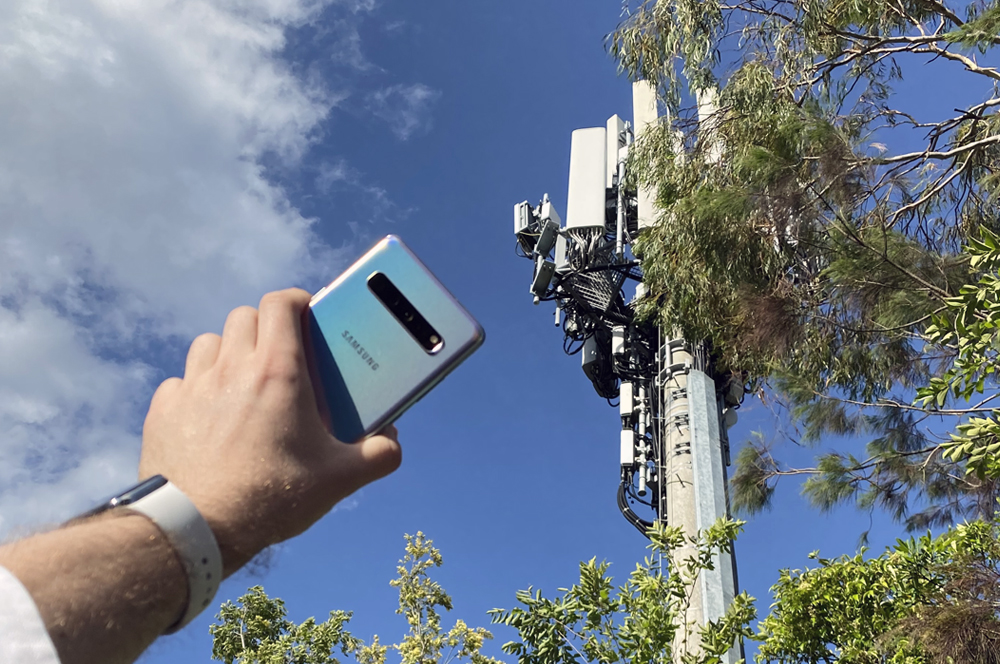
2019 was massive yet underwhelming for 5G in Australia. Telstra and Optus both switched on their 5G networks, the first 5G phones launched, and 5G mobile broadband plans could be a genuine NBN alternative. At the same time, 5G coverage is scarce, devices are more expensive than their 4G equivalents, and there isn't a clear reason to upgrade.
Building networks obviously takes time, but by the end of 2020, we'll be seeing a lot more 5G around Australia. Sure, the country won't be blanketed in coverage yet, but if you get a 5G phone - and you've got a bit of geographical luck - it won't be spending most of its existence stuck on 4G.
We'll also be seeing more affordable 5G smartphones next year. Qualcomm's latest mid-range processor, the Snapdragon 765, is its first chipset to feature an integrated 5G modem. Presently, all Snapdragon-powered 5G smartphones have had their modem as a separate part. That’s an extra component a manufacturer has to buy, design around, and power.
As a result, smartphones powered by the Snapdragon 765 should be smaller and more battery efficient. And since the chip is part of Qualcomm's mid-tier range, Snapdragon 765 devices will also be more affordable.
Locally, we've seen devices powered by 7-series processors, such as the Realme XT, which start as low as $499. That's a far cry from the $1,499 to $1,999 price-point we've seen from most 5G devices at launch.
Apple is expected to launch a 5G iPhone next year, which in itself will drive 5G adoption. A little over half of Australia's smartphones are iPhones, so roughly half the phone-owning population had even less reason to upgrade to a 5G handset this year.
When September rolls around and Apple announces its new devices, a good chunk of iPhone owners will simply upgrade to the 5G iPhone because it's time to upgrade and it's there. And given the iPhone's annual importance, you can bet the telcos will all be pushing to have as much 5G coverage as they can by the time Apple's new devices hit stores.
In short, 2020 will bring more 5G coverage and a greater variety of 5G devices to choose from. Hopefully we'll also start seeing some use-cases for 5G that aren't just faster downloads.
In-screen selfie cameras
There's nothing smartphone manufacturers hate more than then bezel. After all, how else are they going to achieve the sci-fi pipedream of a smartphone that's genuinely all screen. In 2019, we saw mass adoption of in-display camera cut outs and, in some cases, pop-up selfie cameras.
In 2020, we'll almost certainly see smartphones with invisible selfie cameras. That is, a selfie camera hidden under the screen. OPPO and Xiaomi have both showcased prototypes of the technology, and Samsung has also confirmed its working on under-display cameras. The tech allows for an uninterrupted edge-to-edge design without resorting to pop-up selfie cameras. Pop-up selfie cameras do the same trick, but their mechanical nature can make water-proofing harder and add more potential for breakage.
Of course, hiding the selfie camera under the screen could result in poorer picture quality than what we're used to. You win some, you lose some.
We're expecting OPPO to be first-to-market, at least locally. Galaxy S11 (or whatever it ends up being called) leaks suggest that Samsung isn't ready to put the tech on a flagship phone, but there's still a chance we could see it on one of its mid-range phones or even on the next Note in the latter part of 2020.
An exciting year for eSIM

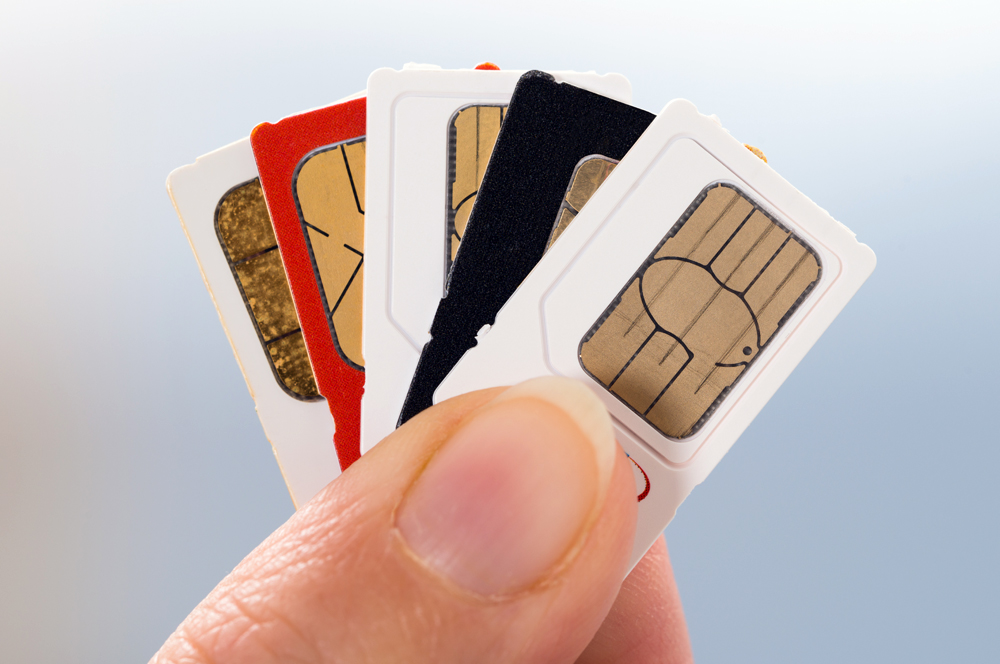
The journey has been a long one, but the three major telcos are now able to provision eSIMs - an electronic SIM or embedded SIM - for compatible devices like the iPhone 11 Pro and Pixel 4. Unlike a physical SIM, there's no need to pop open a slot or pry off a case to put it in; an eSIM never leaves your phone. Instead, you simply download a "software SIM" from your provider of choice.
Right now, Telstra, Optus, and Vodafone are the only providers that sell eSIM phone plans, but we're expecting the telcos to open up this functionality to wholesale operators powered by their networks in 2020.
We're also expecting the process of obtaining an eSIM to become easier. Right now all three providers require you to scan a QR code to add an eSIM phone plan. Telstra and Optus make you get a physical QR code from a store (or in the mail in the case of Telstra), while Vodafone can email out the QR code. It wouldn't be surprising to see Telstra and Optus move to an email option soon, but it's likely telcos will work toward implementing a solution where you can simply download your eSIM via their app, as we've seen overseas.
This will become increasingly important as more and more eSIM-enabled phones hit shelves, especially given that the ACCC has said it would be concerned if any telco's eSIM were to reduce the ease of switching.
A data war cease-fire
For the longest time, telcos were locked in an endless pricing war against one another. Plans just kept getting better in terms of data for dollar value. Yet in 2019 Telstra, Optus, and Vodafone plans all got more expensive.
Earlier in 2019, Optus offered a 30GB plan for $40 per month, while it’s equivalent plan is now 10GB for $39. Vodafone offered a 5GB plan for $35 per month, but that's risen to 7GB for $40. Hell, Vodafone even had a 20GB plan for $35 per month back at the end of 2017. On paper, Telstra prices didn't change too much, but plan inclusions have been cut instead. Features that used to be included in plans - such as international calls - are now a bolt-on. Plans that include monthly roaming data have been cut entirely.
A reversal seems unlikely in the short term. All three telcos are building expensive 5G networks and need to offset their investments.
It's inevitable we'll still see some standout offers in 2020, but our bet is the vast majority of these will come from MVNOs. If you're after the best mobile deal, it will be more important than ever to shop around outside of the big three.
Alex Choros

Related Articles


