
- iPhone 17 vs. iPhone Air: Specifications
- iPhone 17 vs. iPhone Air: Price
- iPhone 17 vs. iPhone Air: Camera
- iPhone 17 vs. iPhone Air: Connectivity
- iPhone 17 vs. iPhone Air: Design
- iPhone 17 vs. iPhone Air: Display
- iPhone 17 vs. iPhone Air: Performance
- iPhone 17 vs. iPhone Air: Battery
- Should you get the iPhone 17 or iPhone Air?
Alongside the iPhone 17 range Apple has introduced its thinnest model ever the iPhone Air. Let's see how the base model iPhone 17 and the iPhone Air, compare.
iPhone 17 vs. iPhone Air: Specifications
Firstly, let’s compare the specifications of the new iPhone 17 and iPhone Air:
| iPhone 17 | iPhone Air | |
|---|---|---|
| Display | 6.3-inch OLED | 6.5-inch OLED |
| Resolution | Super Retina XDR | Super Retina XDR |
| Refresh Rate | 120Hz | 120Hz |
| Rear Cameras | 48MP + 48MP | 48MP |
| Front Camera | 18MP | 18MP |
| Processor | A19 | A19 Pro (5-core) |
| Storage | 256GB - 512GB | 256GB - 1TB |
| Water-Resistance | IP68 | IP68 |
| 5G | Sub 6 | Sub 6 |
| SIM | Physical + eSIM | eSIM |
| Price | From $1,399 | From $1,799 |
iPhone 17 vs. iPhone Air: Price
While Apple doesn’t play in any effective way in the budget space – and even its lower-cost iPhone, the iPhone 16e can’t exactly be called “cheap” – the cheapest models of a given generation of iPhones are generally its suffix-free models, excluding the period where Apple offered “Mini” versions of its iPhone lineup.
As such, it’s no surprise that the iPhone 17 has the lowest RRP of any of the new lineup. However, if you want thin, you’re going to have to pay for it.
Just as Samsung did earlier this year with the Galaxy S25 Edge, Apple’s charging a premium for the Apple iPhone Air. Here’s the full rundown of pricing of each storage variant:
| Phone | RRP | Check price on |
|---|---|---|
| iPhone 17 (256GB) | $1,399 | Amazon |
| iPhone 17 (512GB) | $1,799 | Amazon |
| iPhone Air (256GB) | $1,799 | Amazon |
| iPhone Air (512GB) | $2,199 | Amazon |
| iPhone Air (1TB) | $2,599 | Amazon |
Either model will deplete your wallet by a significant amount, and one way to lessen the immediate thump of those prices could be to sign up for an iPhone 17 or iPhone Air through a major telco. Here’s how much the lowest cost iPhone 17 and iPhone Air variants cost on a 36-month term through Vodafone, Telstra and Optus:
iPhone 17 256GB Plans

|
Optus

$60 Optus Choice Plus Plan
$77.86/mth
Min. cost $1,437.96
|
|
Vodafone

$58 Small Plan
$88.02/mth
Min. cost $1,593.72
|
|
Vodafone
$68 Medium Plan
$93.02/mth
Min. cost $1,598.72
|
|
Vodafone
$78 Large Plan
$98.02/mth
Min. cost $1,603.72
|
|
Optus
$69 Optus Promo Plan
$107.86/mth
Min. cost $1,467.96
|
|
Optus
$70 Optus Choice Plus Plan
$108.86/mth
Min. cost $1,468.96
|
|
Telstra

$84 Essential Upfront Mobile Plan
$117.02/mth
Min. cost $1,622.72
Link not supplied
|
|
Telstra
$74 Basic Upfront Mobile Plan
$117.02/mth
Min. cost $1,622.72
Link not supplied
|
|
Telstra
$99 Premium Upfront Mobile Plan
$127.02/mth
Min. cost $1,632.72
Link not supplied
|
|
Optus
$90 Optus Choice Plus Plan
$128.86/mth
Min. cost $1,488.96
|

iPhone Air 256GB Plans

|
Optus
$60 Optus Choice Plus Plan
$75.06/mth
Min. cost $1,337.16
Out of stock
|
|
Vodafone
$58 Small Plan
$97.75/mth
Min. cost $1,944
|
|
Vodafone
$68 Medium Plan
$102.75/mth
Min. cost $1,949
|
|
Optus
$69 Optus Promo Plan
$105.06/mth
Min. cost $1,367.16
Out of stock
|
|
Optus
$70 Optus Choice Plus Plan
$106.06/mth
Min. cost $1,368.16
Out of stock
|
|
Vodafone
$78 Large Plan
$107.75/mth
Min. cost $1,954
|
|
Optus
$90 Optus Choice Plus Plan
$126.06/mth
Min. cost $1,388.16
Out of stock
|
|
Telstra
$84 Essential Upfront Mobile Plan
$126.75/mth
Min. cost $1,973
Link not supplied
|
|
Telstra
$74 Basic Upfront Mobile Plan
$126.75/mth
Min. cost $1,973
Link not supplied
|
|
Telstra
$99 Premium Upfront Mobile Plan
$136.75/mth
Min. cost $1,983
Link not supplied
|
iPhone 17 vs. iPhone Air: Camera

While the fancy new Apple iPhone 17 Pro and iPhone 17 Pro Max get the best camera goodies, you’re not left with poor camera choices when it comes to the iPhone 17 or iPhone Air.
The iPhone 17 gets dual rear 48MP camera sensors covering wide and ultra-wide capabilities, with the ultra-wide also acting (as so many phone cameras do) as a macro sensor on board. Around the front, you’ll find Apple’s new 18MP front-facing selfie camera, which also handles FaceID secure login.
Apple has made the iPhone Air particularly thin – it’s really its big selling point – but one of the biggest compromises there is in camera selection, because there’s just the one 48MP wide sensor jutting out from the rear of the phone’s slender frame. At the front, you’ll find the same 18MP sensor as on the iPhone 17.
While Apple does offer computational-based modes to cover off the lack of telephoto or true ultra-wide on the iPhone Air, that’s not likely to compare to what you can get from a true secondary lens. As always, if you do want the very best camera goodies, however, you’ll have to save your pennies and opt for the pricier iPhone 17 Pro or iPhone 17 Pro Max phones instead.
The one interesting decision here in camera terms relates to the thin and light nature of the iPhone Air. A lighter phone is one that’s easier to hold in the hand, which could have some impact on your shots, especially if you have to wait to take a shot for a while, or if you want to shoot a little handheld video with lessened hand vibration.
We’re not saying that at 177g, the iPhone 17 is a chunky beast to speak of, but it does make a difference when you’re holding a phone up for any extended period of time.
iPhone 17 camera samples
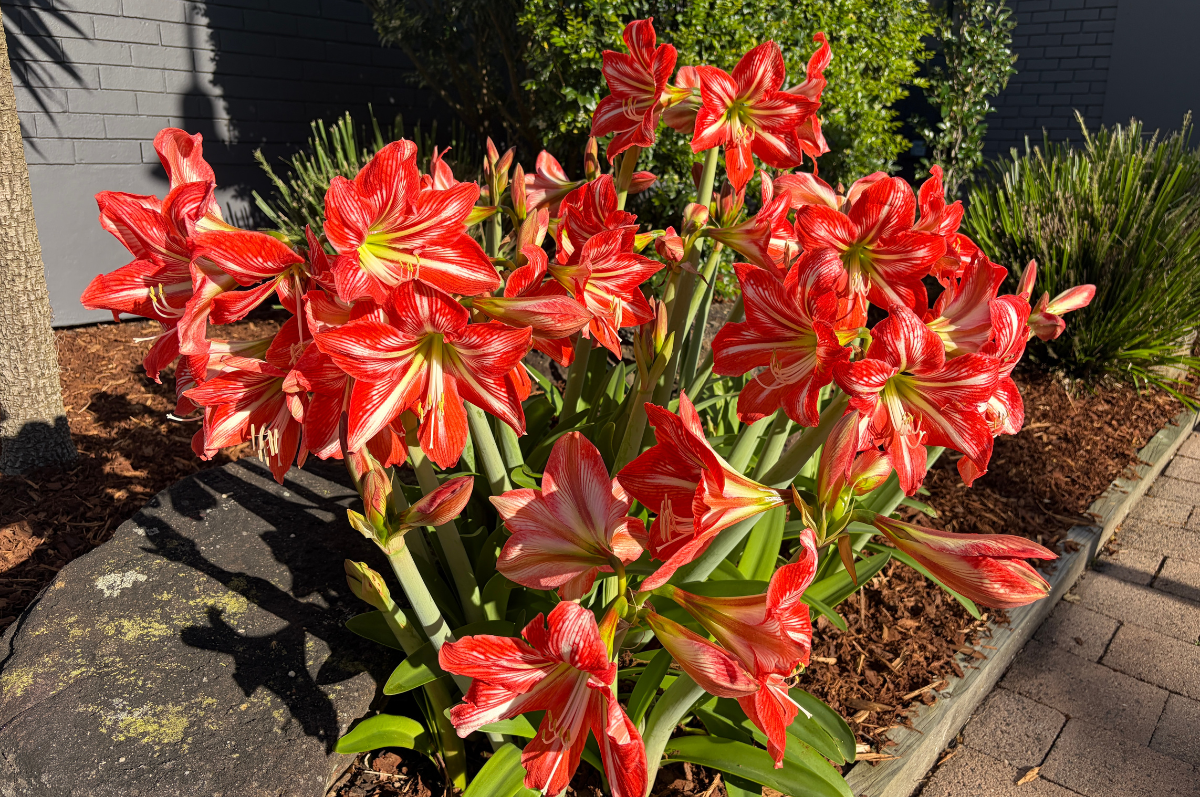
Check out these camera samples taken on the iPhone 17. Click or tap on any photo to see a larger version.












iPhone Air camera samples
Check out these camera samples taken on the iPhone Air. Click or tap on any photo to see a larger version.


iPhone 17 vs. iPhone Air: Connectivity
While rumours have circulated for years now about Apple developing a “cable-free” or “portless” iPhone that relied purely on wireless charging and data transfers, we’re not quite there yet, if indeed that ever does eventuate.
What that means for both the iPhone 17 and iPhone Air is that they use a USB-C connection for power and physical data transfer, with a cable (but not a charger) included in the box.
In terms of mobile network connectivity, both the iPhone 17 and iPhone Air phones support 5G – something would be pretty awry in Apple’s world if phones at this price didn’t – but for Australian models, they’ll still sadly only support Sub 6Ghz 5G, even though international models in some markets also offer faster mmWave connectivity. Australian models of the iPhone 17 also continue to support a single physical Nano SIM plus eSIM, though some international models are eSIM only.
The iPhone Air, however, only ships as an eSIM handset, with no support at all for physical SIM cards.
As with last year's models, both the iPhone 17 and iPhone Ai support WiFi 7, as long as you’re also using a WiFi 7-capable router.
iPhone 17 vs. iPhone Air: Design
Apple’s design language is fairly well established by now, and both the iPhone 17 and iPhone Air certainly look like Apple devices.
In colour terms, you can get the iPhone 17 in Black, White, Mist Blue, Sage and Lavender finishes, while the iPhone Air ships in Space Black, Cloud White, Light Gold or Sky Blue. Apple will sell its own cases for both models, but we can expect a tsunami of third-party case options as well if the colour choices don’t overly excite you.
The really big design difference between the iPhone 17 and iPhone Air is in the thickness of each phone. The iPhone 17 is 7.95mm thin, but Apple’s done some serious engineering work on the iPhone Air, because it measures in at just 5.64mm. That svelte frame also means that it’s somewhat lighter, tipping the scales at 165g compared to the 177g of the iPhone 17. That’s some smart engineering work at play there, especially considering that the iPhone Air has a larger display than the iPhone 17.

Dodo's NBN 500 Unlimited plan is our pick for the best NBN 500 plan for September.
|
Dodo

FTTP, HFC
Editor's Pick
nbn500 Unlimited Plan
$62.99/mth
Min. cost $62.99
|
iPhone 17 vs. iPhone Air: Display
The iPhone 17, like its predecessors (excluding the late lamented Mini variants), is the smallest phone in Apple’s new lineup, featuring a 6.3-inch OLED display at a resolution of 2622x1206.
Comparatively, the iPhone Air gets a screen size boost with a 6.5-inch 2736x1260 OLED display, making it the effective successor to the lineup of “Plus” phones that Apple used to offer.
Where in prior years, if you wanted access to 120Hz refresh rates, you’d have to jump up to the Pro line of phones, this year Apple’s going 120Hz (“ProMotion”, according to Apple) across most of its 2025 lines, excluding the iPhone 16e that came out some months ago. This means that both the iPhone 17 and iPhone Air benefit from smoother on-screen action when needed, whether that’s in video processing or simply zipping quickly down a web page.
iPhone 17 vs. iPhone Air: Performance
With the iPhone Air sitting as a sort-of-but-not-quite successor to the Plus models of years gone past, you might think that it would feature the same internal processor as the iPhone 17.
That’s not the case. The iPhone 17 runs on Apple’s A19 processor with a six-core CPU and a six-core GPU, where the Apple iPhone Air has the A19 Pro with a six-core CPU and six-core GPU, making it a closer cousin to the iPhone 17 Pro and iPhone 17 Pro Max phones, though those devices do benefit from a six-core GPU in their particular processing mix.
That should give a very slight edge to the performance of the iPhone Air, though it’s probable that this may be mostly seen in ways that overcome its thinner nature and lesser camera capabilities, with Apple possibly dialling back the actual performance in order to keep heat dissipation as low as possible. There’s no point in having a super-thin camera if it burns a hole in your pocket, after all
iPhone 17 vs. iPhone Air: Battery
Ask Apple about the battery capacity of its iPhone ranges and… it won’t tell you, at least not directly. Apple’s preferred metric for battery life revolves around playback scenarios and how many hours of a given activity you can get out of a specific handset according to its tests.
For the Australian models of the iPhone 17, Apple’s claim is that you’ll get up to 30 hours of local video playback from them, compared to 27 hours for the iPhone Air. If you’re streaming your video, that drops to 22 hours for the iPhone Air and 27 hours for the iPhone 17. Apple used to also provide music playback timing, but it has dropped that metric for the new generation of iPhones.
If you’re like us, while video is part of your smartphone journey, it’s never 100% of your smartphone usage.
In our testing, we found the iPhone 17 was able to last up to seven hours per charge, which is a full day of moderate usage with a comfortable buffer. Conversely, the iPhone Air typically achieved between 4.5 hours and six hours of screen time. The lower end figure is still enough for a day of moderate usage, but with very little buffer at the end of the day.
Should you get the iPhone 17 or iPhone Air?
There’s little doubt that the most stylish of Apple’s 2025 iPhones is the iPhone Air. It’s thin, it’s light, and it does have a larger display than the iPhone 17 if you prefer bigger screens but don’t want to lay out the even more serious money that the iPhone 17 Pro Max demands.
That being said, you do pay a pretty serious price premium for all that thin and light action, and it’s also the worst-performing new iPhone in terms of battery life, at least on paper. The comparison here with the Samsung Galaxy S25 Edge is inevitable, because the style of the phone is ultimately the point, and at least on paper, the iPhone 17 appears to be the more sensible buy for most consumers.
Check out our iPhone 17 review here and our iPhone Air review here.
iPhone 17 256GB Plans
|
Optus
$60 Optus Choice Plus Plan
$77.86/mth
Min. cost $1,437.96
|
|
Vodafone
$58 Small Plan
$88.02/mth
Min. cost $1,593.72
|
|
Telstra
$84 Essential Upfront Mobile Plan
$117.02/mth
Min. cost $1,622.72
Link not supplied
|
iPhone 17 Pro 256GB Plans

|
Vodafone
Editor's Pick
$58 Small Plan
$92.18/mth
Min. cost $2,043.72
|
|
Optus
$60 Optus Choice Plus Plan
$94.52/mth
Min. cost $2,037.72
|
|
Telstra
$84 Essential Upfront Mobile Plan
$129.52/mth
Min. cost $2,072.72
Link not supplied
|
iPhone 17 Pro Max 256GB Plans
|
Vodafone
$58 Small Plan
$97.74/mth
Min. cost $2,243.88
|
|
Optus
$60 Optus Choice Plus Plan
$100.08/mth
Min. cost $2,237.88
|
|
Telstra
$84 Essential Upfront Mobile Plan
$135.08/mth
Min. cost $2,272.88
Link not supplied
|
iPhone Air 256GB Plans
|
Optus
$60 Optus Choice Plus Plan
$75.06/mth
Min. cost $1,337.16
Out of stock
|
|
Vodafone
$58 Small Plan
$97.75/mth
Min. cost $1,944
|
|
Telstra
$84 Essential Upfront Mobile Plan
$126.75/mth
Min. cost $1,973
Link not supplied
|
Alex Kidman
Freelance Contributor

Related Articles


