
eSIM is exciting new tech gunning for the humble SIM card. Short for electronic SIM or embedded SIM, eSIM is a rewritable SIM card built right into your smartphone. An eSIM never leaves your phone, so there's no need to pop open a SIM tray or remove your case. Instead, you simply download a "software SIM" from the provider of your choice.
Travellers are one of the biggest beneficiaries of eSIM. Instead of hunting around an airport looking for a local SIM, you can just use an app to add a new plan to your phone via the internet. You can even purchase your eSIM before you leave for your destination; if you're prepared, there's no need to screw around with airport WiFi on arrival.
Options for buying travel eSIMs

There are a few different options for buying eSIMs while travelling. Some are sold directly by the provider. For example, if you're travelling in the United States, you can download the T-Mobile prepaid eSIM app on your iPhone to purchase a plan, and add it to your device.
Others come from stores and providers who specialise in travel eSIMs. Airalo is one of the simplest options for buying a travel eSIM. Airalo is essentially a global online store for eSIM phone plans; just search your destination, and pick a data allowance.
Airalo's pricing for a destination eSIM tends to start at around $6.50 for a 1GB plan with a three-day expiry. You can pay more to get a larger data allowance with a longer expiry, if you need it. $20 will get you 5GB with a 30-day expiry in Italy, for example.
Airalo also has travel eSIMs that cover more than one country in case you're visiting multiple destinations. These SIMs are available for Africa, Asia, Europe, Latin America, North America, and Oceania. There's also a "global" travel eSIM covering 138 countries with expiry options as long as 365 days, which could be great if you're planning an extended round-the-world trip.
I've personally used Airalo eSIMs in the United States, New Zealand, and Europe, and the experience has always been reliable. Just note that many Airalo travel eSIMs are data-only and don't come with a local phone number. This is very common for travel SIMs these days, no matter the provider.
You can purchase travel eSIMs from Airalo via its website.
Jetpac is another travel eSIM provider that specialises in data-only plans. Depending on your destination, Jetpac can be cheaper than Airalo, but this can come with some trade-offs. For example, for most European SIMs, Jetpac covers 32 countries as opposed to 42.
Jetpac travel eSIMs have a unique perk where you can score free airport lounge access if your flight is delayed (and meets the threshold). This is done by registering your flight in the Jetpac app. Up a single companion can enter the lounge with you.
You can purchase travel eSIMs from Jetpac via its website.
If you want an eSIM that also allows you to make phone calls, there's also SIMCorner. Select SIMCorner travel eSIMs also come with talk and text. Just double-check the fine print, as some of its plans are data-only. Getting a travel eSIM with talk and text tends to make it more expensive, however.
You can purchase travel eSIMs from SIMCorner via its website.
If you want to see a comprehensive list of eSIM plans for the destination you're travelling to, eSIMDB is a handy website for comparing eSIM options for a myriad of countries.

Dodo's NBN 500 Unlimited plan is our pick for the best NBN 500 plan for September.
|
Dodo

FTTP, HFC
Editor's Pick
nbn500 Unlimited Plan
$62.99/mth
Min. cost $62.99
|
Is an eSIM your best option for travel?
For the most part, buying a local SIM at your destination - whether it's a physical SIM card at an airport or a travel eSIM - is better value than roaming.
Of course, it's also worth considering your international roaming options. If you're a Vodafone or Optus customer with $5 per day roaming, it will be the best option for short trips, depending on your destination. If you're spending over a week overseas, even $5 per day starts to add up quickly.
If you're a Telstra customer, you're typically looking at $10 per day. As such, buying a local SIM will almost certainly end up being a better option most of the time - unless you really need to keep your Australian number active.
For more in-depth information, check out our destination-specific travel guides.
If you're headed to a particular country, we've got a whole host of travel guides that cover specific destinations. In them, we look at the best Australian SIMs for when you're overseas, as well as other options for the country in question.
- Best SIM cards for travelling in New Zealand
- Best SIM cards for travelling in Europe
- Best SIM cards for travelling in the US
- Best SIM cards for travelling in the UK
- Best SIM cards for travelling in Bali
- Best SIM cards for travelling in Japan
- Best SIM cards for travelling in Singapore
- Best SIM cards for travelling in Thailand
- Best SIM cards for travelling in South America
- Best SIM cards for travelling in Canada
eSIM-enabled phones
The vast majority of high-end phones from the last few years support eSIM. eSIM support is still absent in most more affordable phones, however. Here are the main devices with eSIM support that have been available in Australia:
- Apple
- iPhone Air, iPhone 17 family, iPhone 16 family, iPhone 15 family, iPhone 14 family, iPhone 13 family, iPhone 12 family, iPhone 11 family, iPhone XS family, iPhone XR, iPhone SE (2020 and 2022)
- Samsung
- Galaxy S25 family, Galaxy S24 family, Galaxy S23 family, Galaxy S22 family, Galaxy S21 family, Galaxy S20 family, all Samsung Galaxy Z Fold and Galaxy Z Flip devices, Galaxy A56, Galaxy A36, Galaxy A55
- Pixel 10 family, Pixel 9 family, Pixel 8 family, Pixel 7 family, Pixel 6 family, Pixel 5, Pixel 4a family, Pixel 4 family, Pixel 3a
- OPPO
- Find X9 Pro, Find X9, Find X8 Pro, Find N3, Find N2 Flip, Find X5 Pro, Find X3 Pro
- Motorola
- Edge 60 family, Razr 60 family, Moto G56 5G, Moto G55 5G, Razr 50 family, Edge 50 family, Moto G54 5G, Razr 40 Ultra, Razr 40
Note: We've only included a model if eSIM is available on the Australian version. Double-check compatibility before making a purchase.
If you're looking for a new phone with eSIM support, use the belong widget to check out plans for a few popular eSIM-enabled handsets from the last year, grouped by provider:
iPhone 18 Pro 256GB
- 6.3 inch display
- Rear Cameras: 48MP, 48MP, 48MP
- Front Camera: 18MP

Galaxy S26 Ultra 256GB
- 6.9 inch display
- Rear Cameras: 200MP, 10MP, 50MP, 50MP
- Front Camera: 12MP

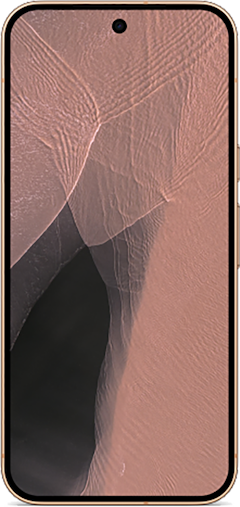
Pixel 11 Pro XL 256GB
- 6.8 inch display
- Rear Cameras: 50MP, 48MP, 48MP
- Front Camera: 42MP
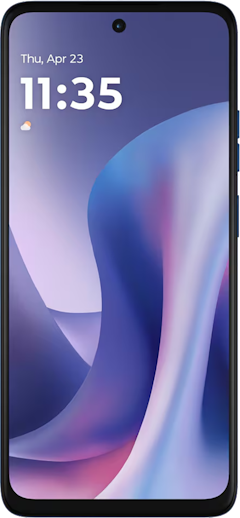
Moto G57 5G
- 6.7 inch display
- Rear Cameras: 50MP, 8MP
- Front Camera: 8MP

iPhone 18 Pro 256GB
- 6.3 inch display
- Rear Cameras: 48MP, 48MP, 48MP
- Front Camera: 18MP
Galaxy S26 Ultra 256GB
- 6.9 inch display
- Rear Cameras: 200MP, 10MP, 50MP, 50MP
- Front Camera: 12MP
Pixel 11 Pro XL 256GB
- 6.8 inch display
- Rear Cameras: 50MP, 48MP, 48MP
- Front Camera: 42MP
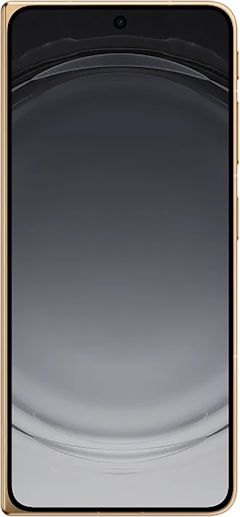
Find N6 5G
- 8.12 inch display
- Rear Cameras: 200MP, 50MP, 50MP
- Front Camera: 20MP
iPhone 18 Pro 256GB
- 6.3 inch display
- Rear Cameras: 48MP, 48MP, 48MP
- Front Camera: 18MP
Galaxy S26 Ultra 256GB
- 6.9 inch display
- Rear Cameras: 200MP, 10MP, 50MP, 50MP
- Front Camera: 12MP
Pixel 11 Pro XL 256GB
- 6.8 inch display
- Rear Cameras: 50MP, 48MP, 48MP
- Front Camera: 42MP
Moto G57 5G
- 6.7 inch display
- Rear Cameras: 50MP, 8MP
- Front Camera: 8MP
How to install a travel eSIM
If you have an eSIM-enabled device, all you'll typically need to do to set up a new eSIM plan is scan a QR code - it's one of the biggest advantages of eSIM technology. In the event you don't have a way to scan a QR code (as in, if you're purchasing your SIM on the same device you want to use it on), you can also manually enter SIM details on both iOS and Android. New versions of iOS can even import the QR code from your photo library if you screenshot it.
Alternatively, if you're travelling with friends or family, you can get someone else to take a photo of your QR code, and then scan the code from the photo. We've tested this, and it definitely works. In recent versions of iOS, you can screenshot your QR code and then "scan" it through the Photos app.
In some cases, you'll need to change your APN settings to work with the new plan. If this is the case, your new provider should give you instructions. You'll find these under the Mobile section in the Settings app. There's a good chance you'll also need to also enable Data roaming, which you'll be able to do in the same part of the Settings app.
You'll also probably want to disable your local number to ensure you're not charged for roaming overseas. The most foolproof way is to remove your Australian SIM from your phone, but you can also disable your plan under in your Mobile settings. Tap on your physical SIM - which should be identified as SIM 1 or Primary - and then toggle it off.
Can eSIM be used internationally?
Yes, you can travel with eSIM. If you have an Australian eSIM, your plan will work overseas exactly the same way a traditional SIM card would. This means you'll pay the standard roaming rates associated with your plan.
Note that a 4G-enabled eSIM smartwatch won't have mobile connectivity overseas, however.
These are the most popular SIM-only mobile plans with WhistleOut users this week:
|
#1
|
SpinTel

Editor's Pick
$23 Mobile Plan
$12.00/mth
Min. cost $12
|
|
#2
|
Boost Mobile

$39 Prepaid
$39.00
Per 28 Day Renewal
|
|
#3
|
Dodo
Editor's Pick
Medium Mobile Plan
$30.00/mth
Min. cost $15
|
|
#4
|
TPG

Editor's Pick
30GB Small Plan
$15.00
Per 1 Month Renewal
Link not supplied
|
|
#5
|
Yomojo

Starter 29GB Plan
$24.90
Per 30 Day Renewal
Link not supplied
|
|
#6
|
Tangerine Telecom

30GB 5G Mobile SIM
$30.00/mth
Min. cost $15
|
|
#7
|
Pivotel

25GB Mobile Swift Plan
$11.45/mth
Min. cost $11.45
|
|
#8
|
Swoop

30GB SIM Only 5G
$14.00/mth
Min. cost $14
|
|
#9
|
Vodafone

$58 Small SIM Only Plan
$45.00/mth
Min. cost $45
|
|
#10
|
felix mobile

felix 25GB Mobile Plan
$30.00
Per 1 Month Renewal
|
Alex Choros

Related Articles


