

- Bigger, all-day battery life
- More durable display
- Sleep score
- Overall, an interative update
- Apple Watch SE 3 better value for money
I’ve always loved gadgets. There’s a scene in Spy Kids 2 where the rival err... spy kids? are showing off the latest prototype hardware. All of the gadgets our protagonists are kitted out with are contained in an assortment of watch bands, which are solely on their rivals' wrists. Just to drive home the point that what they're wearing does everything the rival spy kid jeers, “it even tells time”.
Now, sure, we're super far off from holographic displays on our wrists, but I'm sure what we have now in 2025 would be just as impressive to seven-year-old me back in 2002.
The Apple Watch Series 11 locks in the final piece in the smartwatch jigsaw puzzle. While I would happily go an afternoon without access to my iPhone (god knows my screen time is one metric I could lower), I'd prefer the Apple Watch to be bonded to me night and day. With the Series 11's bigger battery, it's finally a reality.
Actual all-day battery life
Apple has always referred to the Apple Watch's all-day battery life. In reality, for most people (including myself), this up to 18 hours of battery life wasn't always quite enough to guarantee continuous use throughout one day and through an evening of sleep.
The 11th series has finally cranked the battery life up to what Apple says will provide up to 24 hours on a full charge. Previous Apple Watch models like the SE (2022) and Series 10 required me to maintain a strict recharge schedule, including a top-up first thing in the morning while I shower and get started with work, and then often a quick charge before bed.
Any deviation from this strict practice led to more than a handful of times being caught out, and if you’re a close-your-rings sicko like me, then that was enough to throw off your stats. The worst were the times you forget to charge, wake up ready to go to the gym or for a walk and realise you’ve got to quickly charge your watch or your workout “won’t count”.
The Series 11's far-improved battery life has effectively meant that after a full day's use, I can skip charging before bed (if I want) and get up in the morning with between 40-60% battery life left most days. This has meant I’ve been able to go for a morning walk or run and then worry about putting it on charge while I shower, make breakfast and check my emails. It has allowed for a far greater amount of flexibility, and by sticking with my morning charge routine, I've never fallen short and happily made it past the 24-hour mark.
If you wanted longer battery life than "18 hours" before the Series 11, your only option was the somewhat cost-prohibitive Ultra series models, where $1,399 has been the asking price for the previous second-generation model and the current Apple Watch Ultra 3.
The battery is by far the most meaningful hardware change, but there are a couple of others, too. The aluminium Series 11 also features a new glass display with a ceramic coating that Apple says makes it two times more scratch-resistant than the previous generation. I’m hoping this will prevent any scratches at all. No Apple Watch has managed to survive on my wrist a full year without gaining one singular (however faint) scratch. The titanium models retain the sapphire crystal display, which provides greater levels of scratch resistance.
Those who like to leave their phone at home will be happy to know that the Series 11 now also supports 5G connectivity (as do the other Apple Watches released this year). However, its not going to be available for a while yet, as no Australian telco currently offers 5G eSIM plans for smartwatches.
It Series 11 now also supports 5G, however, it's going to take a while for it to be available as telcos in Australia don’t yet offer 5G plans for smartwatches.
A gentle push in the right direction
It wouldn’t be a release of a new Apple Watch without some fine-tuning on the software side. Following its overall shift in software naming conventions for the Apple Watch Series 11, we've actually updated from watchOS 11 to watchOS 26.
With that has come a slew of updates, including the new Liquid Glass design shared in common with other Apple products released this year, but also a new sleep score and workout buddy.
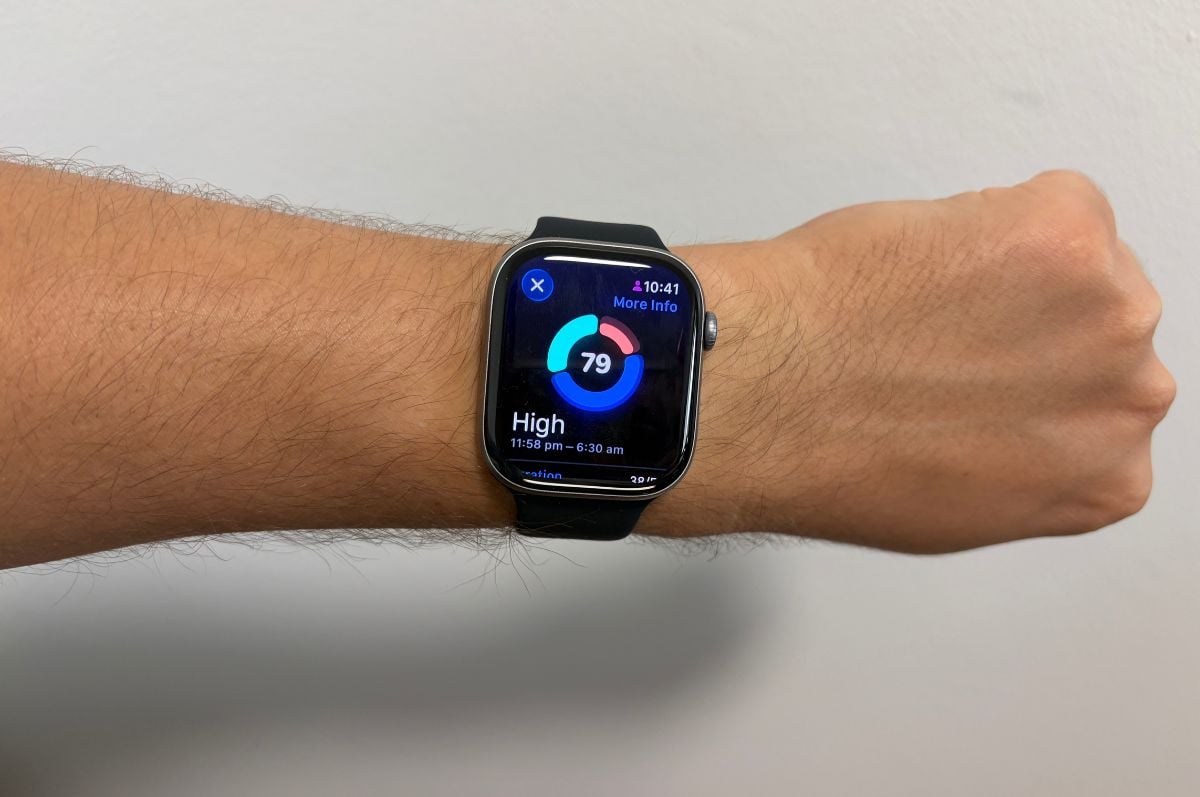
Other wearables like the Whoop and Pixel Watch have long provided a sleep score metric. Apple has now finally introduced it with watchOS 26. Rather than just showing your hours in bed alongside your hours actually asleep, it now provides a score. The sleep score is made up of three key components: 50 points for duration of sleep (10 points of this is for getting enough REM and deep sleep), 30 points attributed to your bedtime consistency (based on the bedtime schedule you set for yourself) and 20 points for sleep interruptions, essentially any wakeups in the night.
Sleep score is one of those features that I didn't know I was missing. Previously, when I would peer back over my sleep results, I had to navigate the waveform graph, which shows how long you spend each night awake and in REM, core and deep sleep. While still informative, it didn’t necessarily tell me at a glance whether or not I was waking too many times or getting enough deep sleep.
The new sleep score summary provides helpful messages to explain your score, such as “getting to bed on time helped you earn a 93. Well done”. It works well because it creates not only a positive feedback loop for those “gamers” among us but also actively provides just that extra little context to the data it’s collecting each night.
Apple has made a couple of adjustments to workouts themselves, including a new workout buddy powered by Apple Intelligence.
Currently available in three different voices, the workout buddy will provide tailored motivation to you throughout your exercise. It leverages all of your workout data and uses it as touchpoints with check-ins like "this is your fifth walk this week and you've already closed your exercise ring for today". If you've set out on a run, it can remind you how long you've got to go.
Prompts like how far you've walked all year or how many workouts of that type you've completed across the week can lend themselves to a sense of achievement. It's not a revolutionary feature, but it is the right sort of gentle push, especially if you're just starting to get into fitness and need positive reinforcement.
The voices sound very close to natural, which does make it feel like you've got your own personal coach spurring you on, but unfortunately, like many AI voice assistants, the illusion is shattered the moment the buddy comments on the artist behind the music you're listening to and butchers their name.
On the subject of workouts, there's a complimentary iOS 26 update that revamps the Fitness app to include a new workout tab. This lets you start, set up and pause workouts directly from your iPhone, and it's about time.
I'm driven by the data my smartwatch collects, and I love to track all exercise, no matter how incidental. However, accuracy is important to me, and this often means I’m pausing and unpausing at the lights or when ordering coffee. After all, I don’t want my walking pace to be dragged down while I spend thirty seconds waiting for the lights to change.
Once I have my coffee in hand, it can be awkward to hold it and tap the right button to unpause the workout – so being able to do it from my phone instead is a great solution. Although, on the other hand, it's annoying that Apple hasn't solved an auto-pause for outdoor walks yet while it has for outdoor runs.
It even tells time, sort of
The Apple Watch Series 11 takes so many positive steps that it was bound to stumble at some point. Those two stumbles are the new watchOS 26 watch faces: Flow and Exactograph.
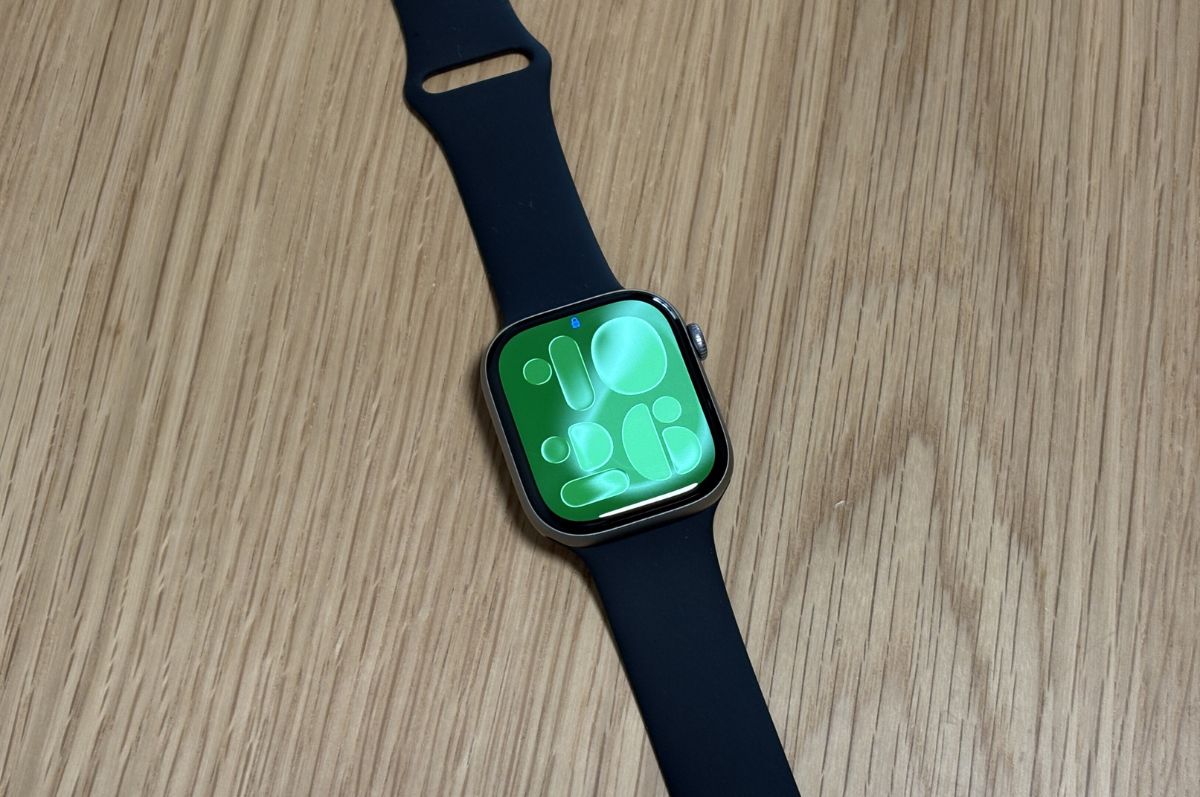
The first, Flow is a love letter to the new liquid glass UI-design, but it's not very readable. I don’t think there was a single instance where I was looking down at the Flow watch face without struggling to decipher what the time was. Your mileage may vary, but I fear the amorphous blobs pretending to be numbers were perhaps too avant-garde for me.
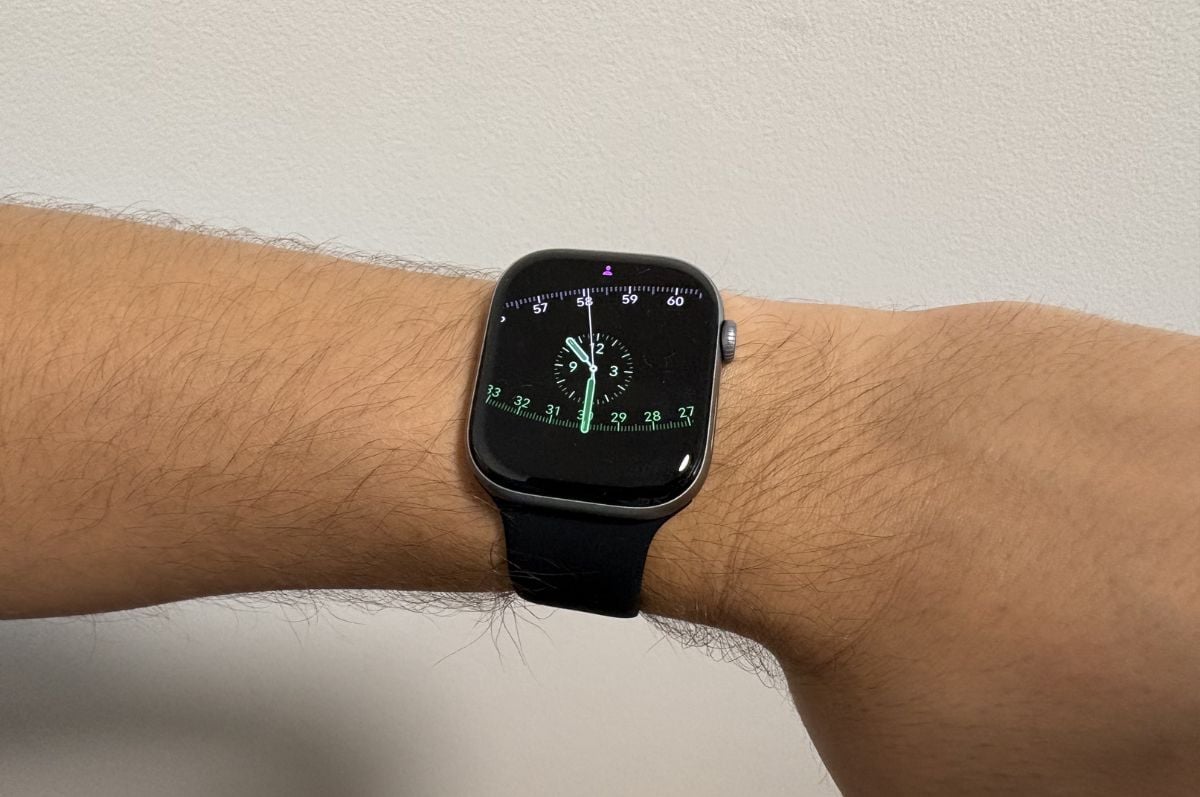
Then there's the Exactograph watch face. It is a more traditional clock face with a dedicated inner ring for hours (only so small that it only shows 12, three, six, and nine) and then an outer ring for minutes and one for seconds. With a tap, you can expand out the minutes and seconds to see them in better detail at 1Hz for exact seconds.
It looks neat, but both new watch faces, pardon the pun, are simply too complicated. Thankfully, they’re not compulsory in any way, although Flow is the default setting fresh out of the box. Unfortunately, Flow in particular feels like a design team being forced to say “yes, we’ve delivered something to tie in with Liquid Glass” this sprint.
The time spent on new watch faces would've been better spent on bringing to life more meaningful updates, like the new wrist flick gesture, which allows you to silence calls and dismiss notifications or the smart stack. It nicely rounds out the double-tap feature introduced two years ago that allows you to select or advance through options by pinching your fingers twice quickly. Gestures are one feature that really hits that cool gadget feel.
Apple Watch Series 11 - Final Thoughts
The characters in Spy Kids 2 argue that an agent is only as good as their gadgets, and the Apple Watch Series 11 is one of the best gadgets you can reach for.
Last year's update saw the Apple Watch Series 10 take on a bigger screen and lighter design. It was heading in the right direction, but stalled when it came to the battery. This year's big boost to battery life is such a great refinement that makes the Apple Watch Series 11 a great choice for even those with newer devices who are frustrated by their smartwatch's battery life. At only $30 more than last year's model, it's well worth the extra price.
If you've got an older device and want to upgrade but are more budget-conscious, then the new Apple Watch SE 3 (which starts at $399) now has many of the improvements you'll find on the new Apple Watch models, including fast charging and the always-on display. It won't solve your battery woes, however.
While the Series 11 is an iterative refinement of the Apple Watch, it's certainly one of the best daily-use gadgets you can buy.
Dylan Crismale
Digital Content Editor

Related Articles


