

Huawei today took the wraps off its next flagship chipset, the Kirin 990. The Kirin 990 is Huawei's top-tier in-house processor, destined to end up in upcoming devices such as the Mate 30, next year's P40, and even the foldable Mate X.
The Kirin 990 comes in both 5G and 4G variants. The 5G variant is notable because it’s the first flagship 5G System on Chip (SoC) in the mobile industry. In short, this means the 5G modem, processor, GPU, and Neural Processing Unit are on the same chip.
Presently, all 5G smartphones have had their modem as a separate part. That’s an extra component a manufacturer has to buy and design around. Qualcomm has a 5G System on Chip solution in the works, but this won't be in devices until early 2020.
In terms of 5G performance, Huawei says the Kirin 990 will be able to achieve download speeds of up to 2.3Gbps and upload speeds of up to 1.25Gbps. Hot. The processor also uses machine learning (artificial intelligence) to help it stay connected to 5G networks, which sounds like it will be especially useful in the early days of 5G where coverage isn't quite what it could be. Huawei also claims the Kirin 990 offers the most battery efficient 5G around.
5G aside, the Kirin 990 sounds like's one speedy boy. Huawei says single core performance on the 5G Kirin 990 is 10% faster than what you'd get on Qualcomm's top-of-the-line Snapdragon 855, and mutli-core performance is 9% faster.
If you're interested in the spec dump, the 5G Kirin 990 is made up of two high performance 2.86Ghz cores, two mid performance 2.36GHz cores, and four high efficiency 1.95GHz cores. On the 4G version, the mid performance cores clock in at 2.09GHz, and the high efficiency at 1.86GHz. The high performance cores are identical across both the 5G and 4G variants.
One other difference between the 4G and 5G Kirin 990 models is the Neural Processing Unit, or NPU, used for AI related tasks. On the 4G model, you'll find a "big core" for more powerful computational work, such as photography, and a "tiny core" for tasks that just run in the background. On the 5G, these are both here, along with a second big core.
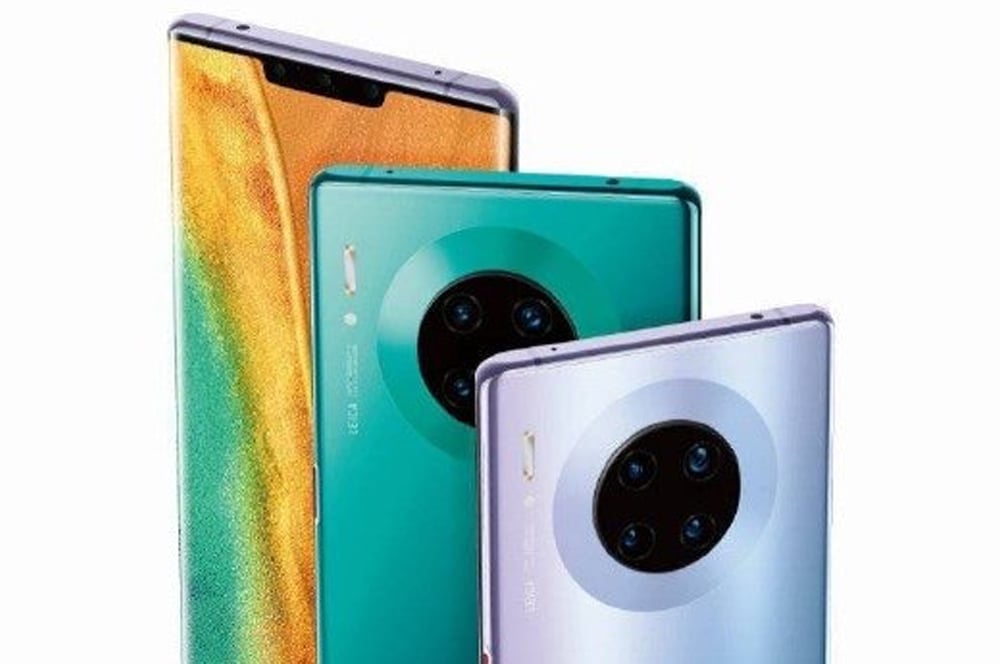
The upcoming Mate 30 and Mate 30 Pro (pictured above in what is an alleged leaked marketing image) will be the first smartphones to ship with a Kirin 990 processor. There are of course plenty of questions surrounding the Mate 30, thanks to the ongoing dispute between the US government and Huawei.
Last week a Google spokesperson claimed the Mate 30 will not ship with Google apps such as the Play Store, Google Maps, YouTube, Gmail and more as a result of the trade ban.
The Mate 30 would still be able to run the open source version of Android - Android Open Source Project, or AOSP - but this would be devoid of the Google apps and services many us have become used to.
As such, there's a lot of doubt as to Mate 30's operating system situation.
Will Huawei manage to secure access to an Android license for the Mate 30? Will the Mate 30 ship with a Google-less version of Android? Will Huawei rush out its own operating system, Harmony, in time for the launch?
We'll know what exactly the go with the Mate 30 on September 19, when Huawei is set to officially reveal the phone.
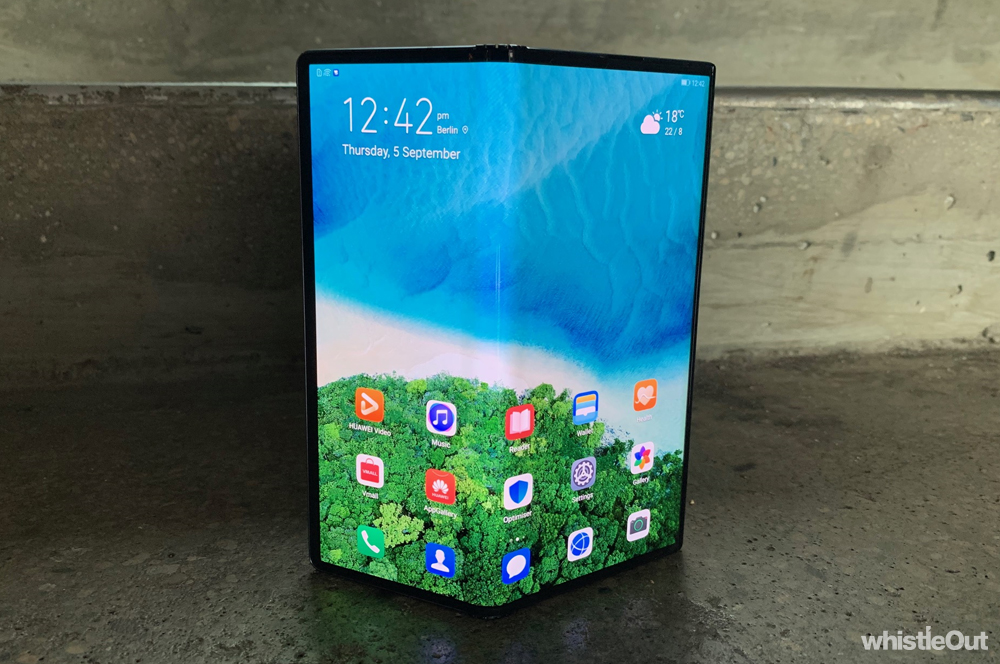
Huawei's foldable Mate X is also set to be powered by the Kirin 990 when it eventually hits shelves, as opposed to last year's Kirin 980.
Thankfully, the situation with the foldable Mate X may be a little simpler. The phone was revealed before the trade ban, as such, should already be licensed for the full version of Android with Google apps and services. But as with the Mate 30, we might just have to wait and see.
WhistleOut travelled to Berlin for IFA as a guest of Huawei
Alex Choros

Related Articles


