

2020 sure has been a year. A lot happened in the tech world, which isn't surprising, given we had 87 months to live through. 5G didn't cause corona, TPG and Vodafone merged despite Rod "The Regulator" Sims' objections, we all spent too much time on Zoom, and there were still plenty of shiny new gadgets to purchase drunk at 3am as your internal monologue whispered "it's a pandemic, baby". Personally, I'm doing my best to just try and forget it. With that in mind, let's instead take a look at what 2021 might bring.
mmWave will be a non-event
Now that 2020 is over, 5G is in a much better state than it was when it first launched. Telstra has a sizable amount of coverage, Optus is kicking along, and Vodafone finally switched on its own 5G network. We've got a whole host of 5G devices to pick from, ranging from $500 Motorolas to $2,000 iPhones. 5G is far from ubiquitous, but we're already talking about what's next: mmWave. There’s going to be a whole lot of hype, but honestly, just ignore it.
mmWave is a faster form of 5G that relies on higher network frequencies. Australian 5G is all currently Sub 6, also known as mid-band 5G. It runs on frequencies similar to 4G, but at the higher end of the spectrum. 3.5Ghz, for example. mmWave, on the other hand, needs extremely high frequencies starting from 26GHz. The higher frequencies means mmWave 5G will be able to hit speeds over 4Gbps. For comparison, we've not seen much faster than 1Gbps on Sub 6 5G, even when right next to a tower.
As exciting as even faster 5G is, it's important to be realistic. The spectrum auction won't happen until the start of 2021, which means we won't see any mmWave networks go live until late 2021 or early 2022. For reference, the Sub 6 5G auction happened in November 2018. Telstra was the first to officially switch on 5G in May the following year, with Optus waiting until November. Vodafone didn't turn on 5G until March this year.
In addition to the time it takes to deploy mmWave, the network technology has its own set of challenges that need to be addressed. While you'll be able to get lightning fast speeds on mmWave 5G, the high frequencies mean it has a shorter range than regular 5G and has an even harder time penetrating buildings.
Reports from the US suggest you need to ostensibly be in line of sight of a tower to get a reliable mmWave connection. Given mobile technology is meant to be, well, mobile, these kinds of restrictions really hamper mmWave’s usability. 4Gbps is cool, but a reliable connection wherever you are is cooler.
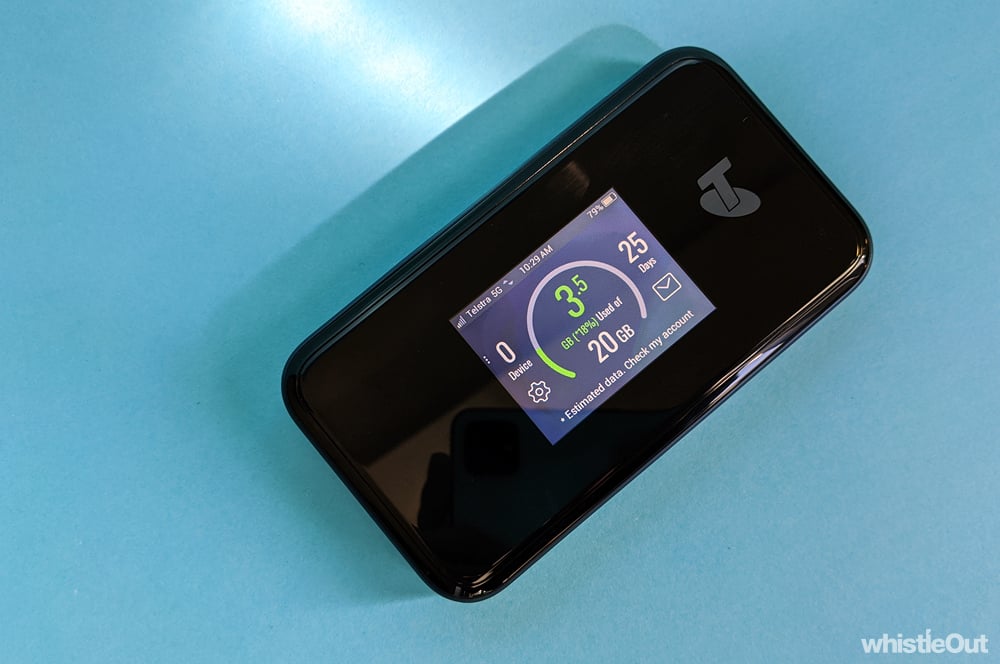
Despite this, it's inevitable that we're going to see brands flogging mmWave compatible devices. Hell, Telstra already has a mmWave-ready hotspot. There's nothing wrong with future-proofing, but as with 5G right now, mmWave certainly won't be a reason you need to rush out and buy a new device immediately.
TPG-Vodafone is gonna **** **** up
TPG and Vodafone are now happily hitched and in a strong position to bring the fight to not just Telstra and Optus, but NBN Co.
TPG has historically been aggressive when it comes to internet pricing, and the Vodafone merger puts both companies in a stronger position. We've already seen ludicrous deals from Vodafone in a year where Telstra put up its prices and Optus froze its. It currently has a promo 50GB plan for $35 per month, whereas Optus is only offering 10GB for $39. To celebrate the launch of the iPhone 12, Vodafone was slinging a casual 500GB for just $55 per month.
Given that the merged entity owns both a fixed line fibre network and a mobile network, it can cross-subsidise expansion. Vodafone can deploy new cells anywhere TPG has fibre at very little cost, and TPG can justify laying more fibre because it can also be used to expand the mobile network. TPG can build a better mobile network for less money due to the scale, a scale that only Telstra operated at previously.
Laying additional fibre also allows TPG to go head-to-head with NBN. TPG already offers fibre as an alternative to NBN plans in certain areas, and the more fibre it owns, the more it can grow its customer base.
Needless to say, 2021 should be an interesting year for TPG-Vodafone.
Samsung kills off the Note
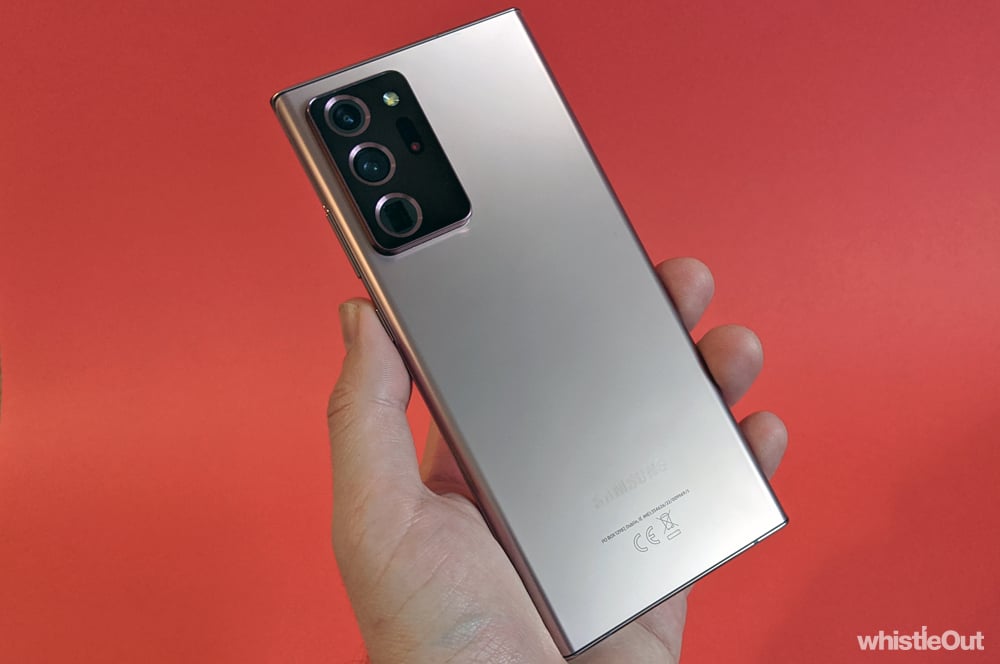
The Galaxy Note may not be long for this world, or at the very least, could be going into hibernation. Instead of supplementing the Galaxy S with a S Pen touting monster later in the second half of the year, Samsung will instead focus on foldables. There are now reports that claim this is likely, but honestly, this has been mulling around in my head since I got my hands on the Note 20 and Galaxy Z Fold 2. You’ll just have to believe me.
There’s been so little differentiation between the Galaxy S and Galaxy Note range in recent years. The Note 20 was effectively just an S20 with a stylus. The days where the Note had a clear place as Samsung’s super phone are long gone. The Note isn’t even Samsung’s largest phone anymore.
Positioning the Fold as Samsung's second key phone for the year makes so much more sense. There's a clear differentiation between the Fold and the S family, and it would make the manufacturer's high-end device range just that little bit less confusing. S Pen lovers need not worry though, as the Galaxy S21 Ultra is set to have a (potentially optional) S Pen you can nab, and it sounds like Samsung is trying to work out a way to add stylus support for the Fold 3.
Looking more broadly, 2021 is shaping up to be a fascinating year for foldable devices. The year on year improvement from the original Fold to the Fold 2 proves they're more than just a gimmick, and they're not going away anytime soon - even if there are still concerns about price and durability.
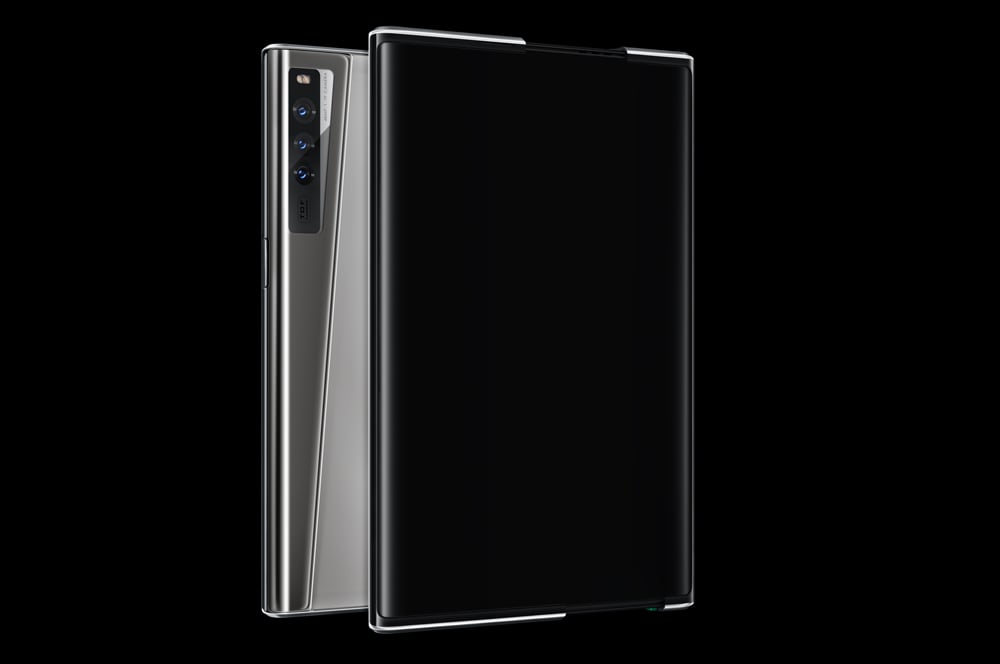
OPPO will be interesting to watch, having revealed two different concept devices with flexible displays: a candy bar with a triple hinge, and a rollable where the display unfurls as you expand the phone. The rollable form-factor is especially appealing. All foldable phones currently have a crease in their display, while this isn't the case with OPPO's design.
Of course, this also means you end up with a flexible display that's fully exposed the entire time. Considering flexible displays are nowhere near as durable as their traditional counterparts, this is certainly going to lead to some engineering challenges. No one wants an expensive phone that gets scratched just from sitting in your pocket.
More emphasis on extras
In 2021, you're going to be able to bundle even more things onto your phone or NBN plan. Telstra already lets you pay off headphones, speakers, or even an Xbox while you're paying off your phone. Vodafone briefly let you add a PlayStation 5 on to your plan. It would certainly make sense if we saw more and more of this. It increases a telco's average revenue per user, and gives customers an incentive to stay - even if plans are technically contract-free. And as we all know, businesses love money. Especially when they happen to be businesses that are building expensive 5G networks.
NBN Co will feel the pressure from 5G
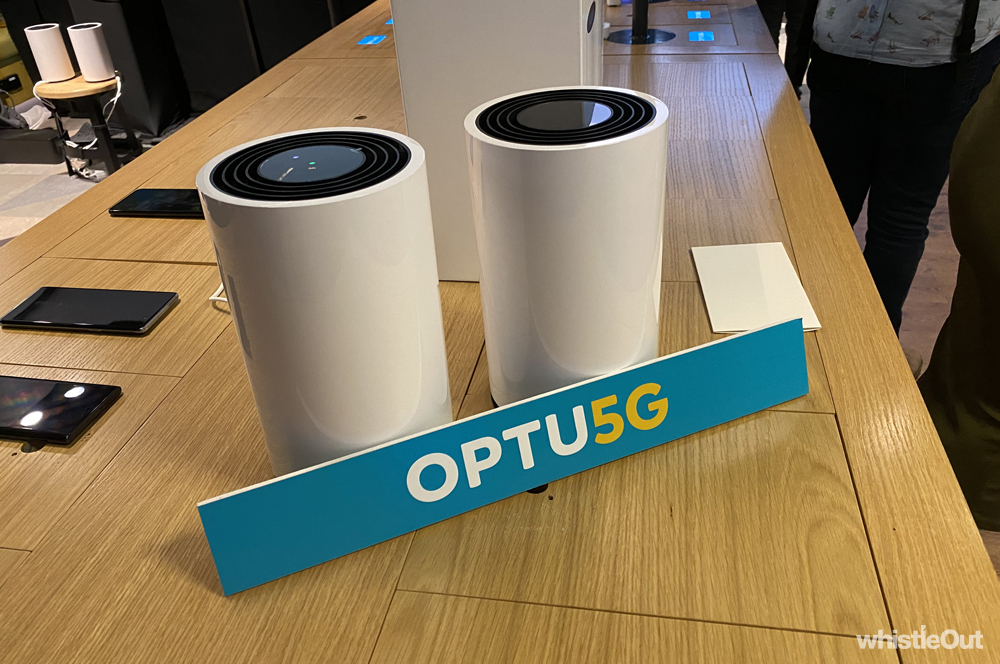
In the short term, 5G is far more exciting as an NBN replacement rather than a must have for your smartphone. No one needs a 5G smartphone right now, there's no application or use case that genuinely needs 5G speeds. Sure, it's fun to flex with a 1Gbps speed test, but it's far from a must have when it comes to mobile.
On the other hand, actually 5G makes sense as an NBN alternative. Right now we're seeing uncapped 5G home internet plans for as little as $70 per month. That means you're essentially spending NBN 50 money for NBN 250 speeds, which honestly, is a pretty attractive proposition.
Telstra, Optus, and Vodafone are all committed to 5G home broadband in 2021, and it's easy to understand why. Delivering an NBN service isn't cheap. The price a telco has to pay to sell an NBN can blow out quickly. Earlier this year, Telstra reported a margin of just 1.8% on fixed line internet, which suggests Telstra is barely breaking even on NBN connections.
There are five factors that contribute to the price of an NBN plan. The major component is Access Virtual Circuit, or AVC. This is a flat fee telcos pay to the NBN for each customer, with pricing increasing with each speed tier. For example, to sell an NBN 100 / 20 plan, a telco is up for $58 per month.
All telcos selling an NBN plan also need to purchase capacity, or CVC. Telcos have to find the right balance between how much CVC they purchase and the price they charge for their plans. Purchase too little CVC, and you get congestion during peak hours. Purchase too much, and plans become too expensive.
CVC is billed at $8 per Mbps, but NBN also includes a small amount of capacity as part of the AVC charge. For example, an NBN 100 / 20 plan comes with 3.75Mbps of CVC as a standard inclusion.
Telcos also need to pay NBN a Network-to-Network Interface charge, which essentially buys a connection to the NBN. This should cost less than $1 per customer per month.
Lastly, a telco also needs to pay for backhaul and transit. Backhaul is the connection between the NBN and a telco, whereas transit is the connection between a telco and the wider internet. At wholesale prices, you’re roughly looking at $1 per Mbps for backhaul, and $3 per Mbps for transit. To avoid congestion, a telco ideally want the same amount of backhaul and transit per customer as they do CVC. Some telcos own their infrastructure, which allows them to cut down on costs. Others need to purchase connectivity through a larger provider.
If we assume a telco assigns about 5Mbps of CVC per NBN 100 customer, the telco would be paying $70 per month in AVC and CVC. Adding on 5Mbps of backhaul and CVC would take that to $90 per month. And that's before we even think about costs like infrastructure and staff. Given $90 or so is a rough median for NBN 100 plans, it's not exactly easy to make a lot of money selling an NBN plan.
On the other hand, when one of the Big Three sells a 5G home internet plan, it's almost pure profit. Optus doesn't need to pay wholesale pricing to NBN Co to deliver a 5G service, so it's not at all surprising that its 5G plans are more affordable than its NBN plans.
As 5G networks become less of a swiss cheese situation, there will almost certainly be more and more interest from consumers in using it as an NBN alternative. While NBN Co has so far been reluctant to make changes like dropping CVC, Australia's three biggest telcos offering a competing product at a better rate could be enough to force the network builder's hand.
Speed tiers for phone plans

This one is a bit of a long shot, but as data inclusions on mobile plans become less and less meaningful, we could see telcos swap to differentiating their plans by speed instead. We've already seen the beginning of this with the launch of felix this year, a Vodafone owned MVNO that offers unlimited data, but capped at speeds of 5Mbps.
This kind of plan structure is already common in Northern Europe. Finnish telco Elisa, for example, has a 10Mbps plan for €24.90 per month, a 150Mbps plan for €29.90 per month, and a 1Gbps plan for €49.90 per month. All of these plans have unlimited data.
It's unlikely that the entire industry would shift to this structure, especially in just a year, but now that even entry-level plans have more data than many of us use, telcos will no doubt be looking for ways to move people onto more expensive options. Instead of picking between the $35 Vodafone plan with 50GB and the $45 Vodafone plan with 100GB, the choice could easily become the $35 Vodafone plan with 50Mbps or the $45 Vodafone plan with 100Mbps.
After all, Vodafone already offers different speeds of "endless data" for when you go over your primary data allowance, depending on how much you pay. Go over your allowance on the telco's cheapest plan? You're stuck on 2Mbps. If you're spending top dollar, you'll still get 25Mbps after your data runs out.
Of course, moving to a speed cap structure for phone plans would also have its challenges. From a network engineering perspective, capped mobile plans are inefficient. Mobile spectrum is a limited resource, and a device actively engaging with the network at a slower speed naturally needs to maintain that connection for longer than a device with an uncapped connection. Despite transmitting at slower speeds, it still needs the same amount of spectrum as a device accessing at uncapped speeds. This could theoretically lead to congestion, depending on where exactly telcos decide to cap their speeds.
Alex Choros

Related Articles


