
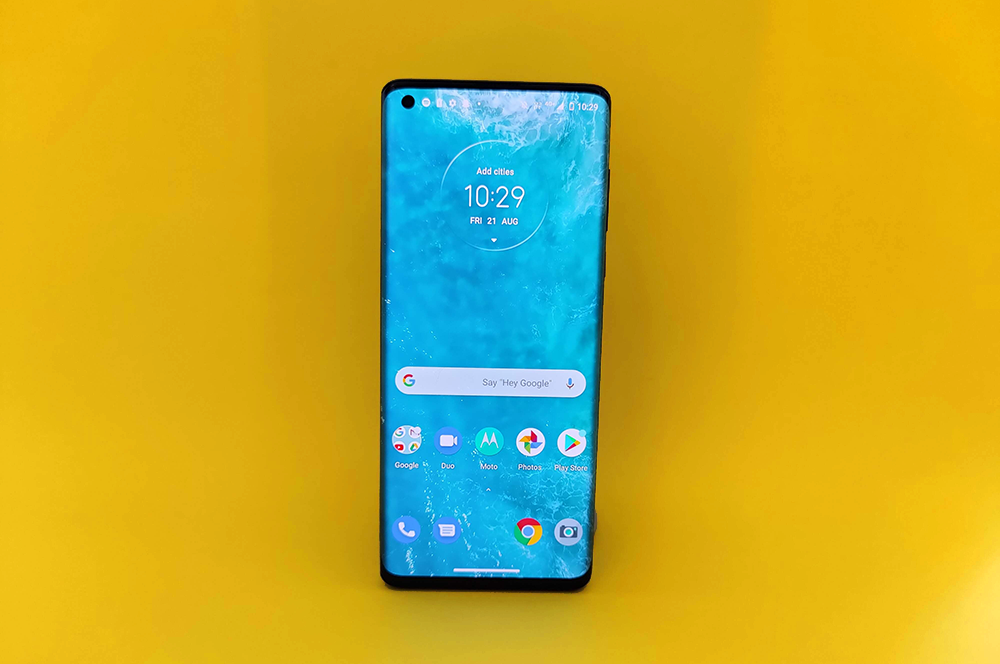
Motorola Edge Review: The Verdict
The Motorola Edge has some brilliant attributes. A curvaceous design topped with a dazzling display and a two-day battery life are impressive starting points for a phone under $1000. Although it’s poor camera performance is a snag that derails the whole device.
What we love
- Battery life
- Beautiful display
- Great use of the curved edges
What could be improved
- Pretty much everything about the camera
- Plastic back
- No water resistance
The essentials
- Performance: Super fast, unless you're using the camera.
- Battery: Incredible. Eight hours screen time
- Screen: Stunning.
- Camera: Slow, superfluous, ineffective.
60/100
$999
The Motorola Edge is eerily similar to quite a few phones on the market at the moment. There are four or five sitting in the same price bracket, all with curved edges, similar camera set ups, and similar processors.
With so many similarities between handsets, the question is whether the Motorola is edgy enough to beat out the competition.
Aggressive curves
Edge is easily the best moniker for this handset. Firstly, the 6.7-inch display doesn’t take into account the curved edges that wrap towards the back of the device, leaving you with plenty of screen space to play with. In addition to the topmost display (which is absolutely stunning), there’s around 5mm of the overhanging edge on either side which functions as part of the display.
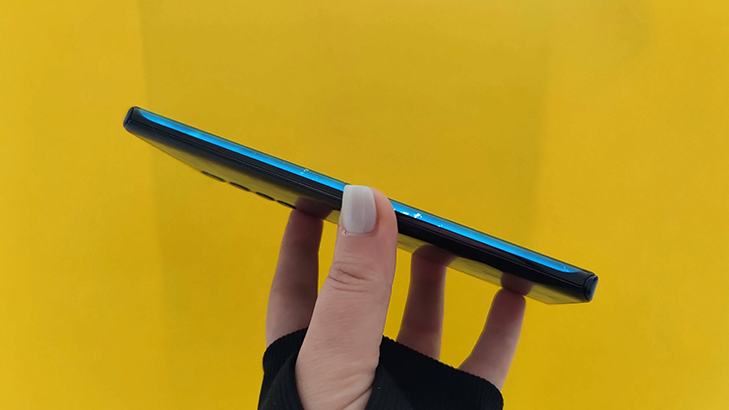
These overhanging sides are aggressively curved at near-right angles, taking up the vast majority of the sides before hitting the back cover. Where curved edges like this create a seamless look they’re rarely done well from a technical perspective. The downside of having a functioning touchscreen on the side of your phone is that you’re always touching it. In my experience this can lead to less response on the main screen, and accidentally opening and closing apps.
Motorola however has leaned into this curve. Sliding your finger up and down the edges will open your top and bottom menus, and you can use these as shoulder buttons when gaming for example. But for the most part the edges simply elongate the screen making for pleasurable immersive viewing.
The curves also disguise the slightly larger than average bezels. It’s hard to even notice, simply because the blackness is too far out of your usual field of vision for a small-screen, but you’re looking at around 3mm bezels which would be significant if not for the Edge’s drop-off design.
Like many other handsets out in the world today, the Edge is rocking a plastic back which is meant to look like glass. I entirely understand the desire to replicate high-end looks, but these glassatic backs are the worst of both worlds. Not only are they clearly plastic but attract smudges and fingerprints far more than a simple plastic back like on the Pixel 4a or Gorilla Glass on top-tier devices. This addition makes an otherwise sleek looking design lose a bit of its sheen, which is a shame but not a deal-breaker.
While the Edge isn’t the most ground-breaking design there’s a reason why we stick with stylistic tropes. The little black dress, florals in spring, curved screens - they’re all perfectly fine go-tos but they’re not on the forefront of change. Although the sharp bends make for a slightly more unique take on the endless screen the Edge isn’t setting any exciting trends.
Battery for days
Motorola has stolen the show with the battery performance here. I hit eight hours of screen time and over 40 hours between charges, making great use of the 4,500mAh capacity.
Of course, this battery longevity doesn’t take into account 5G usage. I, like so many other Aussies don’t have access to a 5G network at the moment. Short of camping out by a tower, it’s impossible to gauge whether the newest tech will accelerate the drain of the battery, as is the case for handsets like the Galaxy Note 20 and the OPPO Find X2 Pro. Given the processor has integrated 5G modem rather than an separate component in the two aforementioned devices, the drain from 5G shouldn't be as significant.
Until 5G gains ubiquity, that’s neither here nor there. Eight hours of screen time on a device is more than ample and a big tick for the Edge. Even if 5G proves drastically more demanding, you'll still get a full day per charge.
While the device is quick to open apps and respond to touch, one qualm is the camera speed which is notably slower than any other function on the phone, but more on than later. The handset comes with a 90Hz refresh rate, which is 50% faster than 60Hz we’re accustomed to seeing on most phones. This means that every second the screen will refresh 90 times as opposed to 60, making for smoother and clearer scrolling.
With over 36 hours between charges, battery is of course the standout feature here. Feeling comfortable to leave the house on less than 50% charge will never not be in vogue. Personally I’ve had handsets that caused me severe anxiety if I left home with 80% battery remaining, so if you’re like me and need a few less stressors in your life than the Edge can substitute one of your evening glasses of wine.
Surplus cameras
Having three rear cameras and a high megapixel quote implies that the Edge can take some great shots, but it’s about one camera too heavy and not at all a point-and-shoot kind of device. Despite initial optimism about the camera set-up, the more I shot on this phone the more I disliked it.
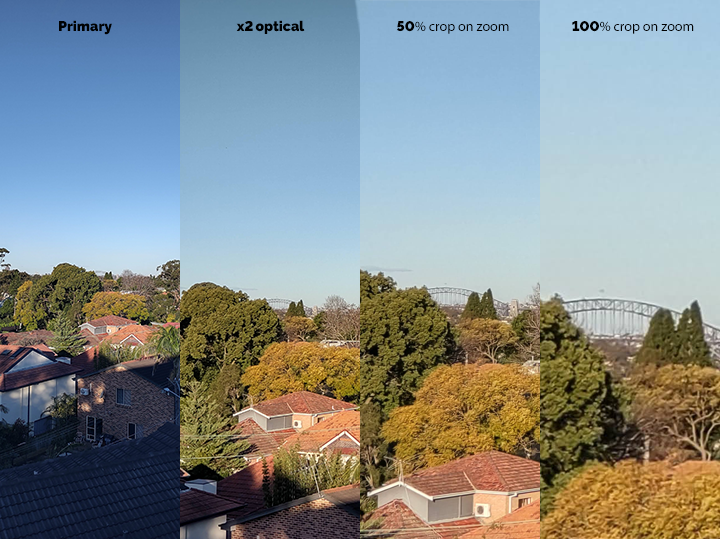
Notably the superfluous camera is a 2x telephoto zoom lens, which is a weird flex in the land of 50x SuperZoom and 100x Space Zoom. Although the camera does take decent photos, having a lens that zooms in by 100% isn't a huge selling point in my opinion. A 100% crop from the primary camera is relatively on-par with a standard 2x zoom snap. If you can achieve the same result digitally it seems like a strange justification to go with the telephoto lens.
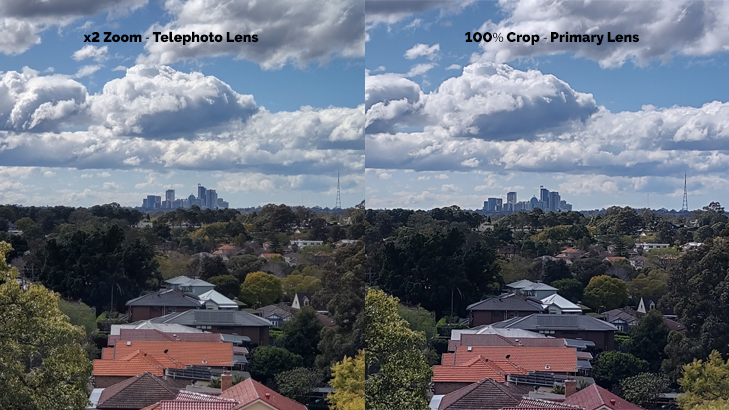
It's almost as if it’s just been added for the sake of having a third camera, one that could have been switched out for a laser auto-focus to better shoot moving objects, or a macro lens for more detailed close ups. When the current set up has problems like the aforementioned, I would have preferred a lens that presents a solution over one that lets you see a bit further in the distance.
Here's another comparison from a clearer day for reference.
Despite the lack of a macro lens, the primary camera and some computational photography magic do a good job at enhancing detail in close-range photos. Take this picture of Manny, you can even make out the disdain in his eyes.

Super close up shots don’t get the same wow factor though. You’ll note in the pictures below a radial blur around the focus point of the shot. It’s disappointing for a macro mode, you expect sharpness from macro photography but without a proper lens this is what we’re left with.

Getting moving shots is another challenge. Despite the snappiness of the performance across the rest of the phone, the camera is inexplicably slow. Expect noticeable delays between tapping the button and capturing the shot. Considering the speed across the rest of the functions, this downfall is disappointing. Photography is where you need to be able to act quickly, so for it to be the one area where the Edge cannot perform well inevitably drags the handset down. Here is the best shot I could get of my pups playing. It – like my zoo of a house – is a mess.

Lowlight images are usually the mid-tier phone’s undoing but the Edge does enough to put it slightly ahead of the competition. Where others fall-short to the extent of not even being able to see the subject, night mode images on the Edge are vibrant enough to actually make out the shot. They’re nowhere near perfect however, take this shot on my balcony. The bulb’s wooden and glass edges are hazy and there is plenty of distortion in the trees behind.

Night mode does brighten the image, but in wider shots not enough to warrant it’s use. Take these shots for example, using Night Mode the sky is noticeably more illuminated, you can see more detail in the clouds and just one extra star glistening in the distance.
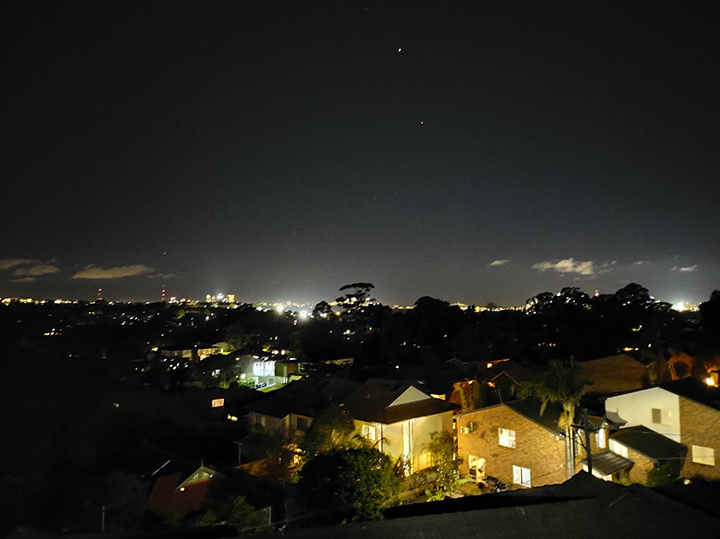
Night mode on
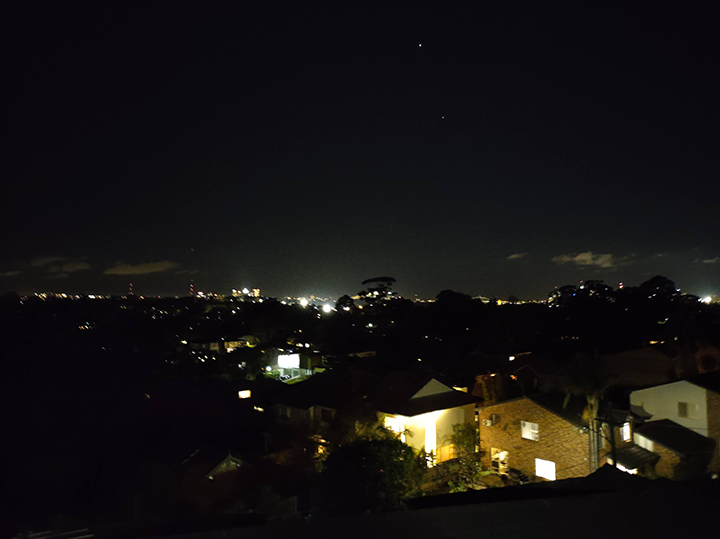
Night mode off
The most notable difference comes from the brightest point, this house in the centre of the shot. Using night mode, even at a distance you’re able to see far more detail than without. Here’s those shots cropped so you can see.
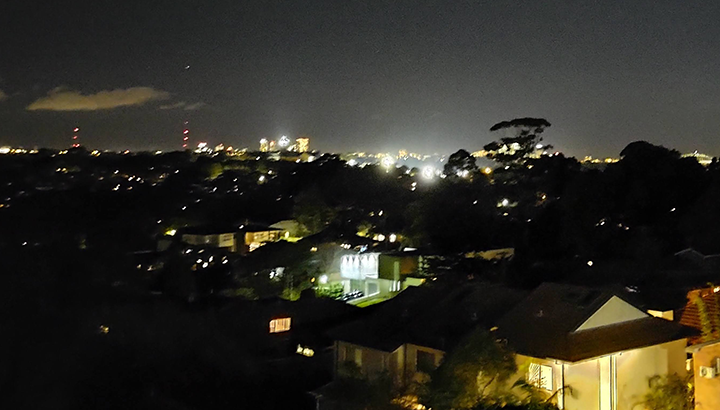
50% Crop - Night mode on
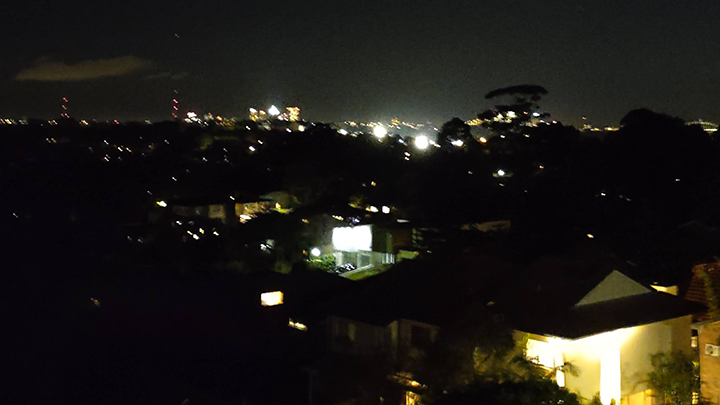
50% Crop - Night mode off
I’m of the opinion that the Edge could have done just as well sans the telephoto lens. In saying that, the primary camera holds up well enough to create some quality shots and the low light features aren’t without their merit.
Motorola Edge - Final thoughts
Despite a stunning display, generally good performance and incredible battery life, the issues with the camera are too widespread to dismiss. Where so many budget phones like the Pixel 4a are nailing the basics in photography with just one camera, seeing three perform so poorly is enough to disregard the Motorola Edge – at least for avid phone photographers.
If on the other hand you’re more concerned with battery life and performance or want to slide into the 5G realm for under $1000 then the Edge could be the right choice for you.
Camera Samples
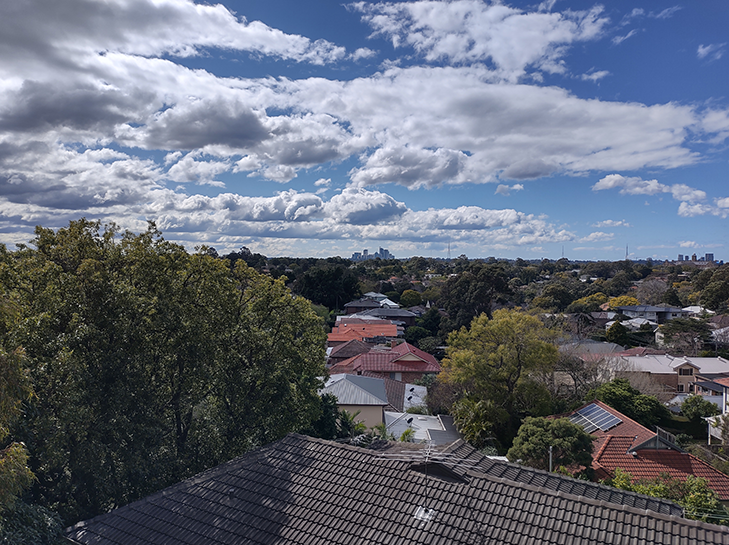
Primary Lens

Telephoto 2x Zoom
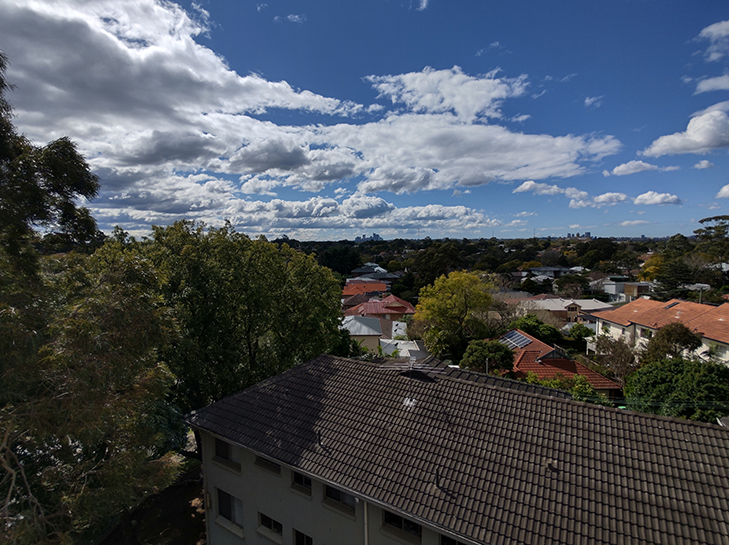
Ultra Wide Lens



Anula Wiwatowska
Offsite Editorial Lead | Instagram

Related Articles


