

- Adorable design
- Thrifty price-tag
- Slow software
- Limited file compatibility
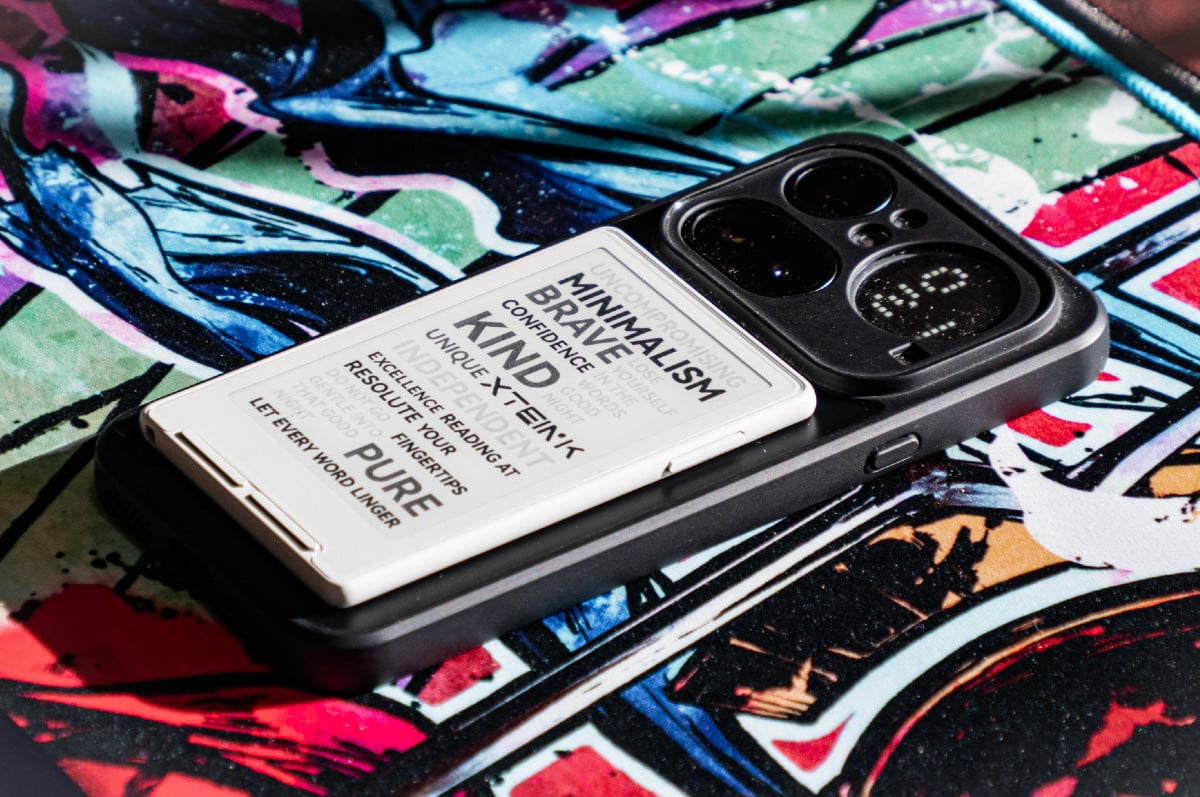
The Xteink X3 is exciting and eye-catching in a way that ereaders usually aren’t. In some ways, the compact compendium feels like the breath of fresh air that the category has needed for years – if not decades – now. Essentially, it’s a smaller ereader that uses a set of magnets to snap into a snug fit on the back of your smartphone when not in use.
Don’t get me wrong, the likes of the Amazon Kindle and the Kobo have come a long way since their earliest incarnations. However, unless you’re looking at one of the most expensive models with fancy features like a colour display or a stylus, the differences between today and yesterday’s ereaders hardly feel like much to write home about.
Courtesy of the more pocket-friendly form factor, the Xteink X3 does not have that problem. The story that it’s trying to tell is a whole lot more legible. If you fancy the idea of reading more but don’t want to carry around yet another gadget, the Xteink X3 promises to provide a fascinating middle ground between reading ebooks on your smartphone and carrying a dedicated device.
It doesn’t hurt that the form-factor here is downright adorable. I haven't seen a piece of tech generate as many curious ‘oohs’ as this has since TCL’s short-lived revival of the Palm Phone.
The Xteink X3 is built around a 3.7-inch e-ink display that offers a perfectly readable 259 pixels-per-inch. To hold and to handle, it feels like a chunkier credit card. It’s 5.1mm thin, and weighs just 58g. The back of the ereader is host to a set of POGO pins that are used to interface with the charger. Meanwhile, the sides of the miniaturised ereader are studded with a set of physical control keys that are used to both navigate menus and turn the page on whatever you happen to be reading.
Writ large, the build quality is surprisingly impressive given the price. The first impression that the Xteink X3 makes is one that far exceeds the expectations that come with the thrifty asking price. The simple fact that the design here is a downsized take on traditional ereaders does a lot to make the initial experience both fresh and familiar at the same time.
Under the hood, the Xteink X3 is powered by a fairly bare-bones software interface and a 650mAh battery. That latter spec should last you around two weeks, if you’re reading for a couple of hours each day.
If you’re more sporadic in your usage, you’ll likely be able to get away with even longer – but that’s nothing too unusual for modern ereaders. For comparison, Amazon’s cheapest Kindle offers around six weeks of usage per charge. However, compared to the Xteink X3, it’s worth noting that it is both more expensive and larger in terms of physical size.
While the hardware is charming right of the gate, the aforementioned software side of the experience is a little harder to love.
If you’re keen to stick with the out-of-the-box experience though, the setup process for the Xteink 3X isn’t too much of a hassle. Once you’ve connected it to a smartphone or tablet using the Xteink app, passing files over to the device is as straightforward as uploading them to Xteink’s own cloud service and then waiting for them to beam back down to the X3.
Unlike something like the Kindle or Kobo, there’s no digital storefront. The Xteink is extremely DIY by comparison, and if you’re planning to read all that many books on it, you’ll have to source them yourself.
Disappointingly, the baseline operating system doesn’t play nice with all that many ebook formats. The Xteink X3 will play nice with txt and epub files, but many other file types – like, for instance, MOBI – aren’t on the menu here. Some formats, like PDF, aren’t officially supported but you can upload them and see how that turns out. I did this, and the results were a little bit all over the place in terms of the formatting, but the book in question was still relatively legible. Your mileage may vary.
Even once you’ve beamed them onto the Xteink X3, the process of navigating the interface and menus that the Xteink X3 offers is painfully slow and more tedious than it feels like it ought to be. If you’re reading something on the ereader, it’s very easy to forget how annoying it can be to do basically anything else.
Honestly, the more time I spent with the hardware here, the less and less I was surprised that there is such a rich scene around hacking Xteink’s ereaders. It doesn't take too much Googling to find out how to trade out the stock experience here for something more custom and a little less painless.
Having said that, it should be said though that this functionality isn’t as universal as it once was. While earlier models were fairly easy to tinker with, Xteink confirmed that it would be looking to prevent it in certain markets earlier this year – which is disappointing to see given the rich community of custom software that has evolved around this nifty new take on what an ereader can look like
Amazon might have spent the last decade and a half building progressively better takes on the Kindle, but Xteink’s take on the ereader template feels like a far more exciting and ambitious angle on that same formula.
After a few weeks of messing with it, I can’t say that I’m convinced that this will win over those who are already willing to invest in a better digital reading experience. However, for more casual ebook consumption, it’s a great companion to consider – especially if your phone supports MagSafe, Qi2, or PixelSnap.
We've spent enough time with this product to piece together our thoughts, but not enough time to put it through our official testing process. We've got a good sense of what is good, what could be improved, and whether it is worth your money, but we're not assigning a score to this one.
Fergus Halliday
Digital Content Editor

Related Articles


