
- Smart form factor changes
- Satisfying hinge
- Dated camera
- Expensive
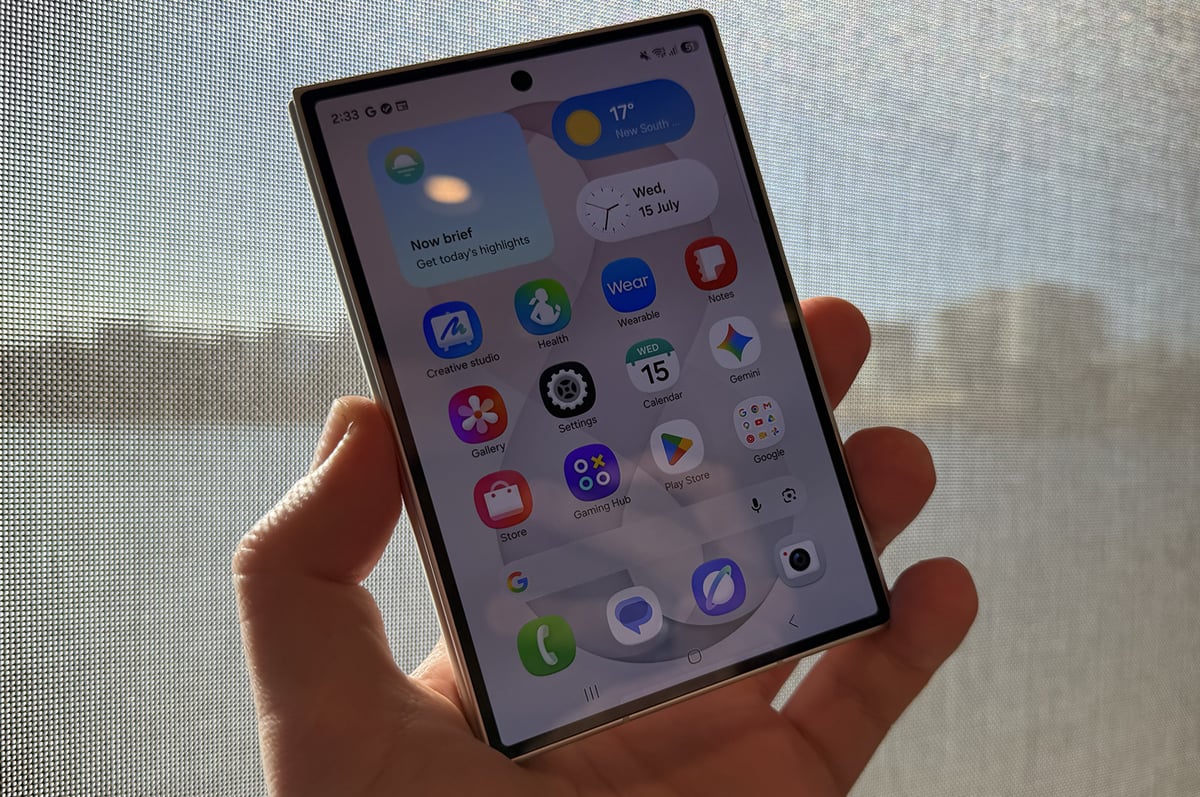
When I first picked up the Galaxy Z Fold 8, it immediately felt correct. Maybe going wider was the ideal foldable shape all along.
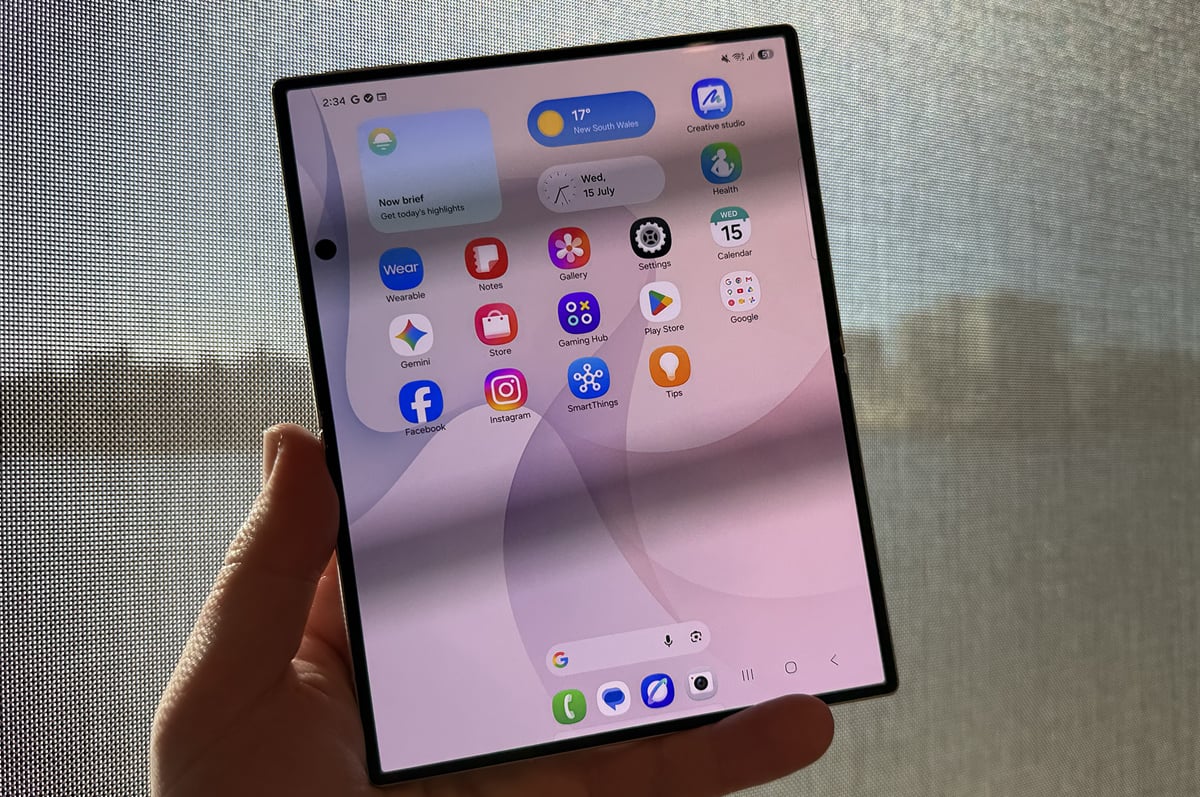
For the most part, book-style foldable phones have had a tall, lanky display on the outside, paired with a squarish display on the inside. The Galaxy Z Fold 8 flips the script, with a passport-like display on the outside, and a wider tablet-like display on the inside.
It’s that wider internal display that’s most important here. It has a 4:3 aspect ratio, which is what you find on a lot of tablets these days. In practice, this means the Galaxy Z Fold 8 is more akin to an iPad mini when you unfold it, in the best way possible. While watching a video on previous generation Folds meant sizeable black bars at the top and bottom of the screen, the Galaxy Z Fold 8’s aspect ratio greatly reduces this. The larger screen becomes more useful, as you’re actually using more of it.
I’m also a big fan of the external display. As someone who has regularly been a Small Phone Defender, the 5.5-inch panel feels like a fun throwback to when hulking devices weren’t the norm. The aspect ratio on this screen isn’t quite conventional, and as such, there could be some weirdness with how apps display on it. I’d expect most should be fine, however.
The Galaxy Z Fold 8 is super thin, and weighs in at just over 200g. It’s lighter than some slab-style phones, which bodes well for extended usage. Importantly, Samsung has largely solved the display crease. While you can still notice it at some off-axis angles, it is seemingly gone for day-to-day use.
It’s hard to get an idea of battery life from a spec sheet or a hands-on, but Samsung has kitted out the Galaxy Z Fold 8 with a 4,800mAh cell. That’s bigger than what we saw in last year’s Galaxy Z Fold 7, so it bodes well for longevity. In my testing, I was able to get around six hours of screen time per charge from the Galaxy Z Fold 7, so I’d expect more than that from the Galaxy Z Fold 8.
Would you get the Galaxy Z Fold 8 or the Galaxy Z Fold 8 Ultra?
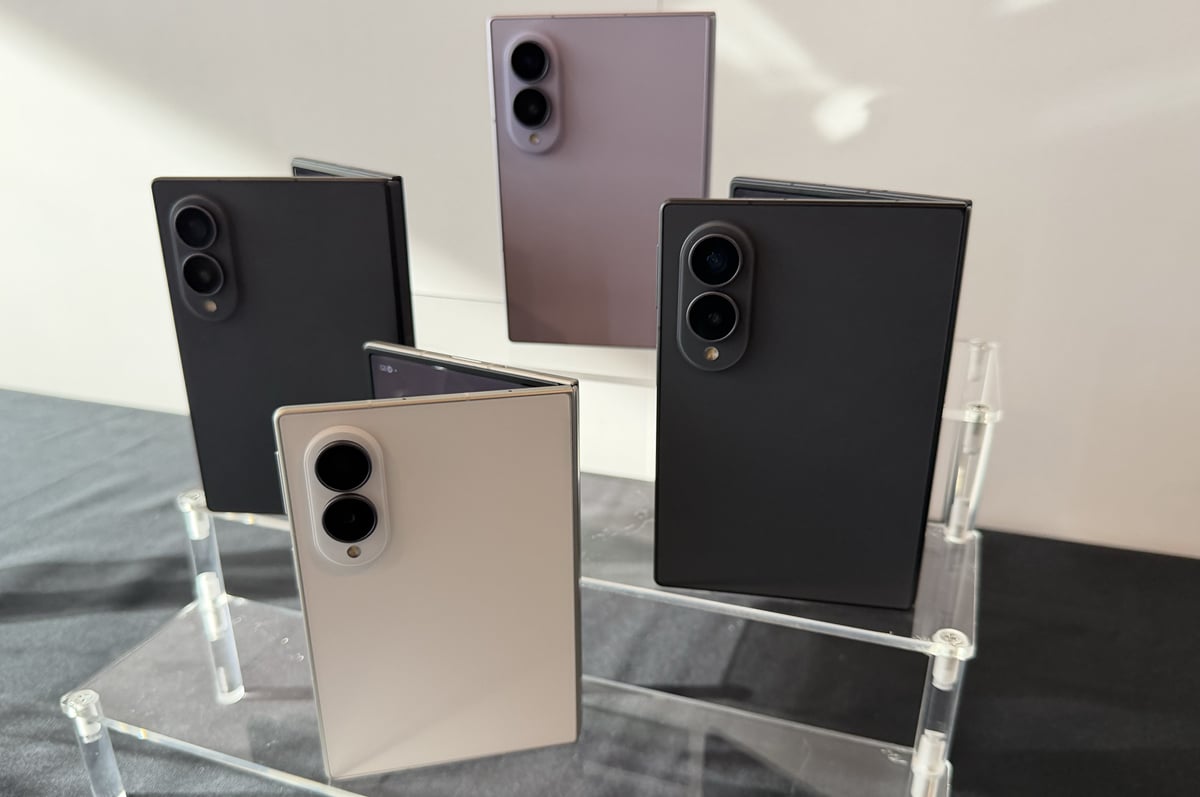
I didn’t have a chance to do any proper camera testing in my initial time with the Galaxy Z Fold 8, but photo quality could be the potential red flag here. The phone appears to be using the same primary lens and sensor Samsung has in the Galaxy S26, which it has been recycling since the Galaxy S23. It’s functional, but not particularly exciting on a phone that costs $1,599, let alone on one that is $1,000 more expensive.
Samsung made big strides in bridging the camera quality gap between its slab phones and its foldables with the Galaxy Z Fold 7, so it’s a shame that we’re potentially going to be having this conversation again. Obviously you can still opt for the Galaxy Z Fold 8 Ultra if photo quality is more important, but it would have been nice to see Samsung kit out the “standard” Galaxy Z Fold 8 with a 200MP lens, even if it's missing the telephoto lens. This a $2,699 phone after all.
But even if the Galaxy Z Fold 8 Ultra has a better camera, the Galaxy Z Fold 8 feels like the more useful device thanks to the new form factor.
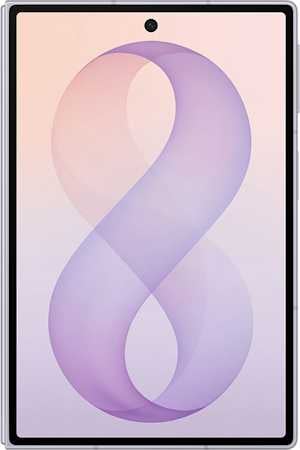
Check out the cheapest Galaxy Z Fold 8 plans below:
Samsung Galaxy Z Fold8 256GB Plans
|
#1
|
Optus

$60 Optus Choice Plus Plan
$97.28/mth
Min. cost $2,737.56
|
|
#2
|
Vodafone

$58 Small Plan
$119.97/mth
Min. cost $2,743.92
|
|
#3
|
Telstra

$84 Essential Upfront Mobile Plan
$148.97/mth
Min. cost $2,772.92
Link not supplied
|

Did you like this article? Good! Why not make us a preferred source in Google? Click below, tick the box, and WhistleOut stories will show up more often when you search for related content.
Alex Choros

Related Articles


