
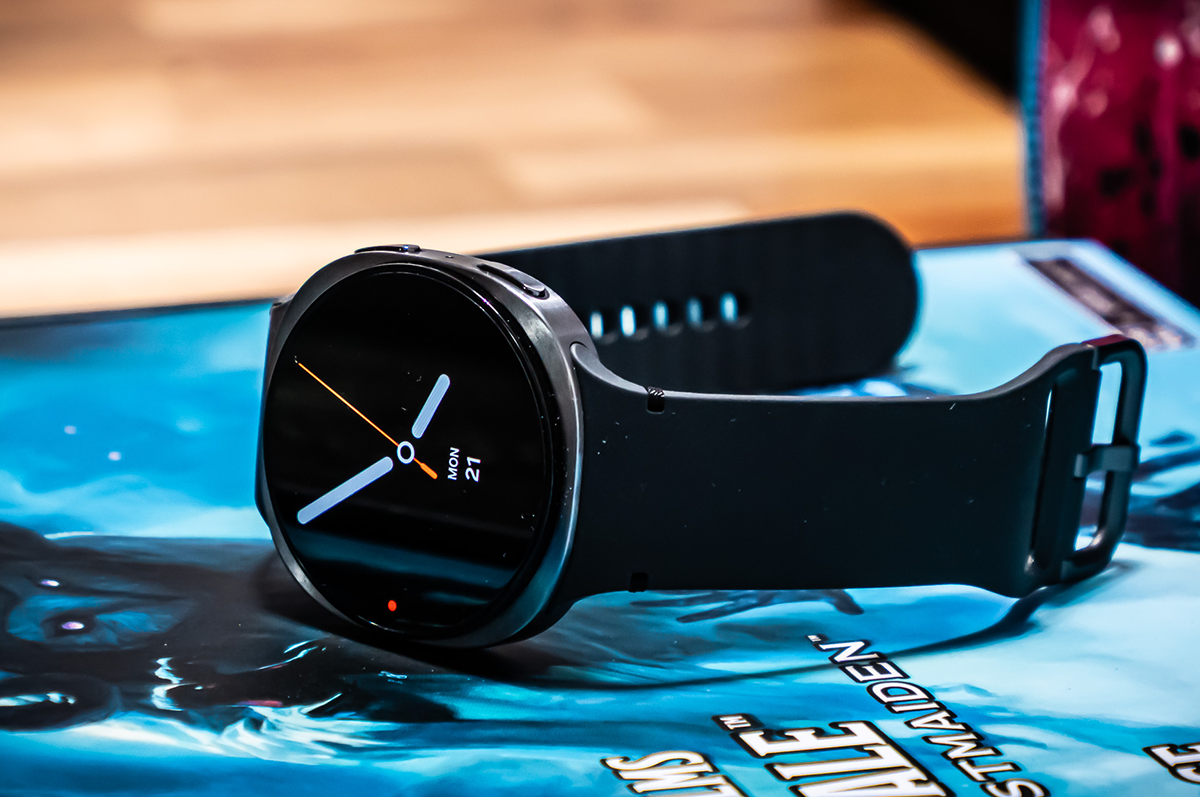
Samsung's Galaxy Watch 8 is a solid effort that feels different enough in the right ways but doesn’t compromise on the features and build quality that you'd expect from a smartwatch with a higher price tag attached to it.
- Low-friction setup
- Anti-oxidant tracking is a novel addition
- Feels expensive for what you're getting
- Boring colors
- "Squircle" design might not be for everyone
The highest compliment I can pay to Samsung’s Galaxy Watch 8 is that it often feels as high tech as it does low friction. The fact that the company’s latest wearable ticks more than just the usual boxes didn’t blow me away so much as fade into the background. Perhaps that’s not a huge shock, though. Even the flashiest of smartwatches have lost much of the lustre they once held, and Samsung has made a lot of them over the years.
The Galaxy Watch 8 is leaner and hardly lacking in features, but the longer I spend with it the more I can't help but wonder if it might be better if Samsung's latest premium was as willing to cut corners in more than just a literal sense. For as nice as it is to rely on a health-tracking wearable as unobtrusive as this one is, it’d be nicer still to rely on one that was a little more competitive when it comes to price.
The squircle is sticking around
Although the new Galaxy Watch 8 and Galaxy Watch 8 Classic are being positioned as natural companions for Samsung's latest set of foldable smartphones, the design involved makes it hard not to see the two as a natural evolution of the "squircle" form-factor that debuted in last year's Galaxy Watch Ultra.
Like that device, the Galaxy Watch 8 features a circular 1.3-inch AMOLED screen that’s surrounded by a decidedly square-shaped aluminium frame. It’s a novel look that sets Samsung’s wearable apart from the competition, though it lacks the rotating bezel and quick action button found in the Watch 8 Classic. Instead, there are two shortcut keys on the right-most edge of the screen. For the most part, though, the interface found on the Galaxy Watch 8 is all about swipes.
If you want to treat it as an extension of your smartphone, you can swipe down for an app drawer. If you just want to check the time and field notifications, swipe to the left and away you go. If you want to spend more time with the fitness tracking and health-oriented sensors built into Samsung's latest smartwatch, swiping right is where you'll want to be most of the time. Finally, up above is where you’ll find a control panel of settings shortcuts.
I’m getting ahead of myself, though. Winding things back, the main reason to go for the standard Galaxy Watch 8 over its Classic counterpart is that it's both lighter on your wallet and wrist. Compared to its predecessor, the wearable is more streamlined in size and slimmer in shape. These subtractions add up to an 11% reduction in thickness overall.
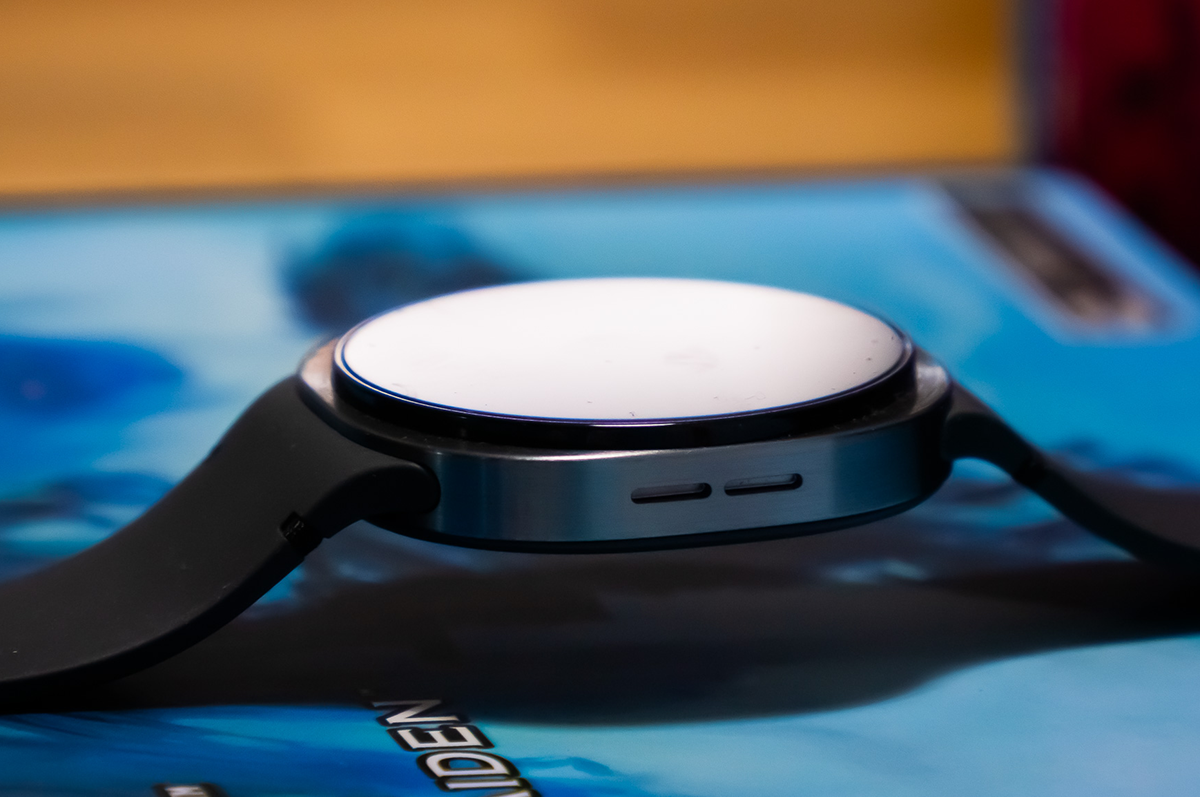
Where the Galaxy Watch 7 came in more varied colours, the sequel settles for two of tech’s most tired tones: silver and graphite. As with previous models, the Galaxy Watch 8 is also available in either 40mm and 44mm sizes.
Regardless of which shade and size you settle on, you’ll benefit from an IP68 rating against splash and dust damage and 5ATM water resistance. Another common thread among every version of the Galaxy Watch 8 is the Exynos W1000 chipset responsible for powering the hardware here. This detail is distinct from the Qualcomm Snapdragon silicon you'll find in most other premium Android smartwatches nowadays, but it should be said that that difference isn't necessarily as meaningful as the one between Samsung and Qualcomm's mobile processors.
Mo' metrics, mo' problems
Like its contemporaries, the Galaxy Watch 8 is powered by a combination of the latest version of Google Wear OS paired up with Samsung's own One UI skin. Meanwhile, in terms of fitness tech, the wearable supports heart rate, GPS, sleep, blood pressure, and ECG tracking.
In addition, the Galaxy Watch 8 also comes with support for antioxidant index tracking. This feature allows you to measure the level of carotenoids in your skin, which can correlate to the amount of fruit and vegetables in your diet. For all the novelty that comes with finding a fresh new way for a wearable to tell you to treat your body better, the underlying value of this feature isn’t all that different to any of the other dozen sensors in the mix here.
That said, there are a few caveats here. For instance, some fruit and vegetables translate into higher levels of carotenoids while others produce relatively fewer. In addition, it can take weeks for carotenoids to make their way into your skin. Any result you get is probably going to be a few weeks out of date. Perhaps most importantly, making use of this feature involves taking your Galaxy Watch 8 off your wrist for a few minutes. That extra friction almost guarantees that most users probably won't bother to make use of it all that often.
Still, even with those catches and shortcomings, it’s hard to get too mad at Samsung for trying to do something different with hardware that was already there. On some level, I think people buy into smartwatches and fitness trackers because they like seeing different aspects of their lifestyle quantified into numbers that they can keep an eye on or try to manipulate. This is another one of those, and I think that if you’re a metrics gremlin, you’ll probably get a kick out of it even if you don’t get all that much usable data.
Set-and-forget software experience
The Galaxy Watch 8 was lean enough that I quickly found myself forgetting I was wearing it. My recollections when it comes to the setup are similarly foggy. Like any other recent Samsung wearable, this is handled via a dedicated app. There are some fundamental drawbacks to this approach, but, for what it’s worth, I found the Galaxy Watch 8 so smooth to set up that I genuinely struggle to remember all that much about the (presumably straightforward) process at all.
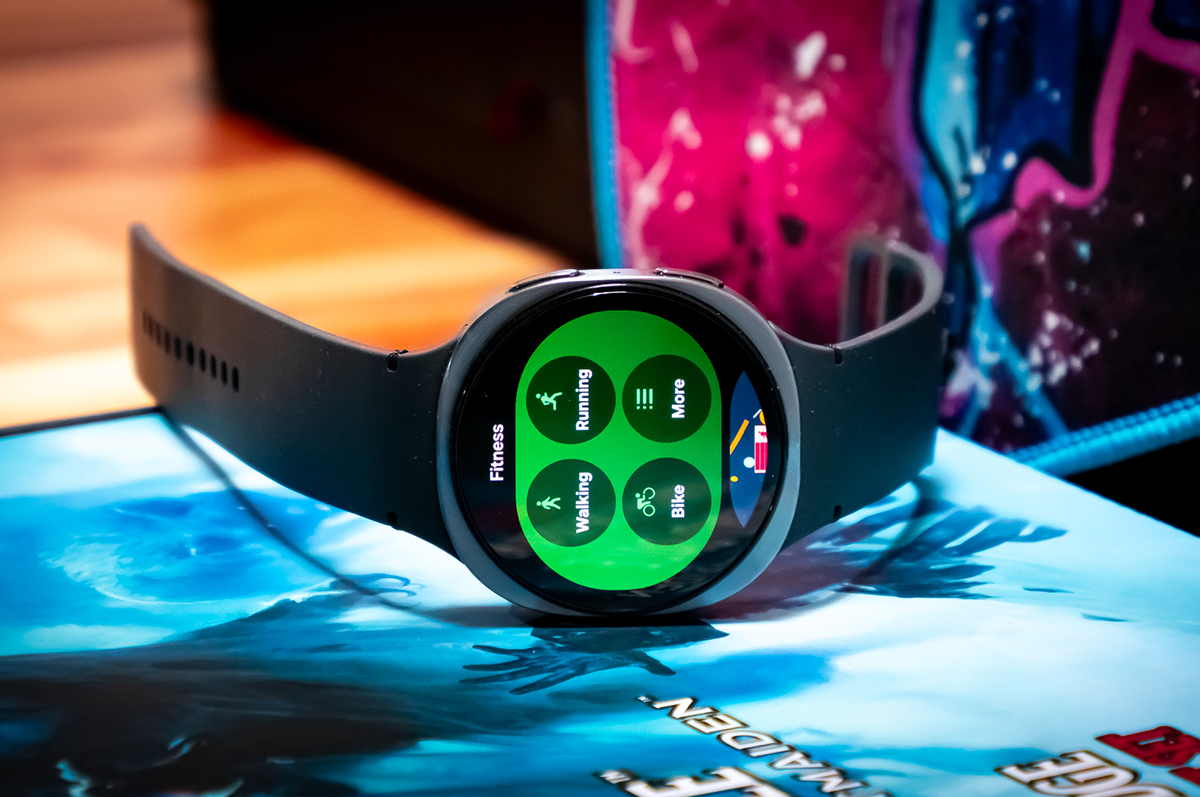
Wear OS has smoothed out the differences between the quality of the software experience attached to most smartwatches that aren��t made by Apple, so there’s little to write home about when it comes to the one offered by the Galaxy Watch 8. If you’ve used any recent Wear OS device, you’ll probably feel right at home.
Even if the overall roster of watchfaces found in Samsung's Wear App isn't as deep or striking as those found with the Apple Watch, Samsung has made it fairly easy to tinker with them and create something that better suits your style.
Still, even if it’s a little light on surprises, Samsung's latest smartwatch was fast and intuitive to use from the first moment. On a daily basis, the Galaxy Watch 8 is just easy to like. It’s easy to recommend. All this is to say that whatever points Samsung is losing in originality here, it handily gains in ease of use.
The Galaxy Watch 8 mostly works the way you'd expect. It's comfortable to wear and it ticks pretty much all the boxes you'd want it to in terms of features.
You wear the watch. You record your workouts. You look at the data and learn more about how you're tracking when it comes to your respective fitness goals. Compared to other Android premium wearables, the battery life offered by Samsung's latest was long enough that I had little worries about leaving it on overnight. Whenever I did need to charge the hardware back up, it didn't take too long. If you want something more heavy-duty, that's what the Galaxy Watch Ultra is for.
The one area where I do feel like Samsung could be a little more competitive, though, is price. The Galaxy Watch 8 feels nice and nails the feel-factor you associate with premium tech. However, I’d happily trade some of that away for a thriftier asking price. At a starting price of $649, this feels like a luxury.
If Samsung could find a way to get something close to this hardware under $499, it’d be a no-brainer for anyone already dabbling with the brand’s broader ecosystem of devices. I guess that’s more or less where the Galaxy Watch FE fits in. At the same time, though, I can’t help but wonder if Samsung is limiting the appeal of its wearables by pinning their price to that of their biggest competitor rather than undercutting them.
Samsung Galaxy Watch 8 - Final Thoughts
Despite the new design, it should be fairly obvious that Samsung hasn't reinvented the wheel with the Galaxy Watch 8. That’s not necessarily going to be a deal-breaker for most consumers, though. For all that you might be missing out on here in terms of innovation, Samsung has done a great job making it faster and easier to tap into the value that the hardware is capable of providing, whether it's smooth integration with a Galaxy smartphone or comprehensive fitness tracking.
The Galaxy Watch 8 doesn't set a new benchmark, but it does hit its mark.
Fergus Halliday
Digital Content Editor

Related Articles


