
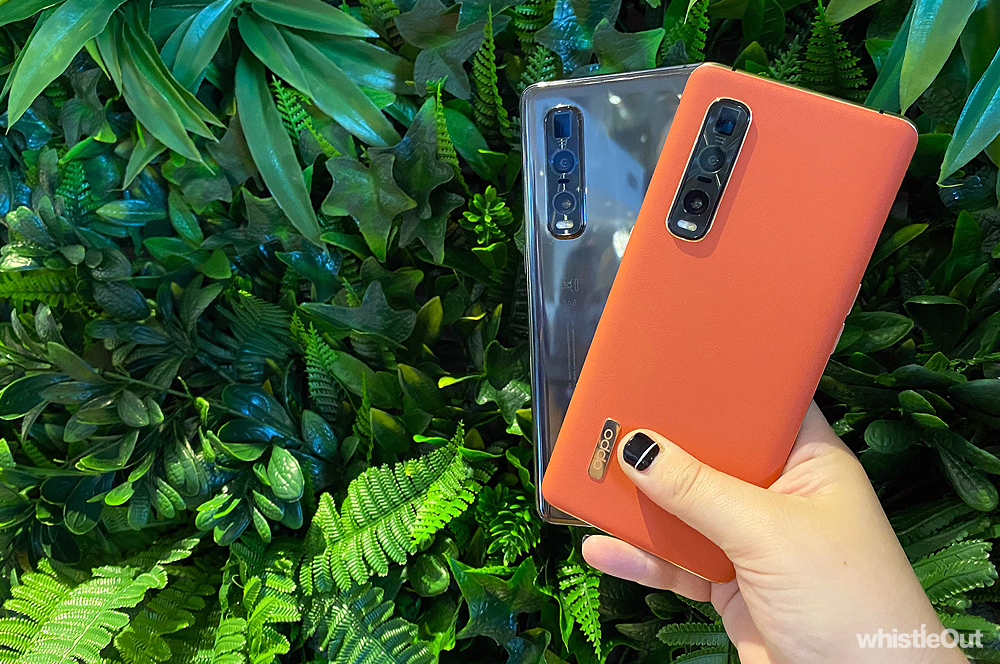
At first glance, OPPO's Find X2 Pro looks like it could have everything you'd want in a smartphone. There's a clear focus on three core pillars: camera, display, and battery life. You know, the things everyone cares about in a smartphone. While it's hard to evaluate a phone from a brief hands-on, my experience has left me eager to spend more time with the Find X2 Pro. And better yet, it costs less than you'd expect.
The Find X2 Pro camera configuration is made up of three rear-facing cameras: a 48MP primary lens, a 48MP ultra-wide lens, and a 13MP periscopic telephoto lens with up to 10x hybrid zoom and 60x digital. While that's less lenses than we're seeing on some phones these days, the Find X2 Pro's camera is promising from the get go.
Renown camera sensor tester DxOMark gave the phone a score of 124, which puts it in equal first place alongside the Xiaomi Mi 10 Pro. For comparison, the excellent iPhone 11 Pro camera racked up 117 points, but it is worth noting that DxOMark hasn't scored any phone in the Galaxy S20 family yet.
It's always important to take DxOMark scores with a slight grain of salt - they tend to focus on pure sensor quality rather than real world usage - but they're still a good indicator of just what a smartphone camera is capable of. And from a brief test shoot, the Find X2 Pro should hopefully live up to the hype.
Photos taken by the primary camera had a nice amount of dynamic range and depth of field, and the phone tended to focus quickly. The zoom lens seemed to work well, but as with all longer range smartphones, requires some stabilisation for the best results. Even a tiny shake of your hand is magnified significantly as you zoom in with a camera, which means the slightest movement can change the composition of your shot.
Less dramatic movements can still be enough to add a touch of motion blur to your photo, which I noticed with some of the zoomed images I snapped with the Find X2 Pro. Zoom quality seemed roughly comparable to the Galaxy S20 Ultra, but a little softer. Of course, I'll reserve judgement until I've had more time with the Find X2 Pro.
15 minutes or so of taking photos in a reasonably well-lit environment isn't really enough to offer a final verdict on camera quality. Especially given the demo units weren't running final software. I'm very interested to see how the Find X2 Pro performs in darker environments, as OPPO is touting an upgrade lowlight photography mode as one of the key new camera features.
Here are a few samples from the primary camera:





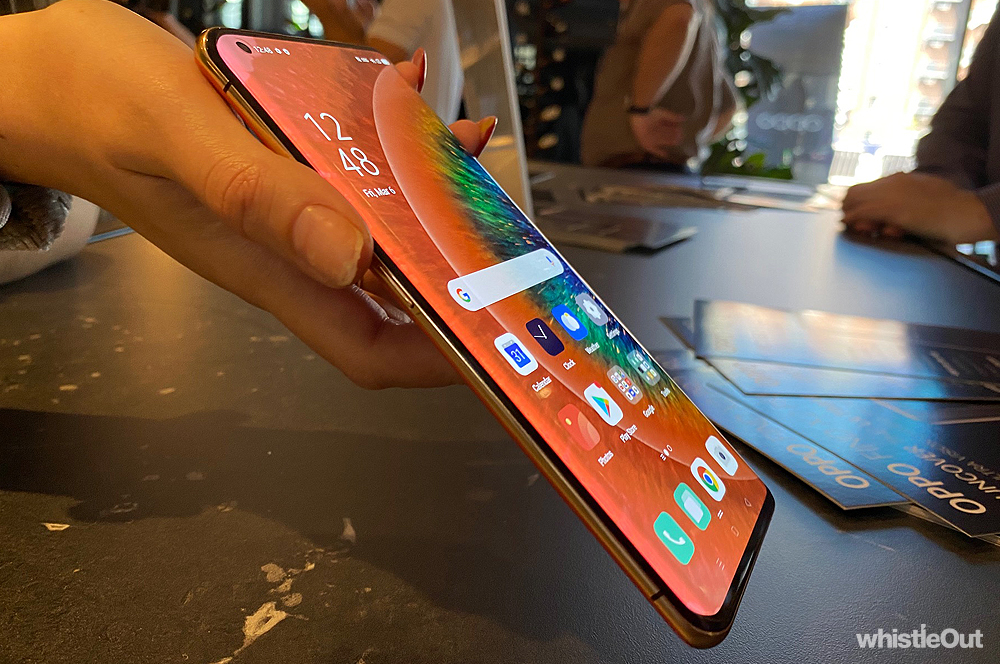
OPPO describes the Find X2 Pro display like a "cinema in your pocket". It has about every tech spec you'd want in a modern display, and more. The screen is a 120Hz panel with 10-bit colour in Quad HD. In English, that means it's a silky smooth high resolution screen that can display a billion colours. On first impression, it sure seems like a nice screen.
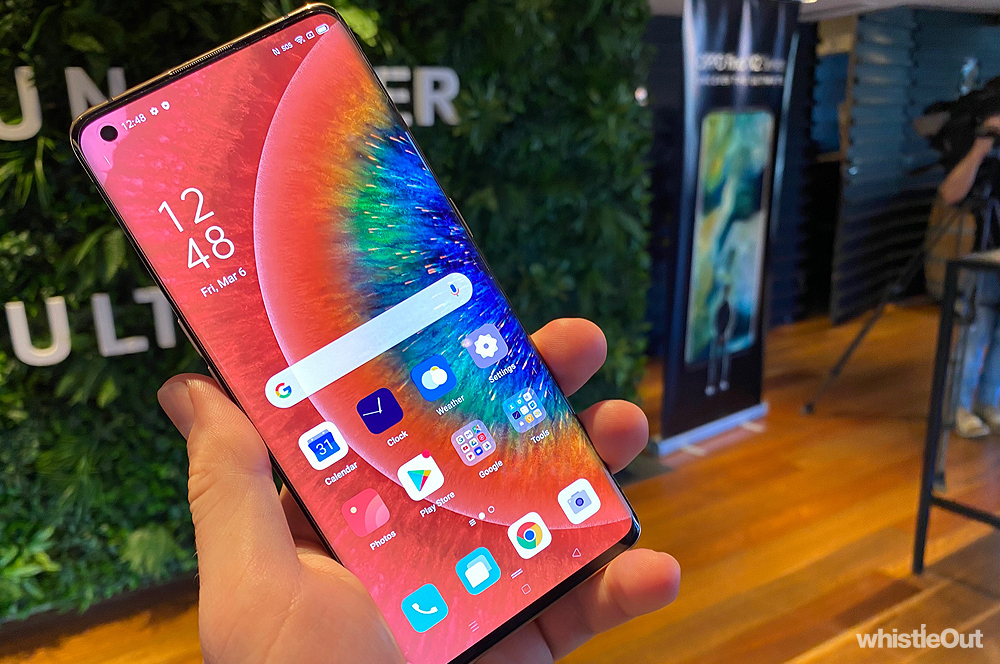
There's also a few software tricks behind it. OPPO says the phone can upscale both the frame rate and dynamic range of video content to match the screen's capabilities. For example, if you're watching Standard Dynamic Range 30 FPS video, the Find X2 Pro can theoretically use some software sorcery to make it seem like you're watching HDR 120 FPS video. I didn't get a chance to test this out, but it could be a boon to anyone who loves watching sports on their phone. Or any fast-paced content where clarity is important.
In terms of battery, the Find X2 Pro packs a sizeable 4,260mAh cell. That's not too unusual these days, but OPPO has paired it with what should be very fast charging. When using the bundled charger, the company says you can go from flat to full in just 38 minutes, or from flat to 40% in 10 minutes. While I didn't get a chance to test out charging times, ludicrously fast charging worked as promised on OPPO's R17 Pro.
What I'm more curious about is how battery will fare day-to-day, especially given the 120Hz display. When testing the Galaxy S20 Ultra, I found using the smoother display setting cost me at least an hour of screen time compared to using the 60Hz setting. Fast charging is certainly a nice option to have in a pinch, but it also relies on you always having access the charger the that comes with your phone. It's not really a substitute for a long lasting battery.
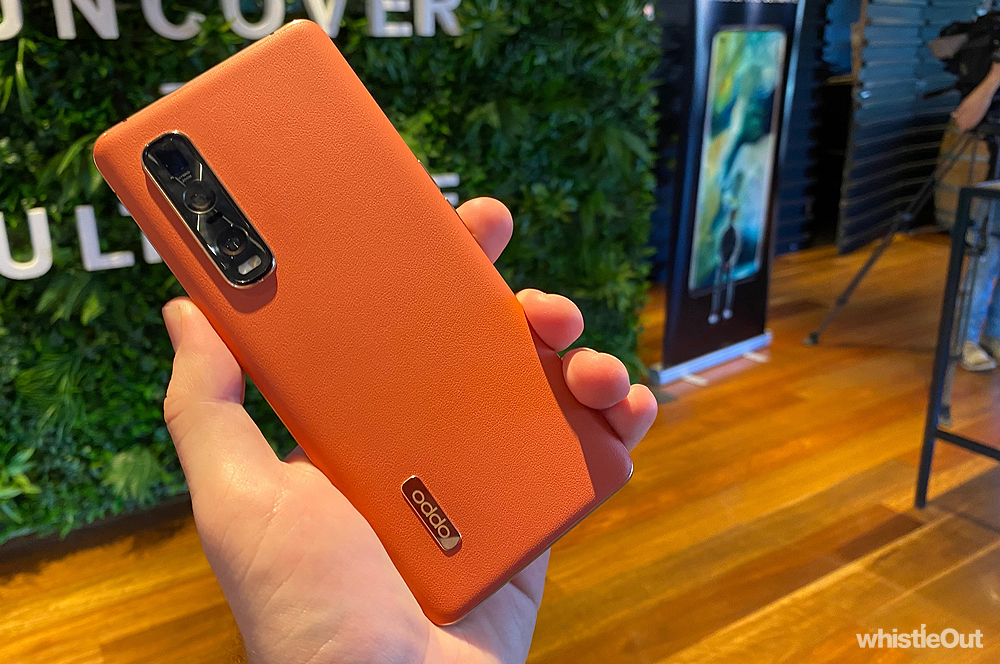
Interestingly, the Find X2 Pro's design is a little more conventional than what we've seen on past OPPO flagship devices. It eschews the pop-up camera of the original Find X and Reno 5G for a camera cut-out in the top left-hand corner of the display. While the Find X2 Pro doesn't quite have the same initial wow factor, the lack of moving parts means the handset is certified IP68 for water-resistance - a feature missing from the two aforementioned devices.
None of this is to say the Find X2 Pro is without personality. One of the two finishes coming to Australia is an orange "vegan leather", which quite frankly, is hot as hell. Colour aside, the leather has a reassuring grippy texture to it, and reducing the amount of glass on the phone should make it less prone to breakage. It will definitely be interesting to see how the "leather" holds up over time, but OPPO says it's been treated to prevent oil and water damage.
While all of the above has me feeling rather optimistic about the Find X2 Pro, it's killer feature could be price: the phone will retail for $1,599 outright with 512GB of storage when it launches in Australia. Don't get me wrong, that's not cheap, but for comparison, a 64GB iPhone 11 Pro will set you back $1,749 and a 128GB Galaxy S20 Ultra will cost you $1,999. On paper, the Find X2 certainly sounds like a bang-for-buck proposition, albeit on the premium side of the scale.
Alex Choros

Related Articles


