

Oppo Find X Review: The Verdict
The Oppo Find X is a superb phone with most of what you'd expect from a premium tier smartphone. Though there are a few common features missing though. Some of these are just nice-to-haves, but others could be considered essentials.
What we love
- Sliding camera panel is much more than a gimmick
- Superb display
- Face recognition is excellent
What could be improved
- No NFC for mobile banking
- No micro SD expandable storage
- Not water resistant
- No fingerprint scanner
The essentials
- Performance: As fast as any Apple or Samsung smartphone
- Battery: Lasted for two full days of medium use and comes with a superfast VOOC charger.
- Screen: A superb screen that alone justifies the higher price tag
- Camera: Better than most, but lacks the punch of the best cameras from Samsung, Google and Huawei.
80/100
$1099
- 6.42 QHD display
- Qualcomm Snapdragon 845
- 128GB storage, 8GB RAM
- 16MP+20MP rear-facing, 25MP front-racing cameras
- 3730mAh battery
It'd be easy to write off the Oppo Find X as phone with a gimmick, but after using the phone for a couple of weeks, trust me when I say that this is a phone that demands a closer look. Especially if you were about to lay down over $1000 on similar smartphone from Apple, Samsung or Huawei.
If you haven't come across the gimmick I'm referring to, it's a pretty neat trick. In an effort to make the front panel of the phone entirely screen, Oppo has hidden the front and rear facing cameras inside the phone, atop of panel that is mechanically raised and retracted as needed. Like the iPhone X, the Oppo Find X doesn't have a fingerprint reader, relying on the sliding panel to reveal the camera and scan your face every time you unlock the phone.

This sounds like a slow, annoying way to unlock the phone (something Oppo claims we do 100 times each day). But, it's not slow at all, and it's actually kind of cool. When you turn on the screen the camera comes straight up, the scan happens and the screen is unlocked before the camera has time to disappear again. It's not quite as fast as a fingerprint scanner, but it's not slow enough to feel much different.
So far several phone makers have taken a crack as face recognition, with mixed results. Apple's Face ID is the gold standard and is mostly seamless and error-free. Samsung has what it calls 'intelligent scan' which is a combination of face and iris scanning, but it doesn't work well at all. Placing the Find X on this spectrum, the face recognition here is much closer to Apple's Face ID. It's isn't flawless, but it works most of the time. It can scan your face at acute angles and even in dark environments. Strangely the place I had the most problem with the face scanning with outdoors on a really sunny morning. But when you run into difficulties like this, you can always fall back on a PIN code to unlock your phone.

Once unlocked, the Find X is a pleasure to use. It has a Qualcomm Snapdragon 845 processor and 8GB RAM, making it one of the most powerful phones in market today. It comes with either 128GB of 256GB of storage, and Dual SIM card slots for those of us who like to have two separate phone numbers, which is great when you are travelling.
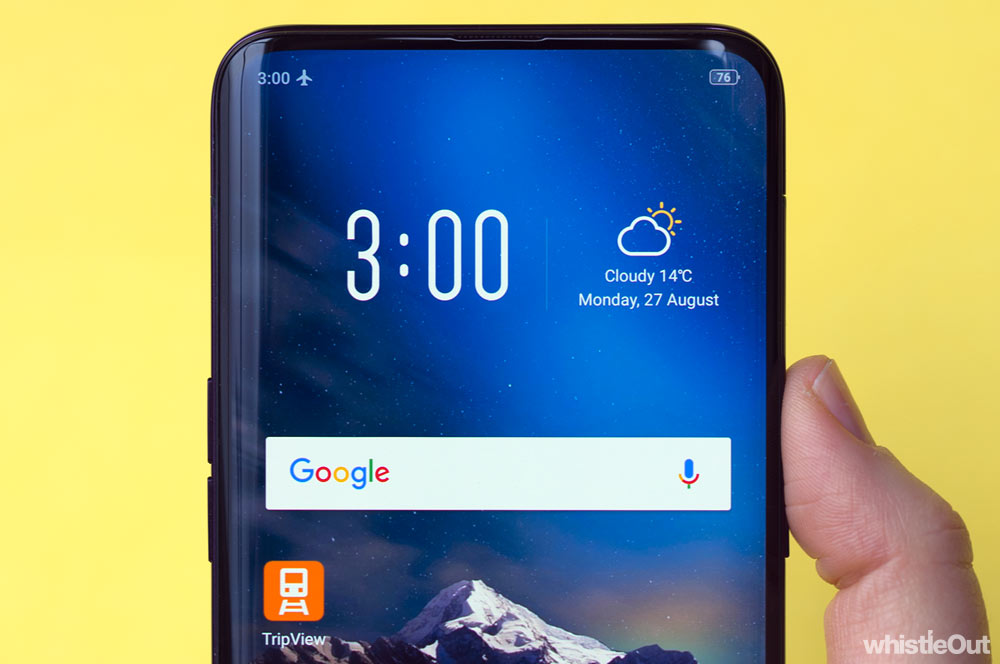
But it is the outstanding 6.42-inch AMOLED display which will really get your attention. I currently have the Find X sitting beside the (more expensive) Samsung Galaxy Note9, and I far prefer the screen on the Find X. It is brighter, more vibrant, and equally sharp and crisp.
To keep the lights on, Oppo includes a big 3730mAh battery, which is one of the biggest batteries in a phone today. Thanks to efficiencies in the Oppo software, we managed to get through two full days between charges on medium-use days. If you're a power user, you'll be glad to know that you get a fast charger in the box with VOOC fast charging tech, which Oppo claims can charge the battery in just 35 minutes.
The rear-facing camera array is comprised of 20-megapixel and 16-megapixel image sensors, designed to offer a zoom option, like many smartphone cameras these days. The lens are revealed with the pop-up mechanism mentioned above, and the camera interface will look familiar to anyone who has used an iPhone recently.
The camera does a good job of taking photos under most lighting conditions. The image sensor in the 16-megapixel lens (which is the primary lens) has slightly larger pixels than its companion, which gives it an edge when there is less light in a scene. Our test photos lack the vibrancy of shots we recently took with the Samsung Galaxy Note9, but overall we're impressed.





What's missing in the Oppo Find X?
In general, we're really happy with the phone you get with the Oppo Find X, but it does lack a number of elements we'd expect to see in a phone at this price range. A 3.5mm headphone jacks is one component that we are seeing less and less these days, but one we still like to have where possible. Likewise, a Micro SD card for storage expansion is also absent, although Oppo generously includes 128GB of internal storage..
While we're impressed with the accuracy and speed of the face recognition, it would still be nice to have a fingerprint scanner as an option.
Two more unusual exclusions, especially in a phone which costs over $1000, are water resistance and NFC. I'm guessing that the moving parts in the Find X make it much more difficult to seal that most smartphones, but we all need clumsy-insurance, especially with a slippery glass phone, like the Find X.

Not having NFC might not seem like a big deal, but for me personally, it is a deal breaker. No NFC means no cashless mobile banking, which is increasingly important in Australia. I tap-to-pay with my smartphone multiple times each day, it makes the Find X a no go as someone who relies on an NFC chip daily. The reason that the Find X (and a number of Oppo handsets) don't have NFC is because they don't use NFC for payments in China; instead they use QR codes for services like WeChat Pay. Australia is a comparably tiny market compared with China, but it would be nice to see localised variants of Oppo phones with NFC in the future.
Who is the Oppo Find X for?
Unlike the majority of the Oppo phone range, the Find X is not a cheapie. At $1099, it is not far off the recommended retail price of the Samsung Galaxy S9 or Apple iPhone 8. Oppo is not luring you away from the big brands with price, but when the chance to try something completely new. For the most part, it is a big success.
If you buy an Oppo Find X, you will get a supercharged phone, with a big, brilliant screen and the enviable combination of good battery life and lightning fast charging. But there is also a number of things missing that you might expect to find in a phone of this calibre. Most people will be able to live without the various missing features, but others, like me, will need to look elsewhere for a phone that does everything they need it to do.
Good alternatives to the Oppo Find X?
Apple iPhone X
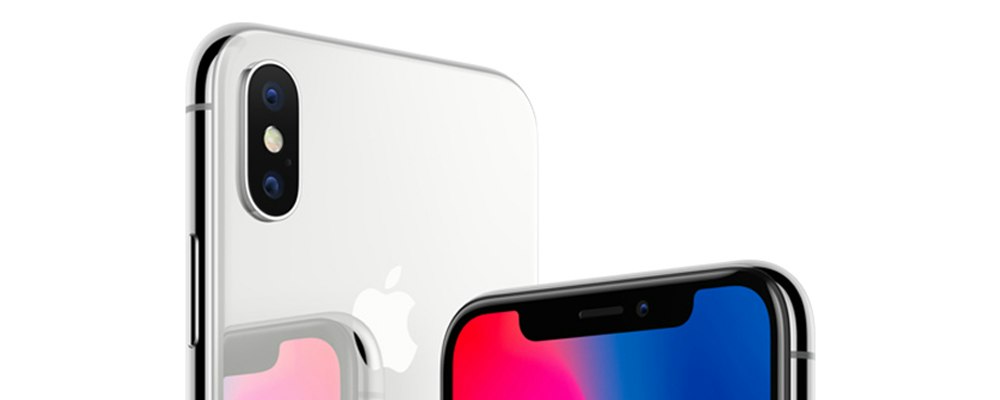
If you're after tech on the bleeding edge, you're best alternative to the Oppo Find X would be the Apple iPhone X. You get the same face recognition features (though Apple's FaceID is better), but you will save hundreds of dollars choosing the Oppo instead.

Huawei P20 Pro
The Huawei P20 Pro has the same $1099 price tag as the Find X, and is easily the best value flagship smartphone on the market. You'd choose the Huawei if your number one priority is the quality of the camera, as the P20 Pro is best in class.

Samsung Galaxy S9
The Samsung Galaxy S9 is one of the best phones of 2018, and has everything the Find X has, a bit more. And, because it is a little older, you can probably buy one outright for less than the $1099 asking price of the Find X. But to be fair, you'll be able to buy the Find X for less than its suggested retail price if you know where to shop.
Joseph Hanlon

Related Articles


