

It's said that any sufficiently advanced technology is indistinguishable from magic, and this is especially true in the case of the Huawei P30 Pro. There's some serious witchcraft happening here.
The P30 Pro, for most intents and purposes, is a Mate 20 Pro with a more impressive camera. Given the Mate 20 Pro is currently considered one of the best camera phones around, this is no easy feat. Yet despite there being only six months between the two devices, the P30 Pro feels like a significant step forward. It's a camera that can genuinely see in the dark, and that feels magical.
Read our full Huawei P30 Pro review here!
You can still capture a bright, usable photo in extreme lowlight situations. Where other phones simply capture a dark mess, the P30 Pro delivers a good shot.

The following photo was taken in a room with almost no light (and no flash) - I could barely see the model. It took a bit of time for the P30 Pro to find focus and not every take was as sharp as this one, but I've never seen a phone do so much with so little light.

What is this sorcery?
This next photo was taken in the back of a moving cab in close-to-complete darkness. Once again, the P30 Pro captured more detail than my eyes could actually see.

For comparison, the below shot is from an iPhone XS:
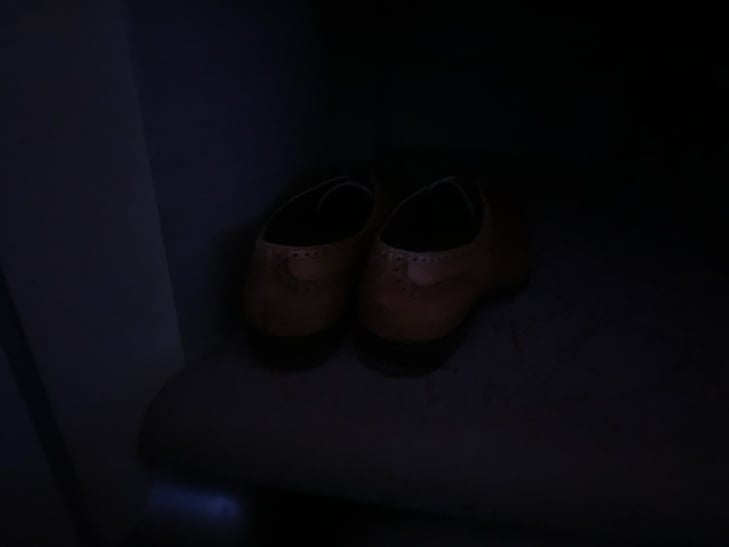
And this one is from the P30 Pro:
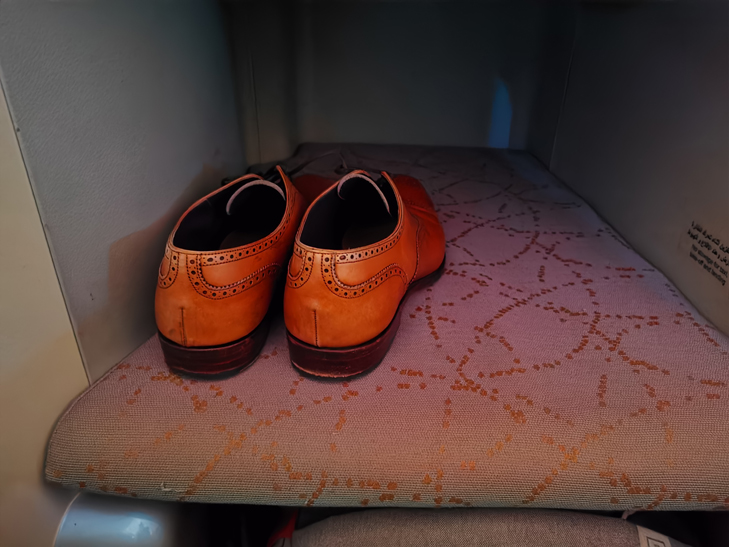
The difference is literally day and night.
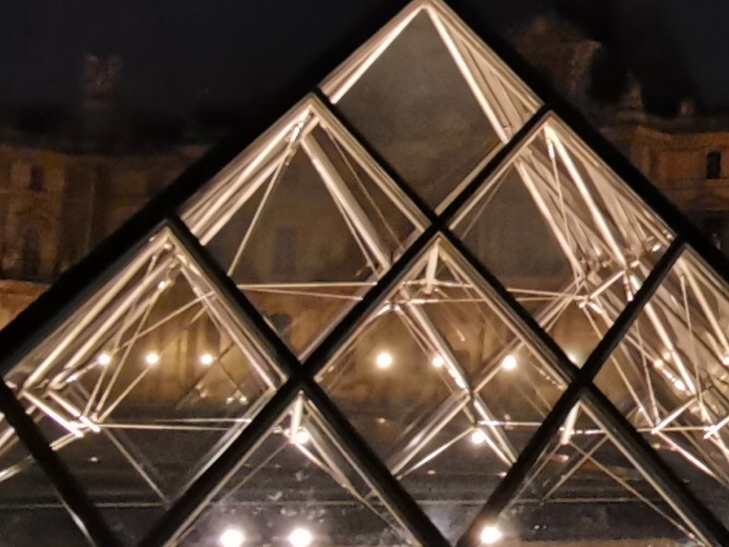
If you want an even more dramatic lowlight shot, the P20 Pro's Night Mode is back. Night Mode uses exposure bracketing to get a more detailed image: the P30 Pro will take multiple photos at different exposures over a short period of time and stitch them together to provide extra pop and a wider dynamic range.
Night mode is off here:

And on here:

The long exposure on Night Mode - typically around six seconds - can result in some blur in your photo, but the P30 Pro's stabilisation and stitching software seem to be able to compensate for hand shake reasonably well most of the time. Here's a 100% crop of the previous image:
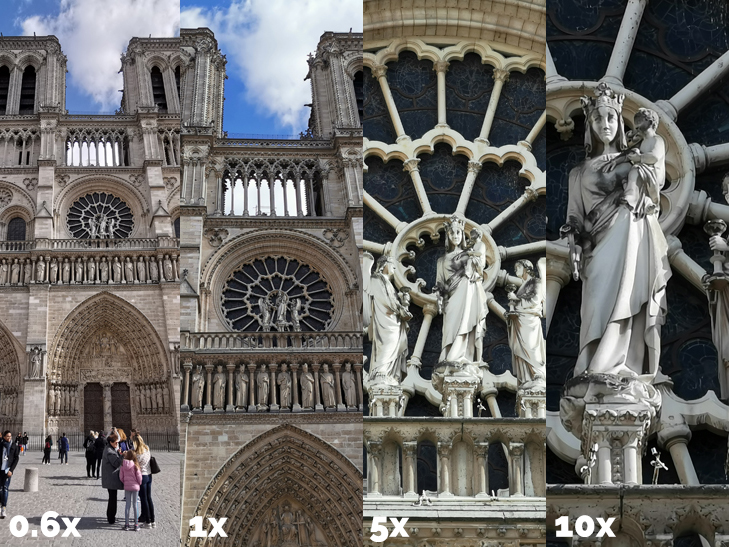
Improved zoom is the P30 Pro's other big new camera feature. The telephoto lens uses a periscope design to fit a longer lens into phone's body without adding thickness - it's been rotated by 90 degrees, and a prism is used to refract light into it. This allows for 5x optical zoom (where the lens does all the work), and 10x hybrid zoom (where software is used to zoom in beyond what the lens is physically capable of).
Shots at 5x zoom are close to on par with the P30 Pro's primary lens. You'll need relatively steady hands to get a sharp shot in lowlight (people are exceptionally tricky to capture), but otherwise, 5x shots tend to look great.


Shots at 10x zoom lose a bit of detail, but are definitely an improvement over what you'd get with traditional digital zoom. Once again, these definitely look better the more light you have available.
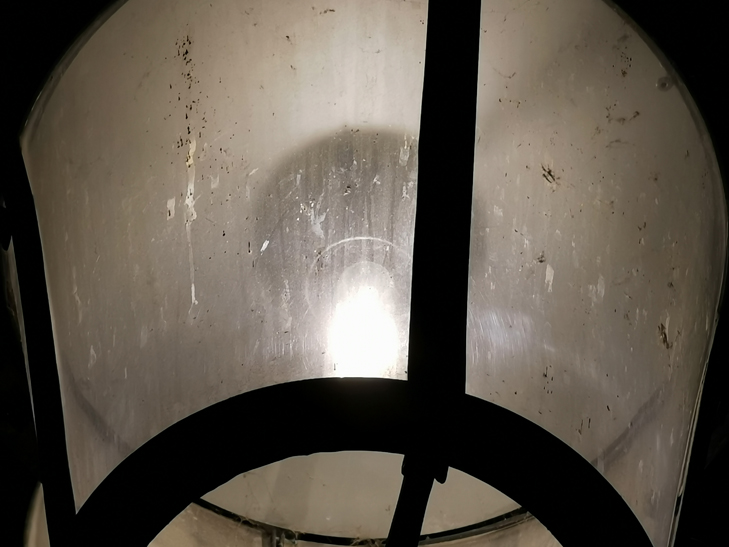

You can push the P30 Pro up to 50x digital zoom. It's probably not the best idea - it's very hard to stabilise without a tripod and the results are a bit average - but it's like nothing we've seen on a phone before. This 50x zoom shot of the moon could be sharper, but it's incredible that it came from a smartphone.

If close ups aren't your thing, the P30 Pro also has an ultra-wide angle lens that zooms out, rather than in. The ultra-wide angle lens still has some slight fisheye distortion to it, but much less than we've seen on comparable devices.


Even when you don't push past 10x zoom, the P30 Pro is an incredibly versatile camera. The amount of range you get between the ultra-wide and the telephoto gives you a whole lot of photographic possibilities.
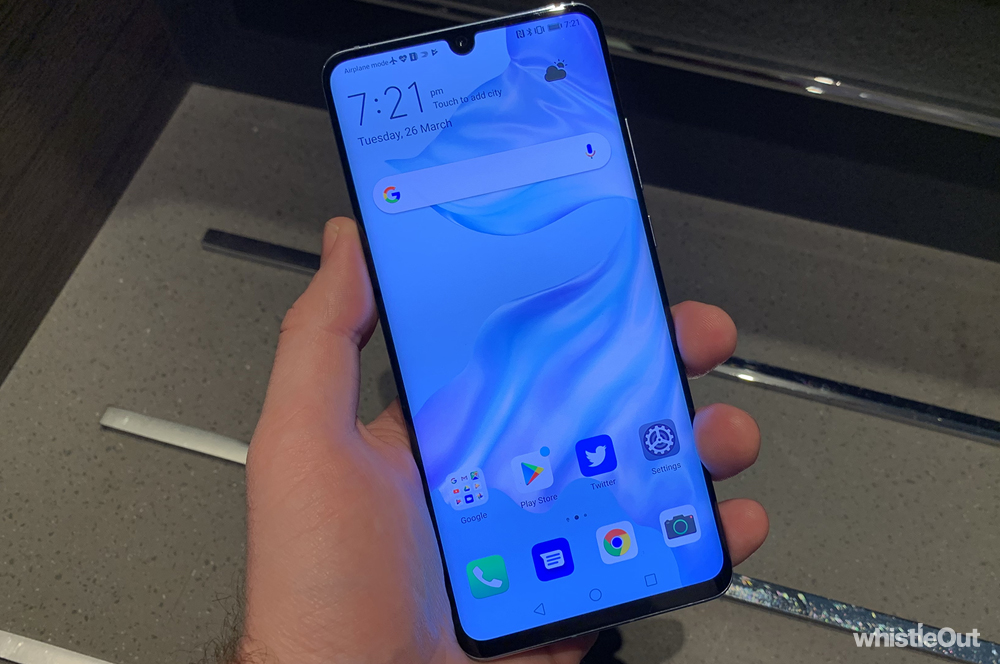
While there's plenty to say about the P30 Pro as a camera, there's not quite as much "new" when it comes to the P30 Pro as a phone. It's a flagship smartphone in almost every sense of the word: it looks and feels nice, it runs fast, the battery should last two days, and there's no headphone jack. Conversely, not everyone will like the curved screen and Huawei's heavily customised take on Android can be divisive thanks to how much it can deviate from stock Android at times.
I haven't spent enough time using the P30 Pro to make a final judgement, but it seems to deliver everything you'd expect from a great smartphone in 2019. At the same time, this almost doesn't matter. You're not going buy the P30 Pro because it's capable smartphone, you're going to buy it because it's an amazing camera.
A few more Huawei P30 Pro camera samples




We've got even more Huawei P30 Pro camera samples here.
What's the difference between the Huawei P30 Pro and the Huawei P30?
The standard P30 may share part of its name with the P30 Pro, but it's a significantly different device. The screen is smaller, and flat rather than curved. It's not water-resistant, there's no reserve wireless charging, it has a smaller capacity battery. Despite this, Huawei says the P30 should still last two days.
Other than price, the most significant differences between the P30 and P30 Pro are related to camera. While the pair share a lot of the same camera tech, the lens configuration is a little different. The P30 Pro only has three camera lenses - you miss out on the Time of Flight lens used to capture additional depth and detail. There are also some slight spec variations between the three lenses the pair share.
The P30 Pro's crazy zoom is also absent. The P30's 8MP telephoto lens isn't periscopic, so optical zoom is capped at 3x, hybrid zoom at 5x, and digital at 10x.
In addition, the P30 has lower light sensitivity, so lowlight photos may not look quite as bright.
Here's how the pair compare in terms of specs:
Key Specifications
| Huawei P30 Pro | Huawei P30 | |
|---|---|---|
| Display | 6.47-inch OLED 1080p+ | 6.1-inch OLED 1080p |
| Processor | Kirin 980 | Kirin 980 |
| Storage | 256GB | 128GB |
| RAM | 8GB | 6GB |
| Rear-Facing Camera | 40MP + 20MP + 8MP + ToF | 12MP + 16MP + 8MP |
| Authentication | Face unlock + in-screen fingerprint reader | Face unlock + in screen fingerprint reader |
| Battery | 4,200mAh | 3,650mAh |
| Water-Resistance | IP68 | N/A |
| Price | $1,599 | $1,099 |
How much will the Huawei P30 Pro cost?
The Huawei P30 Pro will set you back $1,599 outright through JB Hi-Fi, Harvey Norman, Mobileciti, and Kogan. If that’s too much to drop in one go, you'll be able to get the phone on a plan through Telstra, Optus, or Vodafone. Customers who pre-order before April 15 get a bonus Sonos One smart speaker, valued at $299.
When can I buy the Huawei P30 Pro?
The Huawei P30 Pro will be available from April 16.
WhistleOut travelled to Paris for the launch of the Huawei P30 as a guest of Huawei
Alex Choros

Related Articles


