iPhone XS Max 512GB Prices & Plans

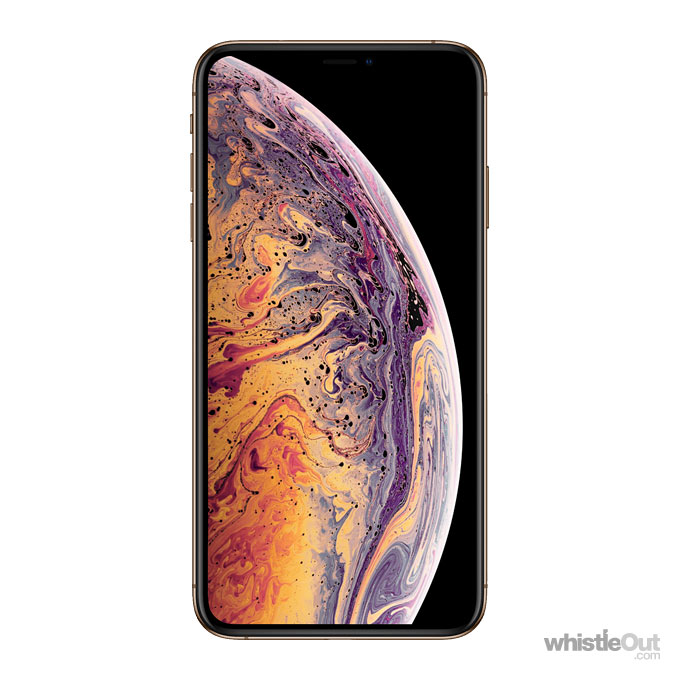

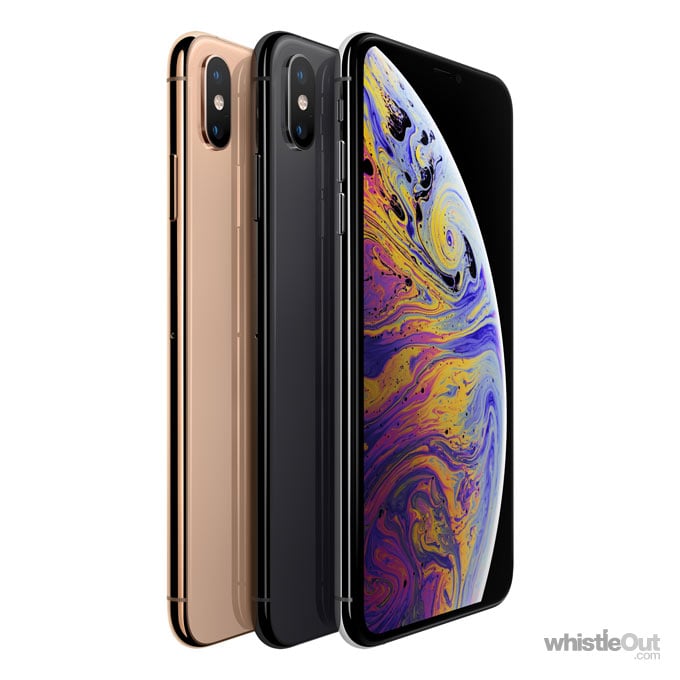


Features
- 6.5 inch display
- Rear Cameras: 12MP, 12MP
- Front Camera: 7MP
- Apple iOS 12
- 512GB int. memory (useable capacity will be less)
- Water and Dust Resistance IP68
- Released in September 2018
- 4GB RAM
- View full specs
Average Score
85/100
The iPhone XS and iPhone XS Max are great iPhones, but they're also very expensive iPhones. While Apple has refined the ...
WhistleOut
Read our full review
Compare Plans for the iPhone XS Max 512GB
 iPhone XS Max 512GB


Sorry, No Results Found :(
Sorry, we were not able to find any results that match your search criteria.
iPhone XS Max 512GB Specs
Display
| Type | All-screen Super Retina HD display with OLED Multi-Touch |
|---|---|
| Screen Resolution | 1242 x 2688 pixels |
| Screen Size | 6.5 inch (16.5 cm) |
| Touch Screen | Yes |
Camera
| Front |
|
|---|---|
| Rear |
|
| Flash Type | Quad-LED True Tone flash |
| Video Recording | 4K @ 24 fps, 30 fps or 60 fps; 1080p @ 30 fps or 60 fps; 720 p @ 30 fps |
General
| Release Date | September 2018 |
|---|---|
| Operating System | Apple iOS 12 |
| Processor Type | A12 Bionic chip with next-generation Neural Engine |
| Processor Speed | - |
| Graphics Processor Type | - |
| SIM Card | Nano-SIM, eSIM |
| Battery Capacity | 3174 mAh |
| Battery Features | Fast charging 15W |
| RAM | 4GB |
| Internal | 512GB |
| Expandable | - |
Physical
| Width | 77.4 mm |
|---|---|
| Height | 157.5 mm |
| Thickness | 7.7 mm |
| Weight | 208 grams |
| Material | Glass front (Gorilla Glass), glass back (Gorilla Glass), aluminum frame |
| Colours | Gold, Silver, Space Grey |
| Water and Dust Resistance | Yes, IP68 |
Features
| Intelligence | Siri |
|---|---|
| NFC | Yes |
| GPS | Yes |
| Sensors | Accelerometer, Ambient light sensor, Barometer, Face ID, Gyrometer, Proximity sensor |
| Audio Formats | AAC-LC, HE-AAC, HE-AAC v2, Protected AAC, MP3, Linear PCM, Apple Lossless, FLAC, Dolby Digital (AC-3), Dolby Digital Plus (E-AC-3) and Audible (formats 2, 3, 4, Audible Enhanced Audio, AAX and AAX+) |
| Video Formats | HEVC, H.264, MPEG-4 Part 2 and Motion JPEG |
Connectivity
| Maximum Data Speed | - |
|---|---|
| WiFi | 802.11ac Wi‑Fi with MIMO |
| USB | Lightning connector |
| Networks | 4G |
| Frequencies |
|
| Headphone jack | No |
| Connectivity Features | Bluetooth, Voice over LTE (VoLTE), Wifi-Calling |
iPhone XS Max 512GB Reviews
|
Positive
|
WhistleOut Review
Alex Choros (WhistleOut) |
|---|
iPhone XS Max 512GB Review

iPhone XS & iPhone XS Max Review: The Verdict
The iPhone XS and iPhone XS Max are great iPhones, but they're also very expensive iPhones. While Apple has refined the bleeding edge tech it introduced with the iPhone X to the point where it feels like the new normal, the hefty price tags mean they're not instantly the default buy for someone upgrading their iPhone.
What we love
- Excellent camera
- Facial recognition works very well
- Zippy performance
- One of the nicest smartphone displays around
What could be improved
- Very expensive
- No bundled fast charger or headphone dongle
- Battery life not as strong as some competitors
The essentials
- Performance: Top tier.
- Battery: A full day with an okay buffer. Won't get very far into a second though.
- Screen: Just lovely.
- Camera: Excellent! One of the best around
The iPhone X was always going to be a hard act to follow. In the year since Apple radically redesigned the iPhone, notched displays and facial recognition have become a mainstay of our modern smartphone vocabulary. Much like the original 2007 iPhone, the iPhone X was a blueprint that many have tried to replicate.
Despite countless imitations and homages at all price points and sizes, Apple has stuck to its guns with the iPhone XS and iPhone XS Max. They're refined versions of the phone they succeed, no more, no less. But while the pair are lacking in wow factor, a year of polish mean the iPhone XS and iPhone XS Max feel less like a bleeding edge beta and more like the new normal.
Unfortunately, the new normal is more expensive than ever.

Size doesn't matter
Before we continue, it's worth noting that the iPhone XS and iPhone XS Max are identical, with the exception of screen size and battery capacity. This is a change for Apple, but a welcome one. In past years, Apple's larger phones have had the benefit of a second rear-facing camera, and in some cases, more RAM. If you've wanted the best camera, you had to go big with a Plus model.
This time around, the iPhone XS and iPhone XS Max have identical hardware and identical cameras. Sure, the iPhone XS Max battery will last a touch longer than the iPhone XS battery, but not to the point where it will be a factor that defines your purchase.
In some ways, the pair are almost similar to a fault. Much like past iPhone Plus models, the iPhone XS Max can reveal extra information in some apps when you've got it in landscape (for example, your inbox and an email side-by-side), but otherwise, you tend to get the same thing, just bigger. So in short, all you need to pick is which size screen you'd prefer.
Here's a quick look at how the iPhone X, iPhone XS, and iPhone XS Max compare in terms of specs and price:
| iPhone X | iPhone XS | iPhone XS Max | |
|---|---|---|---|
| Display | 5.8-inch OLED | 5.8-inch OLED | 6.5-inch OLED |
| Resolution | Super Retina | Super Retina | Super Retina |
| 3D Touch | Yes | Yes | Yes |
| Material | Stainless Steel | Stainless Steel | Stainless Steel |
| Rear-Facing Camera | 12MP + 12MP | 12MP + 12MP | 12MP + 12MP |
| Processor | A11 | A12 | A12 |
| Storage | 64GB - 256GB | 64GB - 512GB | 64GB - 512GB |
| Water-Resistance | IP67 | IP68 | IP68 |
| Price | From $1,479 | From $1,629 | From $1,799 |
Tick, tock
It's no surprise the iPhone XS and iPhone XS Max aren't that exciting. "S" years have always been about refinement; the iPhone X was a radical redesign, and the iPhone XS and iPhone XS Max build on it. The usual hardware and camera improvements are here, but the biggest change is literally that there's also a bigger phone.
Apple's had a whole year to improve on what initially felt like a somewhat alien device. Facial recognition is faster, supports a secondary appearance (or person) and seems to have a lower failure rate. iOS has had a few improvements that make moving over to a home button-less iPhone more natural. And most apps have now been optimised to take advantage of the newish all screen design, even if there are a few stragglers.
Sure, if you're coming from an iPhone 8 or older, there'll still be a bit of a learning curve. It will take some time to get used to lack of a home button, gesture navigation (you swipe up to close an app now, for example), and the repositioned control centre (you'll swipe down from the right of the notch). It's just easier to get the hang of this time around. There's still a few improvements we'd like to see - like the ability to use facial recognition in landscape and the option to customise what is displayed on either side of the notch - but the day one iPhone XS experience is a much smoother affair.

The iPhone XS and iPhone XS Max are also more water-resistance this year, with a rating of IP68. This means they'll survive depths of two metres for up to half an hour, up from one metre last year. Apple says its tested against salt water, chlorinated water, juice, and more, but you will want to rinse off your iPhone with fresh water before letting it dry. As in past years, it's worth noting that water-damage is not covered by your standard iPhone warranty.
Of course, the iPhone XS and iPhone XS Max have all the obligatory yearly upgrades including an ever-so-slightly nicer OLED display, more RAM, and a faster, more efficient processor.
A more efficient processor means battery life improvements. Both the iPhone XS and iPhone XS Max will last a little longer than last year's iPhone X, and average users will comfortable get through the day with a decent buffer left. The pair do however pale in comparison to Android flagships such as the Huawei P20 Pro and the OPPO Find X, both of which can almost go two days in between charges.
The iPhone processor has actually had some serious changes this year, especially when it comes to its Neural Processing Unit (NPU) dedicated to artificial intelligence and machine learning. Apple says it can now complete 5 trillion operations per second, up from 600 billion. While these might seem like meaninglessly large numbers - and the improvement isn't necessarily something you'll notice day-to-day - the new NPU also improves photo and video performance.

What a clever camera
There's a lot more to smartphone cameras than the physical camera. All of the best smartphone cameras have great software behind them, and the best of the best are all using artificial intelligence and machine learning to keep improving photo and video quality.
The iPhone XS and iPhone XS Max use a combination of new software ("Smart HDR") and the NPU for computational photography. When you hit the shutter button, the new iPhones create a single image from a four frame buffer with several interframes while using a long exposure for shadow detail. In simpler terms, your photo is really a software generated image created by merging multiple images. The real world benefit is the iPhone XS is way better at taking great photos in adverse lighting.
In direct sunlight, you'll get less blowout and better balance if you've got a harsh backlight. In lowlight, images are sharper, brighter, and exhibit less noise. The iPhone XS also preserves more detail when it comes to capturing bright objects such as streetlights and digital signage that would blowout on last year's iPhone X. (For more details read our iPhone XS vs. iPhone X camera comparison here).

Portrait mode has been a recurring feature on dual camera iPhones since it was introduced with the iPhone 7. Using the two camera lenses in tandem, iPhones are able to simulate DSLR-like "bokeh", the tastefully out-of-focus background you get behind your subject you'd typically see on a high-end lens. While portrait mode performance hasn't changed much since last year, you're now able to adjust the amount of blur behind your subject (measured in f stops, from f/1.4 to f/16, for the camera nerds in the audience).
The effect is reasonably convincing, more intense blur can start to look a touch fake depending on the photo in the question. Portrait mode and depth control definitely work best for photos of people, but they can still do an alright job with objects.
One of the biggest camera improvements is the zoom lens. While the iPhone XS and iPhone XS Max are technically using the the same physical lens as last year's phone, smarter software has made it a lot more reliable. This is especially noticable when it comes to lowlight photography, where images are drastically sharper and clearer across the board. Here's a comparison:
Video quality has had a whole host of upgrades too. The most important is stabilisation; video is really, really, smooth. Even when you're shooting handheld, camera shake becomes almost unnoticeable - and I have super shaky hands.

Two SIMs are better than one
One of the interesting new features you get with the iPhone XS and iPhone XS is dual SIM support. Well, kind of. Rather than having a second physical SIM slot, the iPhone XS and iPhone XS Max have an eSIM as their secondary SIM card. An eSIM is rewritable SIM card that's built directly into the iPhone, so instead of popping open the SIM slot, you simply download a software SIM from your provider of choice.
At present, we're really not sure if Australian telcos will support this, given how cagey they've been about dual SIM phones in the past. Apple does not list any Australian carriers on its carriers that support eSIM page.
If the Australian telcos come to the party, or if you're travelling in another country with eSIM enabled carriers, if you get one of the iPhone XS models you'll simply be able to add another plan to your iPhone through an app or by scanning a QR code provided by your telco of choice. You'll be able to store multiple eSIMs in your iPhone, but you'll only be able to use one eSIM plan at a time.
Elephant in the room
It's impossible to talk about the new iPhones without discussing the all-time high prices. The 5.8-inch iPhone XS is pricier than last year's iPhone X thanks to our weak dollar, and the 6.5-inch iPhone XS Max starts at a whopping $1,799.
Prices increase with storage capacity, with the 512GB models topping out at $2,369, which is far more than I ever thought a company would charge for a phone. Of course, while these prices are genuinely shocking (and easy to make fun of, given the name), no one is forcing you to buy the 512GB model. In fact, you probably shouldn't buy a 512GB iPhone XS or iPhone XS unless you've genuinely exhausted a 256GB iPhone in the past or have more money than sense.
But no matter which iPhone XS model and storage capacity you'd prefer, it's a significant purchase. One that gets harder and harder to reconcile when there's a couple of product decisions designed to get you spend more.
There's still no headphone jack, and you no longer get a 3.5mm to Lighting adapter in the box. The iPhone XS and iPhone XS Max both support fast charging, but you don't get a fast charger in the box. A headphone dongle will cost you $15, while you're looking at an extra $104 to give your iPhone the fastest charge possible.
You could argue that neither are necessary, but nickel-and-diming on accessories that come standard on most other phones comes across as a bit anti-consumer, especially given the starting price for an iPhone XS is already one thousand, six hundred and twenty nine dollars.

We'd also love to see Apple include even just a basic case in the box, as has become increasingly common with Android OEMs like Huawei and OPPO. After all, it would be gut-wrenching to break a phone you've spent close $2,000 on, if not more.
Sure, Apple says the front and back glass are the most durable found in a smartphone to date, but glass is still glass, and there's no shortage of YouTube drop test videos that happily prove that point. It's always a shame to cover up sleek industrial design - and add a little extra size and weight to the iPhone XS Max - but it would be a bigger shame to shatter your expensive new iPhone.
Especially because repair costs are equally high. An iPhone XS out-of-warranty screen replacement is $448.95, which rises to $518.95 for the iPhone XS Max. "Other damage" fees come in at $858.95 and $928.95, respectively, so if you're not going to buy a case for your iPhone XS, you really should get AppleCare+.

Who are the iPhone XS & iPhone XS Max for?
Let's be fair, you probably already know if you're the kind of person who wants an iPhone XS. And if you can stomach the cost, you won't be disappointed - the iPhone XS and iPhone XS Max are a pair of highly polished devices where the only real issue is a battery life that falls short of some of their Android competitors.
It's just that cost keeps getting harder and harder to stomach.
With prices ranging between $1,629 and $2,369, it's hard to tell where hardware ends and Apple's margin begins. When you consider that a 512GB Samsung Galaxy Note 9 comes in at $1,799, it's important to ask questions about what exactly it is you're paying for. It can seem like Apple is seeing just how far it can push us.
While iPhone owners tend to be pretty loyal, settling for an iPhone XR, an older model, or maybe even an Android alternative doesn't seem like the worst idea in terms of saving some money. If you opt for a slightly less fancy iPhone XR instead (read more here), the only genuine loss is the second rear-facing camera. And the iPhone XR has its own benefits, including a longer battery life.
But if the price doesn't put you off, the iPhone XS and iPhone XS Max are a great update for anyone on an iPhone 7 or older. Your new device will be a massive upgrade. The pair are however too similar to the iPhone X - and even an iPhone 8 - to be a meaningful change for anyone on last year's devices. Well, unless you're the kind of person who needs the latest and greatest shiny thing, in which case you've probably already bought your iPhone XS.

iPhone XS & iPhone XS Max camera samples


I don't want an iPhone XS or iPhone XS Max, what else can I buy?

iPhone XR
If you want to spend less without compromising too much, the iPhone XR is the way to go. It starts at $1,229, and the only real sacrifice you make is the lack of a second rear-facing camera. Otherwise, you get the same fancy design, the same facial recognition technology, and the best battery life of any 2018 iPhone.

iPhone 7
If you really want to save money, the iPhone 7 is the cheapest iPhone around right now. It’s two years old now, but it's still a great phone, and Apple will keep supporting it with software updates for at least two or three years. Maybe more.
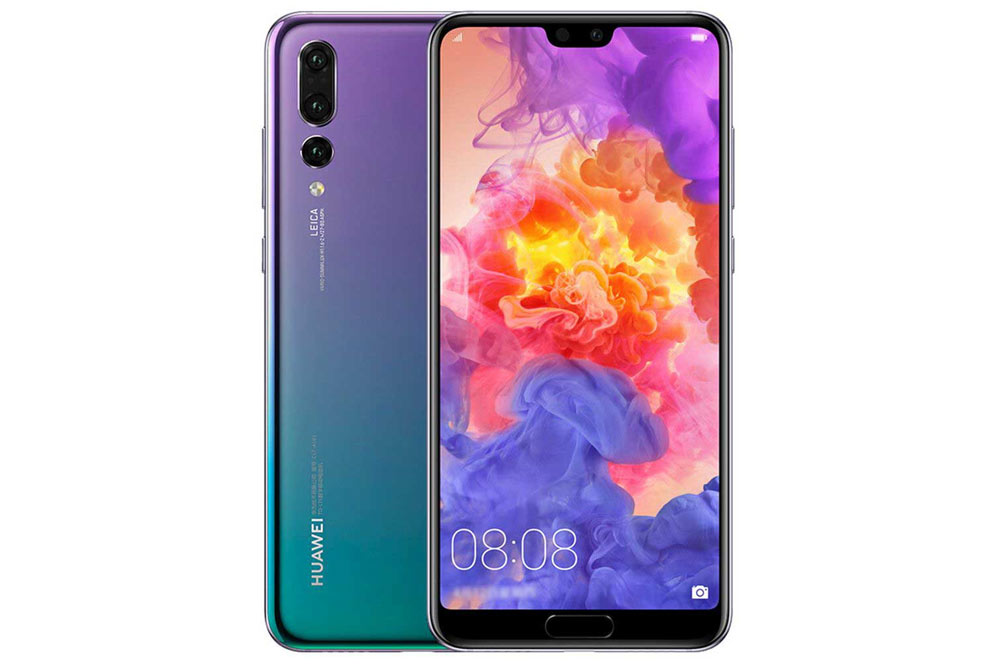
Huawei P20 Pro
If you're looking for an Android flagship alternative, the Huawei P20 Pro has an amazing triple camera setup, is available in a very sleek gradient finish, and will only set you back $1,099.
-
 iPhone 16 Plus 128GB6.7" / Apple iOS90/100
 -
 iPhone 16 Plus 256GB6.7" / Apple iOS90/100
 -
 iPhone 16 Plus 512GB6.7" / Apple iOS90/100
 -
 iPhone 17 256GB6.3" / Apple iOS90/100
 -
 iPhone 17 512GB6.3" / Apple iOS90/100
 -
 iPhone Air 1TB6.5" / Apple iOS75/100
 -
 iPhone Air 256GB6.5" / Apple iOS75/100
 -
 iPhone Air 512GB6.5" / Apple iOS75/100
 -
 iPhone 15 128GB6.1" / Apple iOS
 -
 iPhone 15 256GB6.1" / Apple iOS
 -
 iPhone 15 512GB6.1" / Apple iOS
 -
 iPhone 16 128GB6.1" / Apple iOS90/100
-
 iPhone 18 Pro 256GB6.3" / Apple iOS
 -
 iPhone 18 Pro Max 256GB6.9" / Apple iOS
 -
 iPhone 18 Pro Max 1TB6.9" / Apple iOS
 -
 iPhone 18 Pro Max 512GB6.9" / Apple iOS
 -
 iPhone 18 Pro Max 2TB6.9" / Apple iOS
 -
 iPhone 18 Pro 512GB6.3" / Apple iOS
 -
 iPhone 18 Pro 1TB6.3" / Apple iOS
 -
 iPhone 18 Pro 2TB6.3" / Apple iOS
 -
iPhone 17 256GB6.3" / Apple iOS90/100
-
 iPhone 17 Pro 256GB6.3" / Apple iOS80/100
 -
 iPhone 17e 256GB6.1" / Apple iOS
 -
 iPhone 17 Pro Max 256GB6.9" / Apple iOS80/100
 -
iPhone Air 256GB6.5" / Apple iOS75/100
-
 iPhone 16 Pro Max 512GB6.9" / Apple iOS
 -
iPhone 15 128GB6.1" / Apple iOS
-
iPhone 16 128GB6.1" / Apple iOS90/100
-
 iPhone 17e 512GB6.1" / Apple iOS
 -
iPhone 17 512GB6.3" / Apple iOS90/100
-
 iPhone 17 Pro Max 512GB6.9" / Apple iOS80/100
 -
 iPhone 17 Pro Max 1TB6.9" / Apple iOS80/100
 -
 iPhone 17 Pro 512GB6.3" / Apple iOS80/100
 -
iPhone 16 Plus 128GB6.7" / Apple iOS90/100
-
 iPhone 16e 128GB6.1" / Apple iOS75/100
 -
 iPhone 16e 512GB6.1" / Apple iOS75/100
 -
 iPhone 16 Pro Max 1TB6.9" / Apple iOS80/100
 -
 iPhone 16 512GB6.1" / Apple iOS90/100
 -
iPhone 15 256GB6.1" / Apple iOS
-
iPhone Air 1TB6.5" / Apple iOS75/100
-
iPhone 15 512GB6.1" / Apple iOS
-
 iPhone 16 256GB6.1" / Apple iOS90/100
 -
iPhone 16 Plus 256GB6.7" / Apple iOS90/100
-
iPhone 16 Plus 512GB6.7" / Apple iOS90/100
-
 iPhone 16 Pro Max 256GB6.9" / Apple iOS80/100
 -
 iPhone 16e 256GB6.1" / Apple iOS75/100
 -
 iPhone 17 Pro 1TB6.3" / Apple iOS80/100
 -
 iPhone 17 Pro Max 2TB6.9" / Apple iOS80/100
 -
iPhone Air 512GB6.5" / Apple iOS75/100


