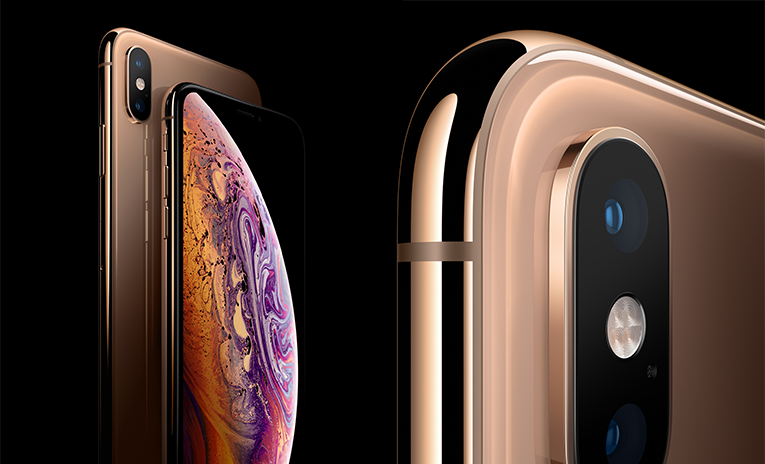
The iPhone XS and iPhone XS Max sure are the latest and greatest iPhones, but if you're after a new Apple handset, you might also want to think about the slightly more affordable iPhone XR instead. The iPhone XS and iPhone XS Max have taken iPhone prices to all new heights, so the premise of a third, cheaper iPhone certainly has an appeal.
In this guide, we'll look at how the pair compare on:
Before we get into the nitty gritty, here's a quick snapshot.
iPhone XS vs. iPhone XR: A snapshot
iPhone XS
Absolutely the latest and greatest.
- Two cameras
- Higher res display
- Better water-resistance
- 512GB storage option
iPhone XR
Similar specs, cheaper price.
- $400 cheaper
- Same high-end internals
Best battery life
Colours
iPhone XS vs. iPhone XR: Price
Our pick: iPhone XR
The iPhone XR is a full $400 cheaper than the iPhone XS when you compare outright pricing.
Even if you're looking at plans, you'll save a good chunk of cash each month by opting for an iPhone XR over an iPhone XS.
If you decide to opt for a 64GB iPhone XR over a 64GB iPhone XS, you'll save $400. This jumps up to $570, if you were considering the iPhone XS Max. Better yet, you can get a 128GB iPhone XR for $1,299, which is only a $70 premium over the base price. Since the iPhone XS isn't available in a 128GB model, the jump between a 64GB iPhone XS and a 256GB iPhone XS is a much more significant $250.
iPhone XS vs. iPhone XR: Camera
Our pick: iPhone XS
The iPhone XS and iPhone XR may have the same primary camera, but the iPhone XS wins thanks to its secondary lens. This second lens gives two times optical zoom, and a whole lot of photographic possibilities.
The primary camera on the iPhone XS and the iPhone XR are actually identical, and they're great. But if you opt for the iPhone XR, you'll miss out on the iPhone XS' secondary camera lens. The second camera on the iPhone XS and iPhone XS Max acts as a telephoto lens, effectively giving you two times optical zoom.
While you can still use digital zoom on an iPhone XR, the photos you take using it won't be as sharp or detailed as photos captured by the dedicated zoom lens on the iPhone XS and iPhone XS Max.
iPhone XS vs. iPhone XR: Design
Our pick: iPhone XS
The iPhone XS is just a little more lux than the iPhone XR, thanks to a stainless steel frame and smaller bezels.
These might seem like small differences, but they make the iPhone XS feel more premium.
The iPhone XS and iPhone XS Max come in the three colours we expect smartphones to come in - black, silver, and gold - the iPhone XR is the most colourful iPhone we've seen since the 5C. In addition to stock standard black or white, you'll be able to get the iPhone XR in red, yellow, blue, or coral. It sure is nice to see an iPhone with a little more personality.
The iPhone XS has a stainless steel chamfer joining the front and the back, while the iPhone XR uses aluminium for its frame instead. The majority of both models are glass anyway, whereas the metal found in the iPhone XS is ever so slightly shinier. It's a small difference, but it means the iPhone XR may feel a touch less lux than the pricier iPhone XS. At the same time, you won't be able to tell the difference after you throw a case on your new iPhone. And you really should. There's a special kind of heartbreak you feel when you smash a new phone, regardless of whether you paid $1,200, $2,000, or more.
In addition, the bezel on the iPhone XS is slightly smaller when compared to the iPhone XR.
It's also worth noting that Apple upgraded the water-resistance on the iPhone XS and iPhone XS Max to IP68, which means they can survive depths up to 2 metres for as long as 30 minutes. Much like the iPhone 8, the iPhone XR is rated IP67, which means it can only be submerged as a deep as 1 metre.
iPhone XS vs. iPhone XR: Display
Our pick: iPhone XS
The iPhone XS' display runs at a higher resolution, uses an OLED panel, and has 3D Touch. In short, it's a much nicer screen all round.
In this case, it's an easy winner.
The other kinda significant downgrade between the iPhone XR and iPhone XS is the display. It's a lower resolution (although still high definition), it's an LCD display rather than OLED, and it's missing 3D Touch. So what does all of this mean?
Well in terms of resolution, the iPhone XR screen has a pixel density of 326 ppi, while both iPhone XS models touts 458 ppi. This means the iPhone XS has a sharper display, so individual pixels are harder to see. The iPhone XR is however still in line with the display from last year's iPhone 8, which was lovely. Unless you're putting your phone right up to your face, we'd say the difference between 458 ppi and 326 ppi will be pretty hard to notice in terms of day-to-day use.
The iPhone XS and iPhone XS Max's OLED displays work by lighting up individual pixels as they're needed. The result of this is a screen with a higher contrast ratio that will give photos and videos a bit of extra pop. The iPhone XR still has a backlight behind the screen, which means it can't go as dark as an OLED display, and as such, doesn't achieve the same level of contrast.
The lack of 3D Touch is easily the least significant screen omission. 3D Touch is Apple's pressure sensitive take on a long press; pushing down harder on your screen can be used for additional commands. These will still be accessible to iPhone XR owners through what Apple calls Haptic Touch. Instead of pressing deeper, you'll just press longer and receive haptic feedback when you activate a button's secondary feature.
In short, the iPhone XS has a nicer display, but there are no real red flags with the iPhone XR screen.
iPhone XS vs. iPhone XR: Performance
Our pick: iPhone XR
The iPhone XR has exactly the same high-end hardware you'll get in the iPhone XS, and as such, is just as fast.
If you're purely looking at bang-for-buck, this makes the iPhone XR a much better value buy.
While you might be spending less money on the iPhone XR, it has the same high-end internals you'll find in an iPhone XS or iPhone XS Max. This includes the same top-of-the-line Apple A12 processor, the same new and improved Face ID facial recognition, and the same 12MP primary camera. And even though there's just one camera on the back, you can still use features like portrait mode thanks to some software tricks.
iPhone XS vs. iPhone XR: Battery
Our pick: iPhone XR
If you want the longest lasting iPhone, the iPhone XR is the clear winner. You'll easily get through a full day on a single charge, and in most cases, you should have a comfortable buffer for day two. Some may even find they get through the entire second day before they have to charge.
Apple says the iPhone XR will last for up to 1.5 hours longer per charge than last year's iPhone 8 Plus, giving it the healthiest battery life out of any 2018 iPhone. In our testing, we've found that means you'll get between day-and-half and two days per charge, with standard usage.
For comparison, we've found a day-and-a-half is the most you can get from the iPhone XS Max.
In terms of official figures, here's how the three 2018 iPhones compare based on the spec sheets:
2018 iPhone battery life
| iPhone XR | iPhone XS | iPhone XS Max | |
|---|---|---|---|
| Talk Time | Up to 25 hours | Up to 20 hours | Up to 25 hours |
| Internet Use | Up to 15 hours | Up to 12 hours | Up to 13 hours |
| Video Playback | Up to 16 hours | Up to 14 hours | Up to 15 hours |
| Audio Playback | Up to 65 hours | Up to 60 hours | Up to 65 hours |
Of course, "cheaper" is entirely subjective, and a $1,229 iPhone isn't exactly what you'd call affordable. If you'd prefer another option, check out how the iPhone XR compares to last year's now discounted iPhone 8 or how the iPhone XS compares to the iPhone 8.
2018 iPhone specifications
| iPhone XR | iPhone XS | iPhone XS Max | |
|---|---|---|---|
| Display | 6.1-inch LCD | 5.8-inch OLED | 6.5-inch OLED |
| Resolution | Retina | Super Retina | Super Retina |
| 3D Touch | No | Yes | Yes |
| Material | Aluminium | Stainless Steel | Stainless Steel |
| Rear-Facing Camera | 12MP | 12MP + 12MP | 12MP + 12MP |
| Processor | A12 | A12 | A12 |
| Storage | 64GB - 256GB | 64GB - 512GB | 64GB - 512GB |
| Water-Resistance | IP67 | IP68 | IP68 |
| Price | From $1,229 | From $1,629 | From $1,799 |
Alex Choros

Related Articles