
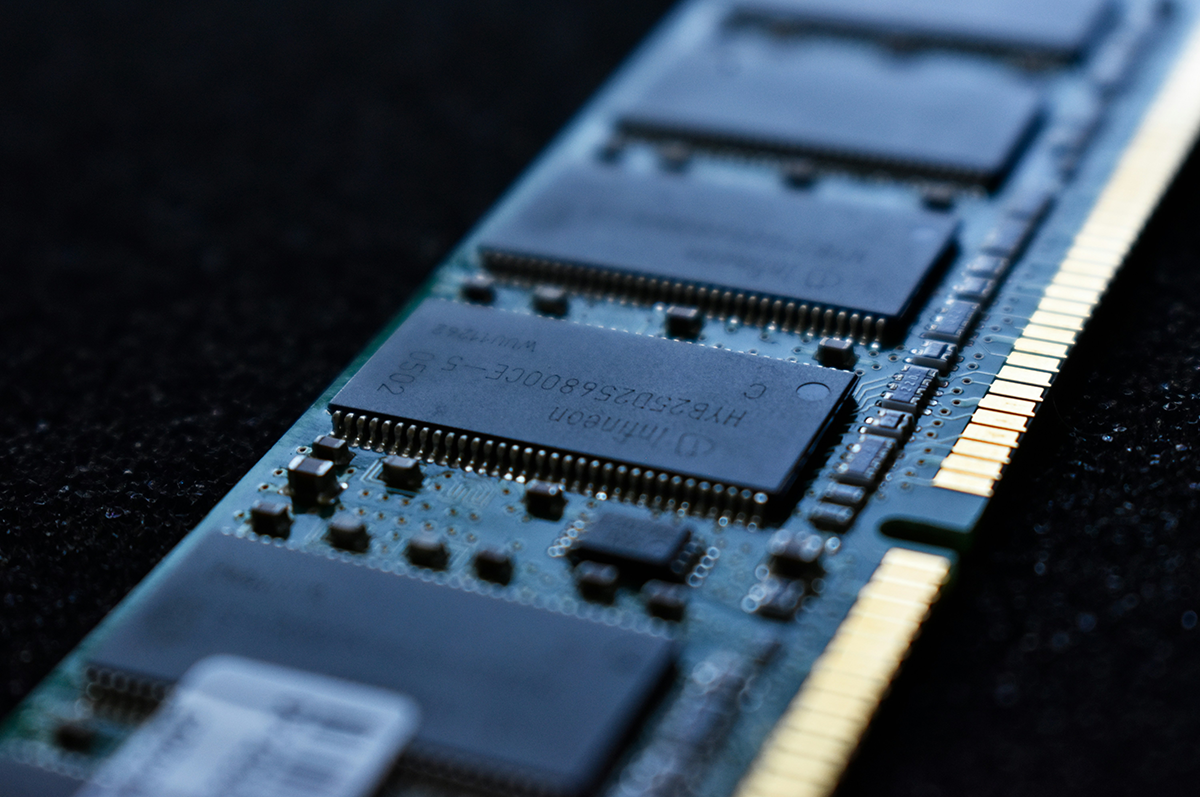
If virtual RAM sounds like it’s too good to be true, your instincts are on the money. As the name might suggest, virtual RAM isn’t real. It converts extra storage into bonus memory, but that isn’t as good a deal as it seems.
It’s easy to forget, but it was only a few years back that even the iPhone only had a gigabyte of RAM to work with. It wasn't until the iPhone 8 that Apple's industry-leading smartphone moved into double digits. By comparison, modern flagships like the Nothing Phone 3 and Galaxy S25 Edge have as much as 16GB to work with.
And as far as smartphone specs go, more RAM is actually one of the more legible metrics in the mix. The differences between Google's Tensor G3 and Qualcomm's Snapdragon 8 Gen 3 processor are a little difficult to parse. By comparison, even the less tech-savvy can usually intuit that having more memory is better than having less - even if they might not be able to explain why.
Naturally, it was only a matter of time before smartphone brands tried to leverage the limits of that wisdom. In recent years, a number of prominent mid-range devices have tried to elevate the humble hardware inside their devices by offering consumers the ability to turn unused storage into additional RAM. Some examples of this include:
- RAM Boost (found on Motorola devices)
- RAM Expansion (found on OPPO devices)
- Virtual RAM (found on OnePlus devices)
For the cost of a few extra gigabytes on your device, you could double or even triple the amount of memory you have to work with. Sound good, right? Unfortunately, the reality of virtual RAM isn’t as rosy as it might first appear.
Let's start with the basics. RAM is an acronym that stands for random access memory. Found in both traditional PCs and more modern devices like smartphones, smartwatches and tablets, this component is used to store data that your smartphone needs to remember on short-notice.
While 4GB of physical memory and 4GB of virtual memory might add up to the same 8GB, how fast your RAM inside your device is matters almost as much as how much you have to work with. In other words, the former has a much higher speed limit than the latter.
That might sound like a small detail, but when it comes to the inner workings of your smartphone, it can add up to something that meaningfully affects your everyday experience pretty quickly.
Imagine your iPhone as a city, with each gigabyte of RAM as a road, and each task the processor inside your device handles as a car travelling from one destination to another. Tasks that move around using real RAM are going to going to reach their destination a whole lot faster than their counterparts.
Where things get tricky is that even simple apps usually involve lots of different tasks that all happen simultaneously, but usually need to resolve in a certain order. To stretch the above metaphor a little further, imagine that the cars travelling on RAM roads are all carrying ingredients for a meal. Even if the celery gets to the kitchen on time, you can't really start making a sandwich without any bread. This different in the speed with the hardware inside your phone can operate can quickly lead to something of a traffic jam.
In short, the fact that virtual RAM is significantly slower than physical RAM can cause a lot of problems when it comes to how the apps and games on your phone operate. You might have more gigabytes of memory to work with, but as it fills up, the performance of your device may end up being bottlenecked.
Part of the problem here is that most of the time, processes on your smartphone don't discriminate between virtual and physical RAM. Most apps usually opt for whatever is available, and if they divide their focus across both formats, there’s a non-zero chance that it could cause a crash or other issues.
To add to that, cannibalising your internal storage for a few extra gigabytes of RAM is going to significantly increase the amount of stress and read/write cycles that it accrues. Over time, this can potentially shorten the lifespan of that component and lead to a situation where the memory inside your device doesn't last you as long as it should.
Ultimately, there’s no substitute for a few extra gigabytes of real RAM. Anyone who tells you otherwise is probably selling something.
These are the most popular NBN 50 plans with WhistleOut users this week:
|
#1
|
Dodo

All Fixed Line nbn®
Editor's Pick
nbn50 Unlimited Plan
$57.99/mth
Min. cost $57.99
|
|
#2
|
amaysim

All Fixed Line nbn®
NBN50
$45/mth
Min. cost $45
|
|
#3
|
Tangerine Telecom

All Fixed Line nbn®
Value Plus NBN 50/20
$64.90/mth
Min. cost $64.90
|
|
#4
|
TPG

All Fixed Line nbn®
nbn50 Unlimited Plan
$69.99/mth
Min. cost $69.99
Link not supplied
|
|
#5
|
Aussie Broadband

All Fixed Line nbn®
Value nbn - Unlimited
$70/mth
Min. cost $70
Link not supplied
|
|
#6
|
Superloop

All Fixed Line nbn®
Extra-value nbn50/20
$69/mth
Min. cost $69
|
|
#7
|
iiNet

All Fixed Line nbn®
nbn50 Liimitless
$69.99/mth
+ $10 Upfront
Min. cost $79.99
Link not supplied
|
|
#8
|
Belong

All Fixed Line nbn®
NBN Standard Plus – Unlimited
$55/mth
Min. cost $55
|
|
#9
|
Kogan Internet

All Fixed Line nbn®
Silver Unlimited
$69.90/mth
Min. cost $69.90
|
|
#10
|
Flip

All Fixed Line nbn®
Unlimited Family nbn50
$68/mth
Min. cost $68
|

Fergus Halliday
Digital Content Editor

Related Articles


