
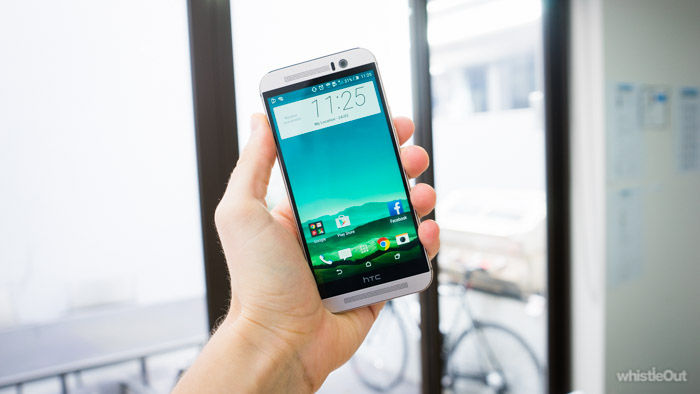
The One M9 is available for sale starting today. It’s the new flagship smartphone from HTC, but will it be able to take on the mighty Samsung Galaxy S6? As a phone it will, but its camera will not.
The M9 announcement was not received entirely positively. Many reviewers and tech pundits outlined it as little more than an incremental upgrade with minimal aesthetic tweaks. That's actually fine. Both Samsung and Apple suffer the same slew of insults as often as they don’t. Knowing this, the lacklustre reception might sound like no big deal.
Speaking as a tech reviewer, it’s easy to get caught up in the wrong kind of thinking. Often a ‘new’ device that doesn’t sound or look very different to its predecessor doesn’t make a great first impression. We reviewers want bigger, shinier, faster phones that wow and amaze us.
|
HTC One M9 Telstra Plans |
HTC One M9 Optus Plans |
HTC One M9 Vodafone Plans |
That’s not what the public really needs. Most people are coming from a 2 year-old device, so any modern flagship is going to blow them away. It doesn’t need to be cutting-edge, it just needs to be a significant improvement over their old model.
All new flagships beat the pants off of anything released 24 months ago. Subsequently, what a user ends up really looking for is an attractive, reliable piece of technology that they’ll love for at least the first year, and won’t drive them up the wall for the last part of their contract. If you can get another year out of it even better. Reliability and usability become paramount.
This is exactly what the HTC One M8 did in 2014. It, too, was an incremental upgrade over its predecessor. In fact, it was less of an upgrade than the M9 is over it. The M8 had the same camera, design, screen resolution and similar internals to the M7. The M9 at least has the good grace to quintuple the M8 rear camera’s megapixels to 20.7MP.
With this kind of pedigree, the M9 sounds like it could be another shoe-in for the best and most under-appreciated smartphone of the year.
The problem
In a word: camera.
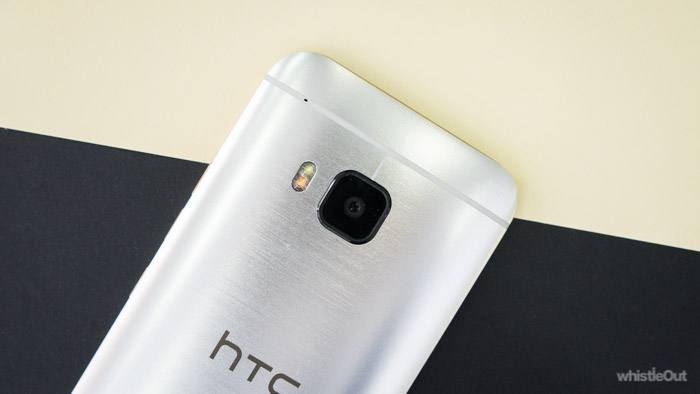
The M7 and M8 both had an identical critical flaw: the camera. On the M7 it wasn’t all bad. The 4 “Ultrapixel” approach was similar enough to the competition of its day that it barely scraped by. The M8 may as well have had the exact same shooter. No noticeable improvement, but this time it was up against cameras that had 12 months more R&D behind them.
It was the major, and possibly only, flaw of the One M8. Despite this, the M8 was such a reliable and smooth piece of tech that once 2014 closed its doors it was one of the few phones from that year that I personally still liked.
With the M9 that 4 “Ultrapixel” camera has been moved to the front. The rear has been replaced with a whopping 20.7MP camera. We took it for a quick spin.
Today is a lousy day for photo magic, but take these two shots for example. The first is the One M9, the latter is the iPhone 6 Plus. This was a point-and-shoot comparison. No special tweaks or bothering to manually adjust focus. Click either photo for a 100% view to get the full effect.
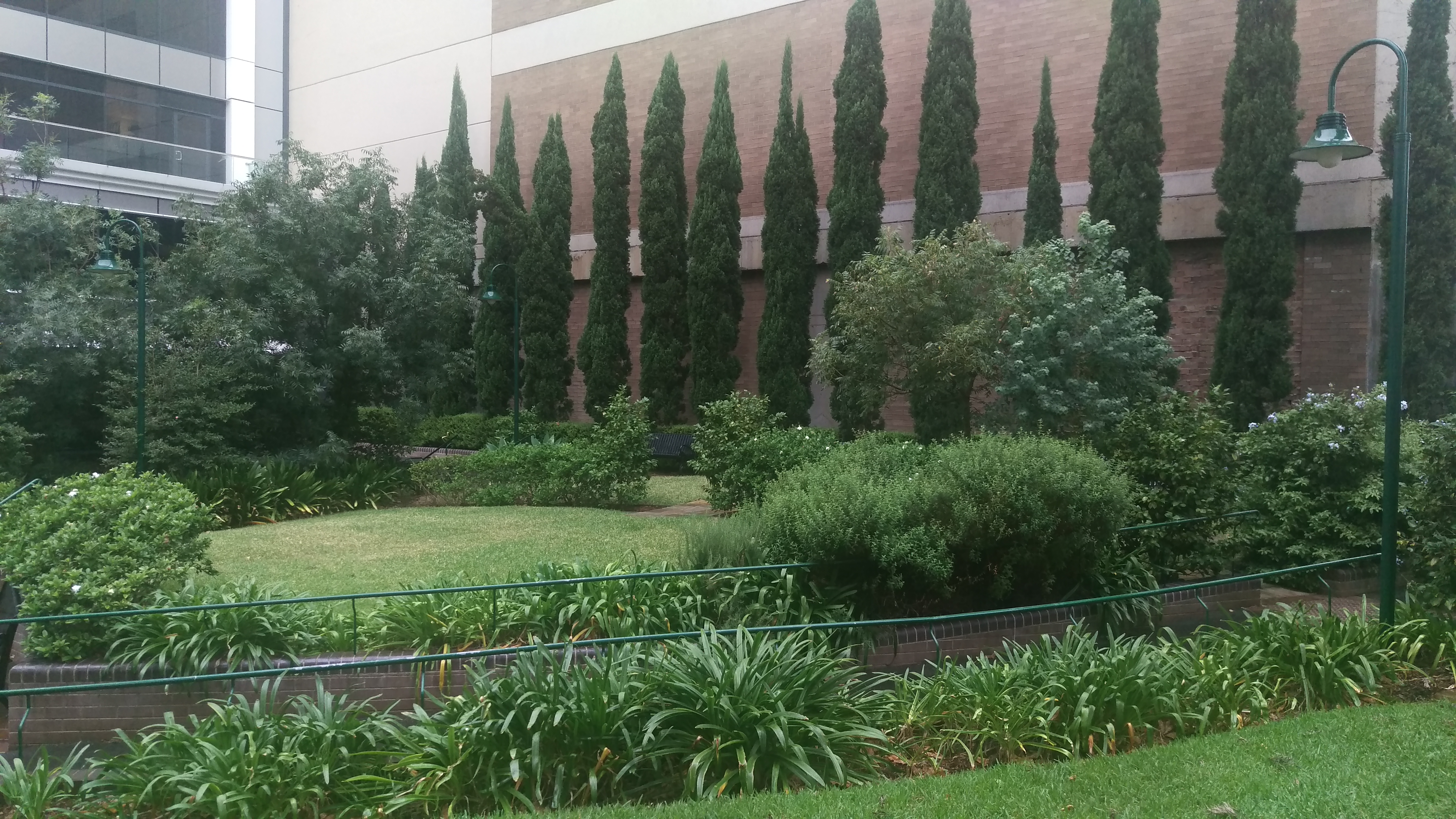
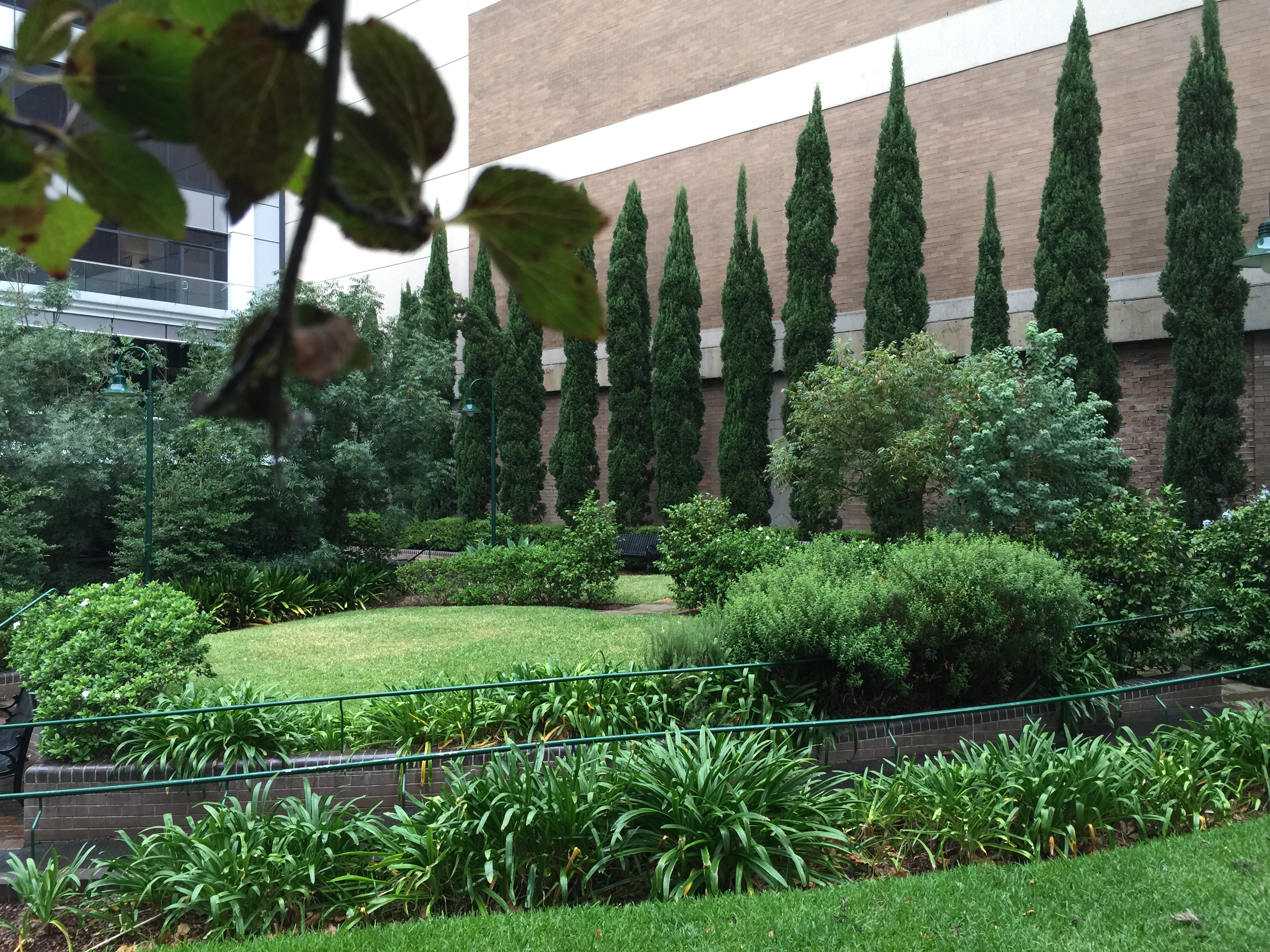
As you can see, the 6 Plus creams the One M9. HTC is still suffering from the same difficulties: light bleeding, a milky blurriness, drab colours, pixellation.
We’ll obviously do more tests for the actual review, but for now HTC’s chances of cornering 2015 are looking shaky thanks to the camera alone.
Words of praise
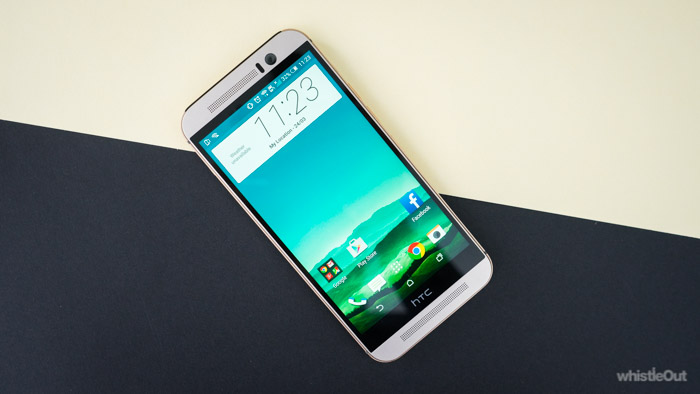
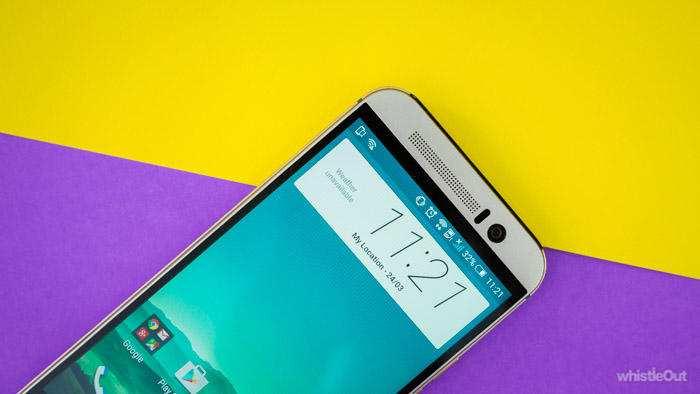
For everything else, so far the M9 has been fantastic. The screen has received derision for being “only” 1080p, but we applaud HTC for this decision. You’ll need borderline perfect vision to really appreciate the difference between the increasingly-common 2K (2560x1440) resolution and the M9’s 1080p (1920x1080).
However, by maintaining this more traditional HD approach, HTC has kept the reins on one of the biggest battery killers in every phone: the screen. 1080p is not a cop-out, it’s a decision: a minor sharpness bump, or more battery power? We know what we'd choose.
It’s ultra-fast, ultra-smooth and feels glorious in the hand. Where the M8 and One Mini 2's casings were both buffed down so smoothly as to be slippery, the M9 manages to maintain its gorgeous design but somehow add significant grip. Win/win.
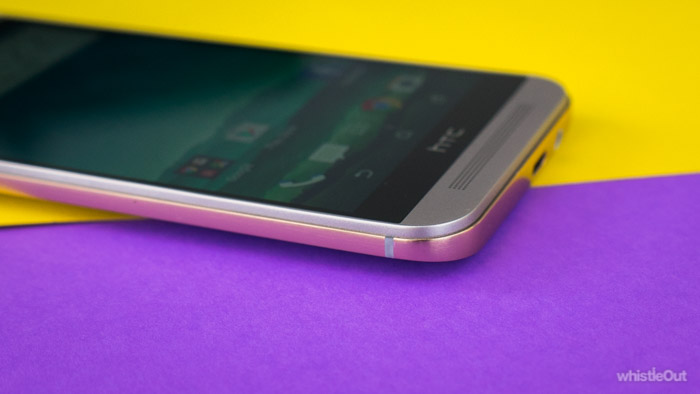
The gold rim around the edge is less tacky than it sounds. It’s a deeper, almost copper colour that is treated right in to unibody frame.
Even the buttons are well made. Everything about this phone screams quality, except for that darn rear camera.
Is it the phone you’re looking for?
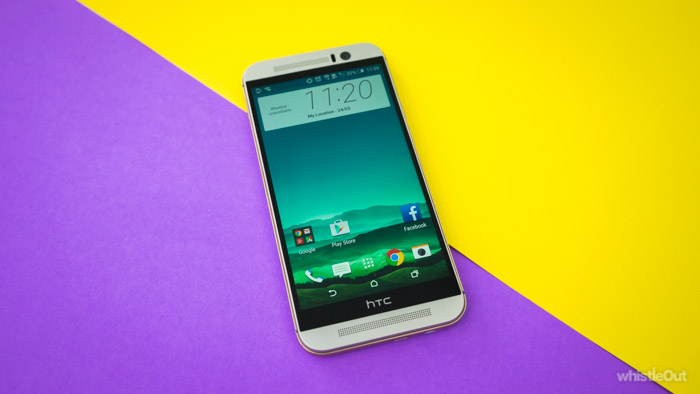
The One M9 will not rock the Android market. It’s a well-designed, beautifully-crafted phone, but the camera is going to hold it back. In the face of competition like the iPhone 6 and 6 Plus, as well as what we already know Samsung is capable of thanks to last year’s Note 4, the M9’s photos look lifeless in comparison.
As for how it functions as a phone, there’s a pleasing nostalgia for the M8 here. It’s solid, feels reliable and functions smoothly. This will hopefully prove to be as stalwart as the two One flagships that came before it, but reliability didn’t translate to sales in 2013 or 2014 for HTC.
If you’re thinking of running out and getting the One M9 right now, you might want to wait a month or so and check out the Galaxy S6 first. We have a feeling Samsung may have actually made the better phone this time around.
Alex Angove-Plumb
Digital Content Editor

Related Articles


