

Smart bulbs are popping up in every lighting aisle, so you might be wondering what all the fuss is about. Light bulbs are a necessary household item, and can change the entire outlook of a room. So when you’re setting up a smart home, it’s tempting to fill up your cart with lighting accessories.
Before you light up your world, read this to make sure you make the smart decisions for your smart light bulb needs.
In this guide:
- What is a smart light bulb?
- How do smart bulbs work
- Are smart bulbs worth it?
- NBN Plans to support your smart home
- Which smart bulb to buy
What is a smart light bulb?
A smart bulb is a light globe that uses wireless transmissions to send and receive signals, allowing the light emitted to be controlled remotely, scheduled and even customised. Generally the LED bulbs can change colour to any shade across the RGB spectrum (although you can get single colour bulbs to save money), and can be grouped together clusters to recognise rooms.
Smart bulbs can usually save colour and dimness preferences based on time of day, or a specific command. Say you wanted some dim blue lighting to go with movie nights, then you could program a movie night setting with the lights, so you can consistently create the perfect ambience.
They come in all shapes, watts, and bulb types, with some even having in-built Bluetooth speakers.
Most smart bulbs can be paired with voice assistants like Google Assistant, Apple’s Siri, or Amazon Alexa, but usually operate through their app, remote control, or via sensor as well.
How do smart bulbs work
Some smart bulbs work using built-in WiFi that connects with your router, others use Bluetooth to interact directly with your phone, and others use a standard called Zigbee.
WiFi connected bulbs allow you to control your smart bulbs from anywhere you can get online, provided your home’s connection is stable. Remote connectivity means you can schedule your lights to turn on and off as usual when you’re on holidays, program them to fade on like a sunrise in the mornings, or turn on the bedroom light in the middle of the night to freak out your partner when you’re not home. The world is your well-lit oyster.
Although, keep in mind that every WiFi bulb you add to your home will use bandwidth on your home internet connection. Like any device connected to the internet, smart bulbs connected to your router will use your data, and may affect your network speeds.
Bluetooth on the other hand, will only work within a small radius of around 15m or so, but won’t take up any bandwidth on your home internet connection. Bluetooth connected bulbs will usually have the same features as their WiFi counterparts, but you’ll be limited by how far you can be in order to operate them. A 15m radius should be enough to cover most apartments, but large spaces might mean you can’t connect to all your smart bulbs at once. To control Bluetooth bulbs from a further distance, you’ll need a WiFi hub to connect them to your router and back to you.
Many low-powered devices, such as smart bulbs use Zigbee - which is a specification similar to WiFi and Bluetooth. Unlike WiFi and Bluetooth, Zigbee devices don’t work with just any device and require a specific Zigbee hub in order to translate the signals for your network. The bulbs connect to your Zigbee hub, and your Zigbee hub connects to your network. When connected to a hub, Zigbee bulbs will work exactly like WiFi bulbs in that you can control them from anywhere.
Some smart speakers and hubs are Zigbee-enabled, such as the upper Amazon Echo range, but for the most part you’ll be looking at an extra device to filter your Zigbee devices through.
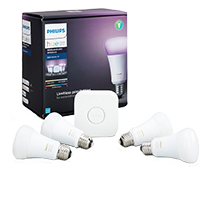
Philips Hue smart bulbs are the most popular Zigbee bulbs around. If you pick up a starter pack, they'll include their own hub.
Are smart bulbs worth it?
Smart bulbs are one of the simplest, and most common smart home devices, and thanks to market trends they won’t break the bank. Over the past few years, there has been an increased trend in LED light bulbs, even without smart capacities. The lower operating costs mean that more consumers were opting for LEDs over traditional bulbs, which forced manufacturers to make better and cheaper LED options.
This trend has overflowed into smart bulbs, with single colour bulbs starting as low as $15 and colour-changing varieties starting from $20. Lighting makes a huge difference to a space, so smart bulbs are a relatively low cost, high impact way to enhance your smart home.
NBN plans to support your smart home
If you're adding more WiFi devices to your home network, the connection may become congested or even slow down.
Smart home devices don't use much bandwidth, but a lot of small additions can add up to make a large impact, especially if you're not satisfied with your speeds as it is.
For small households, NBN 25 plans should be able to handle your devices and your browsing habits, but for smart homes accommodating big internet users or more than three-to-four people an NBN 50 plan is your best bet. Here are our most popular plans for both speeds.
NBN 25 (Standard) Plans
|
#1
|
SpinTel 
|
|
|
#2
|
Dodo 
|
|
|
#3
|
Flip 
|
|
|
#4
|
Tangerine Telecom 
|
|
|
#5
|
TPG 
|
Link not supplied
|
|
#6
|
iiNet 
|
Link not supplied
|
|
#7
|
Telstra 
|
Link not supplied
|
|
#8
|
Kogan Internet 
|
|
|
#9
|
Aussie Broadband 
|
Link not supplied
|
|
#10
|
Superloop 
|


NBN 50 (Standard Plus) Plans
|
#1
|
Dodo
|
|
|
#2
|
amaysim 
|
|
|
#3
|
Tangerine Telecom
|
|
|
#4
|
TPG
|
Link not supplied
|
|
#5
|
Aussie Broadband
|
Link not supplied
|
|
#6
|
Superloop
|
|
|
#7
|
Belong 
|
|
|
#8
|
iiNet
|
Link not supplied
|
|
#9
|
Kogan Internet
|
|
|
#10
|
Flip
|


Which smart bulb to buy
The best smart bulbs to buy are the ones that are compatible with your smart ecosystem. If you are an Apple HomePod household, then buying Works with Alexa certified products won’t do you any favours. Here is our best budget, and all around picks that work with each smart home ecosystem.
Check before you buy
Take note of the maximum wattage for your light fittings, and whether you need screw, or bayonet bulbs.
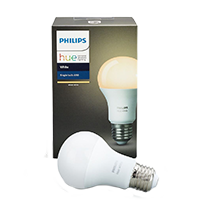
Best smart bulbs for Amazon Alexa
Budget pick
Prices from: $14
Best of the best
Prices from: $240
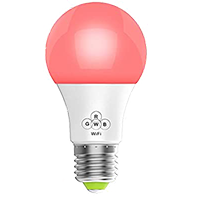
Best smart bulbs for Google Nest
Budget pick
Prices from: $26 for 2
Best of the best
Prices from:$240
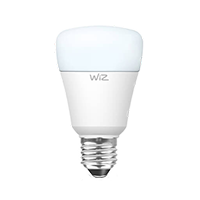
Best smart bulbs for Apple HomePod
Budget pick
Prices from: $17
Best of the best
Prices from: $240
Anula Wiwatowska
Offsite Editorial Lead | Instagram

Find a better internet plan
Thousands of internet plans unpacked. All the facts. No surprises.

Related Articles


Related Topics
smart home smart bulbPopular Topics
NBN Telstra Optus Streaming Internet Broadband smart home 5G Foxtel modemInternet Plans by State
- Internet Plans in ACT
- Internet Plans in NSW
- Internet Plans in NT
- Internet Plans in QLD
- Internet Plans in SA
- Internet Plans in TAS
- Internet Plans in VIC
- Internet Plans in WA


![[Hand-Picked] Best internet providers in Australia](https://r3.whistleout.com.au/public/images/articles/2026/07/man-and-woman-with-laptop-on-green-couch.jpg?w=280&h=280&usm=20&usmrad=0.8&fit=crop "[Hand-Picked] Best internet providers in Australia")

