
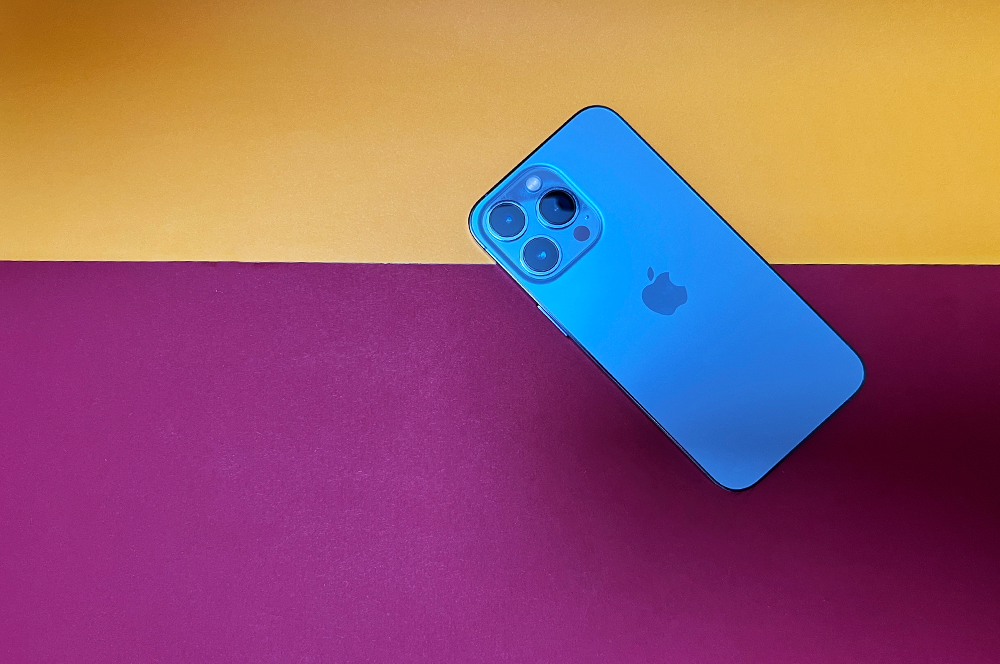
As a lifetime Android user I’ve always looked at Apple as a cult. Once indoctrinated, the users are separated from those that differ from their beliefs, and they become enmeshed within a singular ecosystem, which is inconvenient, if not impossible to escape from. I’ve always considered myself strong-willed, and figured that a cult simply couldn’t get under my skin enough to persuade me to stay. But you know what, I think I'm starting to get it.
The commune
Apple vs. Android is a tale as old as time, or at least as old as 2008 when the HTC Dream was released. By now we have all chosen our operating systems, but both sides keep taking shots to try and bring in new customers from the other side. From a commercial perspective it makes sense, there is a limited amount of users out there, so the only real way to grow an already bursting consumer base is to encourage switching.
But from a consumer’s point of view, is switching to an iPhone actually worth it? Over the past few months I have ditched my Android device for an iPhone 13 Pro, with the goal of answering that exact question.
Before you drink the Kool Aid, it is important to figure out exactly what drove you to be sitting barefoot and cross-legged staring into the cup. Are you looking for an improved connection? A sense of community? Answers to questions you didn’t know you had? For me, I have been searching for a reliable connection… between my devices.
I’ve been having a persistent issue with Android phones connecting with headphones and smartwatches. The connections have been unreliable with devices unpairing randomly, making me reconnect something at least once per day. Even though all of these devices are compatible with one another, they’re not made for each other and somewhere along the lines there is a disconnect.
My current headphones of choice are the Beats Studio Buds which just so happen to be part of the Apple universe. Pairing the Buds with the iPhone was my first experience with the ease of connectivity across the Apple ecosystem, and in retrospect the beginning of my indoctrination.
As the days went on I found myself more inclined towards Apple products than other brands. My iPad, which used to be just for drawing, now serves as a third screen throughout the day because syncing my multiple calendars together was so easy to accomplish. I’ve been able to gain full access to my household’s HomePods (which I used to have to use through voice alone), and can now actually utilise the more advanced features. I’m even part of a new Family according to Apple’s Family Sharing. What can I say, switching to iPhone offered up community, connection, and belonging on a Sierra Blue platter.
The Android loyalist in me is annoyed at how easy it is to slide into the warm embrace of the Apple ecosystem. I expected more of a fight, or some hiccups along the way, but the transition has been relatively frictionless so far. If anything, this experience has made me disappointed with Android powered devices. Apple products speak to one another in a way that no other manufacturer has gotten down as of yet. Everyone is working on it, and in my experience OPPO has come the closest to nailing it with its earbuds and watches, but for now I have to concede that Apple has complete supremacy. It’s not a groundbreaking take, but it is an important consideration for anyone considering the switch from Android to iPhone.
Blessed be the fruit
Of course the ecosystem isn’t everything. Committing to an iWorld comes at a price and you’re probably not going to dive straight into it by buying up a new phone, tablet, headphones, and watch. So let's take a look at the standalone iPhone 13 Pro experience coming from an Android phone.
The actual act of bringing your data across to an iPhone is easy. Just download Move to iOS on your current phone, and you’ll be able to port pretty much all your data and apps across. The only thing that I lost in the migration were some of my contacts, prompting me to send “new phone who dis?” messages to the few people that I still connect with through traditional SMS. Personally, this wasn’t a huge issue, but if you tend to communicate through texts and phone calls rather than messaging apps then be aware that there may be some manual work to do.
Even though younger me would tell you that I stayed away from iPhones because I wanted to be unique, and different, the truth is I just didn’t gel with iOS. Never have. Some people find it intuitive but for me, it was the opposite. Especially in earlier iterations, the user experience never aligned to my expectations, where Android did. Though this time around I have found iOS easier to navigate.
Phone upgrades are a cat and mouse game. If Apple does something cool then Android will copy it, and visa versa. Over time iOS and Android have ostensibly ‘borrowed’ so much from one another that it is only natural that at a certain point they will have a sense of familiarity, even to those unfamiliar. By the time I swapped over to iOS, users had gained access to widgets that have been commonplace on Android devices for years, and Android device’s controls and gestures are now far more similar to those on the iPhone.
On the surface, the operating systems feel interchangeable. There are still places where I falter - finding my notifications is a nightmare, even though I know where to swipe, my thumb just doesn’t want to do it - but for the most part, getting a stranglehold on iOS has only been a minor adjustment.
Having a decent battery life has also been an adjustment, but for the better. Plenty of Android devices have a solid battery, but over the past few years, battery life on flagships such as the Samsung S series have deteriorated. You might even struggle to get through half a day on some foldables. The 13 Pro gets me a full day of charge and then some, even if I’ve wasted a whole Sunday at the altar of TikTok. It's refreshing not having to consider a top-up charge before heading out for a day or evening.
Photography is another big draw, and another one the Android die-hards and iPhone disciples love to argue about. I’ve used some exceptional Android devices for all around photography, such as the OPPO Find X2 Pro, and of course who can dismiss the novelty of the 100x Space Zoom on Samsung’s flagships. However, I have found that the iPhone takes more reliable photos in varied environments.
The shutter speed is quick enough to capture even my speedy kelpie, lowlight snaps have a naturally brighter look to them as opposed to other devices where these can look like someone upped the brightness, and the colours come out truer to reality as opposed to Samsung pics that tend to come out slightly over-saturated. You can get a good shot on any phone if you have enough patience and know-how, but with the 13 Pro I've been able to do a lot more point and shoot photography and be content with the result.
A sacrifice
Clearly there is a lot to like about the iPhone and the Apple ecosystem in general, but there is one major barrier to consider - price.
Cheap Android phones are easy to come by, as are affordable headphones, tablets, and smartwatches, yet entry-level Apple products are still beyond some people’s grasp. Excluding older models, or refurbished devices, the cheapest iPhone currently is the iPhone SE which will still set you back over $700. There are a slew of mid-tier Android devices at around this price point to choose from, and even significantly cheaper options, but it is worth discussing the shelf-life of these devices when discussing price.
I consider the shelf-life of a phone to be as long as it gets security updates. Once a manufacturer stops protecting users with regular updates, it is time to upgrade to one that will. Many Android manufacturers only support security updates for around three years, with the Pixel 6 topping the pack and offering updates for five years. Generally, you’ll want to upgrade your Android device every third generation to make sure that your data is protected, but in some cases it might even be more frequently. That means that on average, your cost per year on the shelf-life of a $700 Android phone is about $233.
Apple on the other hand offers updates for at least six years, meaning that your cost per year on the iPhone SE comes down to about $116.
Although no one is going to force you to keep your phone for six years, with Apple you at least have the option to do so. It is the usual toss up between paying more now to save money later, or saving in the moment. Whether switching over to Apple products will cost you more, or save you will entirely depend on your spending habits and usual upgrade timeline.
Cheers?
So should you take a refreshing gulp of the Kool Aid, or abandon the cup? Once again it depends on what you’re thirsting after.
If the pain points around your Android device have been around battery, connectivity, or security then I’d encourage you to take a swig. For me it isn’t so much the iPhone itself that has drawn me in but the ease of use across multiple devices. Where synching your online life across multiple Android devices can be laborious, Apple doesn’t make you work for it, it works for you.
But if you’re simply curious about what is happening in the Apple camp, then it probably isn’t worth uprooting yourself for. After all, people who are satisfied with their lives don’t join cults.
Anula Wiwatowska
Offsite Editorial Lead | Instagram

Related Articles


