

Alcatel 1C Review: The Verdict
I honestly didn't believe an $89 device could do all the everyday stuff my flagship phone does. But I was wrong. While there are definitely compromises – the camera, in particular, isn't great – using the Alcatel 1C made me seriously question how much anyone needs to spend on a smartphone in the year 2018.
What we love
- It's so cheap
- It actually works, especially if your use is just day-to-day
- Great fingerprint reader
What could be improved
- It's definitely on the slow side
- Connectivity is 3G only
- It has the best bad camera we've seen, but that's still a bad camera
The essentials
- Performance: Be prepared to take some deep breaths. It works fine but apps and web pages are a bit slow to load.
- Battery: One full day on heavy use.
- Screen: Struggles a bit with vivid colours, detail and direct sunlight. But it's still plenty usable.
- Camera: Pretty good for the money, but can't handle challenging situations light poor lighting, movement, and will tend to wash out bright colours.
75/100
$89
- 5.3-inch FWVGA+ display
- MTK6580, Quad-Core (4 x 1.3GHz)
- 16GB storage, 2GB RAM
- 8MP rear-facing, 5MP front-facing camera
- 2,460mAh battery
I'm not going to lie. I wasn't looking forward to reviewing the Alcatel 1C. Like many of us, I've gotten used to using flagship phones and frankly didn't think I'd be able to do much of anything with an $89 device. I was so wrong about that. And while the 1C definitely revealed some flaws that are worth noting, it also made me seriously question how much anyone needs to spend on a phone in the year 2018.
It can do most anything day-to-day
Here's what I did over one weekend with the Alcatel 1C:
- I used Google Maps to navigate all over inner city Sydney.
- I connected Bluetooth headphones and streamed a few hours' worth of Apple Music.
- I downloaded Shazam and Shazamed a song. The app even downloaded before the song playing in the cafe had finished.
- I checked Facebook. Probably about 10 times.
- I watched movie trailers using mobile data.
- I Chromecast Westworld to my TV (with home WiFi) and it looked and played just fine.
- I downloaded photos of my cat from Google Drive (with mobile data).
- I took photos of my cat and uploaded them to Google Drive (with more mobile data).
- I sent messages via text, via Facebook Messenger and WhatsApp.
- I called my Mum. She says hi.
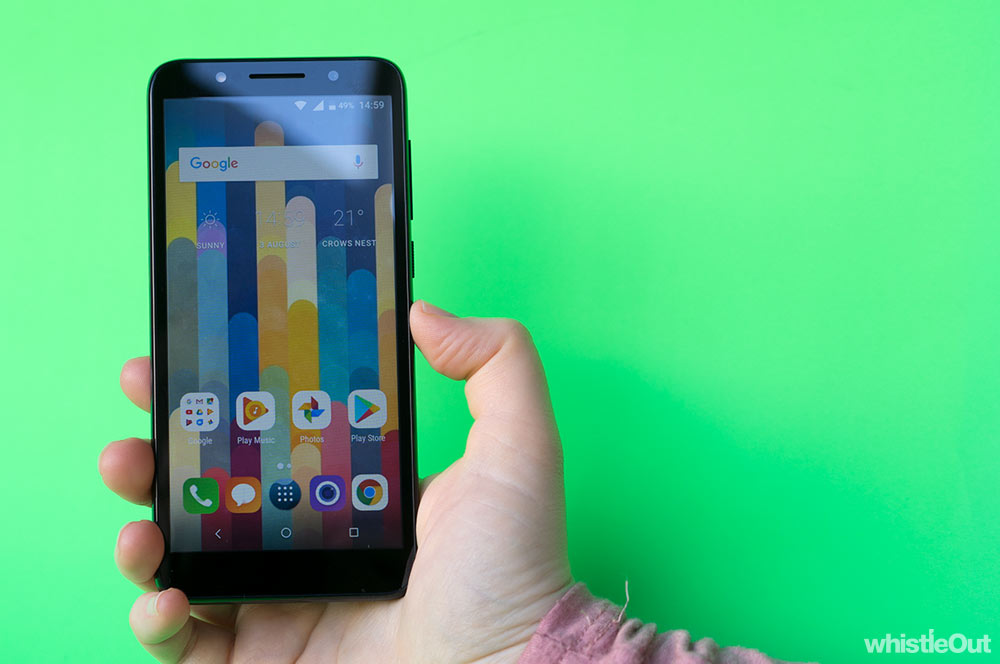
Basically, there was nothing that I do with my phone everyday that the Alcatel 1C couldn't handle. It even kind of looked like my flagship phone, with an extra-tall 18:9 display, a fingerprint scanner that was really fast and fairly accurate and an aluminium body that, while not the shiny glass back I'm used to, definitely felt sturdy and not cheap.
The battery on the Alcatel 1C was also more than capable of dealing with my everday demands. I ended up with 40% left on a day of medium use, and 20% left after a heavy-use day.
All that being said, the Alcatel 1C was definitely on the slow side. Apps could sometimes take several loong seconds to load. But once they got going they tended to be just fine. I also found I could make app loading faster by shutting down all other apps running in the background. For a phone with this little processing power, it was surprising the Alcatel 1C didn't do this automatically with some kind of memory management feature. But I never found it too onerous to do myself.
Web browsing, however, was a bit more excruciating at times and that's due in no small part to the fact that the Alcatel 1C only runs 3G.
What is 3G and what's it like to use?
You probably know something about 3G, 4G and even 5G already. But here's a quick refresher. Each of these terms refers to a mobile network, with 3G being the oldest, 4G the new standard and 5G being the latest and greatest that's not-quite-yet available in Australia.
Although 3G technology is now prehistoric as far as the tech-world is concerned, at the start of this decade it was the standard in mobile network technology in Australia. The 4G and 5G networks may be faster, but 3G still gets the job done.
The difference in speed between 3G and 4G or even 5G networks is said to be most noticeable when anything is downloading or uploading. And that was definitely my experience.
When I was using Google Maps, for example, it could take a good 20-30 seconds for the app to download my route. Once the route was loaded, though, the navigations kept up with me in real-time. When I was streaming Apple Music, it sometimes took a few seconds for a new song to load. But once the song started it played for me buffer-free. Facebook and web pages could also be slow to load. Sometimes very slow to load if I had poor coverage. But once they were loaded, I had no problems.
At first, I found these time-lags infuriating. There may or may not have been some swearing. But once I knew what to expect, it was a good opportunity to remind myself to slow down, take a breath and do a few seconds of mindfulness practice while I waited. So maybe if you're trying to be a bit more Zen, those load times might work for you.
But one thing that mindfulness definitely didn't help me with was Netflix. The 3G network just couldn't quite handle it. It played the videos without buffering, that (surprisingly) wasn't a problem. But the 3G network just couldn't quite keep up with on-screen movement. If the camera panned too fast, the image started to pixelate. If the actors moved around too quickly, that was even worse. And it was a problem that seemed to compound over time. The more fast movement, the more pixelation, the more time the screen took to catch up again once it stopped.
So basically, don't expect to be watching too much Netflix-on-the-go.
What's the camera like?

One of the major things you pay for when you buy a smartphone these days is the camera. So it's not surprising that the camera on the Alcatel 1C isn't great.
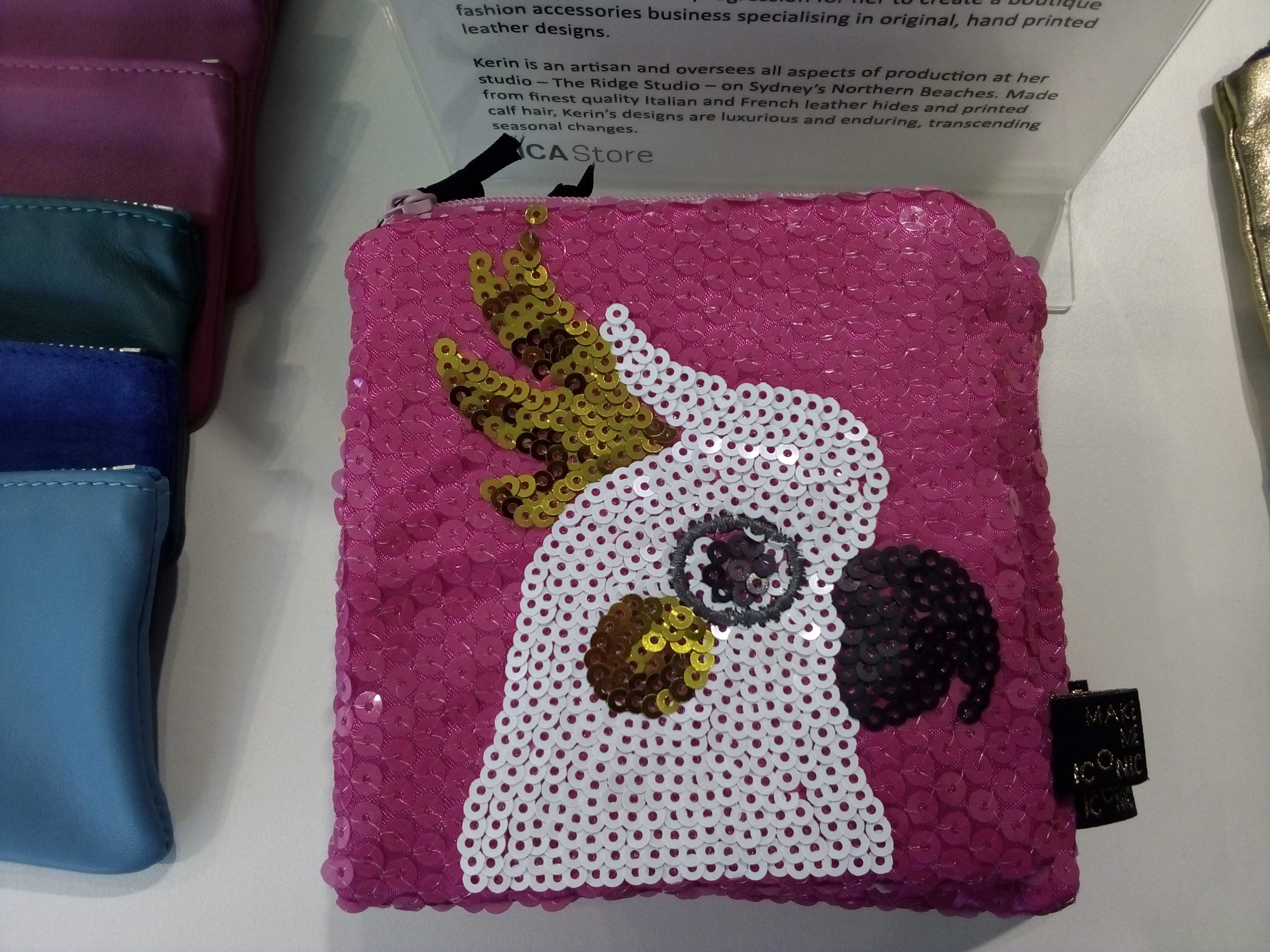
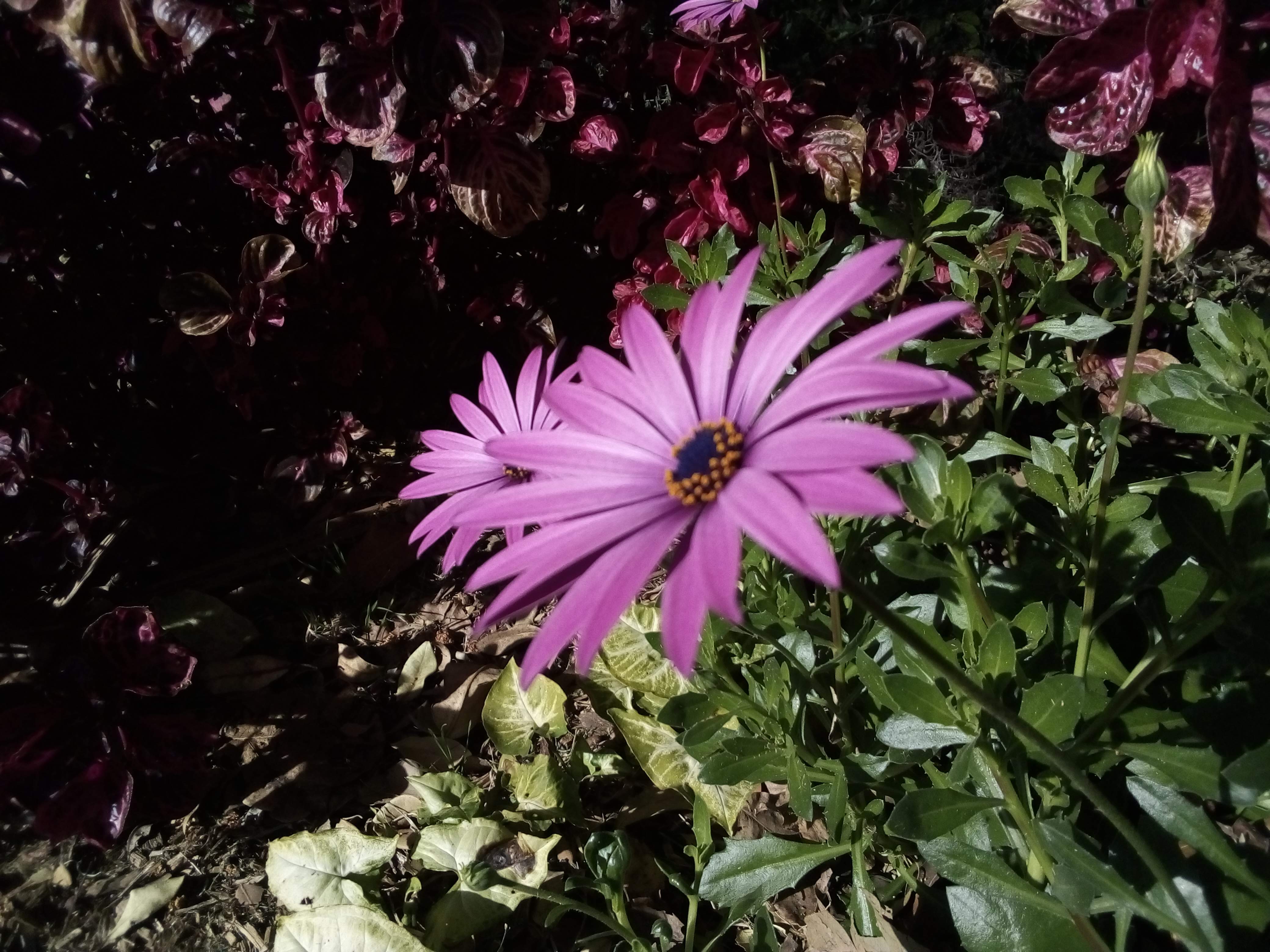
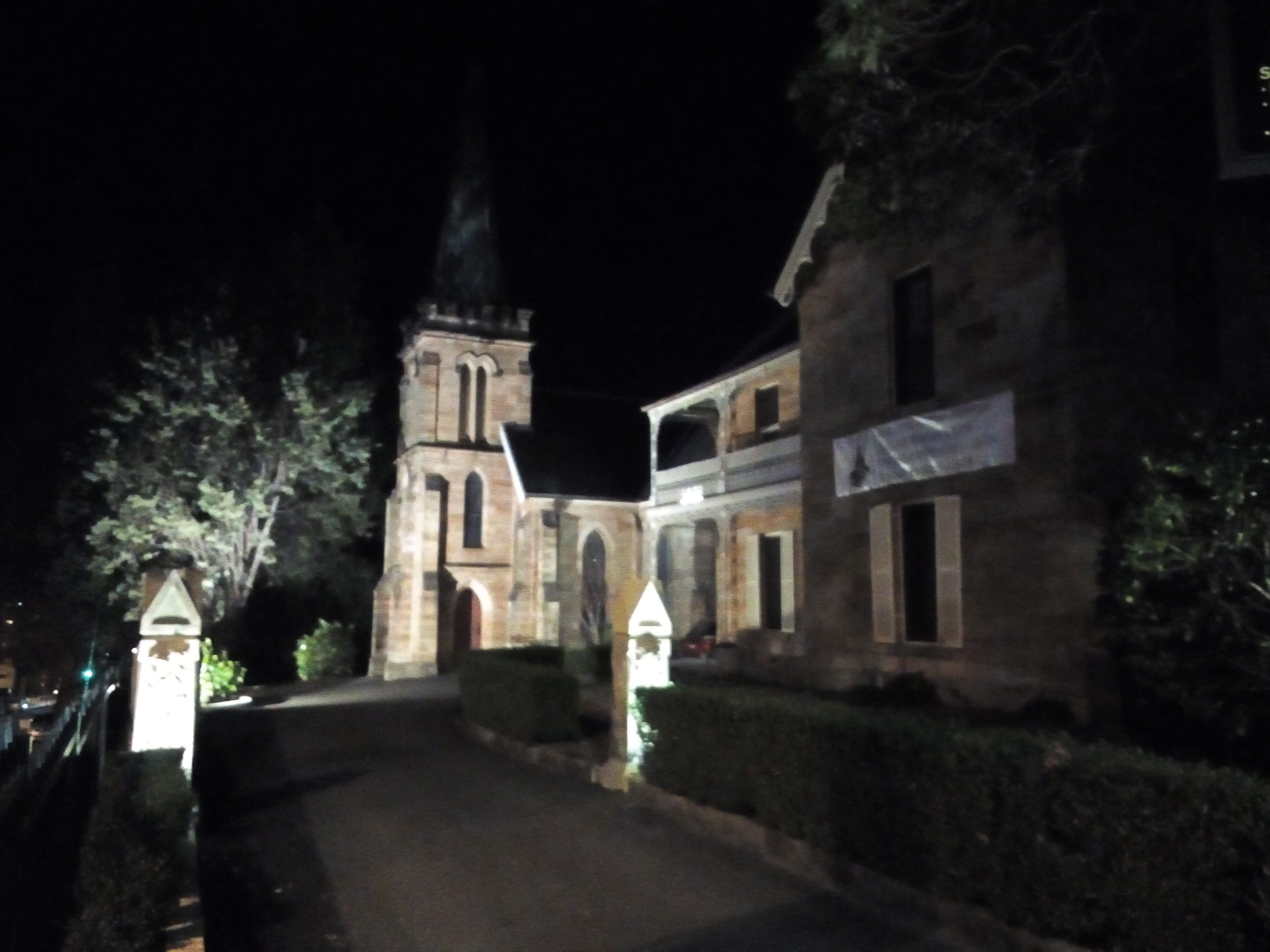
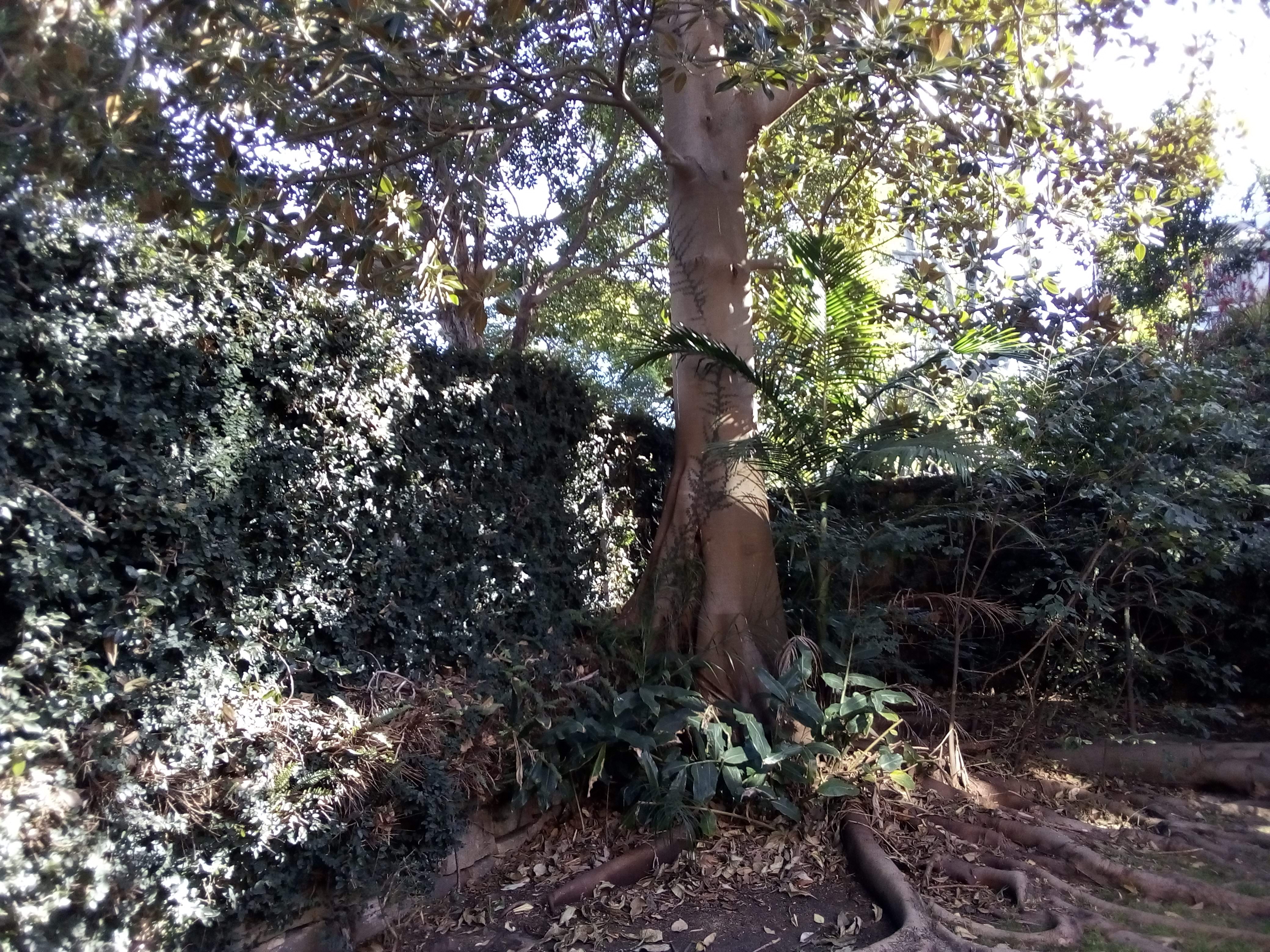
That being said, as bad cameras go, this may be one of the best we've seen. With 8MP rear-facing and 5MP front-facing lenses, the Alcatel 1C camera manages to capture a fair amount of detail in shots. And if the lighting is right, the photos don't look half bad.
Of course, it's horrible in poor lighting conditions. It can't really handle movement. It struggles to focus on the subject in a close-up and tends to produce muted colours in most shots. Basically, it's fine for photos you don't care that much about. But I wouldn't use it for holiday snaps or important milestones and events.
Camera samples

Any other compromises?
As must be expected from a budget smartphone, the Alcatel 1C screen isn't fantastic. Colours tend to be a little washed out and it gets fuzzy around fine detail. But for most everyday smartphone activities like web browsing and music streaming that shouldn't matter too much. Yes, videos don't look fabulous, but this isn't a phone you want to use to watch movies anyway (unless you're casting to a better-quality screen, for example, using Chromecast).
The Alcatel 1C screen has some visibility issues in direct sunlight and tends to lose colour and detail when tilted in certain ways. But this was nothing I couldn't easily overcome with a little angling. In the worst sunlight I just moved so that my shadow fell over the screen.
The other notable issue is that the speakers do have an intermittent hiss. It showed up in the background of one phone call, but not another. I could hear it sometimes when listening to music but only on quiet tracks that were heavy on vocals and light on instrumentals. And the hiss seemed to be eliminated once I connected with Bluetooth headphones.
As for typing, I experienced a little lag when smashing out long emails. But it was otherwise pretty much fine. The Alcatel 1C also runs Android Nougat, which is now a couple of versions out of date.
Two things you should be aware of before you buy an Alcatel 1C as that it only has 16GB of storage which is definitely on the low side and it's locked to the Telstra network. Telstra will let you unlock it, but it'll cost you $80 if you've owned the phone for less than six months or $25 thereafter.
Of course, Telstra's not the only provider that runs on the Telstra network. In fact, you have ten mobile carriers to choose from including Boost Mobile, Belong, ALDI Mobile and (the carrier I used with this phone) Woolworths.
The storage, meanwhile, is upgradeable up to 128GB with a microSD card.
Who's the Alcatel 1C for?
At $89, the Alcatel 1C could make a great first smartphone for your tweens or teens. It would also work for students or bargain hunters or just anyone who wants full everyday functionality for the lowest possible price.
If you want your smartphone to be the only camera in your life, if you watch a lot of video on your phone, and if you don't have the patience for a little loading lag, this is not the phone for you.
But where the Alcatel 1C succeeds most is in demonstrating just what a cheap phone can get away with. You can add a good camera and a good screen and a faster processor to your phone for just a few hundred dollars more. And that's definitely something worth knowing and worth remembering next time you're in the market.
What else can you buy?

Nokia 2.1
If you don't mind spending a little more, the Nokia 2.1 will go on sale in Australia on September 4 for $199 outright, or $149 through Telstra prepaid.
Notably, the Nokia 2.1 runs Android Go, a version of Google's operating system tuned for faster and smoother performance on entry-level hardware. Apps start 15% faster, the entire OS is smaller so that phones have more available storage out of the box, and Google has redesigned many of its apps to be lighter and less data intensive.
Key specifications for the Nokia 2.1 include an extra-tall 5.5-inch 720p+ display, a Snapdragon 425 processor, 1GB of RAM, 8GB of expandable storage, an 8MP rear-facing camera, and a 4,000maH battery. It doesn't have a fingerprint reader.

Motorola Moto E5
Motorola's Moto E5 outperforms it's budget price tag. It's a far better phone than the $229 RRP would suggest. Yes, camera performance ranges from just okay to awful, and you only get 16GB of storage, but those are our only two meaningful complaints. You might be paying about a fifth of what you'd drop on a high-end device, but you're certainly getting more than a fifth of a high-end phone.
Huawei Nova 3e
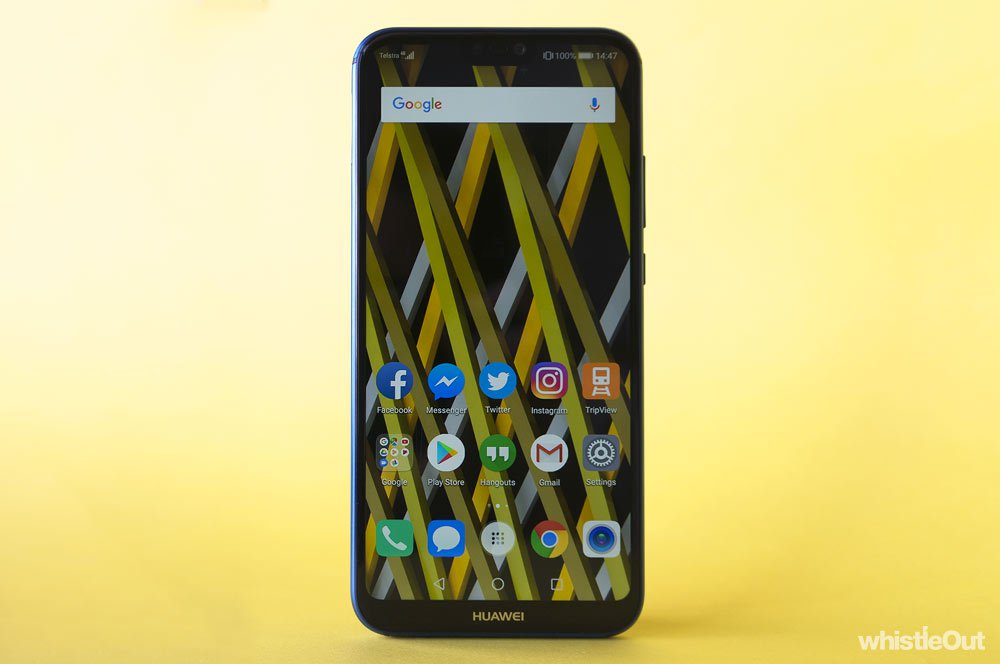
If you're on the hunt for a bargain phone that comes with a decent camera and screen, $399 will get you the Huawei Nova 3e. But it's bound to be mistaken for a phone that costs a hell of a lot more. You've got the requisite shiny glass back, the on-trend notched display, and a hot new vertical rear-camera configuration. It also happens to be one of the best value budget phones on the market.
Plans on the Telstra network
|
#1
|
Pivotel

25GB Mobile Swift Plan
$11.45/mth
Min. cost $11.45
|
|
#2
|
SpinTel

Editor's Pick
$23 Mobile Plan
$12.00/mth
Min. cost $12
|
|
#3
|
Moose Mobile

Moose 23 SIM Only
$14.00/mth
Min. cost $14
Link not supplied
|
|
#4
|
Swoop

30GB SIM Only 5G
$14.00/mth
Min. cost $14
|
|
#5
|
Dodo

Small Mobile Plan
$25.00/mth
Min. cost $25
|
|
#6
|
Tangerine Telecom

30GB 5G Mobile SIM
$30.00/mth
Min. cost $15
|
|
#7
|
Aussie Broadband

Saver 5G SIM Plan
$30.00/mth
Min. cost $30
Link not supplied
|
|
#8
|
More

30GB 5G Mobile SIM
$33.00/mth
Min. cost $33
Link not supplied
|
|
#9
|
Belong

25GB Mobile Plan
$34.00/mth
Min. cost $34
Link not supplied
|
|
#10
|
Coles Mobile

$35 Mobile Plan
$35.00/mth
Min. cost $12
Link not supplied
|

Jacqui Dent
Editorial Strategist


