
- Incredible battery life
- Great cameras
- Premium build quality
- Steep year-on-year price rise
- Shorter software support than the competition
- Teleconverter Kit is an expensive accessory
OPPO's Find X9 Pro is my favourite Android phone of the year. In a year dominated by light hardware refreshes and AI features, the Find X9 Pro delivers on the fundamentals. What if the battery was even longer? What if the zoom lens was more flexible? What if the display bezels were thinner?
These and a handful of other changes arguably make the Find X9 Pro the biggest year-on-year upgrade of 2025. The annual refresh cycle may have become pretty iterative across the board, but the Find X9 Pro succeeds at genuinely feeling new.
Built for battery

Battery is a clear drawcard for the Find X9 Pro, thanks to a massive 7,500mAh cell. That's a 1,590mAh upgrade over last year's already impressive Find X8 Pro. While big numbers on a spec sheet don't always translate into real-life performance, OPPO has well and truly delivered with the Find X9 Pro. You can comfortably expect at least nine hours of screen time per charge on a phone, perhaps even ten. This is the best battery I've seen on a flagship phone.
I was comfortably able to make it through two full days of moderate usage on a single charge with a buffer remaining. I still had 25% left at 10pm on Tuesday after taking the Find X9 Pro off the charger at 7am on Monday morning.
Despite the supersized battery, the Find X9 Pro is lighter and thinner than the iPhone 17 Pro Max. It's certainly no iPhone Air, given the 224g weight, but you don't need to put up with a clunker of a phone to get excellent battery life.
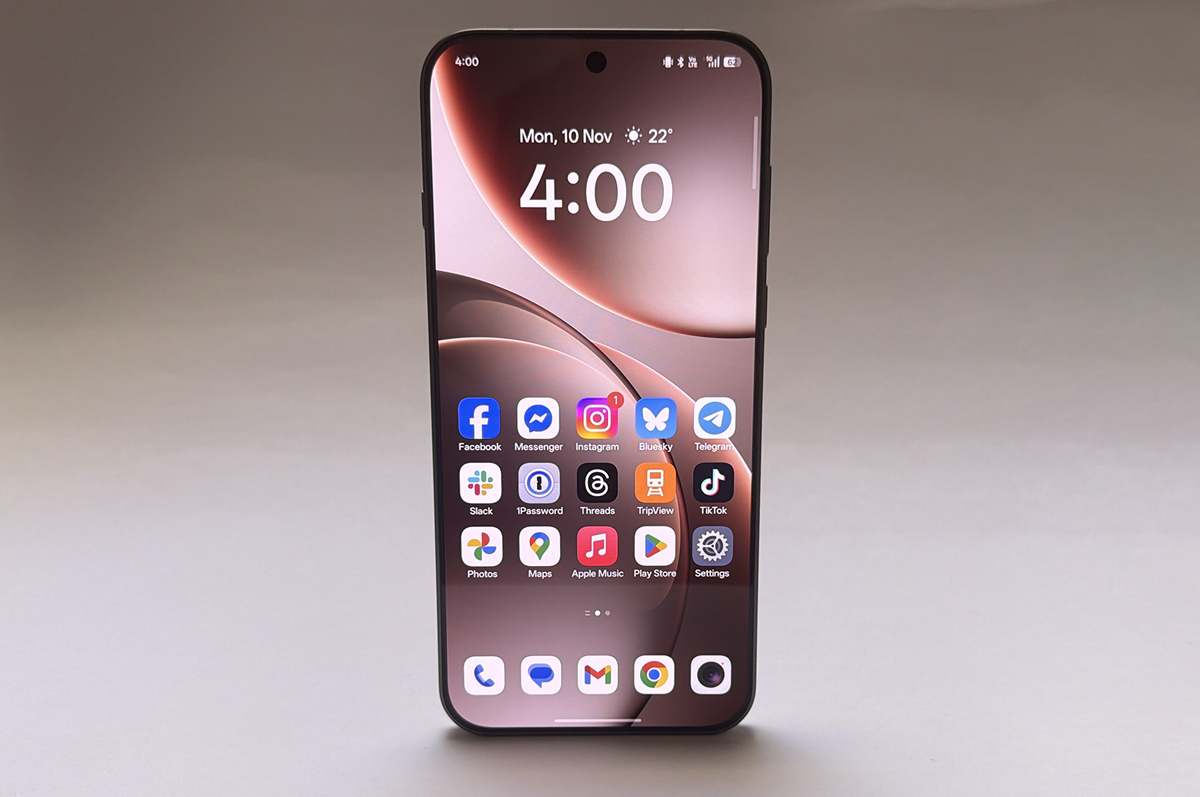
Build quality is excellent in general. The matte glass black feels great in the hand, the frame is matte rather than glossy and doesn't pick up fingerprints, and the bezels surrounding the display are ultra-thin.
There are two major aesthetic changes worth calling out. The Find X9 Pro display is now entirely flat, and the camera bump is now a very conventional square rather than the big circle OPPO used on Find X8 Pro. Moving away from curved displays is the correct call in my opinion, but I did like the sense of identity the circular camera bump gave OPPO's devices.
Like the Find X8 Pro, the Find X9 Pro is rated both IP68 and IP69 for water resistance. In short, the device has protection against submersion and high-pressure water jets. While most of us aren't subjecting our devices to high-pressure water, extra protection is rarely a bad thing.
Inside, the Find X9 Pro is powered by a Dimensity 9500 chipset. This is MediaTek's equivalent to Qualcomm's high-end Snapdragon chips, and performance is reliably smooth for both day-to-day and more demanding activities like gaming.
Zoom zoom

The Find X9 Pro has a unique camera setup of a 50MP primary lens, 50MP ultra-wide lens, and a 200MP 3x zoom lens. We've seen 200MP cameras on devices like Samsung's Galaxy S25 Ultra before, but the Find X9 Pro is the first time we've seen a 200MP zoom on a phone launched in Australia.
By and large, the Find X9 Pro cameras all range from pretty good to excellent. The ultra-wide is the weakest, which tends to be a universal truth across devices. You'll get a lovely shot with enough light, but dark environments can result in muddier images or, in some cases, artificating.
The primary lens is fantastic, taking lovely shots in pretty much any situation. The iPhone 17 Pro camera is a touch more reliable in low light, however. The OPPO's processing can leave images a little less detailed than those taken by the iPhone 17 Pro, but this is the kind of thing you need to pixel peep to spot.
The 200MP zoom lens is the real star of the show. While the native 3x zoom isn't as far as the 4x offered by the iPhone 17 Pro or the 5x offered by the Pixel 10 Pro and Galaxy S25 Ultra, the lens has a wider aperture than those on its rivals. This lets in more light, and in theory, allows for quicker capture. The 200MP sensor also allows the Find X9 Pro to take "optical quality" 6x images via a crop. This is how the iPhone 17 Pro achieves 8x zoom, but the Find X9 Pro has more pixels to work with, which can result in a clearer image with more detail.
There's also 13.2x digital "AI enhanced" zoom, which is a little more inconsistent. The images tend to look better than you'd expect, but sometimes you end up with clear signs that AI has been at play. Text that isn't clear enough will get "autocorrected" into gibberish, for example. When you get into AI enhanced territory, the results depend on your subject.
But between 3x and 6x, I found myself using the Find X9 Pro's telephoto lens more than I expected. Results are reliable, shots have a lovely natural depth of field, and 6x is a surprisingly good option for macro. Despite the shorter zoom, the Find X9 Pro's 6x optical zoom can get closer shots of objects like flowers than the iPhone 17 Pro's 8x zoom.
My only real camera complaint is the Find X9 Pro can be a little slow to shoot in challenging environments like concerts; I consistently noticed a slower shutter speed on photos taken on the Find X9 Pro compared to those taken on an iPhone 17 Pro. You can still get great shots, you might just end up with a few more duds in pursuit of these. There is a "pro mode" where you can manually adjust shutter speed, but most phone users are shooting on auto.
On the front, OPPO has kitted out the Find X9 Pro with a 50MP selfie camera, up from the 32MP from last year's model. The selfie camera was the Find X8 Pro's main weakness, and the new sensor is a lot more reliable. Images are clearer and results are more consistent.
OPPO Find X9 Pro camera samples
Check out these camera samples taken on the OPPO Find X9 Pro. Click or tap on any photo to see a larger version.






















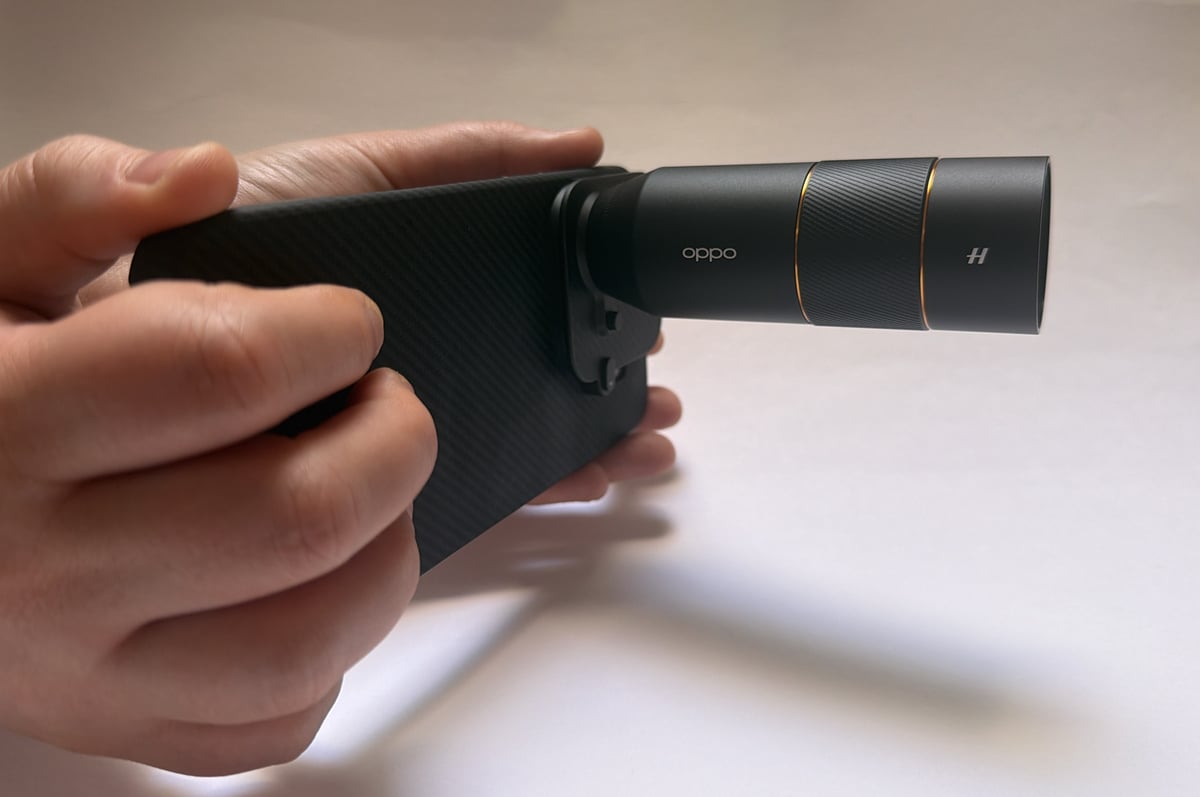
On top of the great array of cameras, OPPO is selling a rather novel accessory alongside the Find X9 Pro: a chunky telephoto lens you can clip onto the phone. Dubbed the Teleconverter Kit, the set includes the lens itself, a case, a mounting plate for the lens that attaches to the case, and a tripod mount for the lens.
Attaching the lens to the Find X9 Pro effectively turns the 3x zoom lens into a 10x zoom lens. It can also take 20x "optical quality" images by cropping the sensor, and 40x "AI enhanced" zoom images. And you know what, the results are surprisingly good.
Here's a shot at 1x from the primary lens:

Here's a shot at 10x using the Teleconverter Kit:

And here's a shot at 40x using the Teleconverter Kit:

40x zoom can be inconsistent depending on the subject - sometimes AI enhanced zoom results in overprocessed or slightly fake image. 20x tends to be the sweet spot for quality. It can also get you lovely natural bokeh like in the shot below:

By and large, the Teleconverter Kit works better with adequate lighting. It can still take nice shots in dark environments, but the phone's processing can soften them.
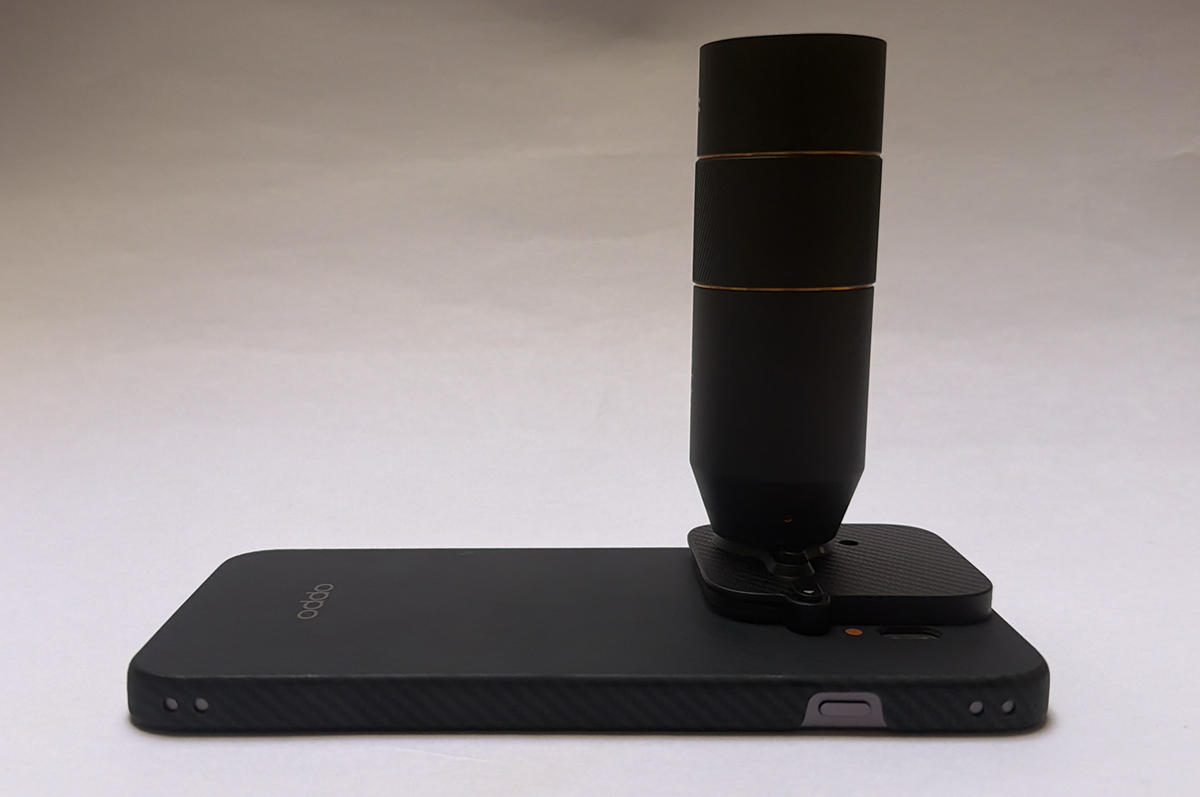
As nice as the photos you get with the Teleconverter Kit are, it isn't the most practical of accessories. Getting it on your phone is a multi-step process. Assuming your phone is already in the required case, you need to attach the telephoto lens to the mounting plate, slide the mounting plate onto the case, and then remove the lens cap. You can probably do this all in about 30 seconds, but it's not a standard smartphone "point and shoot experience".
Once you're in the camera app, you need to open the dedicated mode to properly use the Teleconverter Kit. By default, you get a black screen, and if you swap to the zoom lens, the resulting image is upside down. It would be nice if the camera software could automatically detect when the Kit is attached. Notably, you can't use any of the other Find X9 Pro's rear-facing cameras when the Teleconverter Kit is attached.
Weight is the other big factor. The lens is 185g, which isn't that far off the Find X9 Pro's weight. This can make using the combo a bit unwieldy, which in turn makes it harder to frame up shots. And unless you have very steady hands, the extra weight adds the risk of motion blur.
Then there's the matter of price: OPPO is charging $699 for the Teleconverter Kit in Australia. On one hand, actual camera lenses are expensive, and this is the real deal with glass and metal construction. On the other hand, with an actual camera lens, you typically buy into an ecosystem. If you upgrade your camera, you'll still be able to keep using the lens or get an adapter to use it with a different brand. When I asked about this, an OPPO spokesperson told me the lens itself is futureproofed.
"The Teleconverter Lens will be compatible with select future OPPO flagship models," said the spokesperson. "Further details on future device compatibility will be shared at the time of those product announcements."
You'll probably need to buy a different case and mount, however, depending on the phone's design and the shape of the camera bump. There's also the question of exactly how long OPPO plans to keep flagships compatible. Camera manufacturers have a long history of supporting one standard. OPPO doesn't. It is good to know that the Teleconverter Kit isn't just a "one and done" type situation, however. If you've consistently bought OPPO flagship phones, this might make it an easier splurge.
One last camera-related inclusion on the phone itself is the Quick Button, which is similar to Camera Control on the iPhone 16 and up. The Quick Button opens up the camera, and has been upgraded with trackpad-esque functionality so you can scroll across it zoom in and out. The Quick Button still isn't quite as advanced as Camera Control, due to missing functionality like being able to half-press to navigate through settings. At the same time, I'm a little mid on the concept of a dedicated camera button. Outside of testing, I've typically only hit the Quick Button or Camera Control by accident. Your mileage may vary, however. My colleague Dylan, for example, is quite a fan of Camera Control on the iPhone 17.
Another Apple-inspired addition is the Snap Key, which is effectively OPPO's take on the Action Button. By default, it toggles the phone between silent, vibrate, and ring, but you can customise it. Other options include opening the camera, turning on the torch, turning on do not disturb, taking a screenshot, and starting an audio recording. The Snap Key won't drastically change the way you use your phone, but a customisable button is hard to complain about.
Some small niggles

The Find X9 Pro doesn't give you much to complain about, but there are a few minor niggles worth going over. The most notable is a shorter software life span than similarly priced competitors. OPPO is promising the Find X9 Pro will get five years of operating system updates and six years of security. That's a great commitment, and longer than most people will keep a phone, but both Samsung and Google promise seven years of operating system updates and seven years of security.
And while the Find X9 Pro features 50W proprietary wireless charging using OPPO's own AirVOOC standard, it's missing support for the more universal Qi2 standard. The big benefit of Qi2 is magnet technology similar to MagSafe, which aligns wireless chargers and opens the doors for accessories like tripod mounts, wallets, and battery packs. Fully implemented Qi2 is still admittedly still fairly uncommon for Android phones, but it is standard across the entire Pixel 10 family.
Some of OPPO's official Find X9 Pro cases have a magnet ring that's strong enough for accessories like a MagSafe wallet or a car mount. The phone's back also has a magnet, but accessories don't securely snap to it. Even then, you still don't benefit from the faster wireless charging speeds Qi2 offers. You're looking at basic 5W wireless charging unless you use one of OPPO's AirVOOC charges.
Lastly, at $2,299 outright, the Find X9 Pro is the most expensive non-foldable device OPPO has sold in Australia. That's a $500 price increase on last year's Find X8 Pro. That's still $300 cheaper than a 512GB than a 512GB iPhone 17 Pro Max, and $50 cheaper than a 512GB Galaxy S25 Ultra, but OPPO is well and truly in premium pricing territory here. None of this is to say the Find X9 Pro isn't worth the asking price, but a cheaper 256GB model alongside the default 512GB configuration would have been welcome.
OPPO Find X9 Pro - Final Thoughts
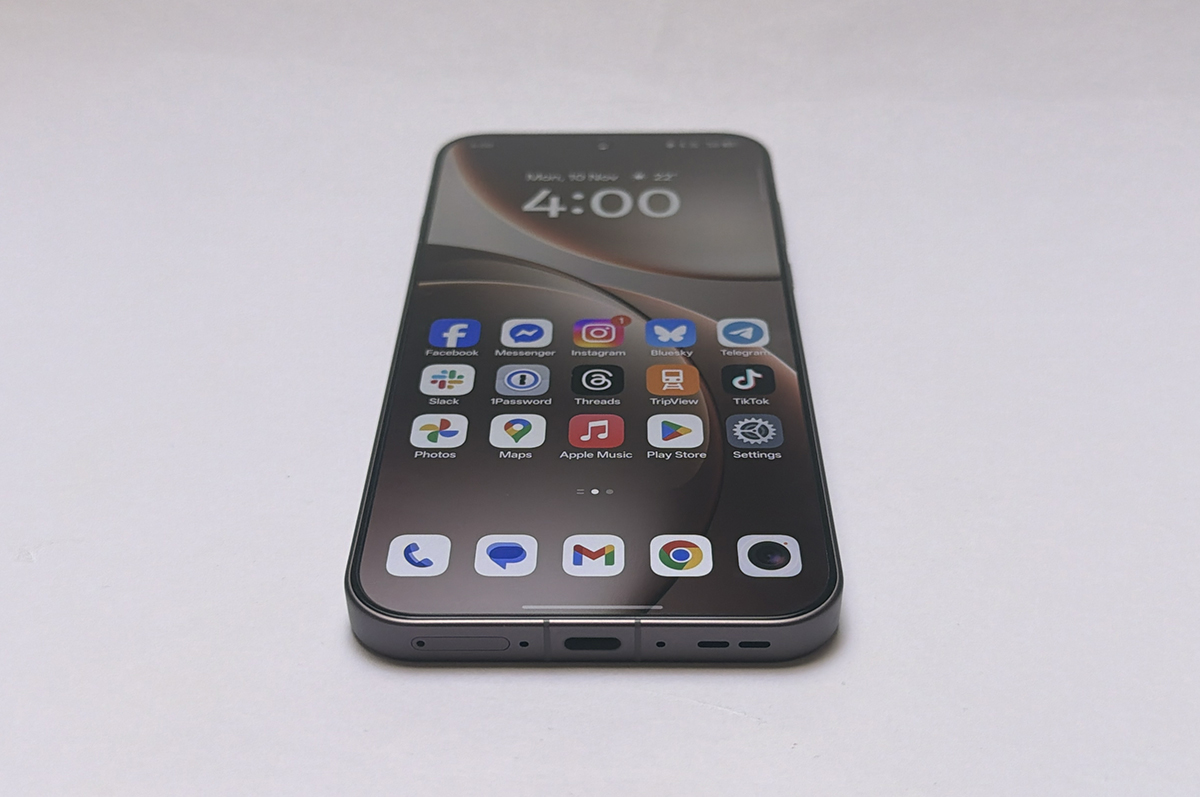
The Find X9 Pro is one of the very best phones you can buy right now. The fact it has the best battery in a flagship phone alone is a reason to consider it. Top-tier cameras certainly don't hurt either.
In any other year, the Find X9 Pro would have been a compelling phone, but it’s especially notable in 2025. Samsung and Google's flagship devices haven't really felt like upgrades. Sure, they got new chipsets, but there isn't much more to them. Conversely, OPPO has improved nearly everything. The Find X9 Pro got a big bump in battery, upgraded primary, zoom, and selfie cameras, a sleeker design, better protection on the display, and more. And yes, there is a faster chipset too.
If you're underwhelmed with Samsung and Google's flagships this year and want to stick with an Android device, the Find X9 Pro is the clear choice. While other brands have chased AI at the expense of actual upgrades, OPPO has put its best foot forward.
Alex Choros

Related Articles


