
Smartphones, among other electronics, will be more expensive this year thanks in part to a weakening Aussie dollar. But as the outright prices soar, the option to buy a new phone on a telco contract plan looks more and more attractive.
Apple was first to move pricing upwards, with an across the board increase in the price of iPhone 6 handsets at the start of March. All iPhone 6 and iPhone 6 Plus handsets are now significantly more expensive through Apple Australia online store, with the base iPhone 16 16GB model going from $869 to $999. The top tier iPhone 6 Plus with 128GB storage saw an even steeper bump, with the RRP increasing from $1249 to $1449.
Apple is not alone in higher handset prices though. HTC will sell its One M9 flagship smartphone in Australia this year with an RRP of $1099. This is $200 more than the price of the HTC One M8 when it was released nearly exactly a year ago. Samsung is yet to announce the price of the soon-to-be released Galaxy S6.
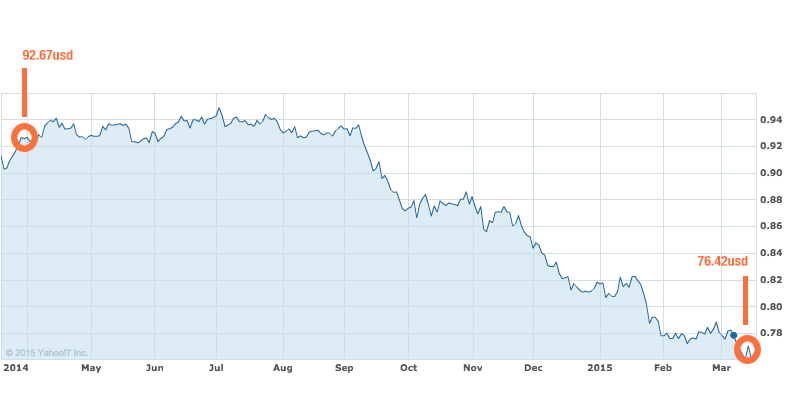
There are some differences between the HTC One M8 and One M9, like a two-tone metal finish and a 20-mega;pixel camera on the newer model, but it is hard to imagine these changes could account for a 22 percent price increase. Unless you factor in that the Australian dollar was trading at $0.91USD in March last year, compared with $0.76USD today.
“The weakening Australian dollar is having an impact that’s being felt industry-wide,” says John Demezieres, Account Director at Motorola Australia. “We wish to deliver the best value at the lowest prices, and as a manufacturer that is importing product, we intend to align our pricing to reflect the currency exchange rate.”
Foad Fadaghi, senior analyst at Telsyte, says all consumer electronics will cost more by Christmas this year but that it might not entirely explain the difference in price we are seeing today.
“Most companies will have some form of currency hedging to reduce the impact of currency fluctuations. This process is continual and typically there is a delay of some months before the full decline impacts consumer prices. The larger the company, the more hedging that typically occurs. Sometimes this hedging can be 12 months or more,” said Fadaghi.
As the price of phones inevitably rises, the big winners are going to be the telcos.
“The impact might push more people into 24 month contracts/payment plans with carriers. We saw a swing back to people choosing contracts last year due to iPhone retail outright prices.” said Fadaghi.
Indeed, the telcos are working hard to win customers with deep subsidies on the cost of new handsets. Despite its higher price tag, the telcos will sell the HTC One M9 on 24-month plans for about the same price per month as customers paid for the M8 last year.
But while the handset repayment cost of new phones might not be increasing, the telcos are working hard to move customers to higher priced plans, with generous bonus inclusions, and higher discounts on the price of phones.
For example, Optus are currently running a bonus data offer for customers who buy the HTC One M9 on the $80 plan, with 5GB per month up for grabs.
Joseph Hanlon

Related Articles


