

Two rear-facing cameras has quickly become the norm for flagship smartphones, but Huawei's decided that's not enough. The newly unveiled Huawei P20 Pro features three fear-facing cameras, once again co-branded with luxury camera manufacturer Leica.
The P20 Pro's camera array is made up of 40MP primary lens, a 20MP monochrome lens, and 8MP telephoto lens. The 40MP lens can be used to take massive photos, but by default, the P20 Pro will combine data from adjacent pixels to create a clearer, brighter 10MP image. The monochrome lens is used for depth estimation to simulate bokeh, and the fine detail and lower noise levels are said to improve image quality when zooming and in low light. Lastly, the 8MP telephoto lens is the equivalent of 3x optical zoom, or can be used for 5x hybrid zoom in combination with the other cameras.
Other camera tricks include AI powered scene recognition and image stabilisation, super-slow motion video at 960fps, predictive focus to compensate for motion blur, and a five-second long exposure mode that Huawei says works without a tripod. Taking a long exposure photo handheld would normally result in an impressionist blur, so we're very keen to see if the P20 Pro can live up to this promise.
Impressively, camera benchmarker DxOMark awarded the P20 Pro camera its highest score yet, describing its triple camera setup as "the biggest innovation we have seen in mobile imaging for quite some time" and a "real game changer". The P20 Pro's score of 109 is a full 10 points higher than the Galaxy S9+, which was the previous reigning champion.
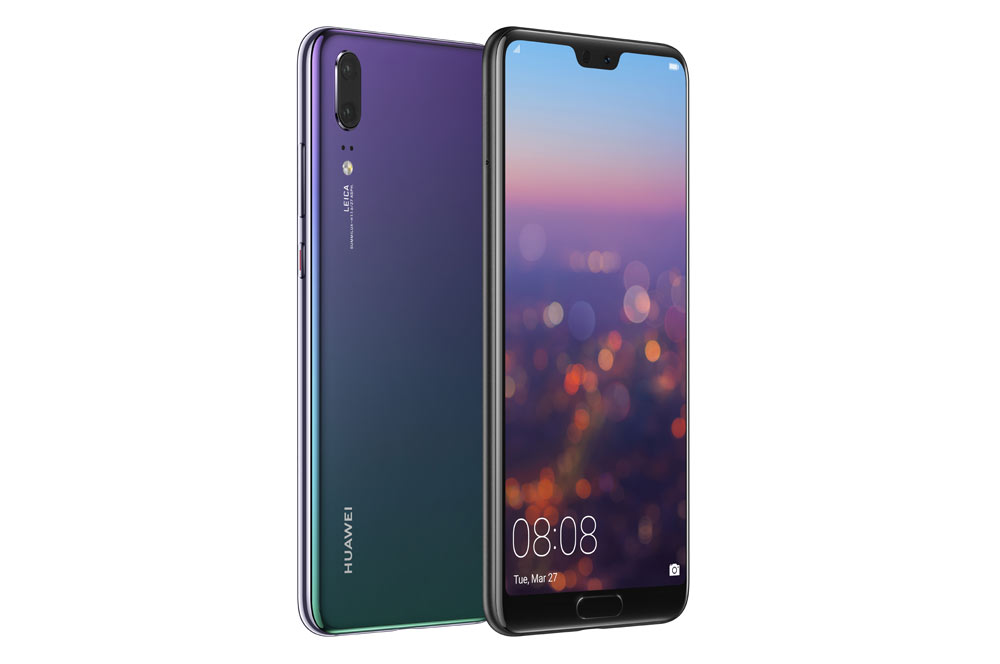
Joining the P20 Pro is its smaller sibling, the P20. The P20 only has two cameras on the back - a 12MP primary lens and a 20MP monochrome lens - but otherwise, the pair share much of the same hardware. Despite the less impressive camera setup, DxOMark awarded the P20 an overall score of 102, making it the second highest rated camera in a smartphone to date.
Both the P20 and P20 Pro have extra-tall displays, with an iPhone X style notch, measuring in at 5.8-inches and 6.1-inches respectively. If you don't want to live the #NotchLyf, Huawei's customised take on Android 8.1 lets you black out the space around it. While the pair support facial recognition, there's still a fingerprint reader beneath the screen. Neither phone has a headphone jack, but you'll get USB Type-C buds and an adapter in the box.
Much like Huawei's Mate 10, the P20 family make the move to glass backs. You can go for black or blue, or you can go for unique new two-tone options: twilight, or pink gold. Twilight transitions from purple to cyan, while pink gold, well, is a bit more obvious.
Key Specifications
| Huawei P20 | Huawei P20 Pro | |
|---|---|---|
| Display | 5.8-inch LCD FHD+ | 6.1-inch OLED FHD+ |
| Processor | Kirin 970 | Kirin 970 |
| Storage | 128GB | 128GB |
| RAM | 4GB | 6GB |
| Rear-Facing Camera | 20MP + 12MP | 40MP + 20MP + 8MP |
| Front-Facing Camera | 24MP | 24MP |
| Battery | 3,400mAh | 4,000mAh |
| Water-Resistance | IP53 | IP67 |
| Price | €649 | €899 |
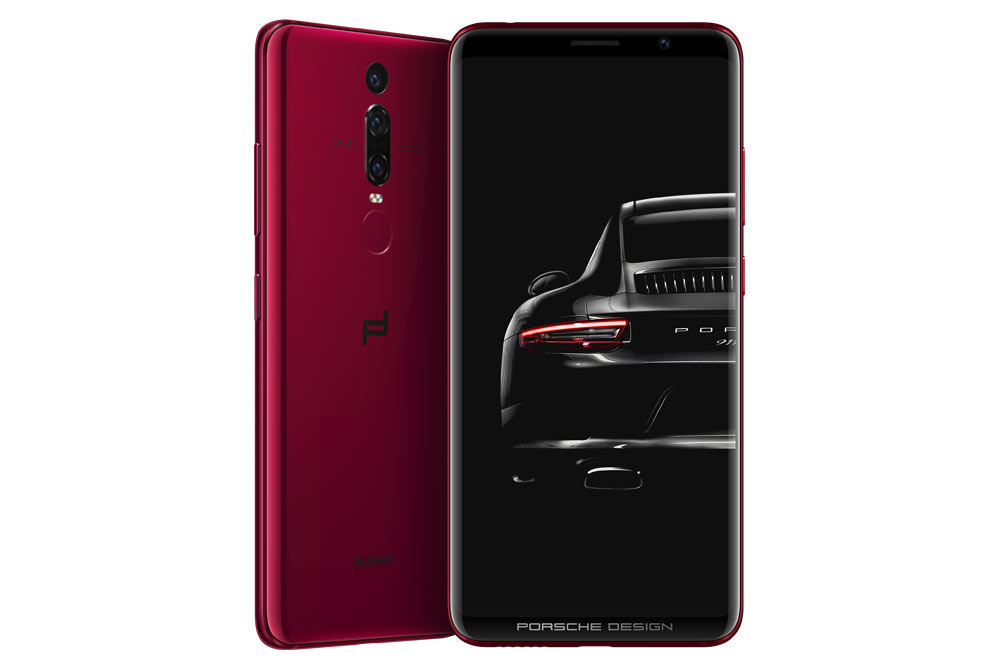
Huawei also used its P20 unveil to announced the Porsche Design co-branded Mate RS, a sort of hybrid between last year's Mate 10 Pro and the P20 Pro. The phone has a notch-less 18:9 Quad HD+ OLED display, but the P20 Pro's triple camera setup. While most other specifications are identical to the P20 Pro, the Mate RS has a few additions: NFC, wireless charging, 256GB of storage, a rear-facing fingerprint sensor, and a secondary fingerprint sensor embedded in its display (!!!). Unsurprisingly, the Mate RS is the priciest of the bunch, coming in at €1695. That's $2,730 locally.
The P20, P20 Pro, and Mate RS are all slated for an Australian launch, but local pricing and availability have yet to be confirmed. We wouldn't be surprised if the trio launch for a little under what a direct conversion from European pricing would suggest, and we're expecting to see them on sale in April or May.
Alex Choros

Related Articles


