

Huawei today announced its latest flagship smartphones - the Mate 20 and Mate 20 Pro - with pre-orders kicking off from today ahead of a November 1 release date.
Mate series devices are typically Huawei's testing ground for new technology, and this is once again true this year. Especially in the case of Mate 20 Pro, which will be the first smartphone in Australia to have an in-display fingerprint scanner (and it actually works really well, but read our Mate 20 Pro hands on here for more on that). There's also iPhone style 3D facial recognition, a huge 4,200mAh battery that should easily last two full days, a new triple lens camera configuration that can do plenty of cool tricks.

The Mate 20 Pro camera setup now includes a 40MP primary lens, a 20MP ultra-wide angle lens, and an 8MP telephoto zoom lens. There's a lot of nuance to it, but for the most part, the phone is using these - and some smart software - simultaneously to take better photos.
In addition to your standard point-and-shoot modes, the Mate 20 Pro camera has a couple of neat features.
Firstly, the P20 Pro's Night Mode makes a return. This uses exposure bracketing to get a more detailed image when shooting in lowlight environments. Essentially, the Mate 20 Pro will take multiple photos at different exposures over a short period of time and stitch them together to retain more detail and provide extra pop.
You've got up to 5x hybrid zoom, which uses a combination of software and the telephoto lens to zoom beyond the cameras are physically capable of. There's also a "super macro" mode that lets you take extreme closeups of subjects as close as 2.5cm away from the camera.
The ultra-wide angle lens does what the name suggests, zooming out from your primary lens, rather than in. It does have a slight fisheye look to it, and isn't as good in lowlight, but it's a welcome addition to the toolkit.
Check out some of our early Mate 20 Pro camera samples here.
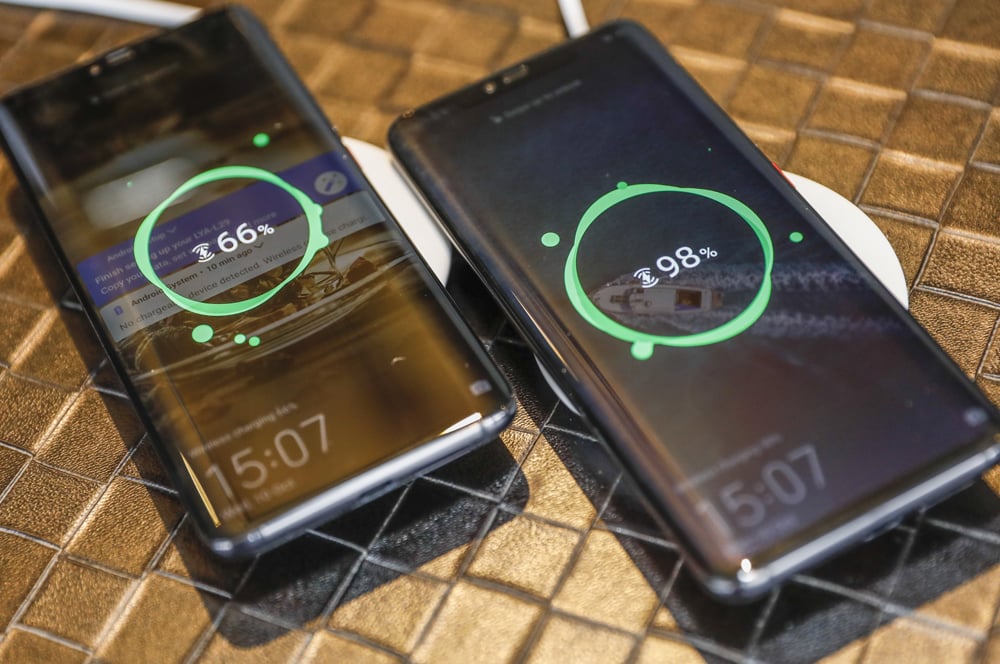
Another standout feature is the sizeable 4,200mAh battery, which should comfortably last most users two days. If you do manage to run it dry, the included fast charger will take you from flat to 70% in half an hour. Notably, you can use the Mate 20 Pro to wirelessly charge other Qi-enabled smartphones - recent iPhones, the Pixel 3, and most Samsung flagships from the past couple of years - provided you have at least 40% battery left.
While the non-Pro Mate 20 shares a lot of DNA with the Mate 20 Pro, it's a significantly different device this time around. While the Mate 20 Pro has an extra-tall curved display, the Mate 20 has a more traditional 16:9 screen with flat edges. You don't get 3D facial recognition on the Mate 20, but this does however mean its notch is much smaller than the Pro's, with housing big enough for just a single camera.
The Mate 20 also has a three rear-facing camera configuration, but with a slightly different setup. You get the same 8MP telephoto lens, but the primary camera lens is 12MP, and the ultra-wide angle lens is 16MP.
One other notable difference is the Mate 20 trades away the Pro's water-resistance for a headphone jack.
Here's how the pair compare:
Key Specifications
| Mate 20 Pro | Mate 20 | |
|---|---|---|
| Display | 6.39-inch OLED 1440p+ | 6.53-inch LCD 1080p |
| Processor | Kirin 980 | Kirin 980 |
| Storage | 128GB | 128GB |
| RAM | 6GB | 6GB |
| Rear-Facing Camera | 40MP + 20MP + 8MP | 12MP + 16MP + 8MP |
| Authentication | 3D face unlock + in-screen fingerprint reader | Face unlock + rear-facing fingerprint reader |
| Battery | 4,200mAh + Wireless Charging | 4,000mAh |
| Water-Resistance | IP68 | N/A |
| Price | $1,599 | From $1,099 |
Both phones will be available for pre-order from today, ahead of a November 1 launch date. Customers who pre-order the Mate 20 will score a pair of Huawei's Freebud wire-free headphones, while Mate 20 Pro early adopters will get a wireless supercharger as well as a pair of Freebuds.
Outright, you're looking at $1,599 for the Mate 20 Pro, and $1,099 for the standard Mate 20. Both will be available outright through JB Hi-Fi, Kogan, and MobileCiti, and on a plan through Vodafone. The Mate 20 Pro will also be available outright through Harvey Norman and on a plan through Optus.
Outright models are dual SIM, while those sold through telcos are single SIM only. Both phones have expandable storage, but this uses Huawei's new NM card format rather than micro SD. We're not quite sure when NM cards will be available locally, but you'll be looking at $139 for 128GB.
The Mate 20 Pro will be available in a choice of black of "Midnight Blue" or black, while the Mate 20 will just come in black.
Porsche Design Mate 20 RS and Mate 20 X
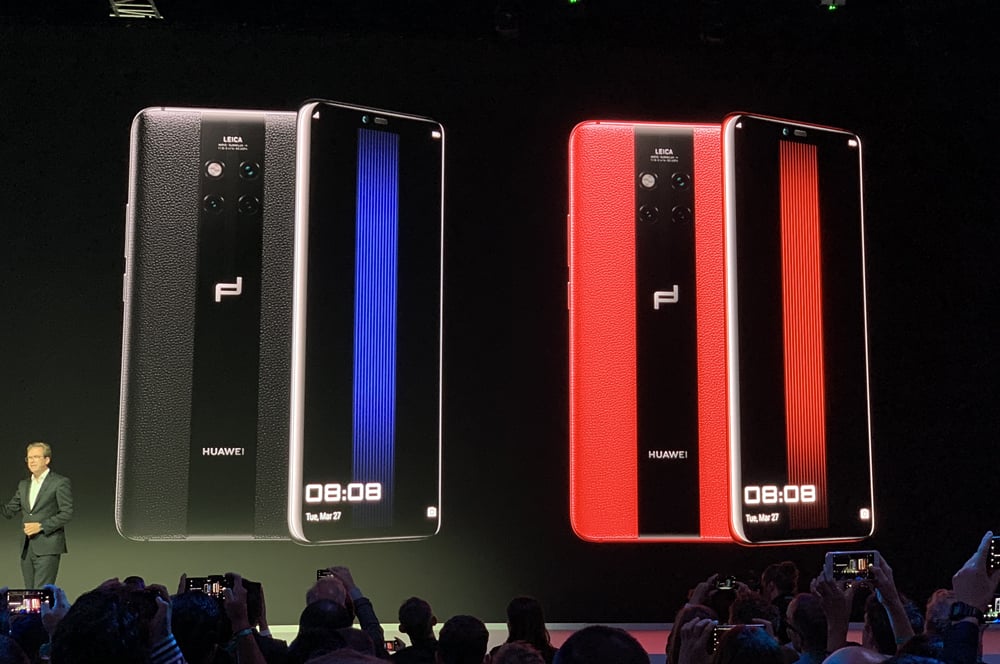
Huawei also announced two more Mate variants that - at this stage - don’t look like they'll be available in Australia: the Porsche Design Mate 20 RS and the Mate 20 X.
The Porsche Design Mate 20 RS is Huawei's latest collaboration with the luxury brand, taking even more inspiration from the sports car this time around thanks to a glass and leather back. Most of the back is leather, but there's still a glass strip running down the middle. It's large enough to mean wireless charging still works. Huawei says the leather gives the phone a little more grip, and won't affect water-resistance.
Other than extra storage and RAM (256GB or 512GB, and 8GB), the Porsche Design Mate 20 RS is identical to the Mate 20 Pro in terms of hardware.
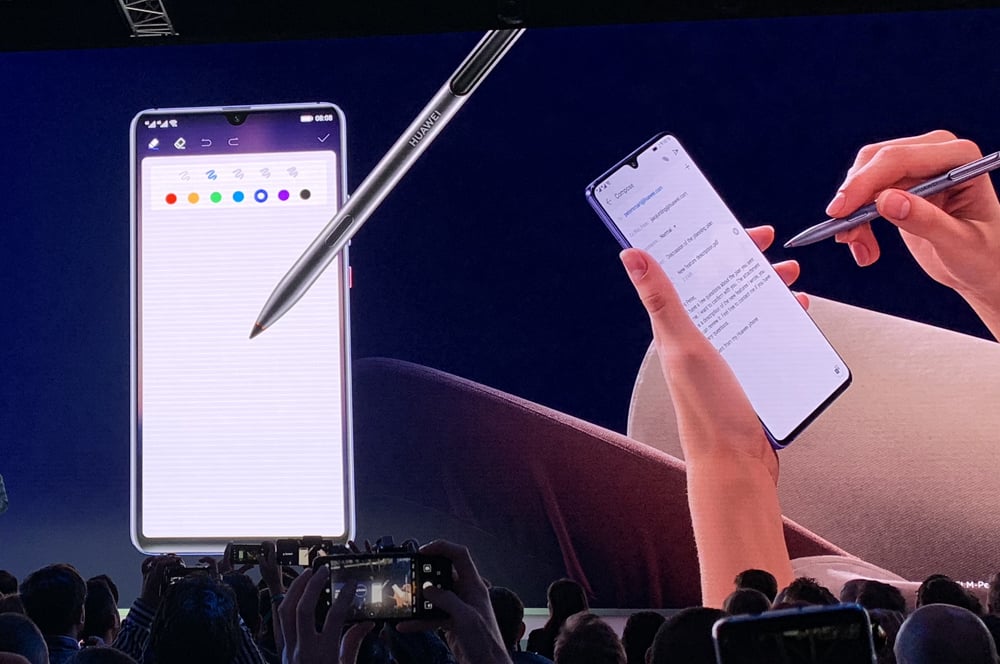
The Mate 20 X is a supersized 7.2-inch model that comes with a stylus and larger 5,000mAh battery. While it has the same processor as the Mate 20, it has a different cooling design that is meant to help the phone run cooler when gaming and further help with battery life.
WhistleOut travelled to London for the launch of the Mate 20 and Mate 20 Pro as a guest of Huawei.
Alex Choros

Related Articles


