

Smartphone maker Huawei already has several of the world's best phones in market, but also has a clear vision for what we should expect next, with a focus on new design, better cameras and smarter Artificial Intelligence (AI).
During a recent visit to the Huawei campus in Shenzhen, WhistleOut had a chance to glimpse into the Huawei crystal ball. Shao Yang, Huawei's Vice President of Strategy Marketing (Consumer Business Group) outlined a few areas for development, saying that while computing performance will naturally continue to improve, there is plenty more to look forward to.
Central to this vision is the way AI will do more of the heavy lifting to help us use our phones more efficiently, from the way we interact with the phone, to the information we get and the photos we take.
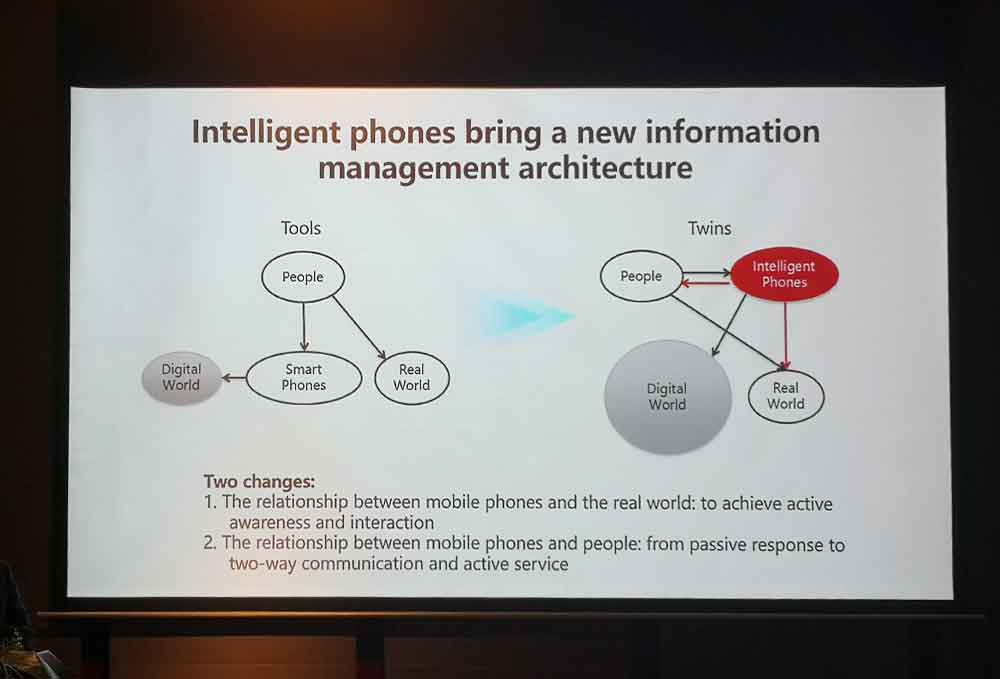
Huawei believes that AI will transform the way we input information into phones in general. At the moment, we do all the work: we touch on phone screens to indicate which services we need, we type long strings of words into virtual keyboards and we can speak basic commands.
Future devices will be able to 'see' your surroundings; these devices will be able to recognise objects in your environment and deliver relevant information. Patterns in your behaviour and routine will inform the AI as to what information is most important and when you need it.
"Your phone is more like a shadow of you," Yang explained. "Now you need to find the information, but in the future the information will find you."
AI will also be integral to building the smartphone cameras of the future. There will be several hardware iterations going forward, with better lenses and larger image sensors, but it will be the software side of smartphone photography that will achieve the big leaps forward.
For example, intelligent object recognition should help render more realistic colours but referring to an ever-growing database of information about the things we see around the world. Blurry photos will be a thing of the past, as AI smooths out the edges and removes shakiness introduced by our silly, human hands.
Cameras will be used more than for just capturing our memories. Like the microphone today, the camera will be a key tool for inputting information into the phone.
"If you see something, and you want to buy it online, you will use the camera [to take you to an online store] to buy it," said Yang.
This is already a big part of everyday life in China, where QR codes are ubiquitous and used to pay for basic goods and services. Most stores in China have WeChat Pay and AliPay QR codes at the counter and customers pay by scanning the code and typing in the price. You can even transfer money to friends and family the same way.
The shape and style of our phones will change dramatically, if Huawei has its way, with foldable LCD screens to be in market as early as 2019 (but probably a bit later). While this may seem needlessly sci-fi right now, it should satisfy the conflicting desire to have a larger screen but in a phone that is still small enough to comfortably fit in a pocket. In fact, future phones could be half as thin as even today's already petite handsets.
Yang believes that future phones will not have buttons or holes, with wireless charging to replace the charging port, and under screen fingerprint scanner to be the way we unlock our phones going forward.
But perhaps the most exciting and important change coming soon to our phones is a shift in battery technology. Huawei (like several other phone makers) is researching completely new batteries using the super-material graphene. Batteries made from graphene will be able to hold more charge, but will also be able to recharge much, much faster -- able to go from empty to full in a matter of minutes.
For smartphone lovers, the future is bright: lit by the screens of the phones that will be even harder to put down. Huawei's vision is for phones that we work less to keep online, and that work even harder for us in return.
WhistleOut travelled to Shenzhen as a guest of Huawei.
Joseph Hanlon

Related Articles


