
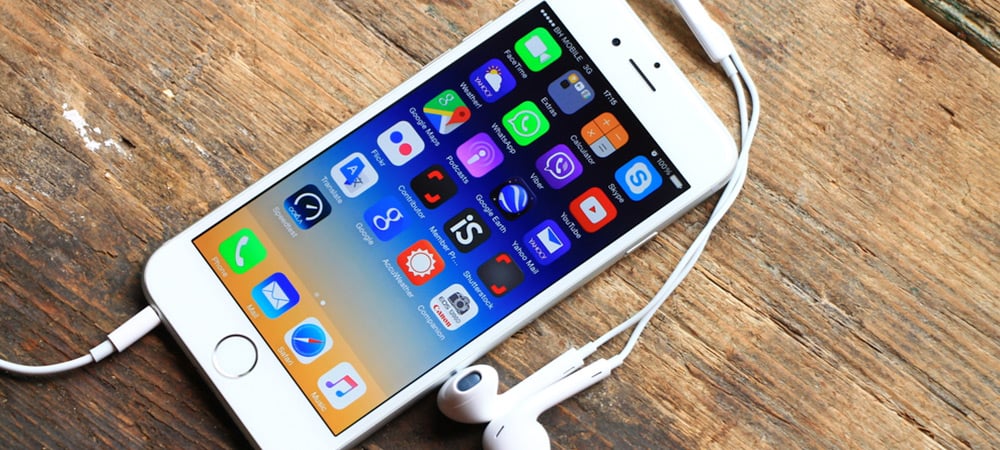
Apple is just weeks away from announcing a new iPhone, tipped to be the iPhone 6s, and with it a number of improvements over the current iPhone model.
While Apple is keeping tight-lipped about which features it is added or enhancing, we’ve collected the ten features which must be on the top of its list.
1. Bigger, Better Battery
To improve battery life would be to address one of the most common complaints about all modern mobile phones. The iPhone 6 and 6 Plus have reasonably good battery life, but it can always be better.
Imagine an iPhone with two full days of battery life, how great would that be? Apple might need to include a higher capacity battery to achieve this, and it might make the phone thicker in the process, but we think this is a fair trade-off for a longer time between charging.
2. Bend-free Durability
The launch of the iPhone 6 Plus was plagued by reports that the phone was prone to bending, especially around the holes where the power and volume buttons stick out from.
It goes without saying that Apple needs to avoid this happening again. There have been reports, based on leaked designs, that Apple is reinforcing these vulnerable areas of the phone, which is great news. Increased durability all-round is something we should expect in devices we carry around with us everyday.
3. Waterproof
In line with greater durability, Apple should seriously consider making the next iPhone water resistant. This is a feature Samsung has dabbled with waterproofing in the past, and it is included across most phones in the Sony handset range.
Sony now even include a ‘cap-less’ waterproof design, where the external ports, like the charging port, are still exposed to the elements, but are invisibly sealed and water resistant. Sony phones can be submerged in up to 1-metre of water or more, which is the level of waterproofing Apple should be striving for.


4. Full-HD screen
The current generation iPhone 6 features Apple’s ‘Retina’ branded screen, and while this sounds impressive, it is actually a dip in quality compared with most popular Android phones, like the Galaxy S6 and the LG G4. Screen sharpness is measure in pixels per square inch (ppi). Samsung’s Galaxy S6 measures 577 ppi, while the iPhone lags behind at 326 ppi.
The iPhone 6 Plus on the other hand included a Full HD 1920 x 1080 pixel screen — the same resolution as more flat panel LCD TVs. This measures at 401 ppi. In our opinion, this would be the minimum upgrade we’d expect to see in an iPhone 6s.
5. Ditch the 16GB storage option
iPhone customers currently have the choice of three internal storage options: 16GB, 32GB and 128GB, with a reasonably expensive pricing tier from the smallest to largest.
But as technology continues to improve, and we do more with our phones, it is time for Apple to ditch the 16GB storage option and replace it with a 32GB option instead. Sure this would be expensive for Apple, but when you consider it is the world’s most profitable company, it should be too much to ask for a little extra memory.
6. Cashless Payments
Apple launched Apple Pay last year, but excluded all countries outside of the U.S. at launch. The irony is that ‘Tap and Go’ payments are still only a small percentage of transactions in the U.S., while we’ve fully embraced the technology here in Australia.
When the iPhone 6s launched in a few weeks, we’d love to see a fully fledged partnerships with Aussie banks and credit merchants, so that your iPhone will be all you need to pay for your morning coffee, or you weekly shop at Coles or Woolies.
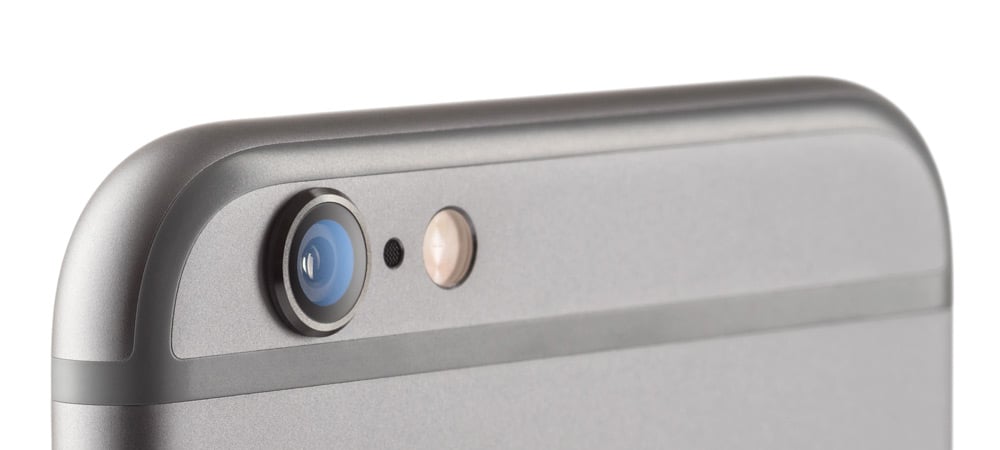
7. Higher megapixel camera
iPhones tend to have great cameras, but technologically they are behind the eight-ball. Samsung and LG phones have 16-megapixel cameras, Sony and HTC phones have 20-megapixel sensors. In comparison, the iPhone 6 has 8-megapixels.
For most everyday photography, 8-megapixels is fine, but if you’re a little more serious, or you’d like to print out your photos, a higher pixel sensor would be a must have. And, like higher internal storage, there is no reason why Apple can’t afford to consider it.
8. Better Selfie Camera
As much as we’d love to see an improved camera on the back of the iPhone, a better selfie camera on the front could prove to be even more popular with the bulk of iPhone fans.
Selfies are a big part of the way we use phones to take photos — just ask Kim Kardashian. Other phone makers are now including front-facing cameras with higher resolution sensors and, more importantly, wider angle lenses. This latter function means you can get more into your selfie shots; more friends and more of your surroundings.
9. NFC: bump and go
Near Field Communications, or NFC, is a sensor found in most Android phones which can be programmed to perform a task when ‘bumped’ against another NFC tag. For example, Tap and Go payments on your debit card use NFC, and Android phones connect with Bluetooth speakers and headphones with a ‘bump’.
This is a really nifty technology which Apple so far has ignored — most probably because it doesn’t like playing nicely with other tech companies. Still, we’d love to have this feature included in future Apple phones.
10. File Transfers
Since the very first iPhone, computer savvy owners have complained about the difficulty in transferring personal files from a computer onto the iPhone memory. Transferring music and videos requires iTunes (which everyone hates) and you can’t copy other files, like Word documents or business presentations, and take them around with you. You always need a separate USB drive.
It is time for Apple to give up these silly restrictions and let us use the storage in our phones for the things we need. It would actually be advantageous for Apple too, if we could use the storage freely, more people would buy the 64 and 128GB models of the phone.
Feature image:
Ellica / Shutterstock.com
iPhone Camera:
Oleg GawriloFF / Shutterstock.com
Joseph Hanlon

Related Articles


