
This guide was originally published in 2024 and the information in it may no longer be relevant.
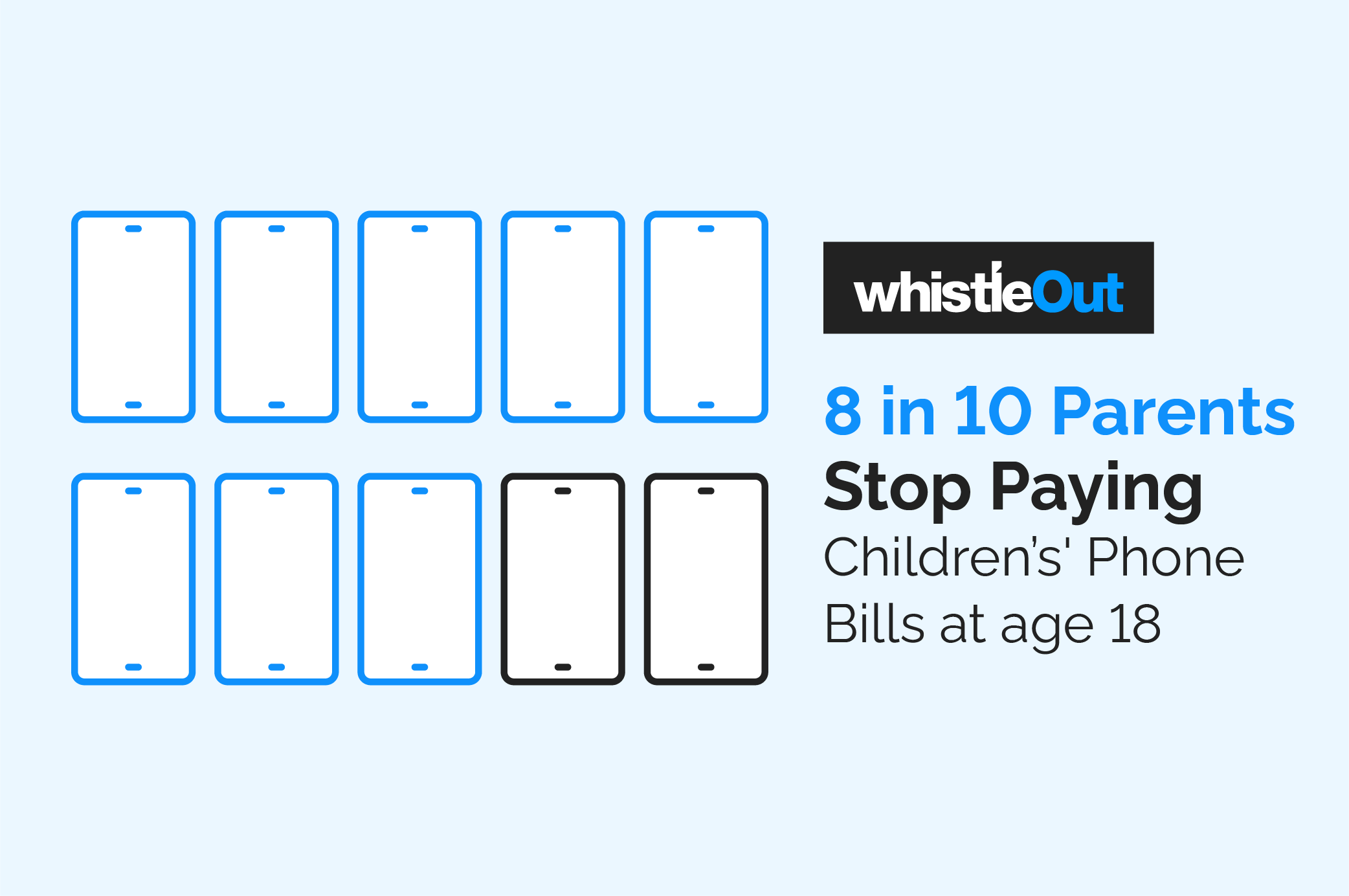
Maturing into adulthood often signifies independence, marked by milestones like moving out and establishing personal responsibilities, perhaps even securing your own phone plan! A significant 83% of parents stop financial assistance for their children's mobile plans when they turn 18. In contrast, a mere 13% of children anticipate paying for their mobile phone plans when they become adults. This big difference highlights how different generations see the shift to financial independence when it comes to using mobile phones.
WhistleOut was keen to understand not just the motivations and expectations shaping the financial ties between parents and their children regarding mobile phone plans, but also to delve into the wider array of support that parents give their children, especially for tech-related expenses. Here's what we learned.
What Parents Really Expect for Continued Support
Surprisingly only 20% of parents choose to pay for their children’s phone costs without imposing any explicit expectations on their children.
For the majority, ongoing financial assistance is not a carte blanche but rather contingent on specific conditions.

When we dig into the mobile plan itself, we find that 59% of respondents are currently on shared family phone plans, while 41% are on individual plans paid for by parents. The majority of family plans include both parents (74%) and one child (55%), shedding light on the prevalent structures of mobile phone plans within families.
Furthermore, we looked at specific network use. Of children on their parents’ family plans, here’s the breakdown by carrier:
- Telstra 45%
- Optus 21%
- Vodafone 15%
Why do Parents continue to Pay for Children's Mobile Plans?
While the expectation is that parents will stop paying for their children's mobile phone plans at 18, the reality is different. Only 13% of children anticipate taking over the responsibility at that age. This raises the question: why do parents continue to foot the bill?
Here are the main reasons for parents:

Whistleout savings specialist Joel Gibson said the data presented some money-saving opportunities for parents and kids alike.
"The Data Bank of Mum and Dad is crucial to keeping family communications up and running, given the cost of living crisis we're living through right now. But we've identified that many parents are overpaying by hundreds of dollars a year and could get a much better bang for the family's buck. Almost half of the plans paid by parents are with one of the most costly providers, plus many kids' plans are probably too big for them with 79% costing over $20 a month. A lot of families could save hundreds in a matter of minutes just by visiting a comprehensive comparison site. There's no need for parents to kick their kids off the family account in the middle of a cost of living crisis, but there's no need to pay through the nose either!”The Motivations Behind Young Adults Taking Charge
As young adults manage their mobile phone expenses, different things affect their choices to avoid taking on financial responsibility. These elements encompass financial considerations, the ease of managing a family plan, and a lack of awareness about the process of obtaining individual plans. Here are the factors listed below
What factors influenced children’s decision not to pay for their mobile phone plan themselves this year?

Of the young adults who do assume responsibility for their mobile phone plans, the main driving forces for them making this change were: :
- A resounding 66% wanted financial independence
- 38% of respondents cite a pursuit of better plan options tailored to individual needs, such as seeking larger data allocations for an enhanced digital experience.
- Privacy concerns also emerge as a notable influence, with 24% expressing reservations about shared text or call history within family plans.
- Furthermore, 22% of participants indicate that the family plan is no longer seen as a cost-effective solution, prompting a shift towards individual plans that align more closely with personal preferences and financial autonomy.
WhistleOut found out that transitioning from family plans to individual plans with smaller providers SIM only plans can result in annual savings of up to $600. Consider the Optus four-bundle plan, which is priced at $165 per month and includes 320 GB of data, adding up to $1980 annually. However, choosing Moose mobile, which operates on the Optus network and provides a total of 400 GB across four individual SIM plans, could bring your yearly cost down to $1382.
The final intriguing finding is the satisfaction on both sides of the arrangement. An overwhelming 95% of parents are content with paying for their children's mobile phone plans, and 78% of children express gratitude for this financial support.
Parental Spending Doesn't Stop at Phone Plans
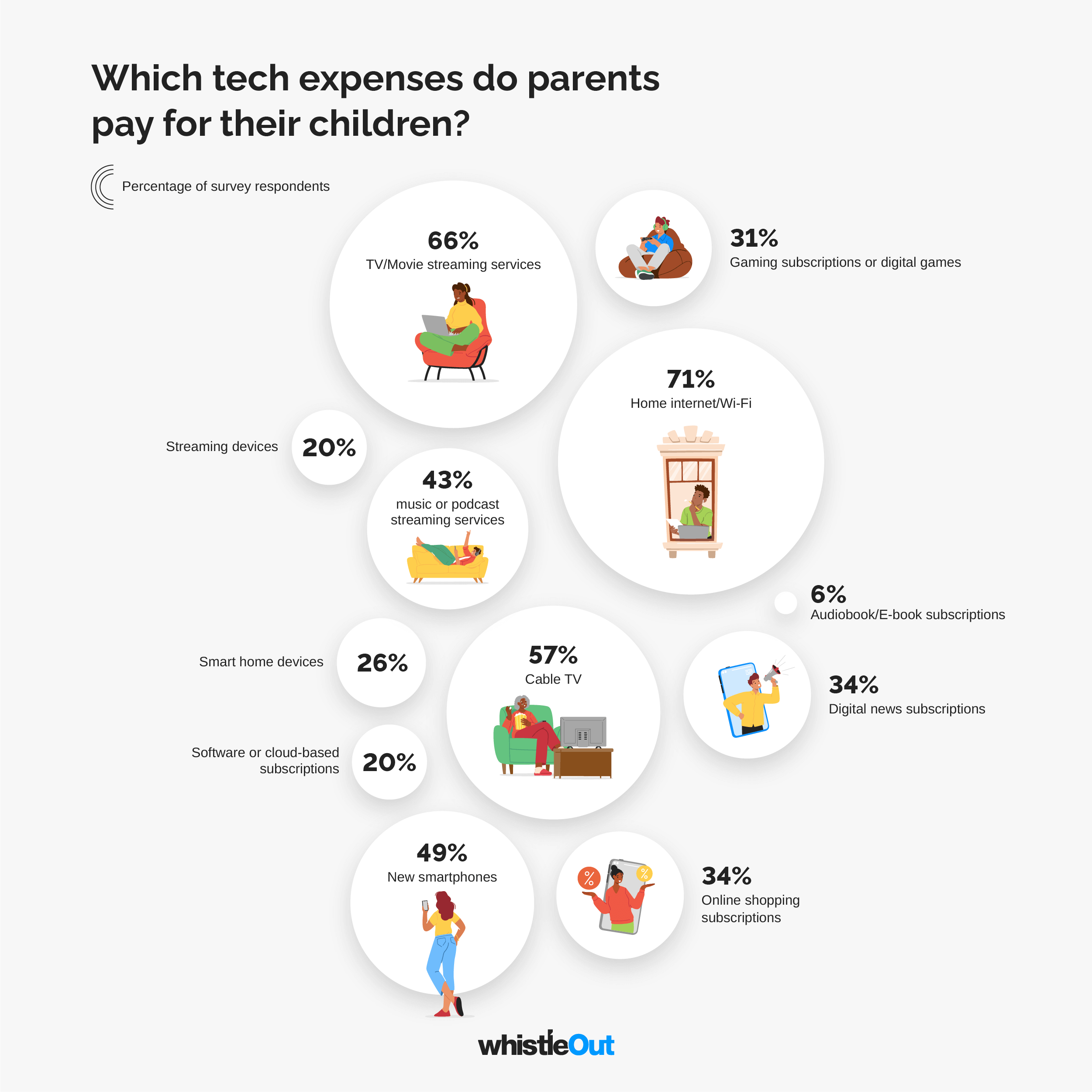
The extent of parental financial support extends beyond mobile phone plans, with a significant 51% of individuals receiving assistance exceeding $100 per month in various other forms. Groceries top the list as the primary type of support, with 65% of young adults benefiting from this assistance. 61% receive aid in the form of rent or mortgage contributions, encompassing those living both independently and with their parents. Additionally, 32% of them receive financial support for their tech expenses.
When it comes to tech expenses, the study unveils interesting patterns. Traditional expenses like home internet are commonplace, but under the music or podcast section, 67% of recipients fall within the 18-24 age group. In the gaming subscriptions or digital games section, 64% of beneficiaries are also aged between 18 and 24. This nuanced breakdown highlights the diverse ways in which parents continue to provide financial support, adapting to the unique needs and preferences of their adult children.
Methodology
WhistleOut surveyed 1000 Australian parents and children (16+ years old) about their perspective on mobile plan bills. The survey was distributed online via Pollfish.

Related Articles


