

HTC 5G Hub Review: The Verdict
As exciting as the prospect of 5G is, the HTC 5G Hub suffers for being the first of its kind. It's an excellent device, but the lack of 5G coverage and limited data allowances make it hard to justify the premium over a comparable 4G portable modems.
What we love
- Reliable connectivity
- Great battery life
- Fast, even when stuck on 4G
What could be improved
- You'll pay a steep premium for 5G
- Telstra's plans don't have enough data
- 5G coverage isn't widely available yet
65/100
Coming first isn't always ideal. While tech companies are in a constant battle to be on the bleeding edge, this can have consequences that aren't great for consumers. The HTC 5G Hub - Australia's first portable 5G modem - exemplifies this.
The hotspot itself is great, but being first to market hurts the HTC 5G Hub as much at it helps it. Speeds aren't quite there yet, 5G data plans are expensive, and coverage is limited. It's a typical "early days for new tech" scenario.
But while it will take a couple of years for 5G to become available Australia-wide, some of us are lucky enough to already have coverage. If that's you, the HTC 5G Hub represents an interesting proposition.

Natural born killer?
5G promises download speeds over 1Gbps, which sounds like mana from heaven when compared to 100Mbps most NBN connections max out at. This has had many touting 5G mobile broadband and devices like the HTC 5G Hub as NBN alternatives, replacements, and killers. Why bother with a patchy politicised mess of a network when you can circumvent it with the next generation of mobile networks? But as alluring as 5G might be, the HTC 5G Hub isn't quite ready to murder anyone yet.
5G is a bit of work in progress There isn't much 5G coverage in Australia right now. Telstra is currently the only telco with a readily available 5G network (and the only place you can buy the HTC 5G Hub), which currently only covers parts of 10 cities. This will continuously grow, but at present, your Hub will be spending a lot of time on 4G networks.
Even if you can get 5G coverage, download speeds aren't quite as fast as the hype might lead you to believe. In my testing, the HTC 5G Hub typically fluctuated between 250Mbps and 400Mbps on 5G networks. This is far faster than the NBN, but at the same time, I've managed to achieve similar download speeds on 4G devices. We're not quite at 1Gbps yet.
The HTC 5G Hub does however do an excellent job of maintaining 5G connectivity. While other 5G devices I've tested have had a tendency to flicker back and forth between 4G and 5G in areas with otherwise good 5G coverage (possibly due to it being early days), the HTC 5G Hub didn't have this issue. It held onto that next gen network for dear life.
And in a similar vein, while 5G connectivity quickly drained the batteries of the smartphones I've tested, the HTC 5G Hub seemed to do okay in 5G areas. Around four hours of actively using the Hub as a 5G hotspot only burnt about 20% of its battery life. The HTC 5G Hub should easily get you more than a full day of use per charge.
Coverage and speeds will improve, the device itself is great, so what's the catch? Turns out it's Telstra. The biggest problem with the HTG 5G Hub is cost on a plan.
Telstra's plans max out at 100GB for $116 per month on a 24-month contract. That's pretty pricey as far as mobile broadband is concerned, and for most it probably won't be enough for a home internet replacement. Especially when you can get an unlimited data NBN 100 plan for between $70 and $90 per month.
If Telstra could even just double its data allowance to 200GB for the same price, the HTC 5G Hub would instantly be a lot more appealing. It wouldn't quite be ready to roll the NBN's mutilated corpse into a carpet and dump it in a river, but at the least, it would start getting into fixed line internet replacement territory.
But even if you're okay with being stuck on 4G and a smallish data allowance, you're paying a lot for the privilege of future-proofing. The Hub retails for $984 outright which you will repay over 24 or 36 months with your Telstra plan. That's phone money.
Given that portable hotspots tend retail for around $200, you're certainly paying a premium. For comparison, Telstra's top-end 4G hotspot - the Nighthawk M2 - goes for $384 outright. It's the closest 4G device in Telstra's family in terms of feature parity. The pair are almost identical from a networking perspective; you're essentially paying a $600 tax for 5G connectivity.
And sure, that premium may seem a little more palatable over the course of 24 months, but it's still a lot.

Life in the slower lane
For what it's worth, the HTC 5G Hub still makes an excellent 4G hotspot. There's been variance, but I've got 4G download speeds as fast as 200Mbps when I've been using the Hub at home. That's still twice as fast as my fixed-line NBN connection.
This is frustrating, because expensive data aside, its zippy enough to make you want to replace your home internet connection.
So I did.
Since the HTC 5G Hub has an Ethernet port, you can connect it directly into a router or switch to share its connection with other devices. You may want to do this if you have devices that still require a wired connection, or if you have more than 20 wireless devices at home, which I do.
Stop judging me. Smart bulbs and Sonos speakers add up quickly.
While mobile connections typically have a higher ping (the time it takes for data to get between your device and the internet) than a fixed-line connection, I didn't find this to be impactful in day-to-day usage. My NBN connection tends to have a ping of around 10ms, while the HTC 5G Hub sat at around 20ms. This could have more of an effect if you're a gamer, especially if you like to play online shooters or anything twitchy. Tetris 99 on my Switch seemed to play fine, however.
If I didn't know I was using a mobile connection, I wouldn't have been able to tell. It would just be so much better with a larger download allowance.
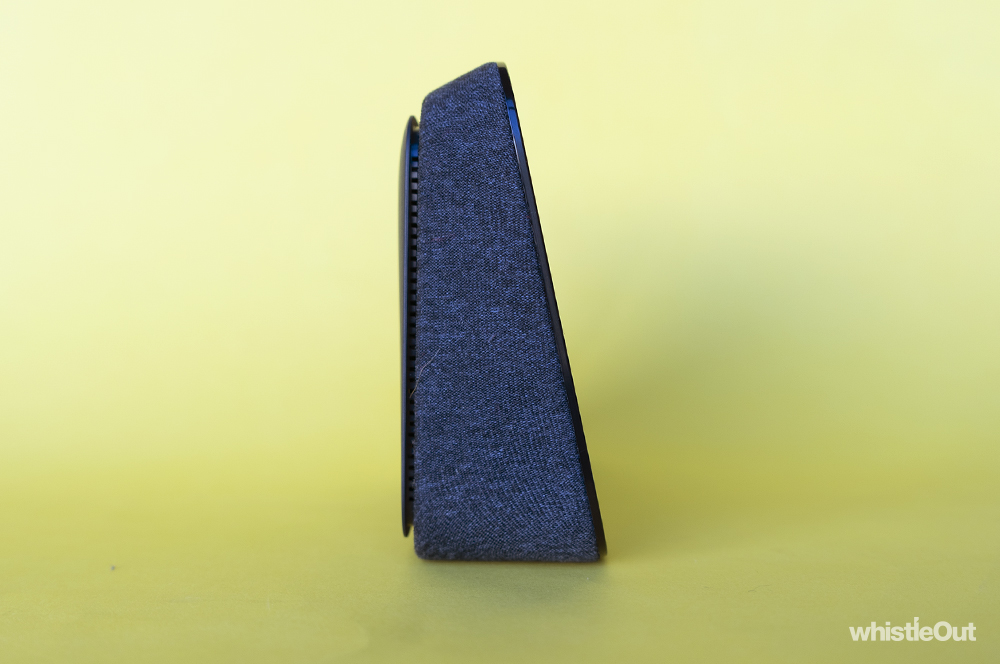
The HTC 5G Hub has one other unique point of difference: it runs Android. A full fledged version of Android Pie. It's almost like a kind of tiny tablet, complete with a 5-inch touchscreen and access to the entire Google Play Store.
While this isn't the kind of functionality you'd necessarily expect from a hotspot, it does mean the user interface is extremely polished, even if some apps will require you to rotate the device to use properly. You're also able to use a USB-C to HDMI cable to plug the HTC 5G Hub into your TV or a monitor, if you want to use it to get Netflix onto a bigger screen, for example.
Who is the HTC 5G Hub for?
For most, the HTC 5G Hub is overkill. 5G is exciting. The HTC 5G Hub is exciting. More importantly, it's an excellent portable hotspot - it's just hard to recommend.
As great as the hardware is itself, it's hampered by patchy 5G coverage and expensive plans. The limitations of being the first 5G modem to market work against its natural use case. You shouldn't buy it just for the sake of being future-proof.
However, if you're already in a Telstra 5G area and have money to burn, there is a certain appeal to the HTC 5G Hub. It's one hell of a back-up connection. It's nice to have ultra-fast download speeds available if you need them in a pinch - especially as 5G continues to improve. And it's always nice to have a reliable modem you can use on the go.
But for most, these use-cases are luxuries, rather than rational reasons to purchase the HTC 5G Hub. The cost of being on the bleeding edge is just too high.
5G will continue to improve as time goes on, data prices drop, and other telcos enter the space. But it's hard not to want more. As it stands, the HTC 5G Hub is far from being an NBN killer. It barely leaves a scratch.
Alex Choros

Find a better internet plan
Thousands of internet plans unpacked. All the facts. No surprises.

Related Articles


Internet Plans by State
- Internet Plans in ACT
- Internet Plans in NSW
- Internet Plans in NT
- Internet Plans in QLD
- Internet Plans in SA
- Internet Plans in TAS
- Internet Plans in VIC
- Internet Plans in WA


![[Hand-Picked] Best internet providers in Australia](https://r3.whistleout.com.au/public/images/articles/2026/07/man-and-woman-with-laptop-on-green-couch.jpg?w=280&h=280&usm=20&usmrad=0.8&fit=crop "[Hand-Picked] Best internet providers in Australia")

