
- Cheaper than the Vision Pro
- Clean design
- Inconsistent interface
- Lack of software ecosystem
While the Samsung Galaxy XR still hasn’t gotten an Australian price or release date, I had the chance to take the headset for a spin on the show floor of this year’s Mobile World Congress.
Before digging into the details of that experience, it’s worth setting the scene with a few specifics. Announced back in October 2025, the Samsung Galaxy XR is an Android-powered mixed-reality headset intended to compete with the expensive-albeit-ambitious Vision Pro.
Compared to Apple’s headset, the hardware here is a little leaner. The Galaxy XR runs on the Qualcomm Snapdragon XR2+ Gen 2 processor, 16GB of RAM, 256GB of on-board storage and an external battery said to offer around two and a half hours of usage on a single charge. On the inside, the headset offers two OLED screens with 4K resolution and a 100hz refresh rate. Perhaps most importantly, the Galaxy XR (USD $1,799) retails for almost half the price of the Vision Pro (USD $3,599) over in the United States.
Having not experienced the Vision Pro for myself, I’m not really qualified to gauge how the Galaxy XR compares in terms of fidelity. Still, the fact that the Vision Pro features a slightly faster 120Hz refresh rate isn’t as much of an issue as the fact that my demo didn’t involve the optional light-shield for the accessory. As a result of both that and the general hustle and bustle around me, the overall experience wasn’t really as immersive as I’d hoped. The bottom of my vision was always there to remind me just how far the gulf between 4K and reality is.
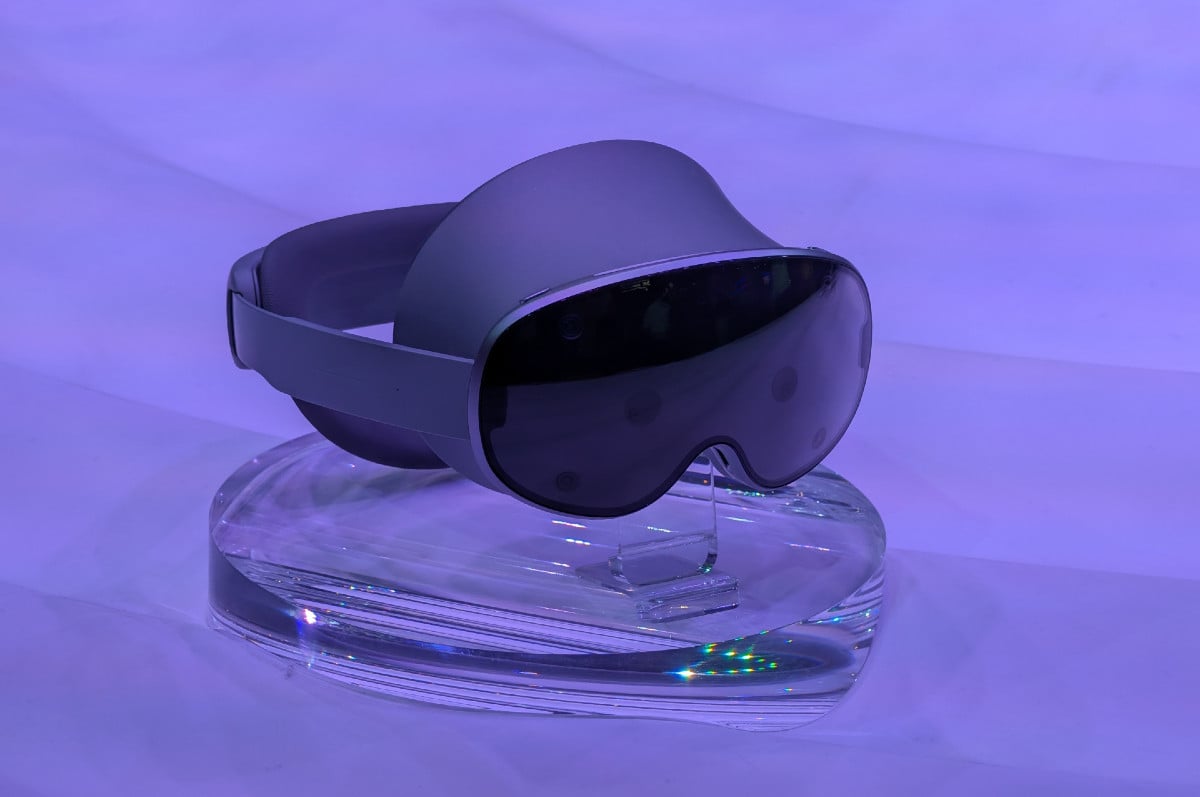
In terms of design, it’s not unfair to say that the Galaxy XR looks like most VR headsets. There’s nothing too distinctive about it, but it’s particularly offensive. It’s yet another face computer, though it is lighter than it looks. I appreciated the fact that the headset was fairly easy to adjust using the dial on the back of the headband.
After putting the headset on, the first thing I had to do was come to grips with the Galaxy XR’s unique gesture-based control scheme. This interface is powered by Google’s new Android XR platform. As the name might suggest, this software doesn’t exactly reinvent the wheel. It’s more of a remix situation. It’s got the look, feel and flow found on something like the Pixel 10a, minus any physical feedback.
Instead, the Samsung Galaxy XR is primarily controlled using hand gestures. The last VR headset I have spent the most time with was the Meta Quest 2, and this felt like a natural evolution of the same hand tracking tech. Even if you’re coming to the Galaxy XR with less literacy about the conventions of face computers, you’ll probably pick it up fast.
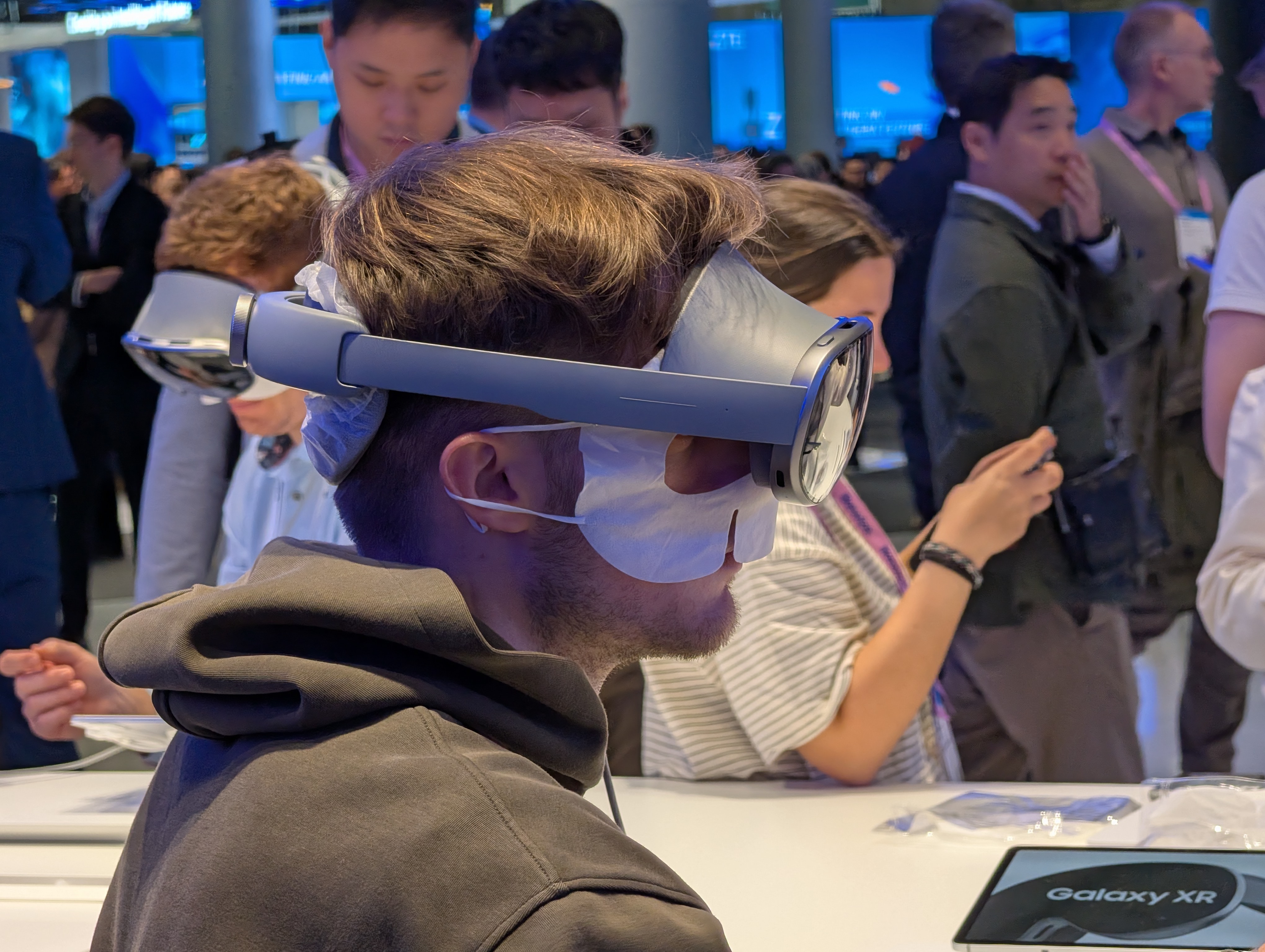
Pointing at apps to open them has a symmetry with touch-based interfaces that’s easy to grok. Unfortunately, this intuitiveness was quickly offset by the fact that there wasn’t much in the way of feedback. It all feels very floaty. Even during my demo, I’d pinch my fingers and then nothing would happen. Other times, the act of pinching would nudge the pointer off the icon I wanted to click.
Meanwhile, turning my palm towards me and pinching would take me back to the home screen. Again, this was less consistent than I’d like and sorely lacking in terms of the feedback you’d get from physical buttons. If going from physical buttons to touch sensors is one level down in terms of tactility, going from touchscreens to imaginary buttons feels like the next one after that.
Perhaps this is why Samsung and Google have put such an emphasis on AI and voice as alternative inputs. Once toggled via a button on the top of headset, you can use voice controls to open specific applications. That might sound familiar if you’ve messed with voice assistants like Siri, but the actual experience is much closer to something like Gemini Live. You’re not really giving the Galaxy XR explicit instructions like click this or close that app. You’re more so expressing wishes and then waiting to see how the headset responds.
Unfortunately, likely as a result of the network latency and noise on the MWC show-floor, those responses weren’t always what I was asking for and often arrived a little later than I’d have liked. When it works, there’s definitely some novelty to be found in the ability to navigate your apps using natural language. At the same time, I can’t say I was particularly convinced that quality is anywhere close to what it probably needs to be justify the price tag.
For what it’s worth, the Qualcomm hardware powering the Galaxy XR mostly lived up to its side of the bargain, even if the M5 inside the Vision Pro could likely outperform it in benchmarks. I didn’t really have the chance to try anything close to what it would take to push this silicon to its limits, but I am I’m uncertain what that would even look like if I did have more time.
All told, my demo with the Galaxy XR was pretty brief. It mostly consisted of trying out some 360-degree footage on YouTube and then trying to find my house using Google Maps. I tried to open the Netflix app, but unfortunately, it wasn’t set up. These experiences — which don’t feel all that far from what Samsung used to pitch the Gear VR back in 2015 — left me with little confidence about the commercial prospects of Samsung’s fancy face computer.
The cost of the Vision Pro has been a hot topic from the moment it was announced, and while Samsung has made something similar at a cheaper price-point, little effort has gone into making a cohesive argument for the foundational idea that strapping a computer to your face is a good use of your time, money, or dignity.
As steep as the asking price is, the fact that someone at Apple went to the trouble of optimising the company’s own apps for the Vision Pro goes a long way towards giving you a reason to want to use it. By comparison — and given the long-beleaguered state of Android tablets and the inherently niche audience for a device like the Galaxy XR — it’s so hard to buy into the idea that developers will give you much to do on it.
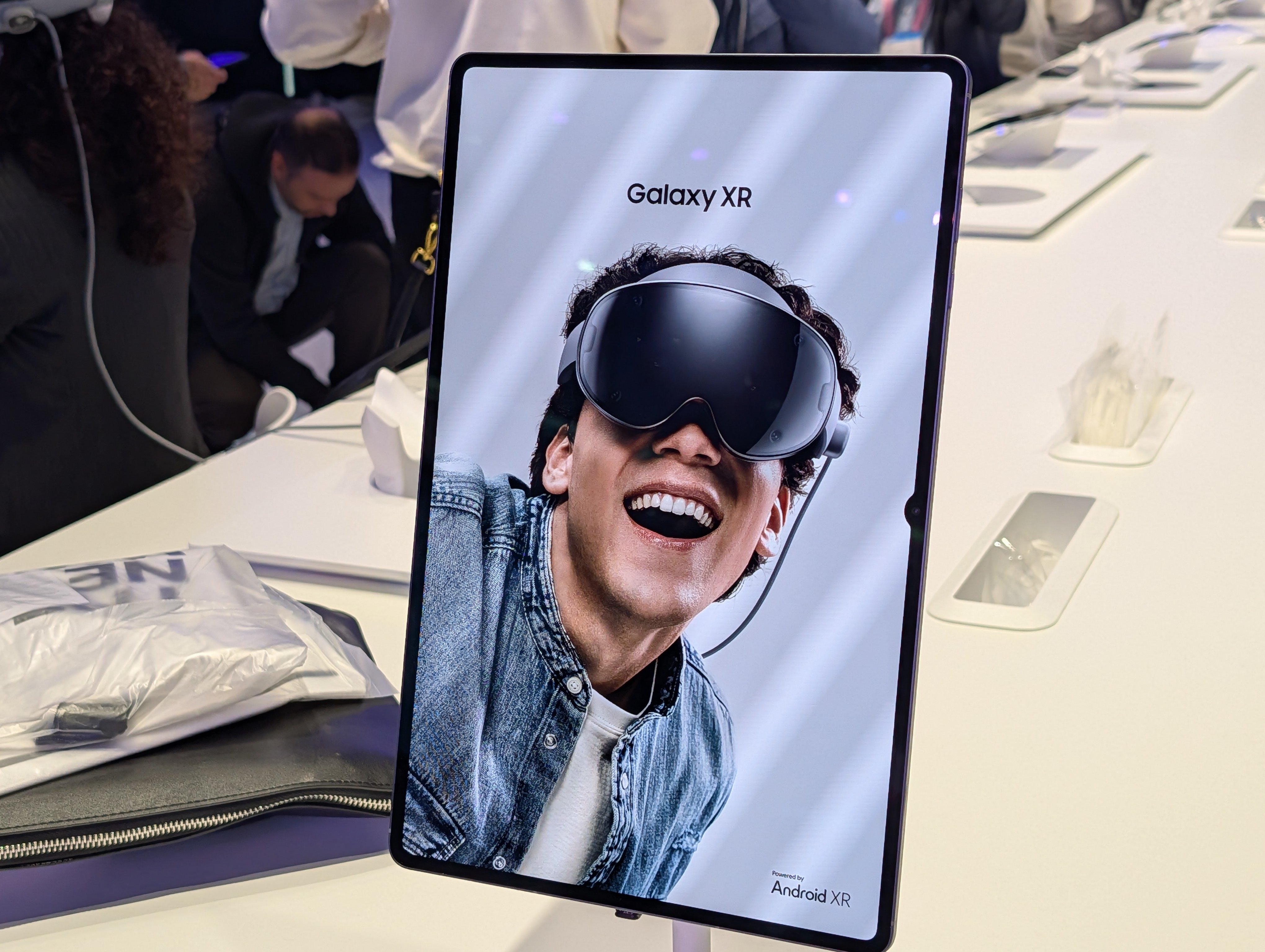
The Galaxy XR might be less expensive than the Vision Pro, but that advantage is overshadowed by the lack of ambition attached to the accessory. Even if the latter is obscenely expensive in the way that Apple products often are, the company’s argument for spatial computing is so much more plausible than the one made by Samsung.
These days, most computers look, feel and work the same. While I haven’t had the opportunity to see if Apple have managed to succeed in making one that’s genuinely different in the Vision Pro, my hands-on with the Galaxy XR left me with little doubt about what Samsung has made in pursuit of its biggest competitor.
Just another VR headset.
Disclosure: WhistleOut Australia's coverage of Mobile World Congress 2026 is supported by OPPO.
Fergus Halliday
Digital Content Editor

Related Articles


