OPPO R17 Pro Prices & Plans



Features
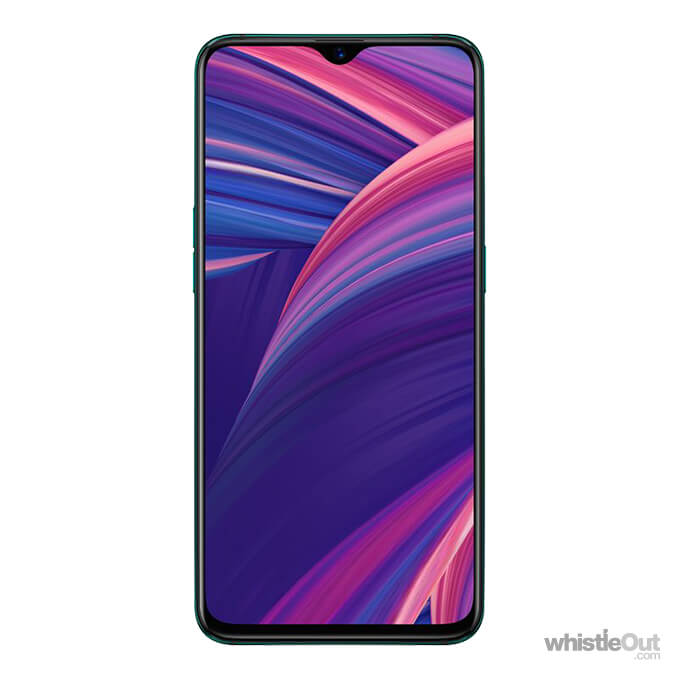
- 6.4 inch display
- Rear Cameras: 12MP, 20MP
- Front Camera: 25MP
- Android ColorOS 5.2, based on Android 8.1
- 128GB int. memory (useable capacity will be less)
- Released in November 2018
- 6GB RAM
- View full specs
Average Score
85/100
Packed full of meaningful features and cool new tech, the OPPO R17 Pro is far more than an iterative upgrade - it's easi...
WhistleOut
Read our full review
Compare Plans for the OPPO R17 Pro
 OPPO R17 Pro


Sorry, No Results Found :(
Sorry, we were not able to find any results that match your search criteria.
OPPO R17 Pro Specs
Display
| Type | AMOLED capacitive touchscreen |
|---|---|
| Screen Resolution | 720 x 1520 pixels |
| Screen Size | 6.4 inch (16.3 cm) |
| Touch Screen | Yes |
Camera
| Front |
|
|---|---|
| Rear |
|
| Flash Type | Dual LED flash |
| Video Recording | 1080p@30fps |
General
| Release Date | November 2018 |
|---|---|
| Operating System | Android ColorOS 5.2, based on Android 8.1 |
| Processor Type | Qualcomm Snapdragon 710, Octa-core (2x2.2 GHz Kryo 360 Gold & 6x1.7 GHz Kryo 360 Silver) |
| Processor Speed | 2.2 GHz |
| Graphics Processor Type | Adreno 616 |
| SIM Card | - |
| Battery Capacity | Not available |
| Battery Features | - |
| RAM | 6GB |
| Internal | 128GB |
| Expandable | Up to 256GB |
Physical
| Width | 74.6 mm |
|---|---|
| Height | 157.6 mm |
| Thickness | 7.9 mm |
| Weight | 183 grams |
| Material | - |
| Colours | - |
| Water and Dust Resistance | No |
Features
| Intelligence | - |
|---|---|
| NFC | No |
| GPS | Yes |
| Sensors | Accelerometer, Gyrometer |
| Audio Formats | MP3/WAV/eAAC+/FLAC player |
| Video Formats | MP4/H.264 player |
Connectivity
| Maximum Data Speed | LTE-A Cat15 800/150 Mbps |
|---|---|
| WiFi | 802.11 a/b/g/n/ac, 2.4/5GHz |
| USB | microUSB 2.0 |
| Networks | - |
| Frequencies | - |
| Headphone jack | No |
| Connectivity Features | Bluetooth |
OPPO R17 Pro Reviews
|
Positive
|
WhistleOut Review
Alex Choros (WhistleOut) |
|---|
OPPO R17 Pro Review

OPPO R17 Pro Review: The Verdict
Packed full of meaningful features and cool new tech, the OPPO R17 Pro is far more than an iterative upgrade - it's easily the most exciting phone you can buy for under $1,000.
What we love
- Ludicrous charging speed paired with great battery life
- Excellent camera for a sub-$1,000 phone
- Lovely finishes
What could be improved
- Quirky software
- No water-resistance
- No expandable storage, no headphone jack
The essentials
- Performance: Damn fast, doesn't feel like you're sacrificing speed by saving money.
- Battery: Excellent. Almost lasts two full days.
- Screen: Great. No complaints here. Even the notch is surprisingly tasteful.
- Camera: One of the best smartphone cameras you'll get under $1,000.
85/100
We often complain about new smartphone releases being too similar to the previous model. Year-on-year changes rarely feel meaningful these days, and it can take multiple product generations to get a feature worth upgrading for.
Yet, OPPO seems intent on doing more and more with each model; its smartphones just keep getting better. We thought OPPO had outdone itself with the R15 Pro, but it's taken less than half a year for it to be eclipsed. The R17 Pro makes the R15 Pro look and feel dated. It's a generational leap forward in just five months.
I'm not even kidding. The R17 Pro's new additions include an in-screen fingerprint reader, superfast charging, OPPO's first triple lens camera, USB Type-C, Gorilla Glass 6, and a refined design with less bezel and a smaller teardrop notch.
That's a whole lot of new.
These new features do come at price, however: the R17 Pro is OPPO's most expensive R-series device yet, selling for $899 outright.

It should have been called unicorn
- 6.4-inch 1080p+ display
- Snapdragon 710
- 128GB storage, 6GB RAM
- 12MP + 20MP + 0.43MP rear-facing camera
- 2x 1,850mAh battery
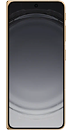
There's a lot to love about the R17 Pro, but let's start with the design. It's the year of our lord 2018, so OPPO's latest obviously has a notch. But it's a tiny one; a teardrop that houses a single front-facing camera and nothing more. It's unobtrusive and inoffensive, at least as far as the ever-divisive notched display goes. One might even go so far as to call it clean. Elegant, even.
Most popular apps can now account for notched displays, but you might encounter the odd quirk. For example, Facebook Messenger's "your friend is now active" notifications are partly obscured by the teardrop. While this isn't a huge deal, at least as far as Messenger is concerned, the R17 Pro has settings to help you prevent apps from displaying in the notch area on a case-by-case basis.
The real stars of the show are however the adventurous colourways: you can get the R17 Pro in a choice of 'Emerald Green' or 'Radiant Mist'. Radiant Mist is especially lovely, graduating from purple to cyan. The metal frame shares the same gradient, which makes the phone even more striking. The stark difference between the blue volume rocker and purple button provides an ever present reminder of the finish, even when you're looking at the R17 Pro front. Look, Emerald Green is nice, but Radiant Mist is clearly the superior choice. I would have called the finish 'Unicorn', though.
No matter which colour you go with, your OPPO R17 Pro is made from Gorilla Glass 6, making it the very first phone to have the latest primate-branded protection. Gorilla Glass 6 is said to be twice as resilient as the fifth generation Gorilla Glass currently found on most flagship smartphones, and is meant to survive an average of 15 one-metre drops onto a rough surface before shattering. It's hard to test this kind of claim extensively, but my R17 Pro survived a drop onto rough concrete with almost no damage. Other than a slight dent in the aluminium, the phone is entirely intact.

One other nifty feature is an in-screen fingerprint reader. It's very futuristic, but a touch unreliable. In most cases, I found the R17 Pro's facial recognition had unlocked the phone before I placed my thumb on the designed spot on the screen. The in-screen fingerprint reader is very fast when you position your finger perfectly, but that's not always the easiest task - especially if you're trying to unlock your phone as you're pulling it out of your pocket. At the very least, having any kind of fingerprint reader is a nice alternative for those who aren't comfortable with facial recognition.
Oddly, the R17 Pro has a few omissions. The headphone jack is gone, which isn't quite surprising, but expandable storage and water-resistance are too. These last two features were both found in the R17 Pro's predecessor, so it's kinda strange not to see them this time around.
The more cameras, the merrier
The OPPO R17 Pro has a rather unique rear camera setup, including a 12MP variable aperture lens, a 20MP depth lens, and 0.43MP Time of Flight (TOF) lens.
As with Samsung's Galaxy S9, the R17 Pro's primary lens has a variable aperture that can mechanically adjust between f/2.4 and f/1.5 depending on the available light. An aperture of f/1.5 is ideal for improved low-light performance, and also creates a shallower depth of field. An aperture of f/2.4 has more depth, for a sharper image. Unfortunately, there's no way to pick between which aperture the R17 Pro shoots at, even in 'expert' mode. The R17 instead picks which aperture is best for the situation and adjusts accordingly.
The secondary camera is a 20MP depth lens, which is predominantly used to help out with getting a shallow depth of field behind your subject when using portrait mode. It's the least interesting of the three, but it gets the job done.
The 0.34MP Time of Flight lens isn't quite a traditional camera lens, and instead processes nanosecond bursts of infrared light to get accurate depth information and increased detail in photos. OPPO says this can also be used for 3D photography and augmented reality applications, but this functionality isn't currently available. We don't have a timeframe for when it will be.
Technical details and missing features aside, the R17 Pro has one of the best cameras you'll find in a smartphone under $1,000. There's not much it can't handle, other than fast motion in lowlight. I tried taking some photos at a gig, and it was almost impossible to get a photo free from blur.

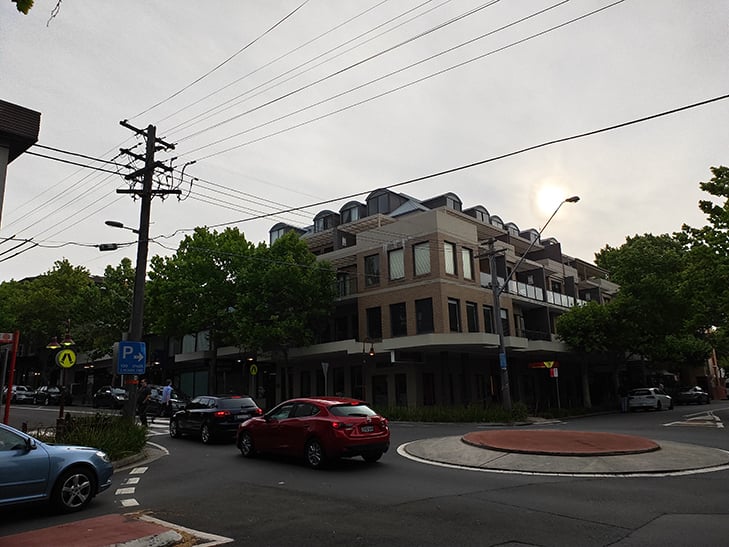
Sweaty metal dudes aside, you'll get excellent photos. The dedicated night mode is a great option for stiller situations that don't involve musicians thrashing around on stage. This is similar to what we've seen on the Google Pixel 3 and Huawei Mate 20 Pro, where the R17 Pro takes multiple photos at different exposures over a short period of time and then stitches them together for a better image. Here's a couple of comparisons:


The first photo above was taken without night mode, the second with. The sky looks a lot bluer in the second shot, and the lighting takes on a more dramatic flair.


Again, the first photo above was taken without night mode, and second with. The night mode image comes across as a lot more vibrant, as the R17 Pro was able to preserve a lot more detail in the background. While the interiors of the BWS and pub are mostly blown out white blurs in the first photo, the R17 Pro has done a better job of capturing what's there in the second.
In short, you won't get lowlight images like this from any other midrange phone.
Looking more broadly, the R17 Pro is a solid performer when it comes to picture quality. Its multi-lens camera setup isn't quite as versatile as some, but you'll get lovely photos for the most part.

Quirks and all
The R17 Pro runs ColorOS, OPPO's heavily customised version of Android. In some way, ColorOS has more in common with Apple's iOS than stock Android. There's no app drawer, for example, and there's no way to bring one back without a third party launcher.
While ColorOS has often been divisive, OPPO has managed to polish out a lot of the issues. It might look different to what you'd expect from Android, but it works smoothly. Well, for the most part - there are still a few quirks and oddities to get your head around.
The one thing that will affect most users is the R17 Pro's aggressive battery management. If you're not using an app, the R17 Pro will automatically shut it down to conserve battery life. However, this can delay notifications, which isn't great when it comes to email and messaging apps. You can get around this by 'locking' an app (swipe down on it in the multitasking menu) but this won't be immediately obvious to anyone who hasn't used an OPPO phone previously.
OPPO is also very insistent on you using its default apps. In order to change my default messaging app, I had to deep dive into the settings and set it manually; just opening the app in question didn't work. Worse, moving away from the default messaging app causes warnings to flash up whenever you try to use Google Pay, claiming "verification codes may be leaked out by non-default system SMS apps". OPPO's heart might be in the right place when it comes to this 'feature', but it's frustrating for a power user.
Slurping the electric
The OPPO R17 Pro impressed me on one feature that no other phone has stood out for: charging speed. I can't get over how damn fast OPPO's new 'SuperVOOC' fast charge technology is. My review unit went from 10% to 85% in just 20 minutes. A 10 minute charge get you as much as 40% extra capacity. Given the R17 Pro has an almost two day battery life, you can easily get a whole day of charge in just over 10 minutes. It's actually kind of ludicrous. If you wanted to, you could genuinely never have to plug the R17 Pro in overnight.
But it's worth noting that you need the bundled SuperVOOC charger to actually get these stupid fast speeds. A run of the mill charger will charge the R17 Pro at run of the mill speeds. At the time of writing, SuperVOOC chargers aren't available as standalone accessories, so you can't just buy an extra for your desk at work or a spare if you need one. OPPO says these will come to stores shortly, and you are able to contact OPPO support for a replacement in the event of loss or breakage.

Who is the OPPO R17 Pro for?
The OPPO R17 Pro is easily the best phone you can currently buy for under $1,000. While $899 is a bit more than OPPO has charged for past devices, the phone is capable of going toe-to-toe with far pricier devices in almost every regard. Camera quality isn't up there with the best of the best, and there are some niggling software issues, but otherwise, the R17 Pro is a solid package.
It's the kind of device you buy if you want a premium phone with a bit less of a premium price-tag. While it's hard to say that an $899 device is cheap by any measure, it's still much more palatable than the $1,500+ price points we're now seeing from top-tier devices.
And sure, you could also opt for one of last year's flagships - an iPhone 8 or a Samsung Galaxy S8 - for less than $1,000 instead, but thanks to all the new tech OPPO has crammed in, the R17 Pro is a far more exciting buy.

More OPPO R17 Pro camera samples









I don't want an OPPO R17 Pro, what else can I buy?

OPPO R17
If you don't want to drop almost $1,000 on a new smartphone, you could opt for the somewhat cheaper standard OPPO R17 instead. Priced at $699, you miss out on a few features including the triple rear-camera and SuperVOOC charging, but you still get a whole lot of phone. Other than those omissions, the standard R17 is reasonably similar to the Pro, complete with in-screen fingerprint reader and the teardrop notch display.
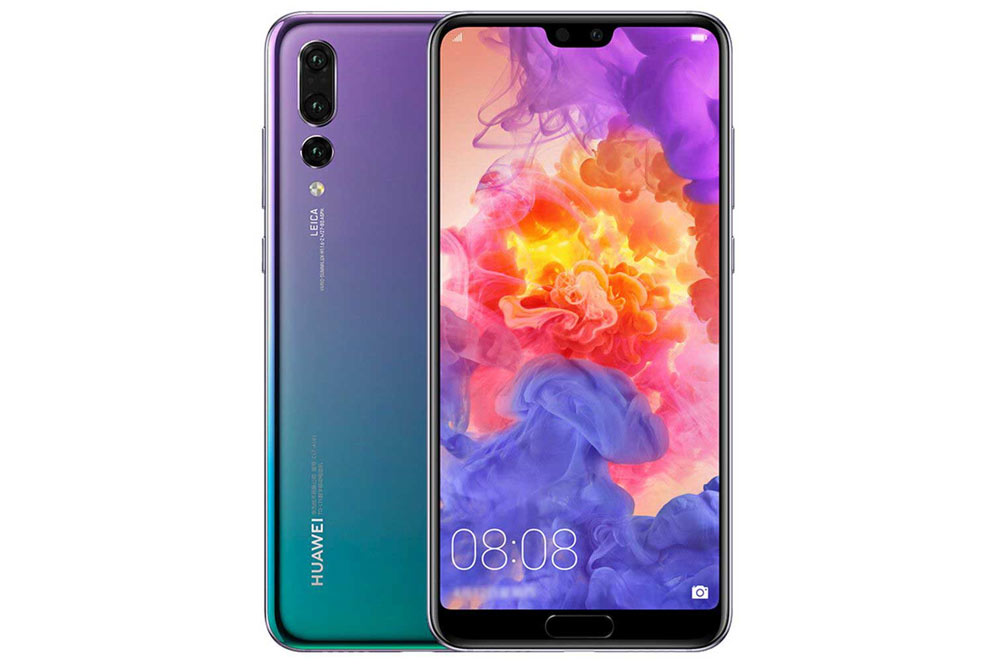
Huawei P20 Pro
Huawei's P20 Pro will set you back about $200 more than the OPPO R17 Pro and doesn't look quite as slick. But at the same time, you'll find a faster processor under the hood and a stunning triple lens camera configuration. And if you like colourful phones, Huawei's 'Twilight' finish easily rivals OPPO's 'Radiant Mist' in terms of prettiness.
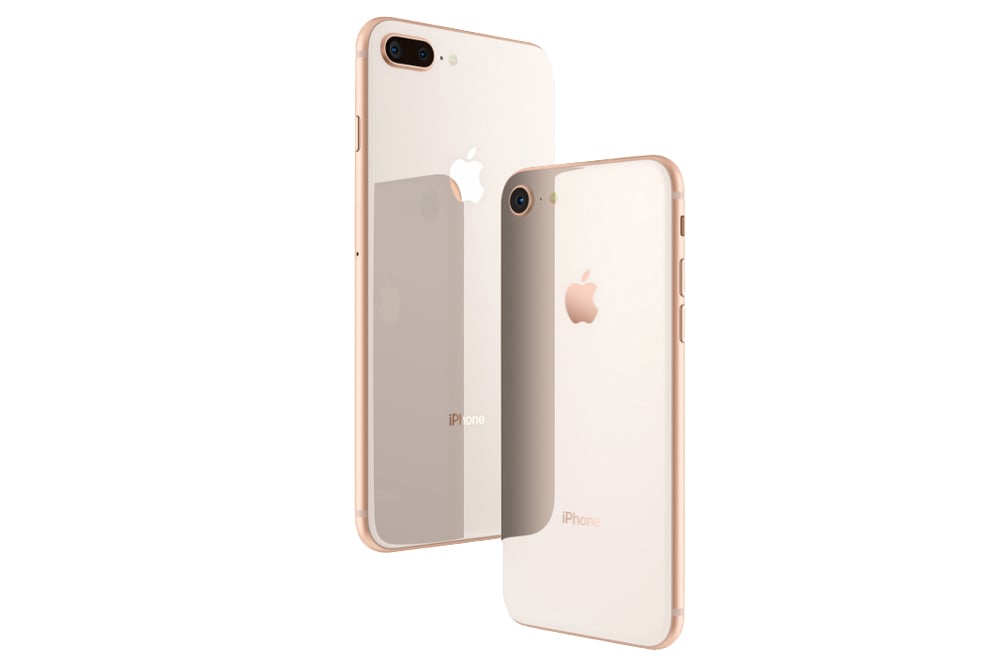
iPhone 8
If you're okay with opting for one of last year's smartphones to save money, the iPhone 8 is a safe bet. It might not look quite as modern as this year's wave of devices, but it's a fast, reliable smartphone with a still excellent camera. And Apple will no doubt keep supporting the iPhone 8 with software and security updates for years to come.








![[Editor's Picks] Best mobile plans for October 2026](https://r3.whistleout.com.au/public/images/articles/2026/01/mobile-phone-plan-Featured.png?w=280&h=280&usm=20&usmrad=0.8&fit=crop "[Editor's Picks] Best mobile plans for October 2026")


