

Android is at war. Not with Apple, but with itself. It's a battle between purists and device manufacturers; between those who want Android as Google intended, and hardware builders who want their smartphone to stand out from the crowd.
Google, unsurprisingly, likes Android as is. For one, it's a Google product. But in the case of pure Android, Google provides faster security and system updates, and its apps and services are at the forefront with no competing options available out of the box. If people are using Google services, Google's making money.
In an attempt to get more manufacturers using pure Android, it's expanded the scope of the Android One program. Originally designed for emerging markets, Android One is an unmodified version of Android maintained by Google, rather than the device manufacturer. There's no bloatware, no preloaded apps, no UI customisation; the only thing manufacturers can change is the camera app. More importantly, Google is promising that all Android One devices will get at least two years of major operating system updates and regular security updates.
Of course, the fact that manufactures can customise Android is one of the operating system's major points of difference. Android devices had fingerprint readers before the "pure" version of Android officially supported them, for example. While it's easy to say pure Android is the best Android, the answer isn't quite as straight forward.
Every manufacturer approaches Android differently. Nokia, for example, is going all in on Android One. Motorola is running an almost pure version of with some tweaks. OPPO has overhauled the operating system almost entirely. And all of them have a compelling reason for doing so.
Nokia

HTC's U11 Life was the first Android One phone to launch locally, but HMD Global - the company behind Nokia's revival - is bringing an entire family of Android One devices to Australia in May.
HMD is easily one of the biggest proponents of "pure" Android outside of Google. Earlier this year, it announced a new series of smartphones all powered by Android One and that it intends to upgrade all existing devices to Android One on a global scale. HMD's Nokia phones already ran a clean, up-to-date version of Android, but the move to Android One should see devices receive software updates in an even timelier fashion.
Mark Trundle, HMD's General Manager for Australian and New Zealand, described Android One as the "logical next step".
"Android One, for us, is Android as Google intended," said Trundle. "It's delivering the best of Google services, it's delivering security updates on a monthly basis, and we're bringing unique, distinct, Nokia hardware to it."
While some manufacturers have suggested that Android One would limit their ability to differentiated a phone, Trundle sees Android One as differentiation in itself for the moment.
"Consumers have said to us that they don't want bloatware, clutter, or uninstallable apps on their device, because they know it slows it down and eats into the battery," said Trundle. "So we're making our devices as Google intended. Google services front and centre, no competing applications against that, and consumers are responding really well."
"And when you look at all of the devices we've announced - regardless of price point - they run the latest Google OS. All of our devices are based on Oreo from day one. When you look at the market and our competitors, they're still launching devices running older versions of Android."
Motorola

Motorola is another iconic phone brand that ships phones with a mostly pure Android experience. It's even used Android One for a US variant of the Moto X4, but it doesn't look like Motorola is going to make a deeper commitment to Android One anytime soon.
Danny Adamopoulos, Motorola's Product Manager for Australia and New Zealand, says that Android One makes it harder for devices to stand out from the crowd; the only things a manufacturer has control over are the "specs, colour, and finish".
"Vendors are moving to Android One because of cost simplification," said Adamopoulos, but it becomes a question of how you differentiate yourself."
While Motorola smartphones use a close-to-stock version of Android, they feature some customisation. Moto-unique features include gestures such a karate chop that turns on the flashlight and a twist that opens the camera, but these are absent on the Android One version of the Moto X4.
"We have Android One products in our portfolio, but right now our [own] pure Android story does really well," said Adamopoulos. "In our current outlook we’ll continue with what we’ve got in the Australian market."
OPPO
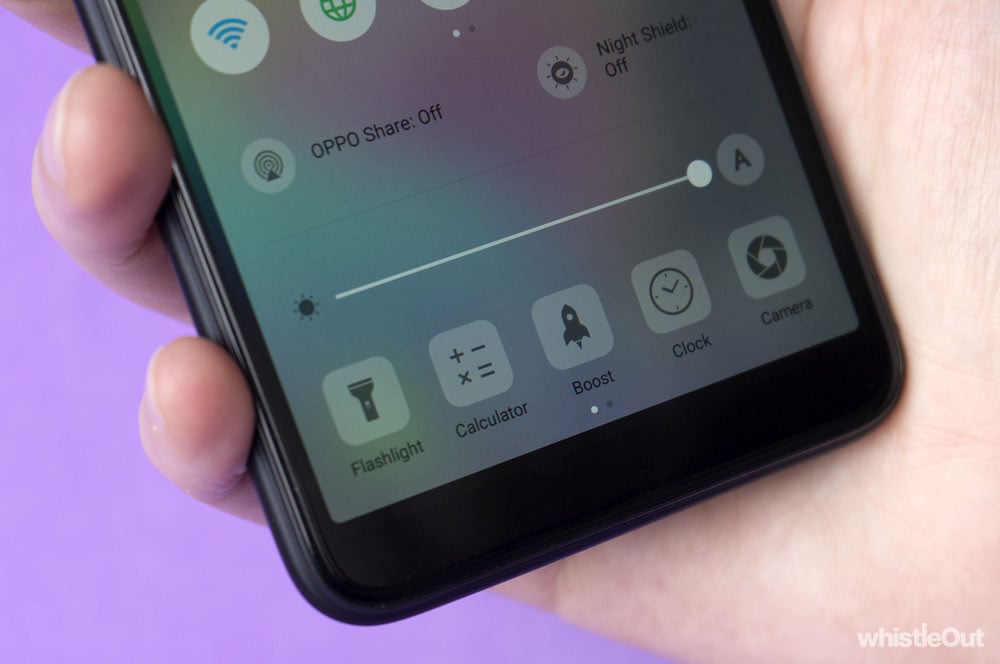
Perhaps one of the manufacturers some would love to see embrace Android One is OPPO. While OPPO's hardware is almost praised universally, its take on Android - dubbed ColorOS - is far more divisive. In part because of how it diverges from key Android elements for an Apple iOS-like aesthetic.
OPPO Australia Executive Director Michael Tran describes ColorOS as a "secret sauce" that helps OPPO get more out of its hardware. While ColorOS may just look an iOS-inspired theme for Android, under-the-hood tweaks assist with battery life and performance.
"While we recognise there are people who want a pure Android experience, our focus is on ColorOS and ensuring the device is fully optimised and performs at the standards consumers expect from the more expensive flagship devices," said Tran. "At this time, we will continue to invest in ColorOS to ensure users' devices, safety and experience remains world class across all our devices."
OPPO has flirted with a cleaner version of Android in the past - Project Spectrum - but has since discontinued it. Project Spectrum didn't ship on any OPPO smartphones; users instead had to download it from the OPPO's community page and install it manually, overwriting ColorOS. While Project Spectrum was based on stock Android, it featured some of ColorOS' features, including the OPPO camera app and extra gesture controls.
Tran said Project Spectrum was put on hiatus "to focus entirely on ColorOS and ensure the best experience [OPPO] phones have to offer".
"However, we will continue to listen to our customers for feedback and develop products and solutions that best meet their needs."
So which approach is the best?
It's easy to see merit in the ways Nokia, Motorola, and OPPO all approach Android. Android One makes sense when it comes to security and streamlining, while the flexibility and freedom afforded by maintaining your own version of Android is equally attractive.
Ideally, we'd love to see Google find a way to directly deliver security updates to Android devices not running One, without the need for intervention from the manufacturer. While security isn't necessarily the "big" selling point of Android One, it's an important feature and an area where many Android phones falter, especially at cheaper price points.
In the short term, it's great to see Android One devices coming to Australia, but it would also be a shame if every single Android smartphone were to run it. After all, Android's tagline is "be together, not the same".
Alex Choros

Related Articles


