
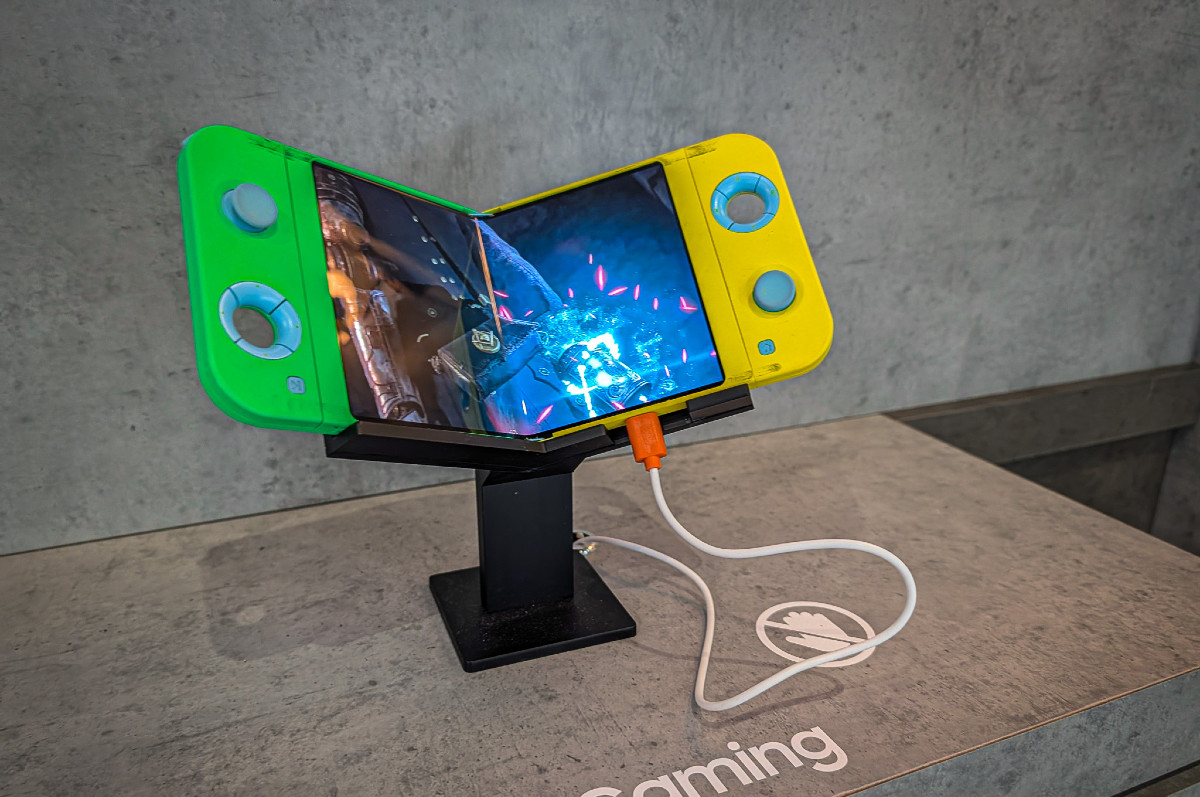
For as long as foldable smartphones have been around, manufacturers have been pointing at gaming as an argument for why it’s worth spending thousands on your next smartphone.
There’s some sense to this use case: a bigger screen typically beats out a smaller one when it comes to gaming. That’s even more the case when you’re losing valuable pixels to your thumbs or relying on a set of controls that can very easily get in the way of your perspective on the action.
Even so, the argument that foldables are better for on-the-go gaming is underpinned by a fraught reality: there aren’t actually that many mobile games that are optimised for this form-factor. For as much as the sales of mainstream foldable devices like the Samsung Galaxy Z Fold have grown in recent years, developer support remains elusive.
Sure, with a bit of tinkering and a lackadaisical attitude to copyright, you can certainly take full advantage of the larger inner display on a device like the Galaxy Z Fold 7 by pairing it up with an emulator. However, when it comes to meaningful optimisation for this particular form-factor, the list of examples is few and far between.
There are several reasons why this might be the case. Lamington Games Director David Kilford told me that the dynamic UI layouts that a foldable form-factor might require are a “massive pain” to implement, particularly if the game in question is being developed in the game engine Unity.
“Needing to support new aspect ratios adds a ton of work, and when it's dealing with a device that can dynamically change aspects, it just isn't worth it a lot of the time,” said Kilford.
Ultimately, though, support for foldable form-factors just isn’t high on the priorities list for most developers.
“It's like how ultrawide monitor UI support is often pretty bad because it's a huge amount of work to support a small portion of players,” said Kilford.
The reality of modern game development production is also likely a factor here. Unless you’re an independent operator, chances are your development pipeline is broken into some number of sprints that prioritise features and content by overall importance or feasibility.
Most games have a limited budget, which translates not just into dollars but time in the sense that you can only work on a project as long as you have money to pay people. Those constraints act as a natural limit. You can only add so much to a game over the course of development, and there are only so many weeks to do so.
Optimisation for foldable form-factors is rarely going to make it onto the list, let alone far up enough to make the final cut.
Even then, it’s not uncommon for developers to shift resources around as one project nears its end rather than laying them off entirely. It’s very easy to imagine plenty of situations where the one person who has the spare time and specific expertise needed to implement something like foldable optimisations might be pulled onto another project right as the very limited window to tick that low-priority task off the Trello board arrives.
It’s possible that Apple’s anticipated entry into the foldable smartphone market could change the conversation. There have been plenty of features that have been introduced by Google and other Android manufacturers over the years that were relegated to obscurity until Apple adopted something similar – and developers adjusted accordingly.
Ironically, those looking to get the best gaming experience from their Android-based foldable device might be waiting on Apple for that to happen.
Fergus Halliday
Digital Content Editor

Related Articles


