
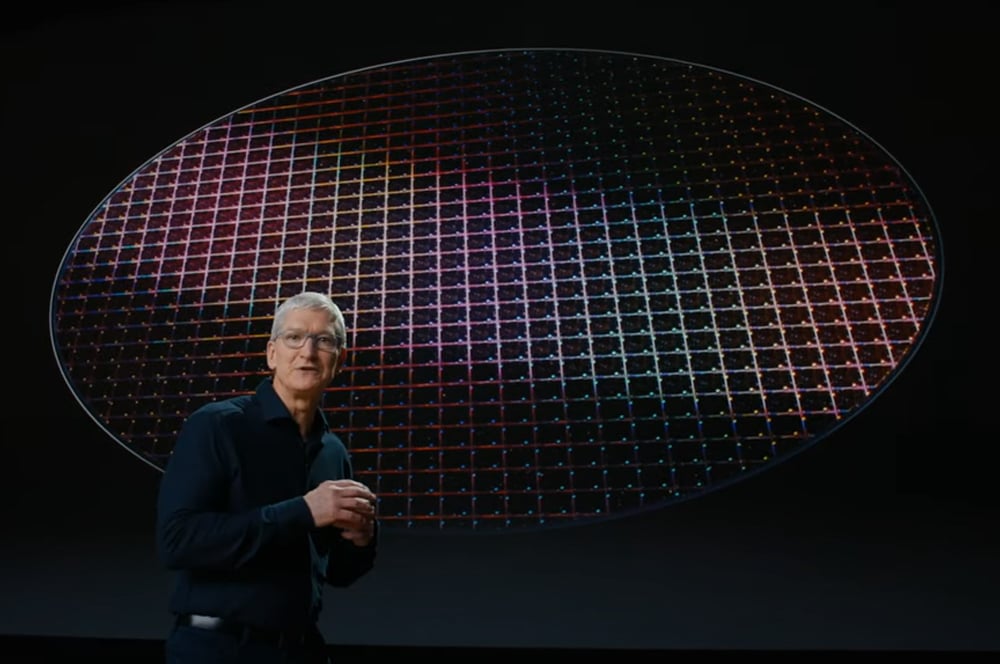
In what marks a radical shift, Apple today announced that the next generation of its Mac computers will be powered by the same kind of inhouse ARM processors you'll find in an iPhone and iPad, eschewing the Intel processors Apple has been using for almost 15 years.
The move to ARM-based processors has a couple of major benefits. Macs will be able to run most iPhone and iPad apps natively, without any need for developer updates. This in itself will bring a multitude of new apps to the Mac platform.
We should see improved battery life, thanks to greater processor efficiency - for example, the ARM-based Samsung Galaxy Book S was able to hit approximately 25 hours of battery per charge. In turn, we should also see these devices wake from sleep in the same way an iPhone or iPad does - instantly.
The use of what's fundamentally a mobile processor could also make it easier for Apple to add SIM support to a Mac, as it has with iPad. In theory, you could pop in a mobile broadband SIM into an ARM-based MacBook and have a constant 4G connection. If this is the case, we might even see telcos start selling Macs on a plan.
And we might even see reduced Mac-pricing, given the move to an in-house chip. If Apple isn't paying Intel for processors - typically one of the most expensive components in a computer - it could pass on the savings to consumers.
While the new architecture will however mean developers will need to rewrite existing Mac apps to support to the new platform. Apple says it has already rewritten all of its first party apps for ARM, and is working with Microsoft and Adobe to bring native apps to the next generation of Mac.
Apple says it should only take "days" for developers to redeploy their apps for ARM-based Macs, but there will also be translation software that will bring over Intel-based apps that have yet to be optimised.
The first ARM-based Mac will be available by the end of the year, as part of what Apple says will be a two-year transition. There are still Intel-based Macs in Apple's current product pipeline, and the company will support existing Intel-based Macs for "years to come".
Apple today also announced new versions of most of its operating systems, including iOS 14 for iPhone.
Alex Choros

Related Articles


