
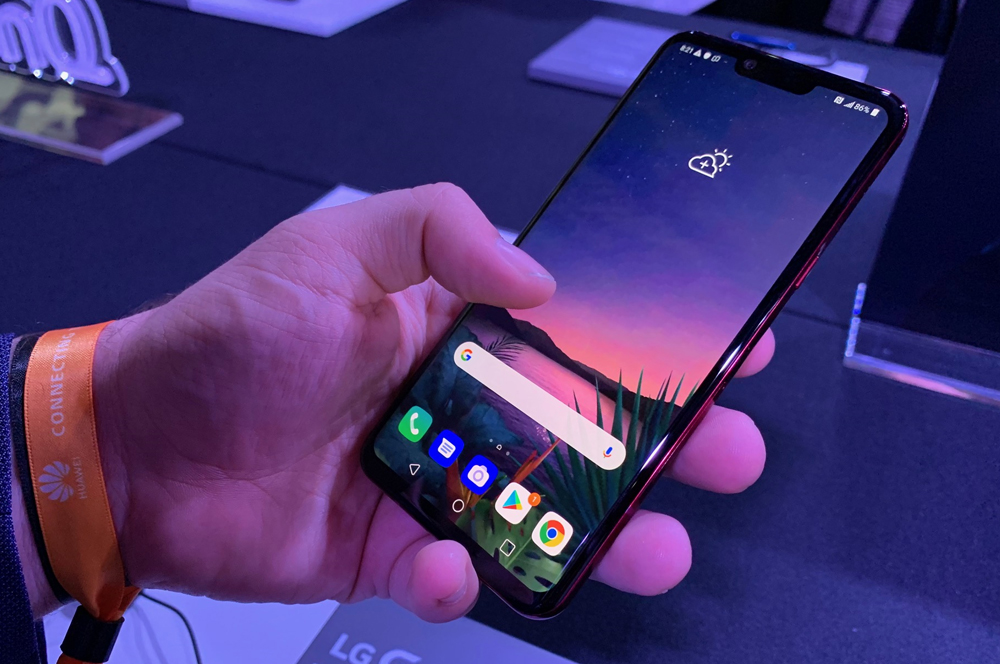
Phones have been a bit samey for a while, but LG is trying something new with its latest flagship, the LG G8 ThinQ. While it looks pretty similar to last year's G7, it now has a depth-sensing time-of-flight (ToF) camera sitting right next to its selfie camera.
This can be used for facial recognition, but LG is dreaming bigger. Weirder, at the least. Working in conjunction with an infrared sensor, the G8 ToF camera can recognise the veins in your palm as a form of authentication. LG calls this Palm ID.
The same tech enables "Air Motion" gesture controls. These let you answer a call, adjust volume, and launch apps without actually touching the G8's screen. To do so, you wave your hand at the phone, pull it back into a pinching motion, and then flick left or right (or turn your wrist if you want to adjust volume).
We love that LG is trying something new, but these features didn't work too well in practice. During a demo, the G8 struggled to even recognise my palm, and was very inconsistent when it came to the "pinch" gesture. Hopefully these are just pre-production issues.
Other key specifications for the LG G8 include a 6.1-inch Quad HD+ display, a Snapdragon 855 processor, 6GB of RAM, 128GB of expandable storage, and a 3,500mAh battery. It will ship running Android Pie.
The LG G8's rear-camera configuration will vary from market to market. The standard set is a 16MP wide-angle lens, a 12MP standard, and a 12MP telephoto, but some variants will miss out on the zoom lens or have a lower resolution wide-angle. At this stage, we're not sure what exactly we'll get here.
Firm local launch details have yet to be confirmed, but LG says the G8 will be available in Australia mid-year.
Alex Choros

Related Articles


Related Topics
LG Mobile World Congress smartphone AndroidPopular Topics
Android smartphone iPhone Apple Samsung Telstra Optus Vodafone Deals Oppo


