
 Prefer WhistleOut in Google
It’s been a decade since USB-C started turning up in everything from laptops to smartphones to headphones.
Chances are that you probably still have a few old-school USB cables (and the gadgets that go with them) in a drawer somewhere, but if you’re looking to buy new tech nowadays then the safe bet is that you’re going to find a USB-C port somewhere in the mix.
For all this ubiquity though, there’s still room for improvement. To put it bluntly: USB Type-C is far from perfect.
Speaking to WhistleOut Australia, Belkin’s VP of design Oliver Seil was quick to focus on the positives. When USB-C first arrived on the scene, the most obvious improvement was the user experience.
“It was smaller, reversible, and removed one of the most familiar annoyances in consumer tech: trying to plug in a USB cable, the right way up. That sounds simple, but it mattered. Older USB cables often had different connectors at each end, and each connector had a top and bottom. The user experience really was that inelegant.”
According to Seil, the other major improvement that USB-C offered was to do with power.
Compared with older USB implementations, USB-C supported much higher transfers of up to 240W. That higher ceiling helped USB-C serve many product categories and use cases that its predecessors couldn’t.
From Seil’s perspective, USB-C’s biggest achievement is that it stayed familiar while the performance envelope expanded around it.
“Using the same physical connector, standards like USB4 and Thunderbolt 4 have also enabled much faster data transfer and more capable display connectivity, when paired with cables and devices designed to support those standards.”
“USB-C has become one connector that can do more than any consumer connectivity standard before it,” he said.
Seil said that USB-C is the closest thing the consumer technology industry has ever had to a truly universal platform for power, data, video, and audio. Unfortunately, the everyday realities involved are often a little messier than you’d hope. I defy anyone who thinks the advent of USB-C has solved port-related pains forever to explain the difference between USB4, USB4 Gen 4, USB 4.0, and USB 4.
While the standard does allow for the transfer of data, power, video, and audio, not every individual USB-C cable is made to take full advantage of that potential. Put another way, not all USB-C cables are made equal. This is bad to begin with, but the situation is made worse by the reality that relatively few manufacturers bother to label their products. The user experience on the other side of that carelessness is chaotic in the worst way.
Seil didn’t shy away from acknowledging this problem, noting that the source of USB-C’s greatest strength is also its biggest weakness.
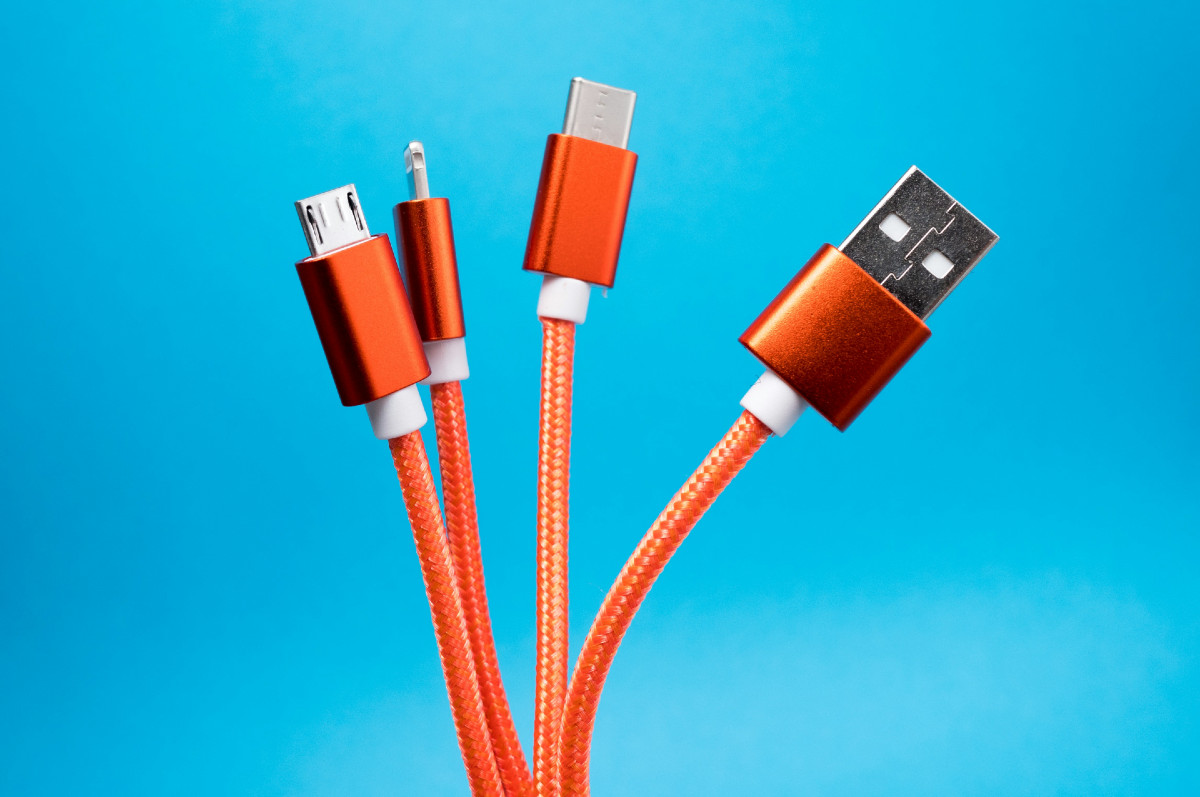
“Two USB-C cables may seem identical while supporting different functions. One may only support basic charging. Another may support high-speed data transfer, video output, or much higher power levels. Some legacy devices come with cables that have USB-A on one end and USB-C on the other, which adds another layer of confusion.”
Seil said that most users are not willing to study these distinctions, and admitted the physical compatibility of USB-C as a standard can create a false sense of confidence.
“Just because a cable plugs in and works does not mean it supports the highest charging speeds, fastest data transfer, or full display capabilities. Everything may connect successfully while still delivering significantly less performance than the hardware is capable of,” he said.
For all that USB-C promises to be the one cable to rule them all. The reality is that all too often consumers are left with one cable that could do a lot of different things and no easy way to tell specifically what those are.
Asked why accessory-makers like Belkin don’t do more to make USB-C cables with different specs easier to identify, Seil called it a fair question.
“Our industry has not always made the differences between USB-C cables and ports as clear as they should be.”
“The challenge is that the most important differences are not visible at first glance. Wattage, charging speed, data bandwidth, display support, and certification all matter, but they can’t realistically be communicated by the connector shape itself.”
Seil said that the challenge is making the right information visible at the right moment.
“That is not simple, especially when many users are not used to looking closely at interoperability details,” he said.
Still, he said that Belkin is doing what it can to make those differences easier to understand.
Many of the brand’s USB-C accessories now feature the maximum wattage printed directly on the cable and newer peripherals like chargers with built-in displays are able to provide a snapshot of the specs whenever a USB-C cable is connected.
“That might be useful for some technically inclined users but won’t be of interest to the average person,” Seil admitted.
For those more everyday users, Belkin is betting on a much more straightforward approach.
“We communicate clearly on packaging and in our online content to explain what each cable supports and what types of devices it is best suited for, whether that is a phone, tablet, laptop, or higher-power device,” Seil explained.
As he puts it, USB-IF certification and labeling help but there is still plenty of work to do across packaging, product pages, retail displays, and the cable itself.
“The goal should not be to make people study USB specifications. The goal is to make the right choice obvious before they buy the cable, and easy to confirm after they own it,” he said.
Despite these pain points, Seil still argues that USB-C has shifted the way consumer tech works for the better over the past decade.
“The idea of one connector working across most of the devices people use every day is no longer aspirational; it is becoming normal,” he said.
Fergus Halliday
Digital Content Editor

Related Articles


