
I’ve never been an overtly spiritual person, but in the before times, I attended live gigs religiously. The mosh pit my communion, a recurring baptism of sweat, beer, and blood.
Of course, masses huddled around a stage, celebrating their icons doesn't gel with social distancing. COVID-19 drove live music online. Concerts were cancelled, replaced by livestreams performed over YouTube.
I wasn't a believer at first, but a set one from one of my favourite musicians made me a convert. A raw, intimate epiphany. One which gave me faith livestream gigs still have a place in the world when everything is a little more normal.
An online concert was always going to be a hard sell. A live show isn't just an aural experience, it's physical in every sense. The pound of a bass drum reverberating through your chest. The hair tingling on your neck as your favourite song starts. The communal heat of the mosh. The accidental elbow to your ribcage. A room of strangers united in purpose, singing to every word, dancing to every beat.
These sensations can't be recreated through the internet. You can't just yell "marry me Carly" when watching a live stream on your laptop. Well you can, but it's not quite the same.
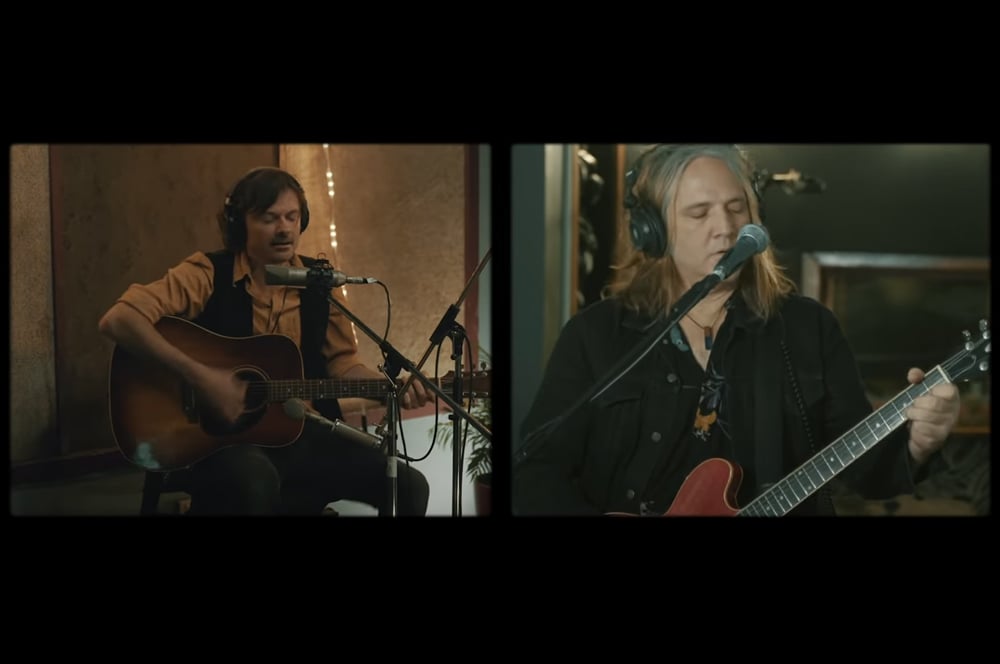
In some cases, a livestream isn't even live. Powderfinger's reunion gig was recorded weeks before and edited to perfection ahead of its debut last weekend. While there's still a certain magic seeing a band perform "together" for the first time in ten years, it was polished to the point where it was like watching a DVD.
No matter how tight a band plays, live music invites chaos. No two shows will be identical. A guitar string snaps. A cymbal collapses. A microphone lead becomes a jump rope. A song moves you to tears after your fifth bowlo vodka soda. The singer dives into the pit. Some dickhead shouts "Free Bird". It's a congregation where the sermon is never the same.
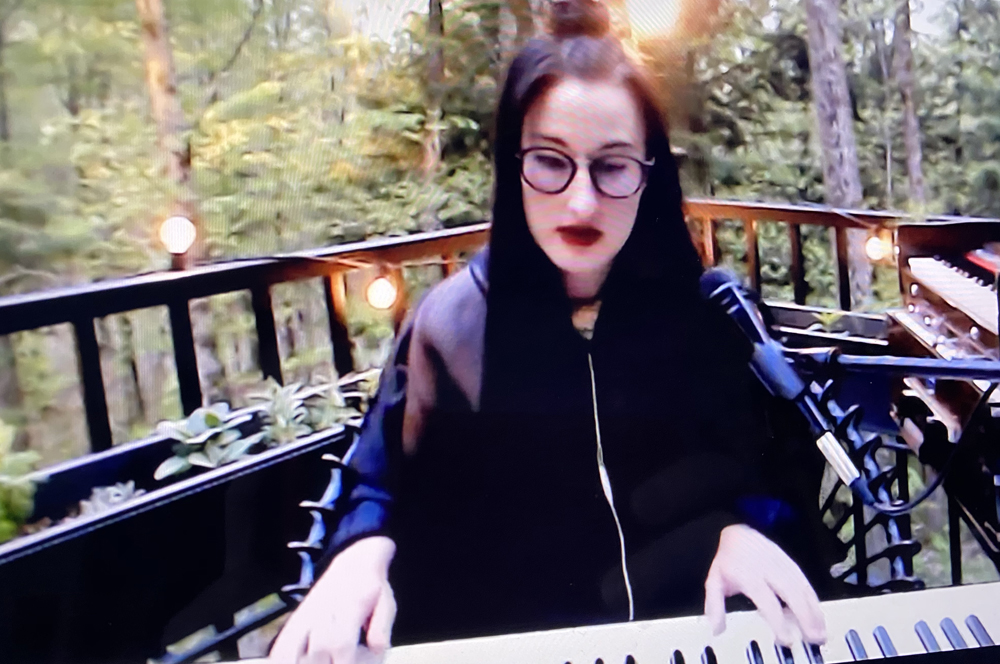
The force behind my conversion was a livestream by Zola Jesus, the stage name of goth pop singer songwriter Nika Roza Danilova. Around the start of her set, Danivola quipped about how strange it felt playing into an abyss, without feedback from an audience. In the same vein, there was a surrealness to watching through an iPad display, unaccompanied by hunger of a crowd longing for a connection. This, however, gave way to a more personal experience.
While a far cry from a "normal" gig, Danivola made the most of the situation. She wasn't trying to recreate one of her live shows, at least in the traditional sense. Where she'd normally play backed by a band and a cavalcade of industrial noise, it was just her and a piano. Spotlights and strobes were replaced by fairy lights and a forest sunset.
A humanity permeated the set. Danivola changed her mind about what songs to play. Bumped her microphone with a wine glass. Made jokes about playing one of her songs on a piano for the first time. "Let's see how it goes." Not what you'd expect from a live show, but embodying the inherent chaos of one. A raw, unscriptedness that made it easy to feel to a connection. There could have been 100,000 people watching - enough to fill out a stadium - but at times, it felt like I was the only one tuned in. As someone starved for live music, it was nourishing.
While not the kind of gig I frequent, it offered something different. A sense of intimacy an arena show can never provide, a contrast to the atmosphere an army of screaming disciples creates. I'd love to see more artists attempt the same. A new take on a familiar rite.
These primordial online performances are a clear response to a challenging situation, but maybe we should hold on to them when venues open their doors. They help democratise music, make it accessible to international audiences in a way that touring simply can't. I'd pay $20 to watch one of my favourite acts play some songs and banter into a webcam for an hour. It will never be the same as seeing a band play live, but it doesn't have to be. And it shouldn't be.
This isn't dissimilar to how technology has reshaped our lives amidst this pandemic. Everyday experiences are different for many. Our daily rituals, big or small, religious or otherwise, are changing. As a society, we've learned and adapted, and as with live music, there's things technology can't replicate, but there's different experiences it can provide.
We've seen movie studios take films destined for a cinema and plonk them straight on iTunes. But no matter how large your TV is, it's not going to replace the enveloping nature of a movie theatre experience. Both can be good, but they're unique in their own ways.
For anyone working from home, it's a stark contrast to an office. You can roll out of bed and get straight to work, unshaven, unshowered. You can take time out to attend to your sourdough. You can weave your laundry into your workflow. Office life has more structure, but is more social. You can chat with your colleagues whenever, without relying on an app. You've got the rituals of coffee runs and post-work drinks.
Even socialising is different. In the last three months, I've made countless video calls to family and friends living in other states, whereas I'd typically prefer to text or catch-up in person. And in the same way I hope that I can still see my favourite artists serenade me online when this is all over, I hope my interstate friends and I take more time to catch-up online.
I'd prefer to catch-up in person. A hug. A shared meal. But that's not always possible, and Zoom drinks are the next best thing. A new ritual we shouldn't just throw away when convenient. And as Danilova's set proved, the next best thing can still be wonderful in its own right.
Alex Choros

Find a better internet plan
Thousands of internet plans unpacked. All the facts. No surprises.

Related Articles


Internet Plans by State
- Internet Plans in ACT
- Internet Plans in NSW
- Internet Plans in NT
- Internet Plans in QLD
- Internet Plans in SA
- Internet Plans in TAS
- Internet Plans in VIC
- Internet Plans in WA


![[Hand-Picked] Best internet providers in Australia](https://r3.whistleout.com.au/public/images/articles/2026/07/man-and-woman-with-laptop-on-green-couch.jpg?w=280&h=280&usm=20&usmrad=0.8&fit=crop "[Hand-Picked] Best internet providers in Australia")

