OPPO A73 Prices & Plans


Features
- 6 inch display
- Rear Cameras: 16MP, 8MP, 2MP, 2MP
- Front Camera: 18MP
- Android 7.1 (Nougut)
- 32GB int. memory (useable capacity will be less)
- Released in January 2018
- 3GB RAM
- View full specs
Average Score
75/100
The OPPO A73 succeeds at bringing a taste of flagship features to budget price-points, but makes a few compromises in do...
WhistleOut
Read our full review
Compare Plans for the OPPO A73
 No Phone Selected


Sorry, No Results Found :(
Sorry, we were not able to find any results that match your search criteria.
OPPO A73 Specs
Display
| Type | FHD+ Full Screen |
|---|---|
| Screen Resolution | 1080 x 2160 pixels |
| Screen Size | 6 inch (15.2 cm) |
| Touch Screen | Yes |
Camera
| Front |
|
|---|---|
| Rear |
|
| Flash Type | LED |
| Video Recording | 1080p/ 720p/ 480p @ 30fps |
General
| Release Date | January 2018 |
|---|---|
| Operating System | Android 7.1 (Nougut) |
| Processor Type | MediaTek MT6757CD, Octa core (2.5 GHz, Quad core, Cortex A53 + 1.6 GHz, Quad core, Cortex A53) |
| Processor Speed | 2.5 GHz |
| Graphics Processor Type | Mali-T880 MP2 |
| SIM Card | - |
| Battery Capacity | Not available |
| Battery Features | - |
| RAM | 3GB |
| Internal | 32GB |
| Expandable | Up to 256GB |
Physical
| Width | 76 mm |
|---|---|
| Height | 156.5 mm |
| Thickness | 7.5 mm |
| Weight | 152 grams |
| Material | - |
| Colours | - |
| Water and Dust Resistance | No |
Features
| Intelligence | - |
|---|---|
| NFC | No |
| GPS | Yes |
| Sensors | Accelerometer |
| Audio Formats | MP3/APE/AMR/WAV/MID/OGG/FLAC/WMA |
| Video Formats | MPEG4/ H264/3GPP/AVI/FLV |
Connectivity
| Maximum Data Speed | - |
|---|---|
| WiFi | 2.4G 802.11b/g/n, 5G 802.11a/n |
| USB | microUSB 2.0 |
| Networks | - |
| Frequencies | - |
| Headphone jack | No |
| Connectivity Features | Bluetooth |
OPPO A73 Reviews
|
Mixed
|
WhistleOut Review
Alex Choros (WhistleOut) |
|---|
OPPO A73 Review

OPPO A73 Review: The Verdict
The OPPO A73 succeeds at bringing a taste of flagship features to budget price-points, but makes a few compromises in doing so. If you can live with an average camera and an occasionally restrictive operating system, the A73 is a great phone for the money.
What we love
- Great value
- Excellent battery life
- Facial recognition works well for the most part
What could be improved
- OPPO's take on Android can be frustrating
- Occasional performance hitches
- Camera is just okay
75/100
What's the OPPO A73?
Flagship features don't just trickle down to affordable smartphones anymore; manufacturers are racing to have the latest and greatest features at the lowest price. No device proves this more than the OPPO A73, a $359 handset with an extra-tall 18:9 display and facial recognition; two of 2017's hottest smartphone features.
Key specifications for the A73 include a 6-inch Full HD+ display, an eight-core MediaTek MT6763T processor, 3GB of RAM, 32GB of expandable storage, a rear-mounted fingerprint reader, a 13MP rear-facing camera, and a 3,200mAh battery.

What's good about the OPPO A73?
The A73 is the cheapest phone around to try its hand at facial recognition, and it actually does a competent job. In good lighting conditions, you might not even see the lock screen.
The A73's $359 price-point does however mean the technology isn't quite as sophisticated as what you'll find in Apple's iPhone X. You can't use your face to unlock your phone in the darkness, and OPPO says beards, hats, heavy makeup, and glasses can also effect accuracy. I registered my face without my glasses, and was able to unlock the A73 successfully wearing both my reading glasses and my sunglasses.
More importantly, OPPO says its implementation of facial recognition is less secure than using the fingerprint reader or a PIN. The Settings app on the phone explicitly notes that phone may be unlocked by someone with a similar appearance, or worryingly, "objects shaped like you". I'm hoping this doesn't mean a balloon with a beard and eyes drawn on it.
Simply using a photo wasn't enough to compromise facial recognition, but an evil doppelganger might just do the trick.
OPPO's facial recognition technology would have been improved if you could wake the A73 by raising it or tapping the screen. As it stands, the front-facing camera doesn't trigger until the screen is on. To turn the screen on, you need to press the phone's power button, and in most cases tapping the fingerprint reader will take about the same amount of time as clicking the power button.
While the A73's facial recognition isn't perfect, it works well for what it is and you're not forced to use it. OPPO has kept the fingerprint reader around, and the A73's is lighting fast.
The A73's facial recognition tech is also meant to help with better selfies. Specifically, improved beautification. In my experience, beautification just blurred my beard and glasses, but I don't quite think I'm the target market for this. The selfie camera can also use this tech to create shallow depth of field, but the results can look quite artificial - especially around the edges of your face.

Of course, OPPO hasn't just made the cheapest smartphone with facial recognition, it's also made the cheapest smartphone with the newfangled style of 18:9 display, minimal bezels and all. It's a high quality display, works well in bright sunlight, and has great viewing angles. The A73 has kind of display you'd expect to find in a far pricier phone.
While a 6-inch screen-size might seem a bit imposing, the limited amount of bezel makes it mostly manageable. In terms of physical size, the A73 isn't any bigger than most last year's 5.5-inch phones. The display's extra height does however mean you'll need to readjust your grip or use a second hand to reach the very top. Most apps now scale to extra space well, but some games and video apps will appear with black bars on either side of the display.
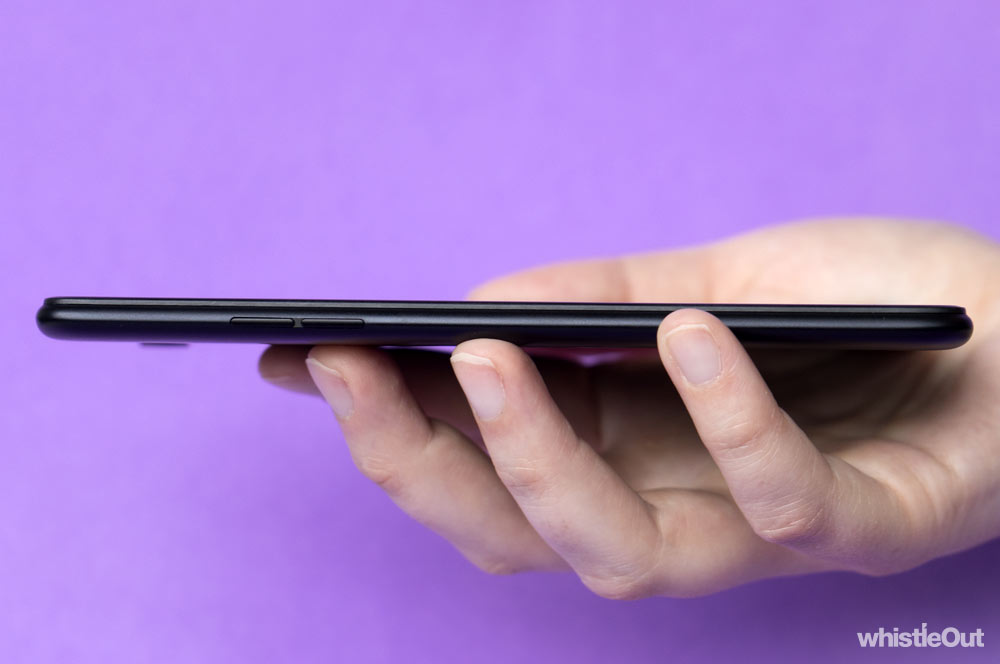
OPPO has been using aluminium unibodies across its entire range of smartphones for the last couple of years, but it's moved to polycarbonate with the A73. In terms of design, this seems like the one hardware trade-off the company's made to keep the price low while moving to the bigger 18:9 screen.
The fact the A73's back is technically made of plastic isn't immediately noticeable; while the phone is a little lighter than you'd expect and a little warmer to touch, it still has a solid feel to it. You're not going to pick it up and accuse it of being flimsy.
While the A73 is far from the fastest phone on the market, it's a competent daily driver; you shouldn't find yourself getting frustrated with it. The A73 was painless to use for about 95% of the time, but I did run into the occasional performance hitch once in a while. An odd stutter from time to time, where the phone would freeze up for a second before jolting back to life. Hardly a deal breaker at a $359 price-point, but a reminder that the A73 is indeed a $359 phone.
The A73's battery should comfortably get through two days in between top-ups; I found I could typically make it to the end of the second with a buffer of around 20% left. This is partly thanks to some aggressive battery management that entirely freezes certain apps once you leave them. In most cases, the A73 is smart enough to not freeze apps that you actually want running - chat apps, for example - but I found I had manually whitelist a couple to prevent notifications from being delayed.
At $359, the A73 is already great value. If you pick it up on a prepaid plan, you can get it for as little as $289. This does however you mean it will be locked to the network of the telco you bought it from.
What's not so good about the OPPO A73?
OPPO's heavily customised take on Android - ColorOS - continues to be the most contentious issue with its smartphones. To OPPO's credit, ColorOS is a reasonably polished software offering, it's just doesn't quite work how you'd expect Android to. In some cases this is simply a case of learning, in others, it's a potential deal-breaker.
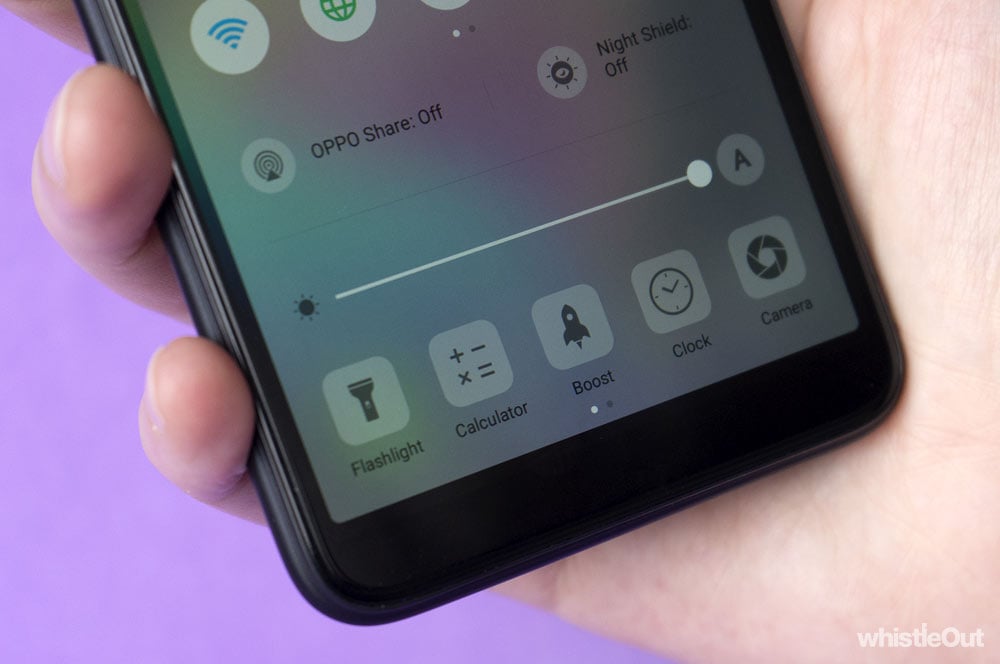
ColorOS takes a great deal of inspiration from Apple's iOS iPhone operating system. There is no app drawer - all installed apps appear on your home screens - and OPPO has replicated the iOS Control Centre interface for quick settings.
Rather than swiping down from the top of the screen to access settings like screen brightness, Wi-Fi, and Bluetooth, you swipe up instead. This might make sense if you're coming from an iPhone, but it will almost certainly feel alien for Android veterans. Either way, this is a quirk that most can probably learn to live with.
More egregious is ColorOS' approach to app management; it doesn't want you using anything but OPPO's default apps. Even something as simple as changing my default messaging app became an exercise in frustration. While I was given the option to set a third party app as my default whenever I opened it, I got a "helpful hint" that told me the phone had reverted to the OPPO app whenever I tried to send a message. It's not that there's anything wrong with OPPO's default messaging app, it's just that choice has always been one of Android's core tenements.
Out of the box, the A73 also took issue with me changing my default keyboard; the device reverted to the OPPO keyboard after about a day. Disabling the phone's "self-diagnosis" seemingly let me keep Gboard as my keyboard, but it's not an issue you should have to deal.
An OPPO spokesperson told us that this is a security precaution, and provided the following statement:
"To ensure the security of our users, third-party applications cannot be set as default applications on our older devices, such as the A73. OPPO takes users security very seriously and always look to ensure their safety. However, it is working to allow third-party applications to be enabled as default apps once it has vetted and ensured they are secure for users."
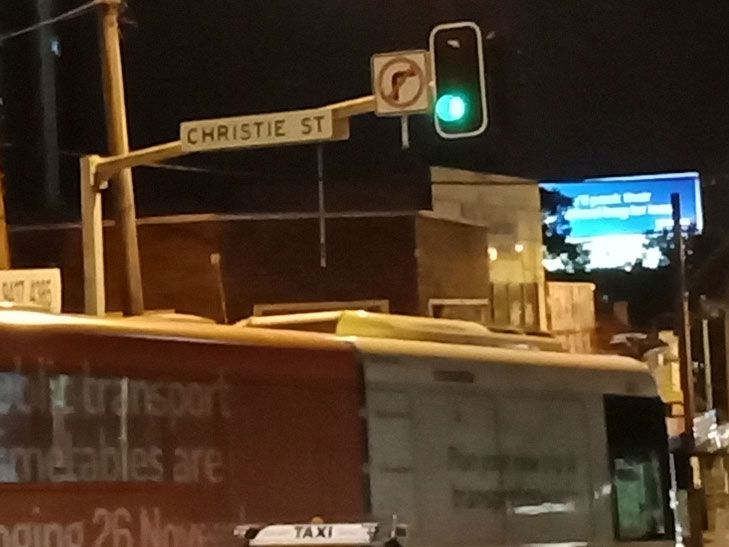
The other big compromise made by the A73 is the camera; it's just okay, which is still one of the realities of buying a phone at this price-point. You'll get workable photos in good light, but even these lack contrast, dynamic range, and can look a bit washed out. These issues become even more noticeable when shooting in lowlight, and images also become prone to motion blur. To the A73's credit, it can still take a decent lowlight photo, provided there isn't too much movement in the shot. You might just have to try a couple of times.
In terms of other, lesser omissions, the A73 doesn't support NFC. This won't be a huge deal for everyone, but it does mean you can't use it for contactless payments with Google Pay. And lastly, the phone's screen doesn't have any oleophobic coating, which means smudges and fingerprints are a bit more noticeable.

OPPO A73 camera samples








Who's the OPPO A73 for?
The OPPO A73 succeeds at bringing a taste of flagship features to budget price-points, but makes a few compromises in doing so. Camera quality and software quirks are two main trade-offs you'll make. But if you don’t mind using OPPO's default apps are okay with a camera that's just okay, put the A73 on your shortlist.
Reliable performance, a lovely display, zippy facial recognition, and a two day battery life all however mean the A73 is a great phone for the money.
What else can I buy?

Moto E4
If you’re looking for something a little cheaper, the $249 Moto E4 might be right up your alley. Performance is comparable to the OPPO A73, and you'll save around $110. The screen is however a little harder to read in bright light, and the camera is worse.
Nokia 5
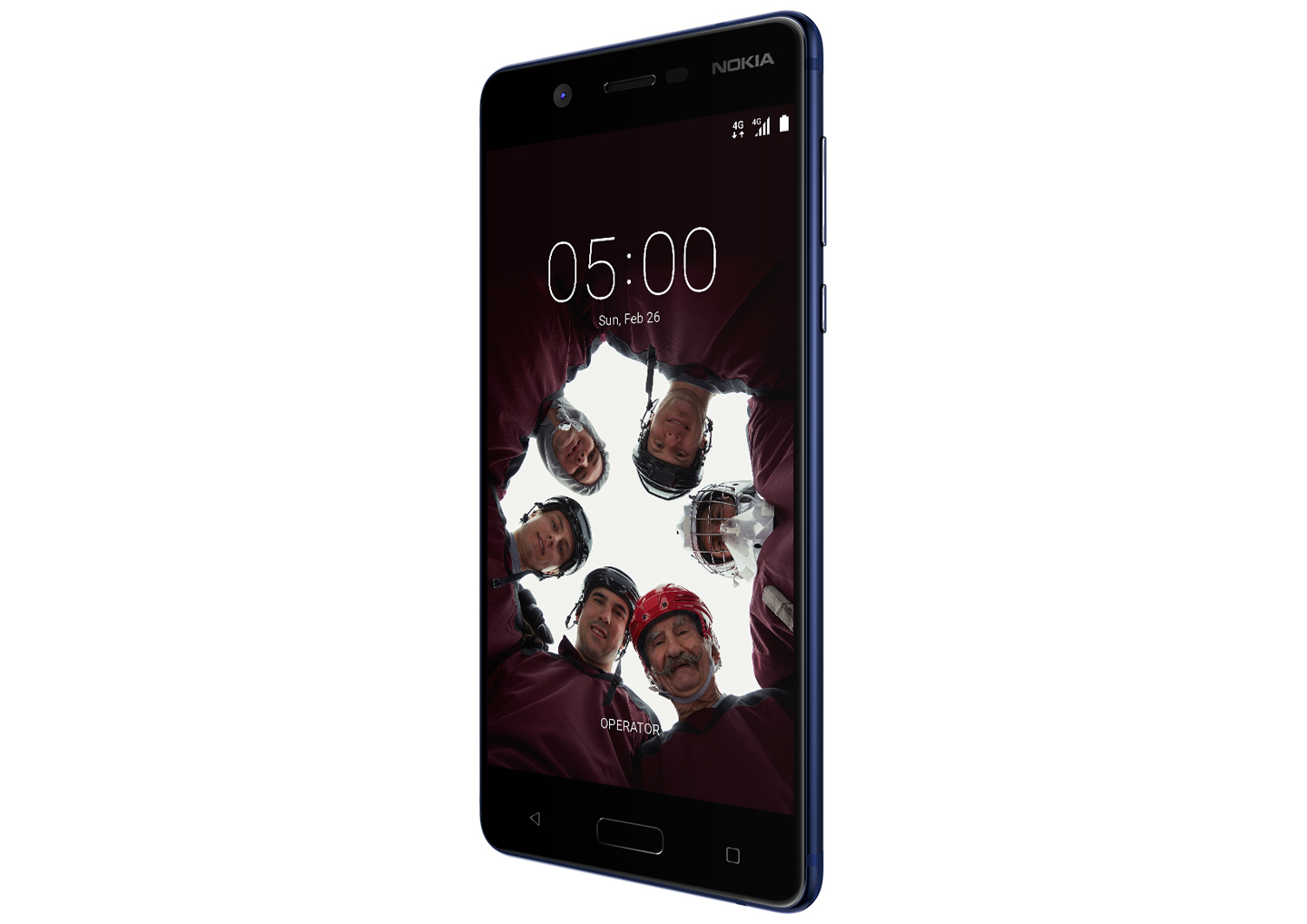
The Nokia 5 is also a little cheaper than the OPPO A73 outright, and is another good budget option. The design is a little less impressive, but it runs a completely unmodified version of Android that will receive software and security updates for around two years from when it first launched. If you're not a fan of OPPO's heavily customised take on Android, the Nokia 5 could be a good choice for you.
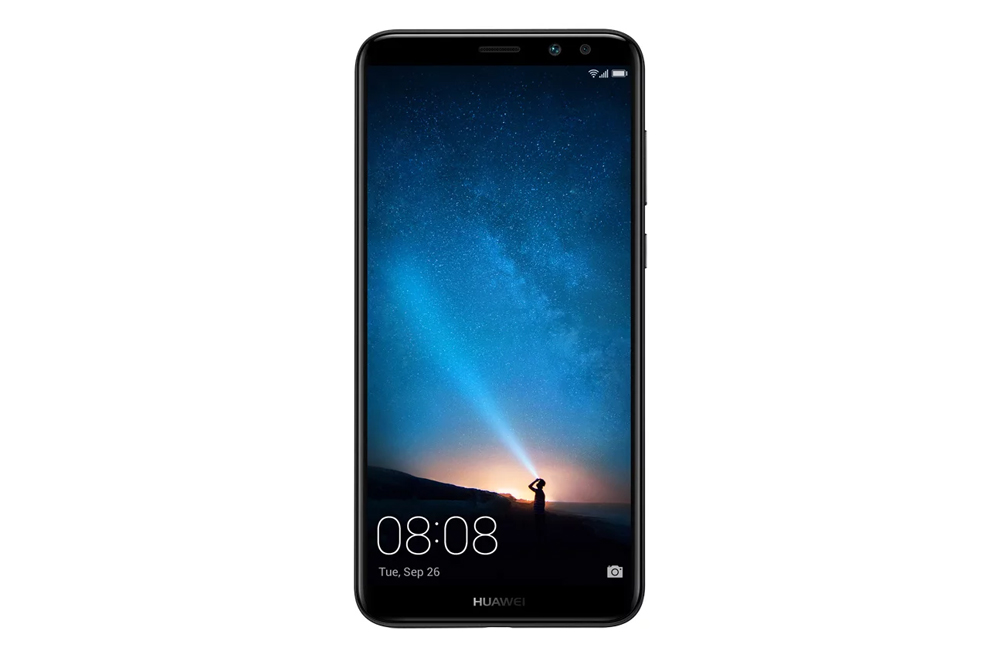
Huawei Nova 2i
Huawei's Nova 2i isn't quite as cheap as the OPPO A73, but is a bit faster when it comes to day-to-day performance and a bit easier to customise. The Nova 2i also has the same style of 18:9 display as the A73.


