

Out of all the foldable phones I've tried so far, the Motorola RAZR feels like the most practical. It's a phone that folds in half, rather than a tablet that folds in half. It's not trying to also be a tablet. It's just a regular phone that gets smaller when you're not using it.
Of course, the RAZR isn't quite just a normal phone. Sure, it has the distinction of the second foldable smartphone set to launch in Australia (with a release date of February 24), but it also comes wrapped in the nostalgic shroud of the RAZR brand. The RAZR V3 is the world's best-selling clamshell phone in the world. Quite frankly, the RAZR family is iconic.

Based on a brief hands-on, the RAZR does its predecessors justice. Motorola isn't just reviving the name for the sake of it. The new RAZR is exciting. It's highly usable thanks to a considered design. And it could be the perfect antidote for those who think smartphones are getting too damn big.
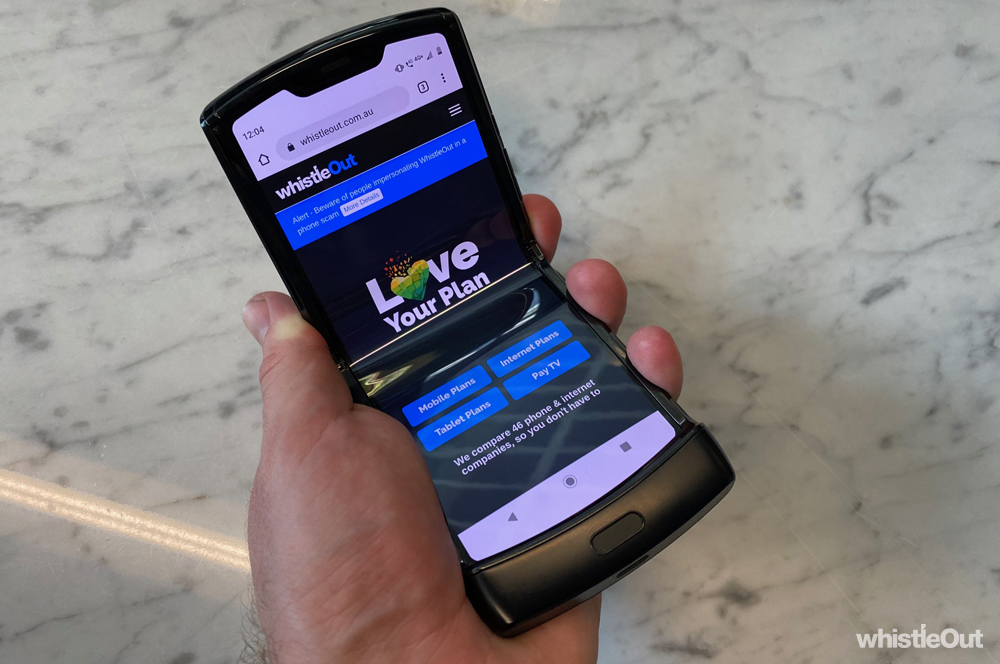
The RAZR uses similar technology to the Samsung Galaxy Fold and Huawei Mate X, but the design is quite different. Instead of opening out to be a tablet size, the RAZR has a standard-sized smartphone screen - measuring in at 6.2-inches - that folds down into a smaller form-factor to better fit in pockets. Essentially, flip-phone with a foldable display.
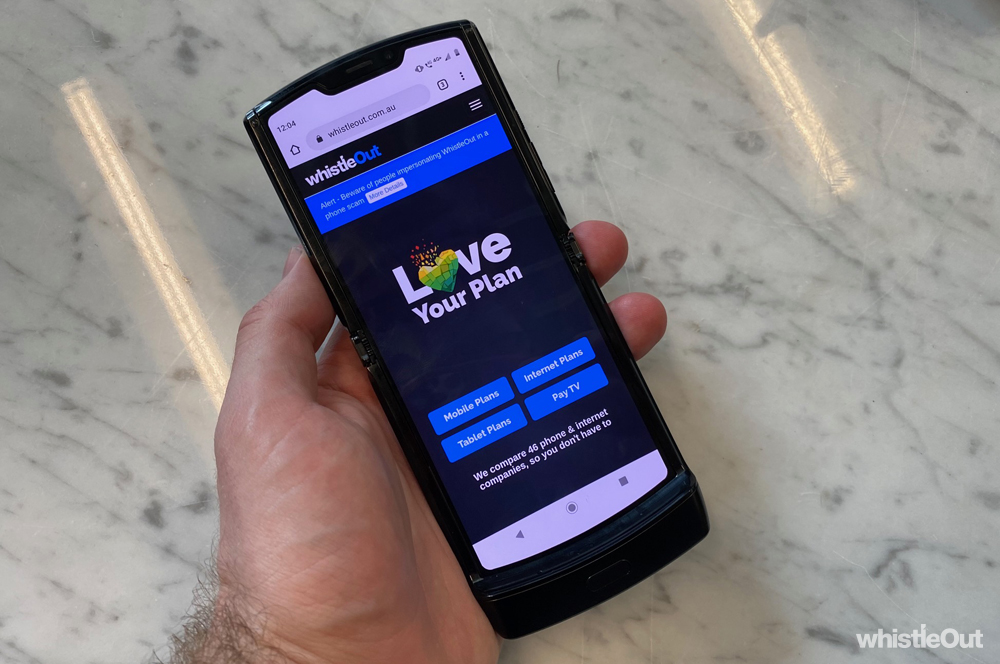
Unfolded, the RAZR feels like any other phone (albeit with a slightly taller display), and that's for the best. It doesn't feel like the design has been compromised due to a foldable form factor.
For comparison, Samsung's Galaxy Fold makes an excellent tablet when unfolded, but isn't a great phone when shut. The Fold's front display is a bit too small for banging out text messages and you need to use two hands for almost every task as soon as you unfold it.
While you still have to unfold the RAZR to reply to a message, you can do it with one hand. You don't have to stop whatever else you're doing just to send a text. The experience is a familiar one.

The RAZR also has a small display that's still visible when shut, but this mostly exists so you can check notifications or change track without having to unfold just to check if you've got any emails. You're not really going to be interacting with the RAZR through the smaller display.
When folded down, the RAZR is tiny. It has a bit of weight to it, but it just disappears into pockets. If you're sick of ever increasing smartphone sizes, this could be the device you're looking for.
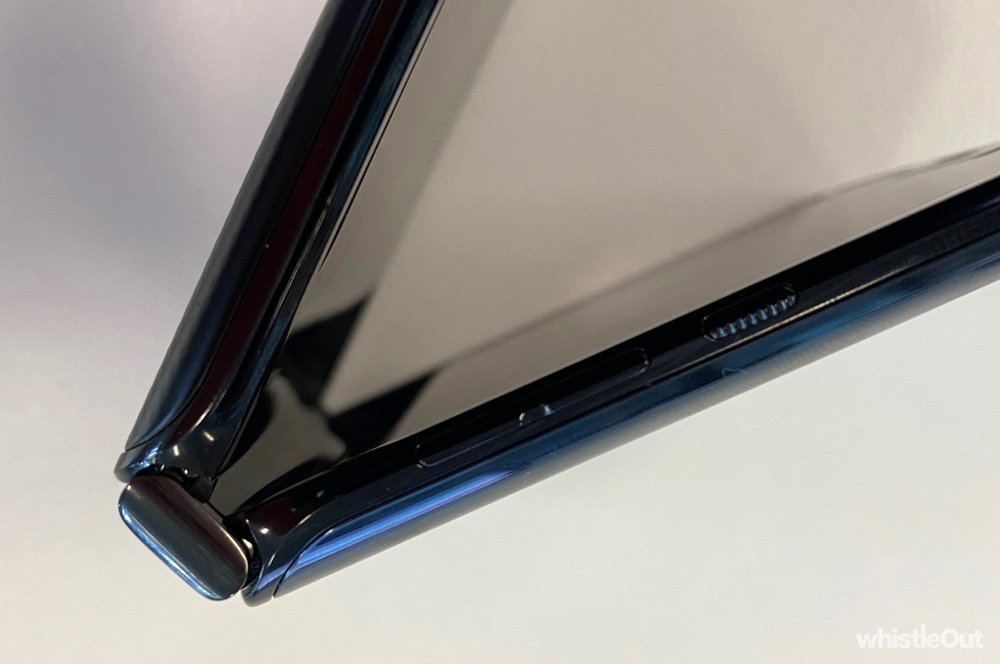
Notably, Motorola seems pretty confident in the RAZR's build quality. While the RAZR's display is plastic, it has a scuff resistant coating that should help protect it from scratches. In addition, Motorola says the hinge has been engineered to prevent water and debris from getting inside it. However, the phone itself isn't water-resistant - you definitely shouldn't take it for a swim.
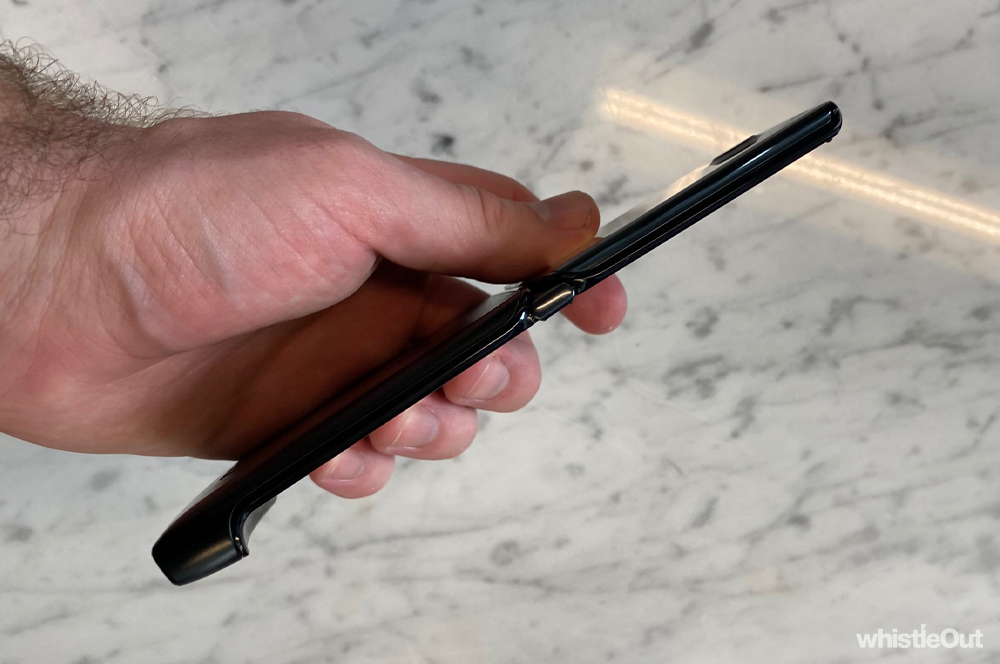
Unlike the Galaxy Fold and Mate X, RAZR's display doesn't have a noticeable crease. It looks seamless, but doesn't feel it. You'll still notice the steel plate that reinforces the RAZR's hinge when you run your hands and up and down the screen, and there's a slight flex to parts of the display. While I was pretty concerned by this at first, Motorola says this is because the display itself isn't fixed in place. It doesn't just bend in half when you fold the phone, it also physically moves.
What's really interesting about the RAZR is that it's isn't just a spec war smartphone. It's not making any promises about performance or cameras (although both seem fine), it's all about the experience. The nostalgia. The tiny form-factor. The ability to slam the phone shut when you're hanging up on a phone call. And to Motorola's credit, the folding mechanism is damn satisfying. It's easy to just waste time just opening and closing the phone. Especially because watching the display slowly contort as you do so is spellbinding.
Of course, buying a phone based on "the experience" or nostalgia alone isn't necessarily always a smart choice. At this stage, I've got two main concerns about the RAZR and they're kind of intertwined: midrange hardware at a high-end price tag.
With an outright cost of $2,699, the RAZR is one expensive phone. This gets harder to swallow when you consider the internals. The phone itself felt fast enough, the camera seems okay but isn't as exciting as a camera should be on a top-tier handset, and I was told that the battery should last a full day with "normal use" but that heavier users will probably need to top up to make it through the day.
When coupled with top-tier pricing, you're paying a massive premium for a foldable form factor. The RAZR touts a Snapdragon 710 processor, 6GB of RAM, and 128GB of storage. It's not quite an apples-to-apples-to-apples comparison, but Realme XT has similar specs - a Snapdragon 712 processor, 8GB of RAM, 128GB of storage - and retails for $499 outright.
That essentially means you're paying an extra $2,200 for the privilege of having a phone with a bendable display. No matter which way you cut it, that's a lot of money. Is a genuinely different smartphone experience worth that kind of cash?
At the same time, the RAZR is $300 cheaper than the Galaxy Fold. The Galaxy Fold does however have more cameras, higher-end internals, and a pair of wire-free Galaxy Buds in the box. While the Galaxy Fold certainly isn't the most rational of purchases either, it's easy to see how you could justify the $300 step-up in price compared to the RAZR.
Samsung also has a second foldable phone on the horizon, the Galaxy Z Flip. The Galaxy Z Flip is expected to sport a similar form-factor to the RAZR, but with beefier hardware and an ultra-thin glass display. The Z Flip is expected to be cheaper than the Fold and could even end up undercutting the RAZR. Right now, leaks suggest the Z Flip will come in at USD$1,400, which is USD$100 less than the RAZR's international price. It's hard to say how that will affect local pricing, but if you're fanging for a foldable, it's worth waiting until February 12 - when Samsung is set to reveal the Z Flip - before locking in a RAZR pre-order.
Alex Choros

Related Articles


