
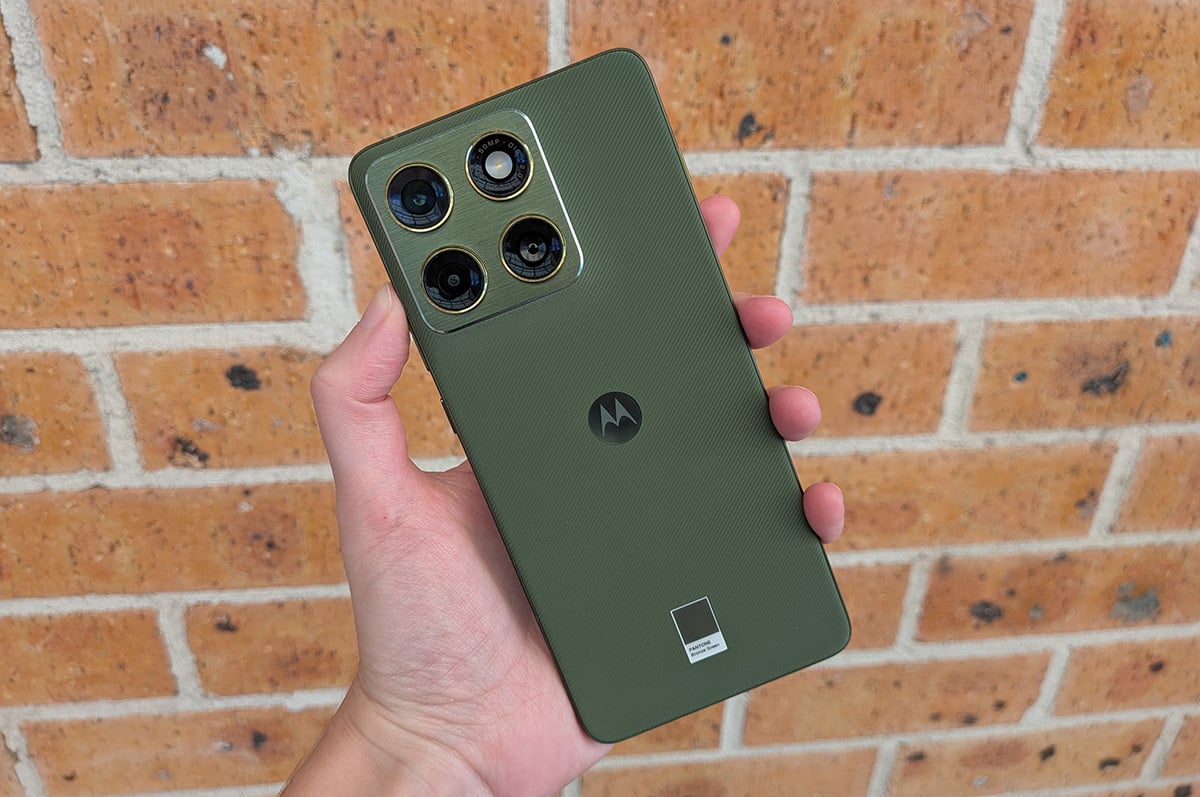
- Slim, lightweight build
- Half the price of competitors
- Surprisingly good battery life
- Colourways won’t be for everyone
- Image post-processing is a bit much
I’ve never understood the appeal of ultra-slim phones. I get that they’re aesthetically pleasing and lightweight, but are those virtues really worth the compromises that inevitably come with them? The Samsung Galaxy S25 Edge and iPhone Air are both lovely feats of engineering, but they come at the cost of battery life and camera quality, not to mention the actual cost.
To me, the value proposition simply wasn’t there. However, the Motorola Edge 70 may have just changed my mind.
Edging out the competition
Extreme form factors tend to attract quite the premium when it comes to smartphones. The first foldable phones were prohibitively expensive, clocking in at around $3,000 for the original Samsung Galaxy Fold. It’s taken a few years, but it’s now possible to get your hands on a flippy boi for under a grand.
Although not quite as extreme as a phone that can literally bend in half, ultra-thin phones seem to have become the next frontier in aesthetic innovation, and until now, they, too, have come at a high cost. The Samsung Galaxy S25 Edge kicked things off with a 5.8mm-thick body and a starting cost of $1,849. Apple followed up a few months later with the 5.6mm iPhone Air, which came with a launch price of $1,799.
Usually, it takes some time for these innovations to trickle down to the mid-range, but Motorola has swooped in not even a year later, massively undercutting the big dogs with the Edge 70, which starts at just $899. Yes, half the price of its rivals. Of course, we’re not exactly comparing apples to apples, but let’s face it, no one is buying a super-slim phone for its performance.
Insert Ozempic joke here
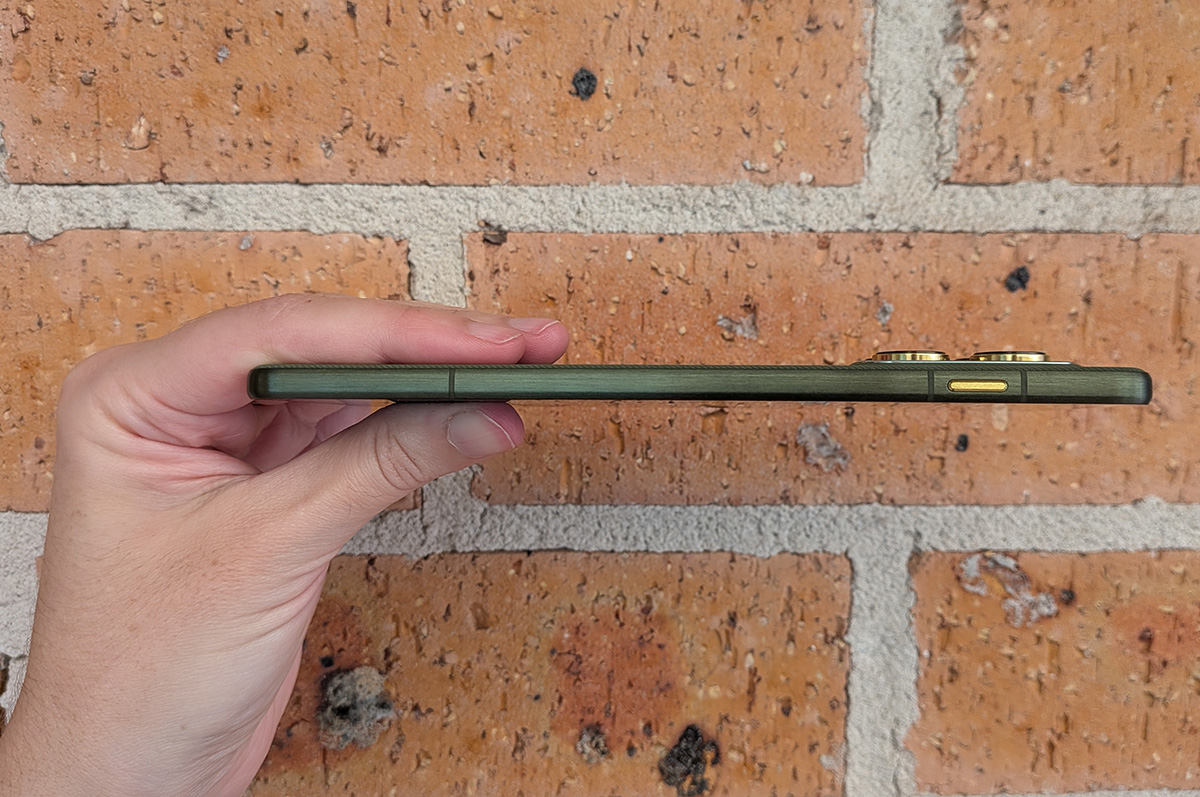
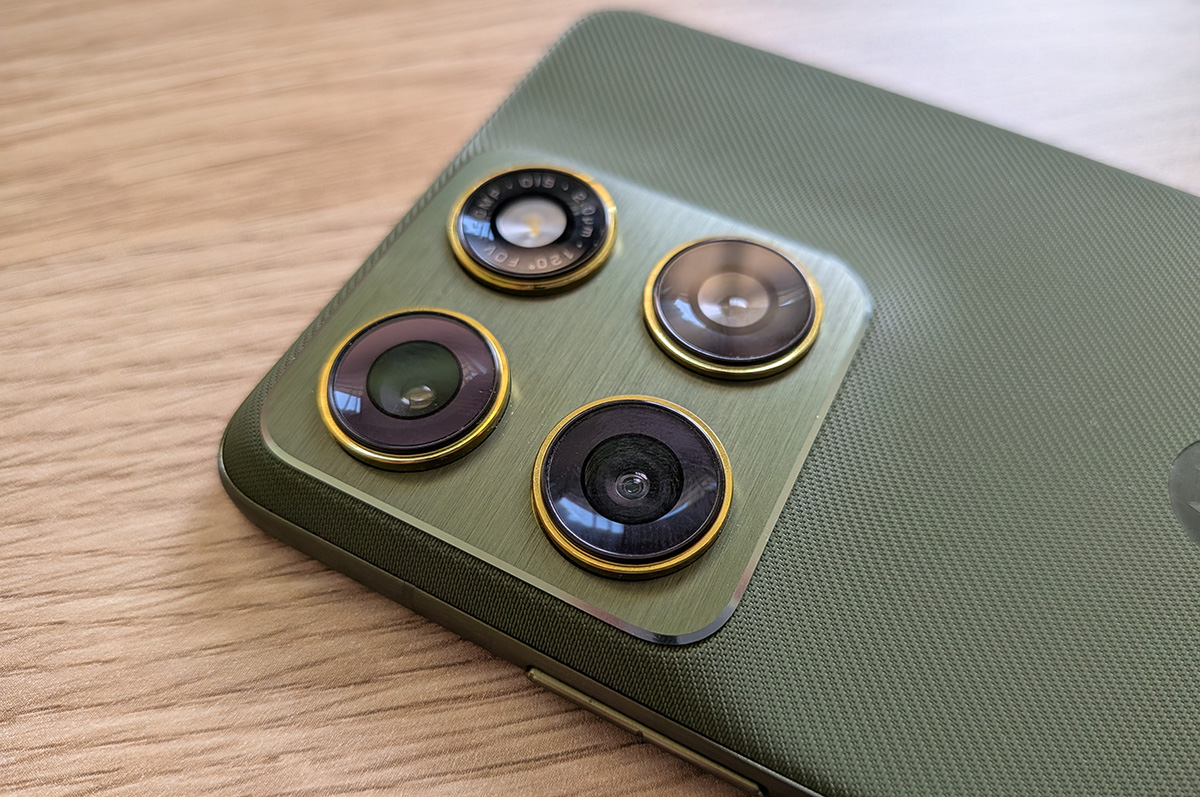
The first thing you’ll notice about the Motorola Edge 70 is that it’s thin. Like, really thin. At 5.99mm, it’s marginally thicker than the iPhone Air and Galaxy S25 Edge, but still noticeably slimmer (and, at just 159g, lighter) than just about every other phone on the market today. As you might expect, the camera bump does protrude quite a bit, giving it a bit of wobble when laid flat on a surface.
The only thing that seems a bit strange to me is that, for a device whose value is placed so much on its design, Motorola has chosen such… unusual colourways. There’s a Gadget Grey, which looks like a mostly normal charcoal colour but is marred by cheap-looking metallic blue accents, and a Cloud Dancer (the Pantone colour of the year) variant, but that’s blinged out with Swarovski crystals, which certainly won’t be to everyone’s taste. Then there’s not one, but two different shades of green (Lily Pad, with a sage tone and rose gold-hued accents, and Bronze Green, which comes with greeny-gold accents), both of which somehow end up being the best looking of the bunch.
The woven, fabric-like back feels nice but can get dirty quite easily. Fortunately, there’s an included clear hard case in the (inexplicably perfumed) box, which provides a decent bit of protection without adding too much bulk. But if you choose to go case-free, the Motorola Edge 70 offers both IP68 and IP69 ratings for protection against dust, submersion in up to 1.5m of water for 30 minutes, and high-pressure water jets.
Photographical gaslighting
Despite what the chonky camera bump might imply, the Motorola Edge 70 has just two rear lenses: a 50MP main lens and a 50MP ultrawide, with another 50MP selfie shooter around the front. All three are perfectly proficient in most scenarios, even managing low-light shots without much noise or muddiness. The problem isn’t the hardware, but rather the software.
It’s common for the final results of photos we take on our phones to look different to what we see through the viewfinder. After all, every modern smartphone has some level of post-processing magic happening under the hood. The problem is that, on the Motorola Edge 70, the post-processing is a bit much. The result is images that (although lovely) have a vaguely AI-tinged vibe to them.
Take a look at this shot of a frangipani tree I took in the gallery below. Gorgeous, right? Unfortunately, that’s not really what it looks like in real life. The software has smoothed out every imperfection and cranked up the saturation to the point where very little of the photo actually feels real. But hey, if that’s your style, you’ll love this phone.
Motorola Edge 70 camera samples
Check out these camera samples taken on the Motorola Edge 70. Click or tap on any photo to see a larger version.









A mid-ranger in disguise
At first glance, you’d be forgiven for thinking the Motorola Edge 70 came with a flagship price tag. It even feels like it should cost more. But appearances are just that, and it’s important to remember that we’re still in the mid-range here, so don’t go expecting to edit hour-long 4K videos on the go.
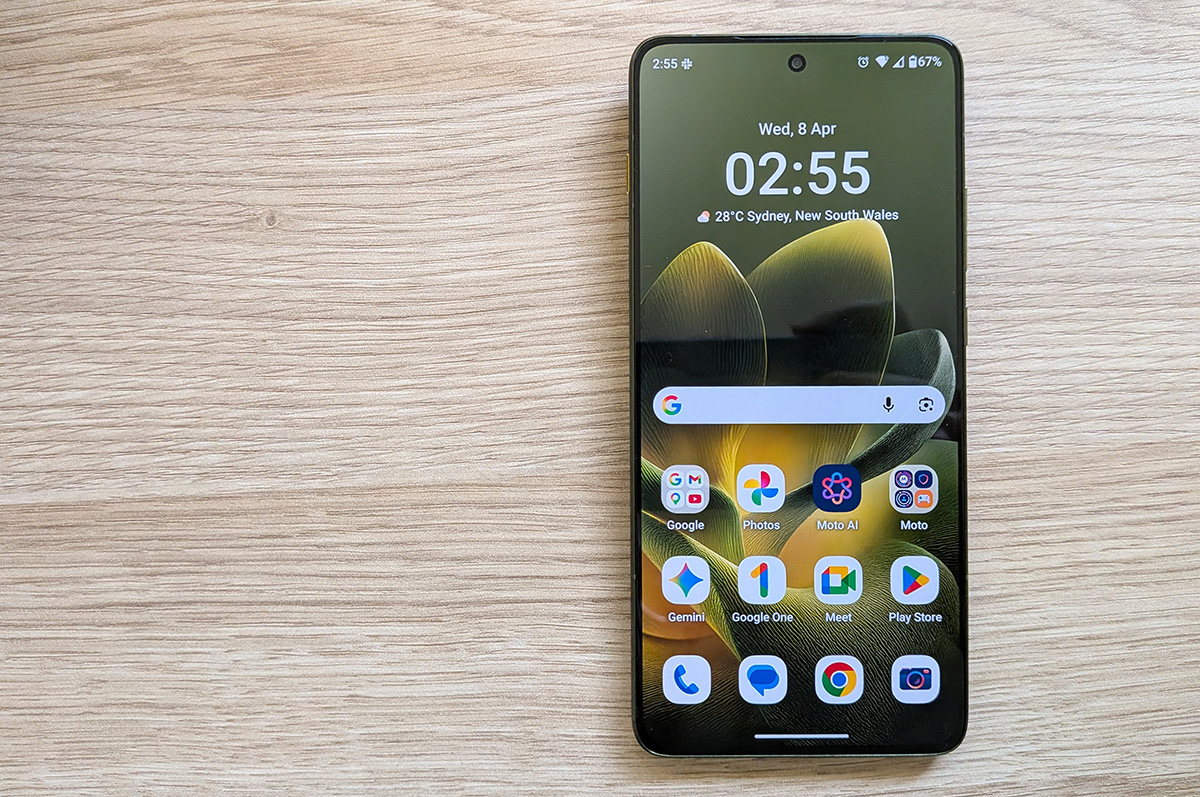
The Edge 70 runs on the Snapdragon 7 Gen 4 processor, which is the same chip that powers the Nothing Phone 4a Pro. With 8GB of RAM, it isn’t quite as smooth or snappy as its rival (which has 12GB), but it’s more than fast enough for the average person’s day-to-day needs, whether that’s jumping between social media apps or playing “just one more” Marvel Snap match.
Perhaps it’s a blessing in disguise that the Motorola Edge 70 is more underpowered than its competitors, because the upside is a battery that won’t let you down. Going into testing, my expectations were low. I was very aware of battery life issues on the iPhone Air and Galaxy S25 Edge, and assumed Motorola’s attempt wouldn’t be much better. Fortunately, that isn’t the case at all.
Not once during my time testing the Edge 70 (which included around eight hours of screen time per day) did I find myself needing an afternoon top-up. A full charge only takes about an hour (or less than 45 minutes using a maximum 68W charging brick), and the device supports up to 15W wireless charging.
Motorola Edge 70 - Final Thoughts
If it weren’t for the skinny form factor, the Motorola Edge 70 would honestly be pretty forgettable. But the fact that it is so normal works massively in its favour. In fact, I’d argue that the Motorola Edge 70 is the only ultra-thin phone that puts practicality and usability first and aesthetics second. This isn’t a slim phone that happens to also be good at being a phone—it’s a good phone that happens to be slim.
Although I’m still not a total skinny phone convert, I applaud Motorola for making an accessible entry point in the Edge 70, and one that feels like much less of a compromise than its twice-as-expensive competitors.
Georgia Dixon
Managing Editor - Singapore

Related Articles


