
- Fantastic sound quality
- Great noise cancellation
- The Smart TX is surprisingly useful
- Cheaper than its competition
- Higher frequencies could have more sparkle
- Voice passthrough is lacklustre
- All-plastic design feels cheap
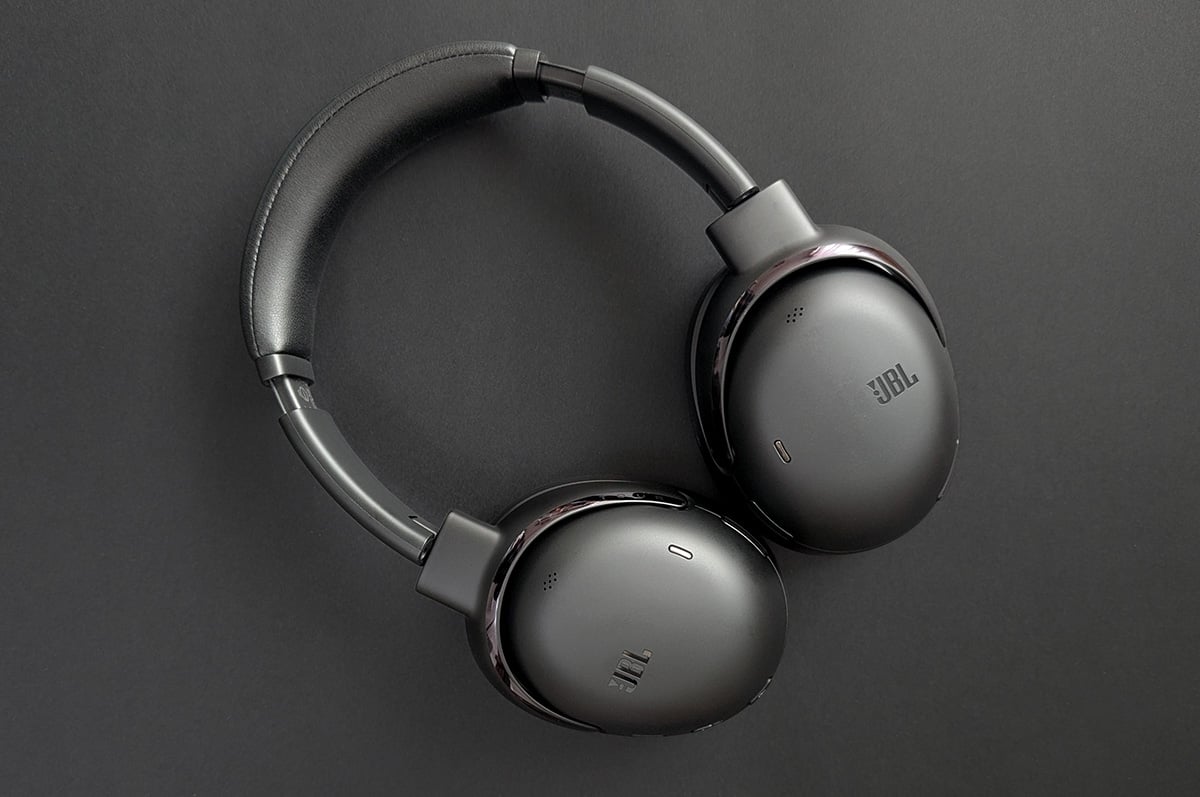
There aren't many products that can go toe-to-toe with well-established and more expensive competitors, but JBL has made it look easy with the Tour One M3. There are no alternatives for this price I’d recommend as widely. In fact, I found myself most often comparing them to Apple's AirPods Max 2, which, at $999, are double the starting price of the Tour One M3.
However, no product is without its flaws, and the Tour One M3 headphones do have a few. But I do mean “few”, particularly compared to their price competitors.
Design and comfort
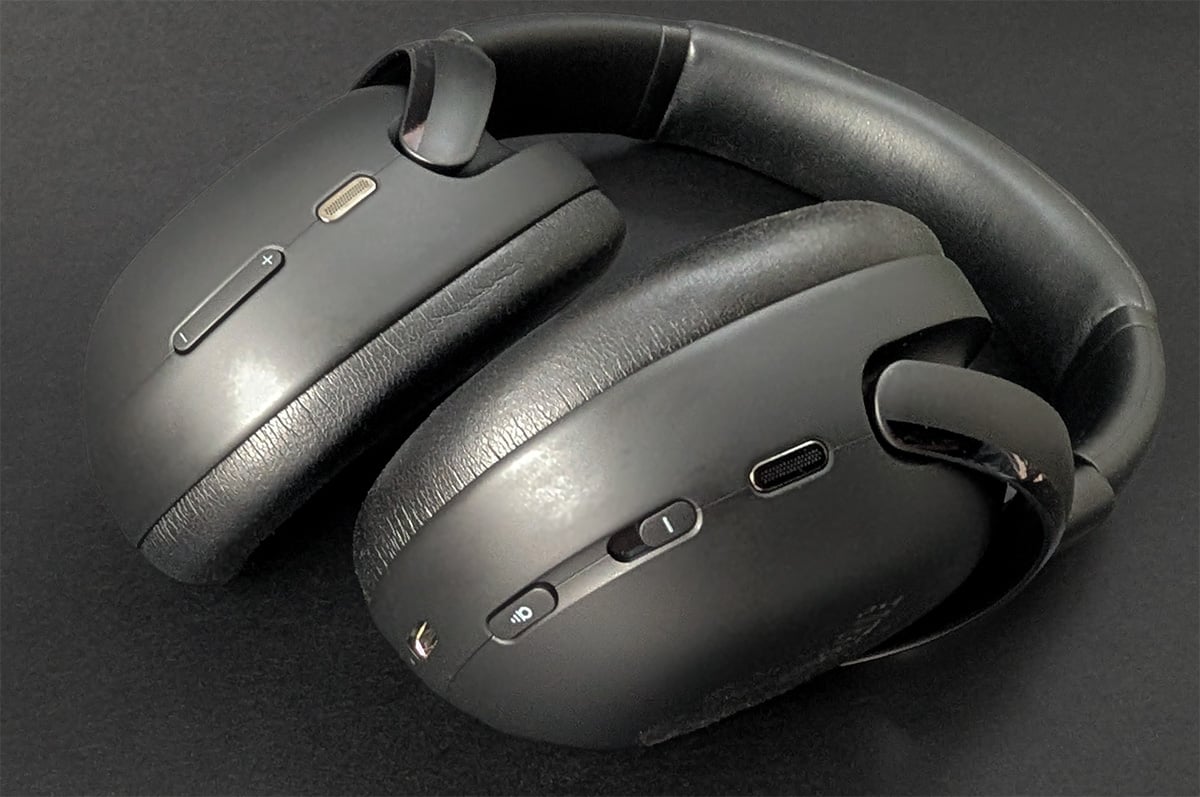
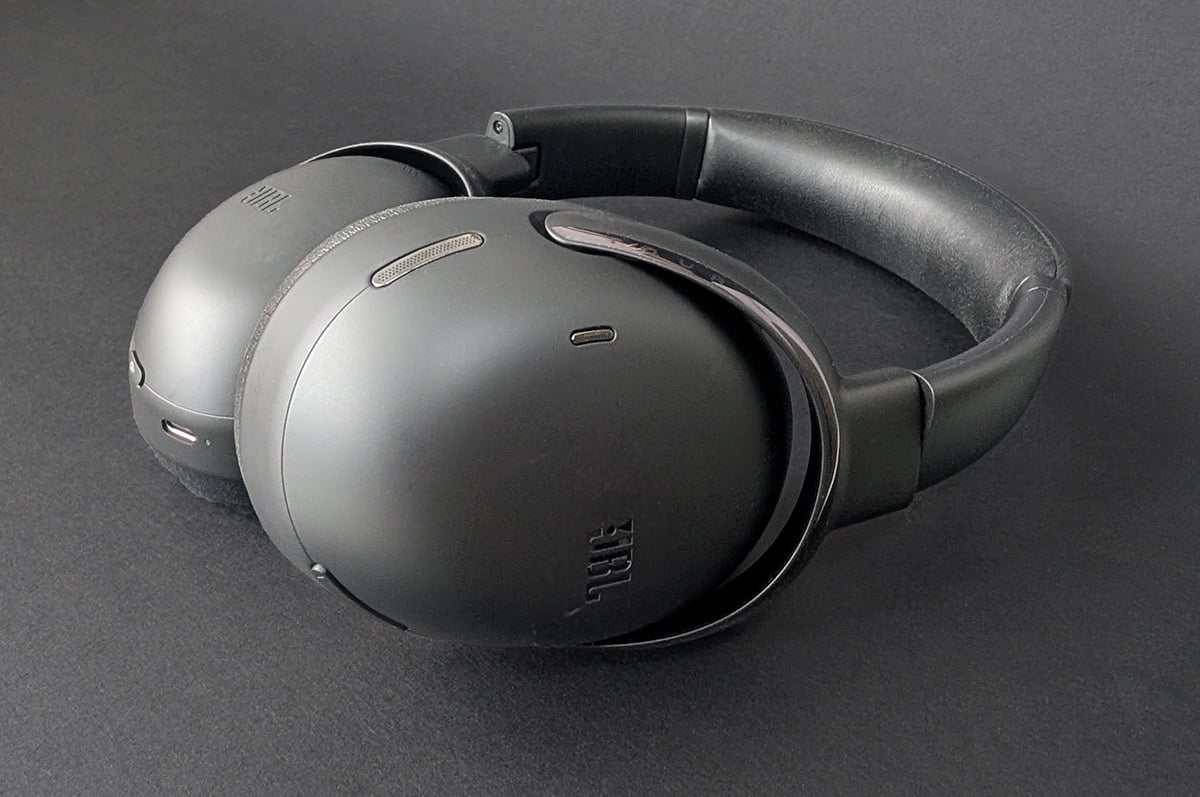
Aesthetically, Tour One M3 are a familiar tale: minimalist and ovular with as few physical buttons as JBL thought it could get away with. This unfortunately means play, pause, and skip all are handled via touch controls on the right ear cup, making them easy to activate when putting the headphones on or taking them off. Meanwhile, the physical buttons and on-off switch are all tiny and similarly shaped. You’ll eventually learn which is which, but I’d prefer sharper tactile delineation.
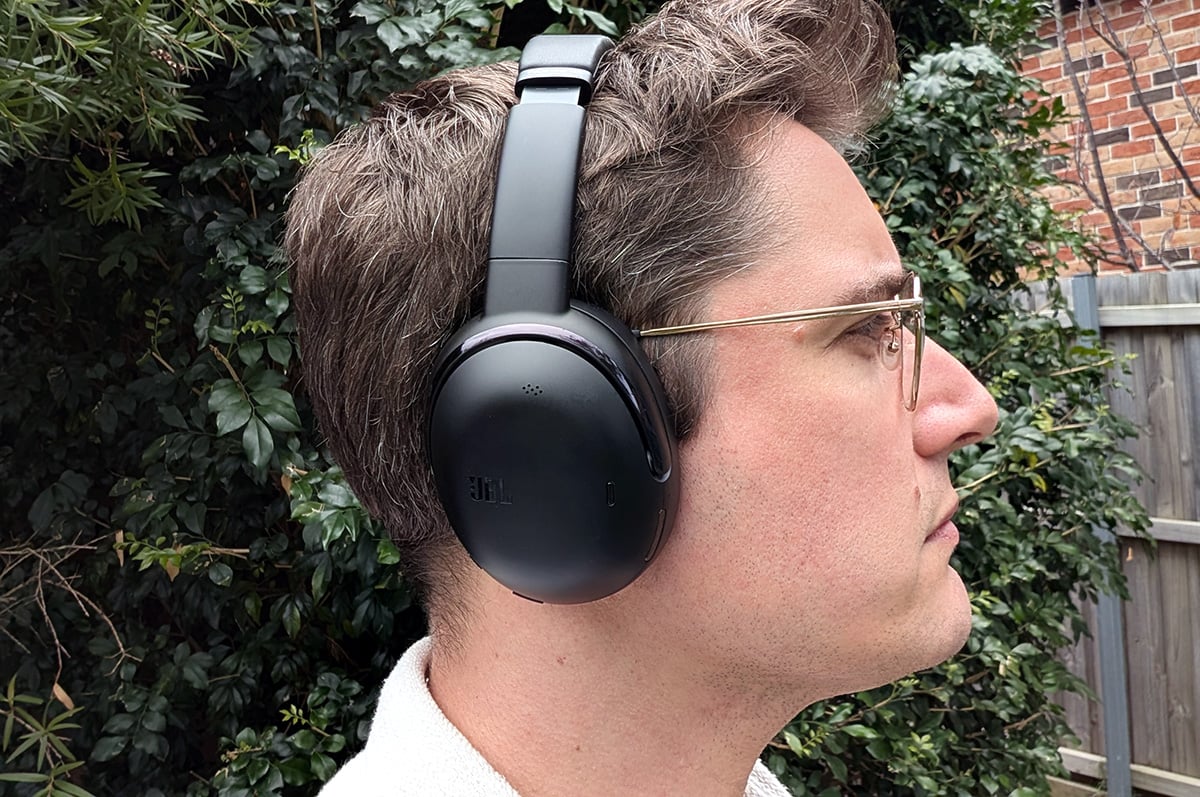
The fully plastic construction doesn’t feel quite right for a $549.95 pair of headphones – even the $329 Nothing Headphone A have metallic cup hinges. But the plastic does mean they’re lightweight and, while the hinges are plastic, they’re flexible enough to suit most head shapes and hairstyles. Coupled with the spacious and deep ear cups, this is an unusually comfortable pair of headphones, suitable for wearing all day at a computer.
Yet, despite their enduring comfort, it’s hard to get away from the plastic feel; pulling them out of the case and popping them on just doesn’t feel special. In fact, there’s very little to reassure you it was about $550 well spent until you hit play.
Audio
JBL went with a more balanced sound than the industry-standard bass-forward approach, and it paid off.
If you only used the default Studio equaliser (EQ) setting, you might disagree. But the Tour One M3’s hardware can support a wide range of EQ tampering. For example, I found the default setting a little lacklustre in the upper frequencies, but after boosting the 4kHz and 8kHz sliders in the app a little, it fixed some of this issue. While most headphones have similar customisable EQ settings, in my experience, few react well to boosting upper frequencies like this.
If you prefer more bass or energy, I recommend giving the Jazz preset a try. It’s less muddy than the Bass, Extreme Bass, and Club presets, while still ramping things up significantly. But before you do this, I'd suggest you listen to "Sone" by Pyramid to get a good idea of what the default setting is capable of.
Bass and sub bass on the Tour One M3 are great. There’s plenty of punch for urgent beats like in deadmau5’s "Deus Ex Machina", or the intro to Deftones' "Swerve City", but the headphones are also well-suited to warmer, rising vibes such as in "Blinding Lights" by The Weeknd.
The clear and resonant vocals allow for an earnestness lost by many wireless headphones, even many premium ones. Nina Simone’s rendition of "Feeling Good" is a good example of the Tour One M3's attention to vocals, as is "Fast Car" by Tracy Chapman. But this respect for mid-tones also benefits plenty of instruments like strings, piano, rhythm guitar and brass.
There are admittedly better options for mids than the Tour One M3; the Apple AirPods Pro Max 2 (and original AirPods Pro Max) spring to mind, but they’re also double the starting cost. At this price point, I can’t think of a worthy competitor.
The Tour One M3’s hot streak starts to falter in the upper treble and more brilliant tones – falter, but not fail. This can mean a lack of sparkle, but also a distinct lack of gravitas from something like the crunch of gravelly footsteps in the intro to "Short Change Hero" by The Heavy.
You can fix some of this in the EQ, but it requires a little experimentation. Thankfully, once you do, higher-pitched tones like those in Röyksopp’s "Eple" regain much of their plink and bounce, and there’s enough room between highs and lows to get lost in tracks like Kraftwerk’s
"The Robots".
Versatility and the Smart TX dongle
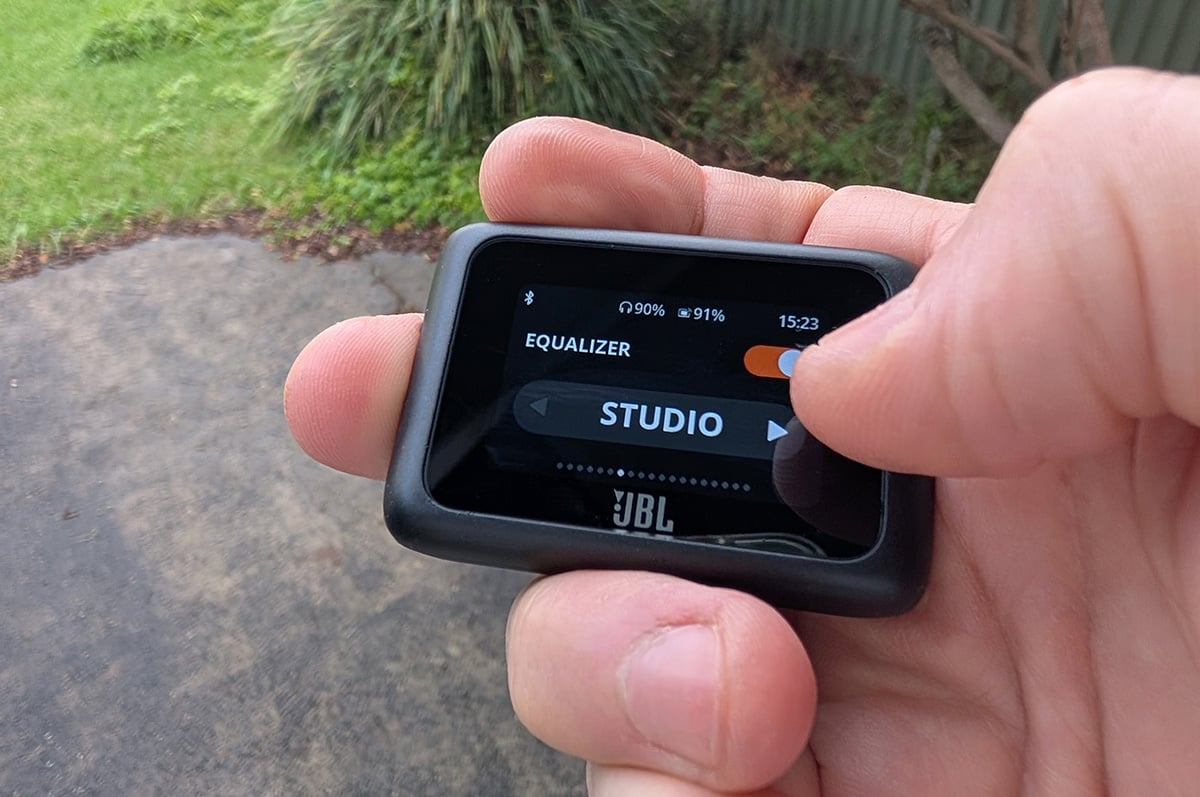
You can get the Tour One M3 with or without JBL’s nifty new Smart TX dongle, the difference being an even $100. So, what does this pill-bottle-sized transmitter offer versus a crisp, metaphorical c-note? Quite a bit, as it happens.
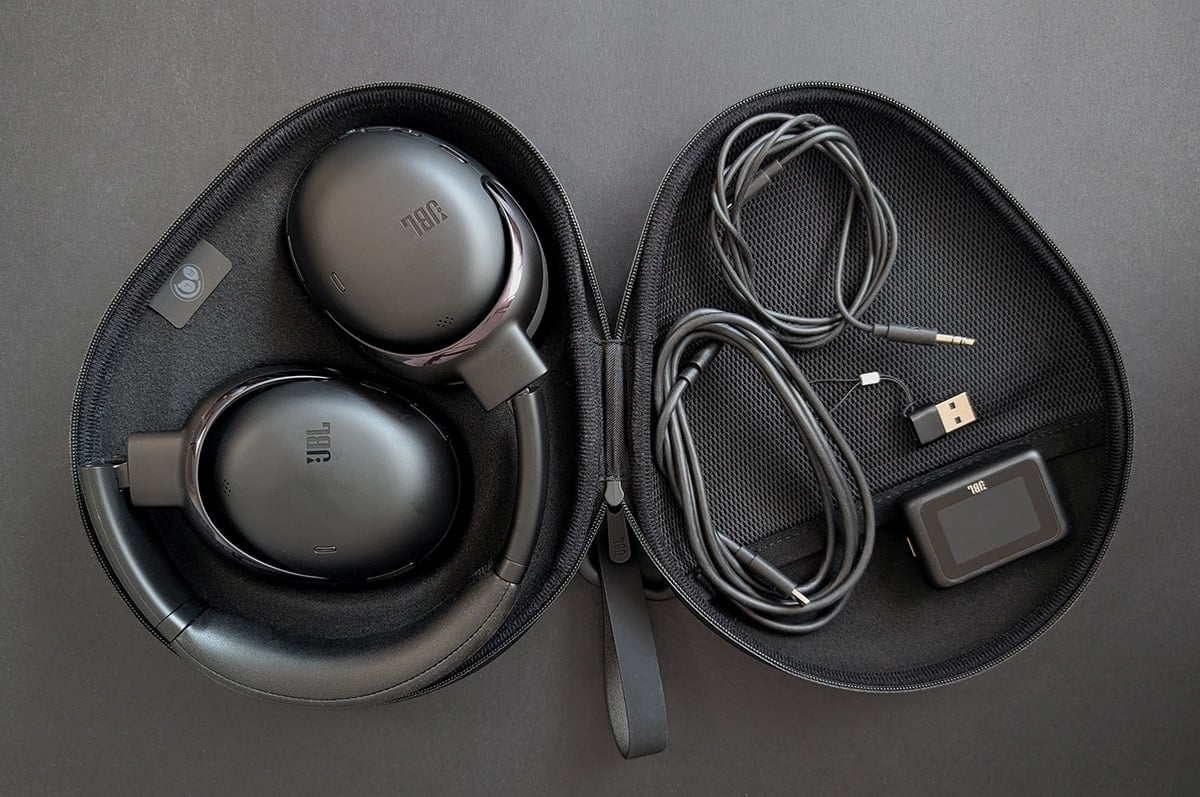
The Smart TX is a compact Bluetooth transmitter that lets you easily connect to just about any device that has a 3.5mm headphone jack or USB-C audio output (or USB-A via the included adaptor).
It supports Auracast, a Bluetooth broadcasting technology that allows multiple Auracast-supporting devices to connect to a single audio output source (such as the Smart TX) for simultaneous listening. But it's a one-way connection; similar to a radio station broadcast, Auracast can't be used for two-way communication.
The Smart TX included in the box is pre-paired to your headphones, so there’s no setup required. And it lets you access features that would normally be restricted to an app on your phone, like saved EQ settings or device switching, among others.
You can even use it fully wirelessly as a remote for changing settings without pulling out your phone. Personally, I expect I’d lose it within a day if I carried it around untethered – plus it’d be one more thing to charge. I might feel differently if I could chuck it on my keychain, but sadly, there’s no built-in attachment for this.
Now, I know what some of you are thinking, but the Smart TX is less niche than it might sound.
Have you ever found yourself wishing you had headphones that could connect to a given device in your home or elsewhere? (I'm sure you can provide your own examples, both in and out of the home.) But pairing your headphones with multiple audio sources quickly becomes unmanageable, if those devices support Bluetooth at all.
The Smart TX can turn those nice-to-have moments into a plug-and-play experience, without adding pairing clutter to your headphones’ day-to-day operations or requiring the audio source to support Bluetooth.
Whether this is worth the extra $100 is up to you. My only advice is to give it some consideration, rather than dismiss it outright as a techie bauble you’ll never use.
Other stuff: Noise cancellation, battery, microphone, portability
Noise cancellation is fantastic – some of the best out there. You'd likely need to spend at least $150 extra to get this kind of cancellation. Maybe more.
Battery life is simply outstanding. JBL claims 70 hours of playback, but expect a tad less based on your use of ANC. Even so, this is some of the best battery life you’ll find in a pair of over-ear headphones.
The microphone works well and can effectively filter away most external noise, though it can get a bit echoey in high wind or on a busy street. Sadly, the Voice Aware setting, which is supposed to let you hear yourself during calls, doesn't feel much different from just engaging transparency mode. Transparency mode itself is fine – it doesn't feel particularly real, and it's a far cry from the efficacy of the headphones' noise cancellation.
For portability, the Tour One M3 fold flat into a hard-cover carry case. The case also has a mesh pocket for your cables and a special mini sub-pocket for the Smart TX. It's a pretty portable system, but you'll still want a bag to put the case in.
Codec support includes SBC, AAC, LC3 as regular codecs and LDAC as the high-res codec. There is no support for aptX. When using Auracast as a one-to-many output channel, LC3 is used.
High-res lossless audio via USB-C can support up to 96kHz / 24-bit audio with the corresponding 4.6Mbps data rate.
Latency depends on various factors and we were only able to get rough figures from JBL. For Bluetooth, latencies range from 110ms to 270ms, depending on the codec and other factors such as interference. With the Smart TX, latency is less than 100ms. With USB, latency is less than 50ms.
JBL Tour One M3 with Smart TX – Final Thoughts
The JBL Tour One M3 aren't just among the best headphones in their own price range; I'd rate their most direct competitors along the lines of the Bose QC Ultra ($699.95) or, if you prefer a lot of bass, the Sony WH-1000XM6 ($699.96). Even the Apple AirPods Max 2 struggle to justify their $999, despite the high-tech bells and whistles.
The Tour One M3 are extremely comfortable for long periods, have great ANC, amazing battery, and can deftly handle a wide range of audio preferences. Out of the box, some listeners might feel their sound lacks a little character, but you can fix this pretty quickly by swapping to the Jazz EQ preset via the JBL app or Smart TX.
The Smart TX itself is surprisingly useful, letting you plug-and-play with almost any audio device out there. But, if you don't want it, JBL won't force it on you.
The downsides include the fully plastic build (though this does lighten their weight) and the voice passthrough mode leaves a lot to be desired. They could also do with more attention to upper trebles, but that's even true of the AirPods Max 2 at double the price, so I can't hold it against the Tour One M3.
Whether you only grab the Tour One M3 by themselves for $449.95 or pick them up with the Smart TX for $549.94, they're great value and should go way up the top of your list for consideration.
Did you like this article? Good! Why not make us a preferred source in Google? Click below, tick the box, and WhistleOut stories will show up more often when you search for related content.
Alex Angove-Plumb
Digital Content Editor

Related Articles


