
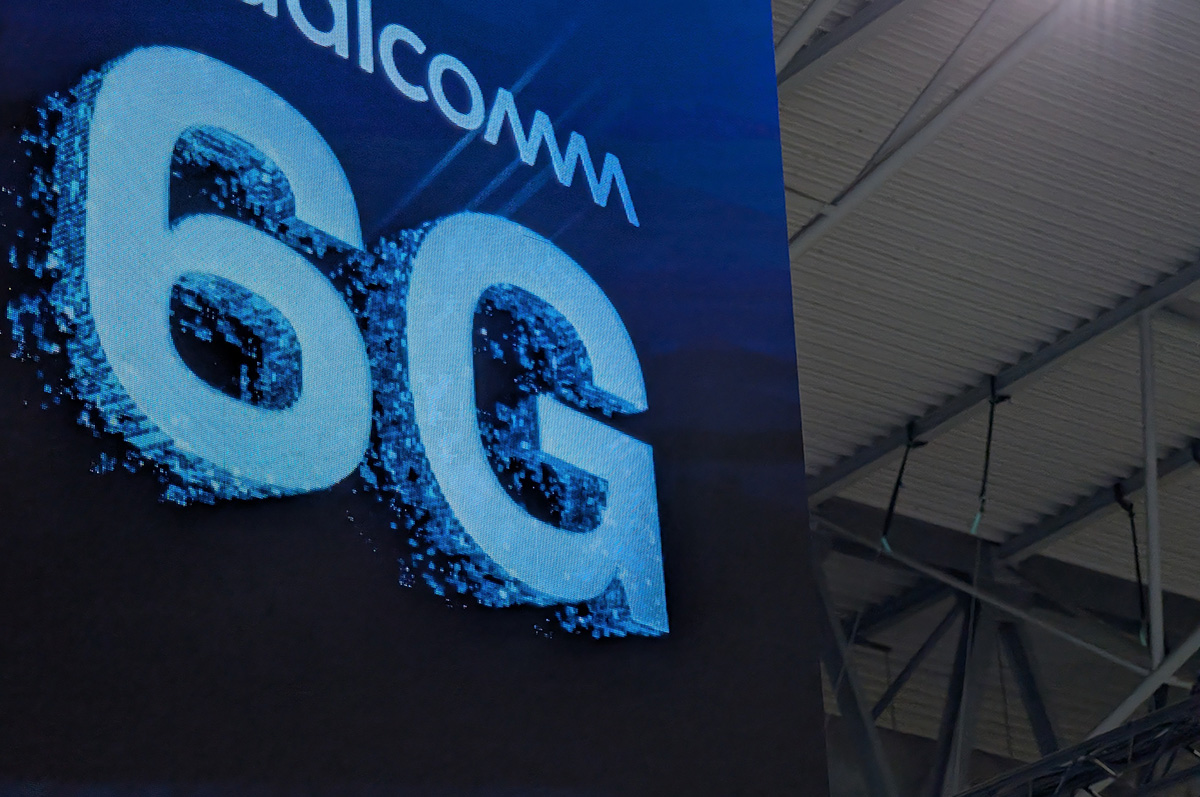
5G home internet has fast become one of the better alternatives to the NBN, and 6G could be even better.
Australia’s 6G network rollout is still likely a few years away, but Qualcomm’s Christian Daher didn’t shy away from pitching some of the potential benefits that the emerging telecommunications standard might bring to those on a fixed wireless connection.
Speaking to WhistleOut Australia at this year's Mobile World Congress, Daher cited specific 6G proposals like GigaMIMO - which could help increase the overall capacity of the network and expand the density of fixed wireless connections that can be handled in a given area.
This is more of a side-effect than a stated purpose behind 6G as a project, though.
As put by Daher, the rise of AI agents and applications demands a new network standard that’s capable of dealing with the subsequent growth in network activity.
“The network now — 5G — the profile of the traffic is heavily downloads. The majority of traffic that is used is video streaming — people watching YouTube or some Netflix — and the nature of that traffic is downlink.”
“With AI, when people start to use visual models or take pictures and generate images and upload to social media or do something like that, the nature of the traffic changes. You start to have a lot of uplink profile, and then you’re going to need more capacity on the uplink,” he explained.
Daher said that, hypothetically, as more consumers start to use AI agents on their phones and other devices, networks will struggle to handle the subsequent traffic and deliver connectivity at scale. According to him, the integration of AI across platforms and applications is going to drastically change not just the profile of individual consumers but also the volume of network activity they produce. It’s not hard to imagine how the amount of data used by mobile customers might see a similar uptick.
As more and more AI workloads are split between the device, the network’s edge and cloud, that need for greater uplink capacity is only going to grow. However, that shift towards distributed compute may come with some silver linings for both consumers and carriers when it comes to battery life.
One of the other big proposals for 6G is the implementation of low-power wake-up signals. If that ends up being accepted and effectively implemented, it's possible that we could see a reversal of what we saw during the earlier stage of 5G adoption. In the early days of the last network rollout, devices had to rely on sub-optimal implementations like non-standalone 5G, which often resulted in worse battery life. With 6G, the opposite might be the case.
Interestingly, this emphasis on power conversation could apply not just for consumers but also network infrastructure. Daher suggested that if a given cell of the network isn’t actively servicing any connections, it may also shift into a low power mode. This could bring down operating costs, enabling further network expansions into areas where it was previously considered difficult to justify from an infrastructure investment perspective.
Given the hype around AI, it isn't a huge shock that this technology is the frothiest factor driving the conversation around the next-generation of telecommunications standards. However, the advent of 6G in Australia is still likely years away. Should the bubble burst between now and then, it's nice to know there are still some potential upsides for humans in the mix.
Disclosure: WhistleOut Australia's coverage of Mobile World Congress 2026 is supported by OPPO.
Did you like this article? Good! Why not make us a preferred source in Google? Click below, tick the box, and WhistleOut stories will show up more often when you search for related content.
Fergus Halliday
Digital Content Editor

Related Articles


