

At its best, new technology has the power to make our lives better. Obviously, that's not always the case. On one hand, Facebook makes it easy to stay in touch with friends, on the other, it may have had undue influence in a certain election. You win some, you lose some.
When it comes to positive impact, there's no other bit of tech that's done as much for me as the Apple Watch. The Apple Watch does a lot of things well, but it's most impressive feat has been tricking me into living a much healthier life.
Of course, you could argue that's come at a cost.
Before the Apple Watch, I was never an overly active person. I don't think I was unhealthy, but I wasn't exactly fit. I was always picked last in school sport. You'd typically find me on the couch or in front of my computer. I never went out of my way to exercise. I definitely put on weight after leaving uni and settling into a full-time job. There's some body image issues at play.
The Apple Watch wasn't my first fitness tracker. At first I tried using a Fitbit to motivate my lazy ass, but it didn't really do it for me. I had the super basic Fitbit Zip, a glorified pedometer that clipped onto a pocket. The goal was to reach 10,000 steps. It didn't feel meaningful. It didn't do anything else. It was easy to forget to wear it. And I mean, what's even the point of taking steps if they're not being quantified?
On the other hand, the Apple Watch gave me reasons to wear it outside of fitness. Even the first generation model felt like a natural extension of your phone, in a way that other smartwatches still haven't really replicated.
Sure, fitness was a core component of the Apple Watch package, but there was more to it than just fitness: Apple Pay on my wrist, easy access to Siri while cooking, smart notification mirroring, and more. Even though the first generation Apple Watch was a tad slow and a little clunky, it marked the first time I wanted to keep using a smartwatch after I finished reviewing it.

Fitness tracking was however, and still is, the standout feature. For those not familiar with the Apple Watch's methodology, it tracks three key metrics: kilojoules burnt, active minutes, and each hour in which you've stood and moved around for a couple of minutes.
You choose your own goal when it comes to kilojoules (and the Watch will give you recommendations as to whether you should change it at the start of each week, based how you went the previous week), while the other two are set: 30 minutes of exercise, and 12 hours where you've stood and walked around for at least a minute.
These are represented as three rings that fill up as you progress towards them. It's clever iconography that's easy to understand whether it's taking up the entire screen or in the bottom left-hand corner of your watch face. It makes it easy to see how close you are to achieving your daily fitness goals, and to be quite honest, makes me feel a little guilty whenever I look at my Watch.
The persistent guilt trip motivated me more than what any other fitness tracker had managed to achieve. It actually got me exercising regularly. It tapped into my goal-oriented analytics-driven brain in a way that other fitness trackers hadn't. The combination of a constant reminder that I should be moving more and clear achievable goals made it easy to get sucked in.

By the time the Series 2 rolled around, the Apple Watch really got its hooks in. I wasn't exactly in a good place at the time, but the gym proved a good distraction. While my previous exercise record was a little patchy - a glass of red wine in the front of the heater seemed like a much better choice than working out on a cold winter night - I started closing my rings on a daily basis. And the Apple Watch rewarded me for it. Every day I'd get a "new longest streak" notification, representing the ever-increasing number of consecutive days I'd managed to meet all three of my task master's demands. It felt good. I was appeasing the Watch.
I slowly set higher goals for myself, and more importantly, I was meeting them. At the start, I was burning around 2,000kJs per day on average. Several Apple Watches later, I'm at around 4,800kJs. I've never been more active in my life.
(Well, maybe other than in May when a friend I were constantly trying to out-do each other's Apple Watch metrics to the point where I was taking regular late night walks just to get a higher ring closure percentage.)
While the overall impact of the Apple Watch has been great, it hasn't always been a positive force in my life. Closing your rings feels awesome - there's pretty animations and everything - but failing to do so can be soul crushing. The demon in the Watch, yelling at me, berating me for being lazy.
I've pushed myself when sick to close my rings. I've been an idiot and gone to the gym at 3am before getting on an early international flight. I refuse to miss workouts when on holiday. I've paced up and down on a plane to get those last few kilojoules in. I get upset when a time zone change ruins an otherwise perfect month. There's been days where I've felt down for just meeting the bare minimum to close my rings. I realise how dumb that sounds.
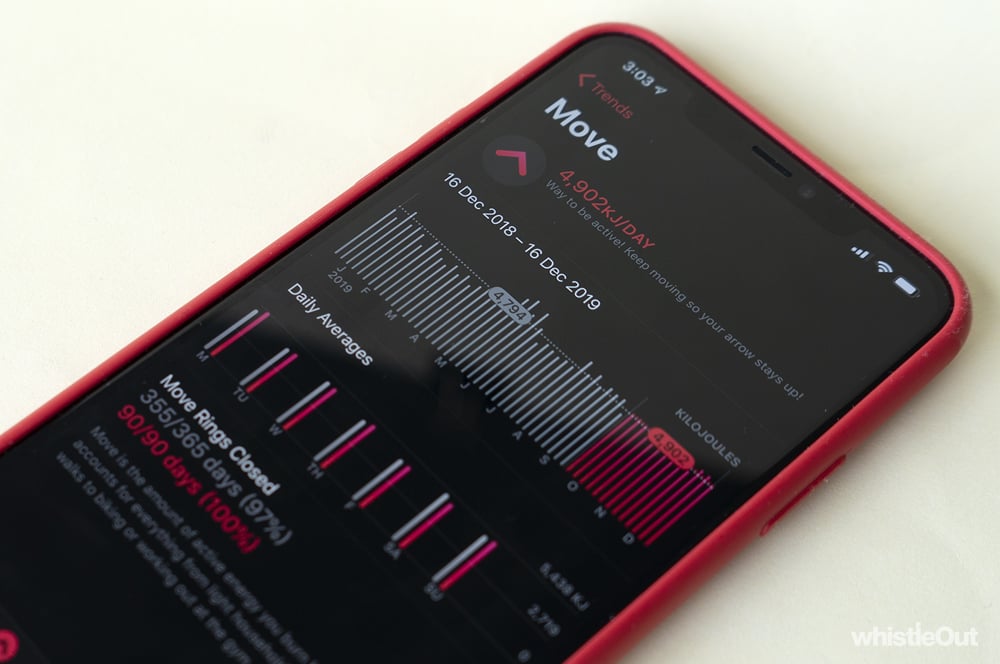
Trends, one of the new features in the latest Apple Watch operating system, is rapidly becoming another source of guilt. Trends compares your last 90 days of activity to the previous year, and will tell you if you're falling behind. It sounds great in theory, but I've got the kind of brain that hates it when my phone tells me I've been "moving less than usual". Even if there are completely valid reasons for that being the case.
You could easily make the argument that my relationship with my Apple Watch is a form of tech addiction. It probably is - I'd feel naked without it. It might be the Stockholm Syndrome talking, but at least it's not the worst gadget to be addicted to.
But even if the Apple Watch brings on a bit of self-loathing from time to time, the net impact has been positive. It lifts me up more than it brings me down. I've lost a bit of weight. I'm mostly balancing out my bacchanalian love of food and wine. I hope. I ran the City2Surf for the first time year, and would have done so in under 90 minutes if it wasn't for long toilet lines. That's not a sentence I ever thought I'd write.
The Apple Watch also helped foster what's now a love of hiking. Sure, nature is pretty and all, but it's so much better when you're feeding the analytics demon at the same time.
And hey, exercise is meant to be good for you right?
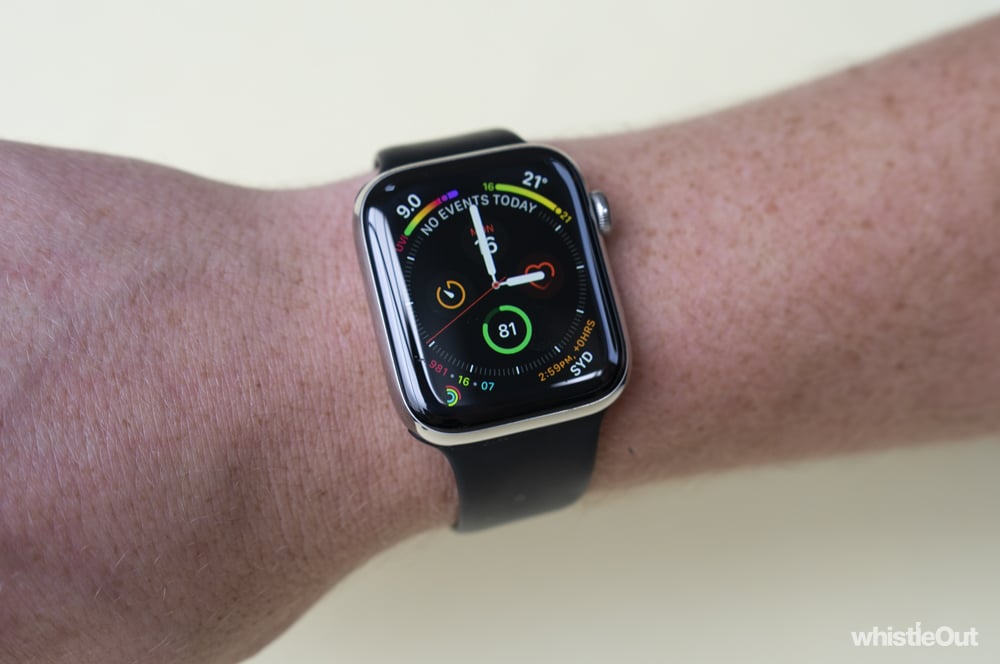
None of this is to say I'm some sort of amazingly in-shape person or anything right now. I still low key hate myself on the reg! I'm definitely fitter though, so that's something, and I'm proud of what I've achieved - even if the Watch weaponises the worst parts of my personality against me.
You could argue I didn't need the Apple Watch to do any of this, but having a constant source of motivation and or guilt on my wrist genuinely helps me. Especially on those days I know I should work out but just don't feel like it.
I know it sounds like hyperbole, but the Apple Watch genuinely changed my life. It's rewoven my identity into someone who cares about exercise and fitness. It's rewired my brain. I'm fundamentally a different person to who I was five or so years ago, and somehow, it's mostly because of a tiny computer I wear on my wrist.
Alex Choros

Related Articles


