
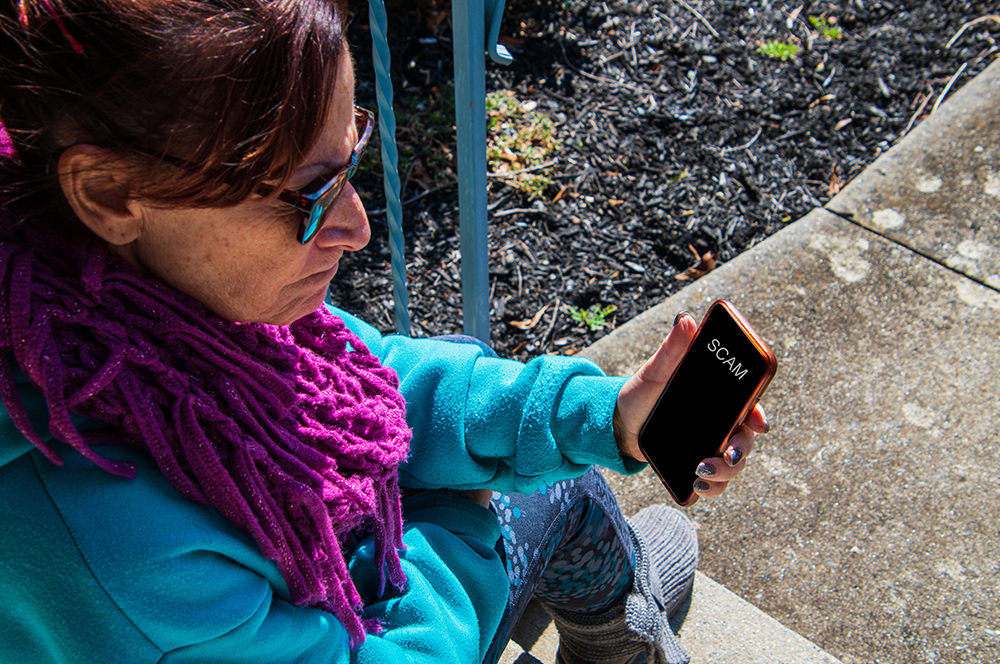
My mum got scammed once. I don’t think I've ever been so angry. How could someone target my MOTHER!? That woman is a saint. A loud saint, with zero boundaries, but a saint nonetheless.
Since that day, I put my phone number down for all of my mum’s bills so that if anything legit was going to come through, it would come through to me. It has been close to a decade since, and with the barrage of spam texts (among other things) out there, everyone is back in the firing line. Mothers included.
If you’re like me and you’ve taken on the role of technological caretaker for your parents, grandparents, or inept cousin, here are some simple ways to keep them safe.
Step one is to remember that scams come in all shapes and forms. We’re all pretty used to scam phone calls, but in the technological era we reside in, people are always coming up with new and exciting ways to try and steal your money and/or identity. In this guide we’ll cover scams coming in by phone, text, and online.
Put them on the Do Not Call Register
Phone call scams your loved one’s achilles heel? A simple way to cut down on the unwanted calls is to get on the Do Not Call Register.
The Do Not Call Register is a service where you can register any phone number in order to reduce unsolicited calls. Note the word reduce. The Register won’t stop scam calls persay, but will cut down on telemarketing calls which are known to prey on elder generations.
Registration is entirely free, and you can sign-up multiple numbers at once. It takes about five minutes all up.
After 30 days there should be a marked reduction in unsolicited calls coming through, but organisations such as registered charities, political parties, and those that you have an existing relationship with (ie. your telco) can still access the number.
Teach them to look at URLs in text messages
Text message scams are rampant right now, specifically delivery texts. One of the easiest ways to help your people steer clear of the dodgy texts is to teach them to actually read the URLs.
By now you would have seen a scam delivery text message, or any scam message for that matter. They usually involve a message about an undelivered package, followed by a URL that they REALLY want you to tap on.
These URLs are usually entirely nonsensical, and entirely irrelevant to the text in the message. If you take a second to actually read them, then you can avoid some heartache (and a lot of password changing).
You might not be able to stop your parents from clicking on fake news, but you can at least encourage them to leave unrelated links alone.
Don’t forget stranger danger
Chances are that the same people you’re trying to protect now, used to tell you not to talk to strangers on the internet. Funnily enough, online scams disproportionately affect those aged 45 and older. How do these happen? By talking to strangers online. Isn’t it funny how those roles get reversed?
Last year, Australians lost over $323 million to scams, with the majority of that loss coming from people over the age of 45. Scams over the phone equated to $100 million of these losses, but after that came social networking, internet, email, and mobile applications to a total of $192 million.
Even though the internet is entirely different these days, and it is impossible not to talk to strangers online - it is worth taking these conversations with a grain of salt. If someone is offering you something unrealistic, be that too much love too soon, an obscene amount of money, or a groundbreaking investment opportunity, you can and should be skeptical.
It seems like common sense, but unfortunately what is common are large financial losses. Try gently reminding your parents to use some problem solving skills.
Anula Wiwatowska
Offsite Editorial Lead | Instagram

Related Articles


