

Foldable smartphones are easily one of the most interesting things happening in the mobile industry right now. While not without their ups and downs, they've gone from sci-fi pipe-dream to actual physical products you can now find in a store in what feels like a very short time.
While folding phones aren't exactly mainstream yet, here's everything you need to know.
What's a foldable phone?
As the name might suggest, a foldable phone is a smartphone with a bendable display. We've seen a few different implementations across concept devices and products, but flexible screen technology is what sets a foldable device apart from a traditional smartphone.
In some cases, foldables are smartphones that can open up to become tablets, as we've seen with devices like the Galaxy Z Fold 2 and the Huawei Mate XS. In others, foldables are smartphones that can collapse down into a smaller form-factor, almost like flip phones. The Galaxy Z Flip and new Motorola RAZR are the best examples of this design.
Who makes foldable phones?
Samsung, Motorola, and Huawei have all brought foldable smartphones to Australia so far. OPPO is also looking at flexible display technology, but is working on a rollable concept device instead.
TCL is working on flexible displays and has showcased its own foldable prototypes, but the company's General Manager for Global Marketing, Stefan Streit, told us the company is in no rush to bring a foldable to market. Streit says TCL wants to wait until the tech is both more mature and more affordable.
"We don't want to make the user a beta tester," said Streit. "We're not worried about timing."
Streit said the company will definitely launch a foldable in the coming years.
While not strictly a foldable, Microsoft's Surface Duo works on a similar principle. Instead of featuring a single flexible display, the Surface Duo has two 5.6-inch displays joined by a 360-degree hinge. Certain apps can span across both displays, or each display can run a different app.
There have been plenty of rumours about Apple working on a foldable smartphone, and the company has filed at least three different patents regarding such devices. Of course, a patent doesn't necessarily mean we'll see a foldable iPhone, but it does mean Apple is investing in the technology.
How do foldable phones work?
There are a few different types of foldable smartphones with unique designs, but the core idea is identical across the board: a small device that can turn into a bigger device.

Samsung's original Galaxy Fold and the Galaxy Z Fold 2 both have two displays. Folded down it's a candy bar device with a smallish screen on the front. Opening it up then reveals a larger, tablet-esque display. Notably, the phone's software seamlessly moves whatever app you're using on the outside display to the inside display as you transition between the pair.
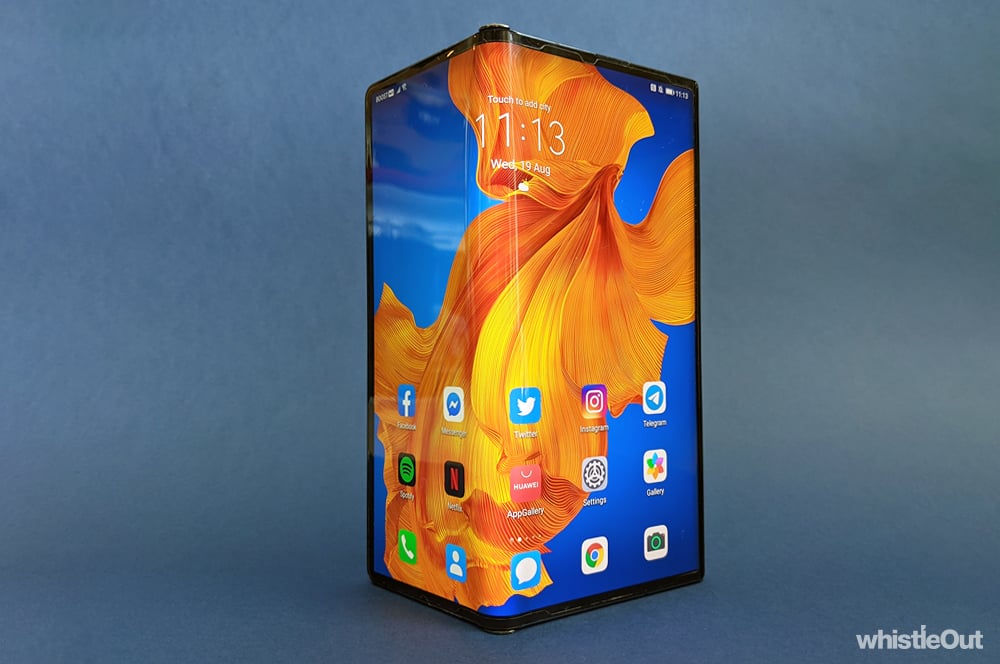
On the other hand, the Huawei Mate XS has just one large display that wraps around the phone. When you fold the phone down, the the entire display is still exposed.

There are also devices like the Motorola RAZR and Samsung Galaxy Z Flip. These use more conventional sized smartphone displays, rather than tablet sized display, and fold down like a clamshell flip phone. In both cases, these devices have small displays on the front so you can check notifications without opening the phone.
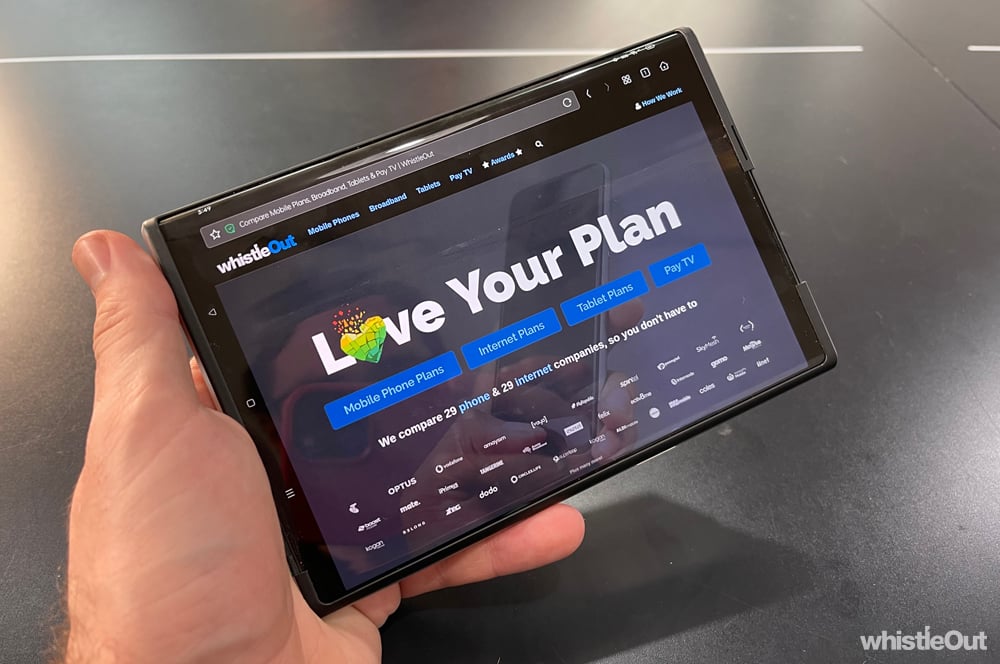
We're now also seeing rollable concept devices like the OPPO X 2021 which have displays that unfurl like a scroll. These use the same kind of flexible displays as you'd find in a folding phone, they just expand differently.
Notably, Google Android natively supports foldable form-factors to help avoid fragmentation. This means manufacturers (who tend not to be as experienced in software as Google) don't have to try and rebuild Android to achieve their foldable dreams.
How much do foldable phones cost?
Unsurprisingly, foldables are a fairly costly affair right now. You're looking at anywhere between $1,499 for an older model, while phones like the Galaxy Z Fold 2 cost $2,999 at launch. Huawei's Mate XS has been the most expensive foldable phone we've seen in Australia, with launch pricing of $3,999.
Select foldable smartphones are available on plans.
Is also worth being aware that foldables will be more expensive to fix if damaged. Samsung Galaxy Z smartphones all come with one discounted screen repair, priced at $220. This is only valid during your first year of ownership, however. A screen replacement for the Huawei Mate XS will set you back $1,909 locally.
Some foldable devices are only available outright, in which case you'll need to bring your own SIM. If you're looking for a new plan, here are a few popular SIM-only options:
|
#1
|
SpinTel 
|
|
|
#2
|
Tangerine Telecom 
|
|
|
#3
|
Pivotel 
|
|
|
#4
|
Dodo 
|
|
|
#5
|
Swoop 
|


Samsung folding phones
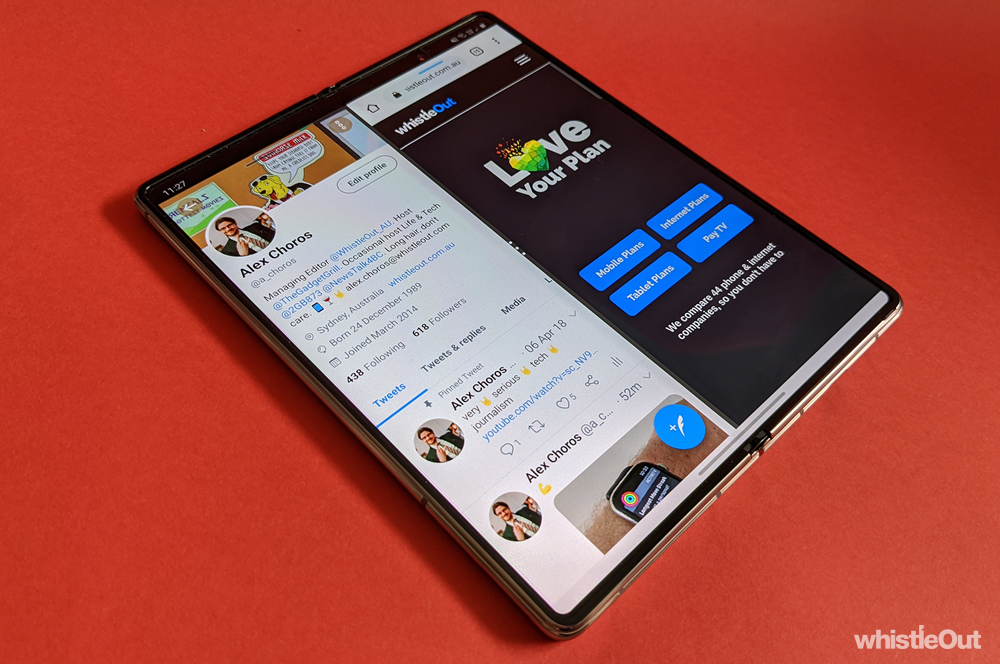
Samsung is the manufacturer with the most experience in foldable devices. To date, it has launched the following:
- Samsung Galaxy Z Fold 2
- Samsung Galaxy Fold
- Samsung Galaxy Z Flip 5G
- Samsung Galaxy Z Flip
Samsung is expected to unveil successors to the Galaxy Z Fold 2 and the Galaxy Z Flip later this year. The big rumour regarding the Galaxy Z Fold 3 is that it will finally support Samsung's trademark stylus, the S Pen.
OPPO folding phones

OPPO yet to launch a commercial folding phone, but has revealed a concept rollable device: the OPPO X 2021. The OPPO X 2021 uses similar flexible display technology similar to folding phones, but the screen unfurls instead. Swiping the power button will expand the screen from 6.7-inches to 7.4. At this stage, there's no indication as to whether OPPO will bring a commercial version of the X 2021 to market.
Motorola folding phones

Motorola's folding phones have taken the form of retro throwbacks; RAZR inspired flip phones. It has launched two to date:
- Motorola RAZR 5G
- Motorola RAZR
At present, it is unclear of whether Motorola will release another foldable phone this year.
Huawei folding phones

Huawei has released three foldable phones so far. These include:
- Huawei Mate X2
- Huawei Mate XS
- Huawei Mate X
Only the Huawei Mate XS was made available in Australia. It is unclear as to whether the the Mate X2 will make its way down under, but if it does, we expect it will only be available in limited
TCL folding phones

TCL has showcased a number of foldable and flexible phone concepts, but has yet to bring a device to market. The company says it won't do so until the technology is more mature and affordable. TCL's most ambitious concept is the Fold N' Roll, a device that uses both foldable and rollable technology. The device initially unfurls to expand the screen, and if you want an even larger display, you can unfold one of its sides.
Are foldable smartphones durable?
There's no two ways about it, folding phones are less durable than your traditional smartphone.
For one, no smartphone manufacturer has worked out how to make a water-resistant foldable. If you drop your foldable smartphone into water, there's no telling how well it will hold up. Our best guess is poorly. While electronics and water rarely mix, the majority of high-end phones come with an IP rating that at least provides some assurance against accidents.
Secondly, foldable screens simply aren't as durable. Devices like the Motorola RAZR and the Huawei Mate XS both have plastic screens, which makes them more prone to scratches. Samsung has moved to ultra-thin glass for its latest devices, but this isn't as a durable as a traditional smartphone screen. While you might luck out with nothing but a few scuffs if you drop a regular phone on concrete, the odds aren't anywhere near as good with foldable smartphones.
There is also always the possibility that dust or debris could find its way into a foldable's hinge and damage your device. Samsung says its latest hinges have been designed to prevent this, however.
In short, if you're thinking about picking up a folding phone, you're going to need to handle it with a little bit of extra care than you normally might.
Alex Choros

Related Articles


